
RBT social media ethics is not only about whether a post includes a client’s name. It is a repeatable pause-and-check process for photos, videos, screenshots, stories, comments, direct messages, workplace details, and public claims about credentials or services. The safest habit is to decide what the post could reveal, whether it is approved, whether it is necessary, and whether an official channel is required instead.
Table of Contents
- What RBT social media ethics covers
- The pause-before-posting check
- Common high-risk content
- Personal accounts and professional claims
- What to do after a mistake
- Frequently asked questions
- Official sources and scope
RBT ethics and social-media safety guide
RBT Social Media Ethics: A Safe Posting Guide
Use a short pause-and-check routine before posting, commenting, messaging, or sharing anything connected to clients, workplaces, services, or credentials.
RBT social media ethics is not only about whether a post includes a client’s name. It is a repeatable pause-and-check process for photos, videos, screenshots, stories, comments, direct messages, workplace details, and public claims about credentials or services. The safest habit is to decide what the post could reveal, whether it is approved, whether it is necessary, and whether an official channel is required instead.
The RBT Ethics Code (2.0) says RBTs protect client, stakeholder, and workplace confidentiality and privacy, and it specifically prohibits sharing identifying client information on social media or websites. This guide translates that boundary into everyday decisions without pretending to replace the current Code, employer policy, consent process, law, or supervisor direction.
What RBT social media ethics covers
Social media is broader than a public feed. It can include a professional profile, a personal account, a private group, a story that disappears, a comment, a direct message, a review response, a community forum, a workplace chat with sharing controls, or a screenshot sent to one other person. A post can also create risk without showing a client’s face. Location, schedule, school, distinctive behavior, room details, a service date, a caregiver comment, or a recognizable voice may allow someone to identify a person through context.
The ethical question is therefore not simply “Is this account private?” Ask instead: What information does this content reveal? Who could connect the details? What authorization and workplace rule apply? Is sharing necessary for the job? Is there a safer approved channel? If any answer is unclear, pause and ask the supervisor or designated privacy contact before posting.
The pause-before-posting check
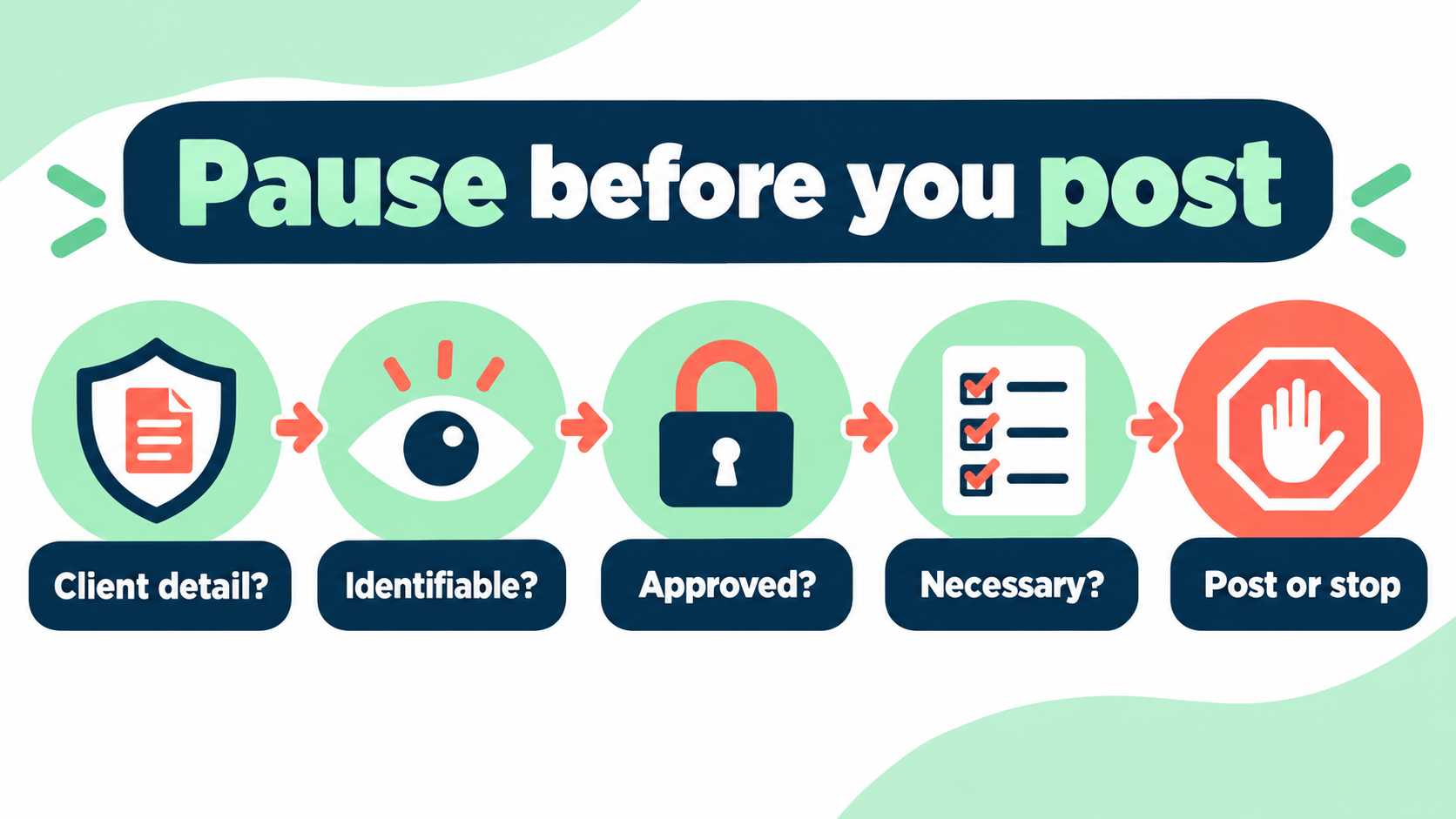
Use the following five questions before publishing, forwarding, liking, commenting on, or saving content that relates to work.
- Client detail? Does the content mention a client, caregiver, learner, setting, schedule, session, record, behavior, progress, or service event?
- Identifiable? Could a person be recognized from a name, image, voice, date, location, device screen, background, combination of details, or the people who follow the account?
- Approved? Is there documented authorization and an approved workplace process for this exact use, not merely a general belief that the family would not mind?
- Necessary? Does the post serve a legitimate job-related purpose, or is it mainly for engagement, personal branding, humor, celebration, or convenience?
- Post or stop? If the answer is uncertain, stop. Keep the content private, do not forward it, and seek direction through the approved route.
Common high-risk content
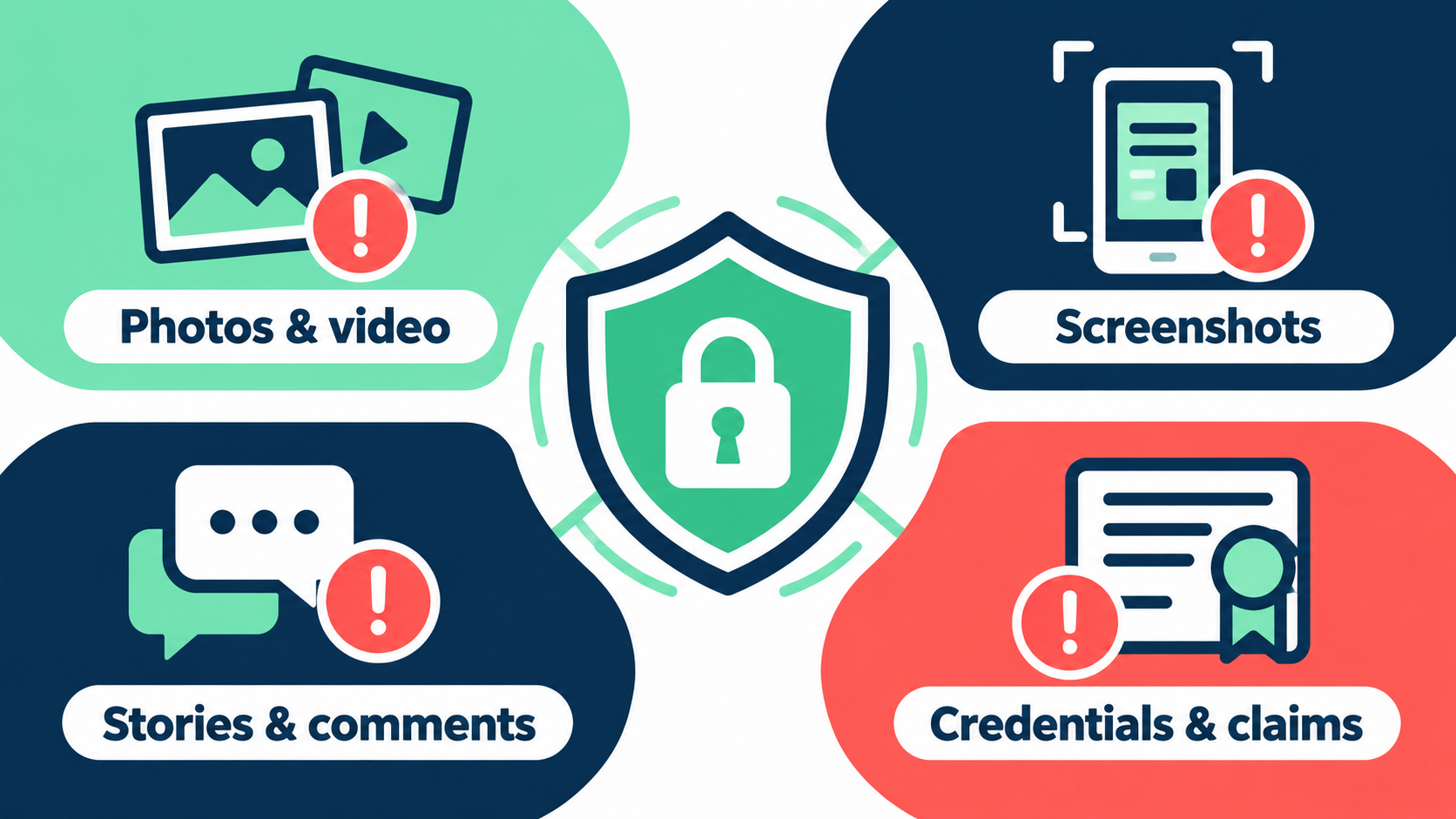
Photos and video
A photo can reveal more than the intended subject. Check reflections, whiteboards, labels, uniforms, devices, school signs, voices, and other people in the frame. Do not assume cropping, blurring, a sticker, or removing a name makes the post safe. If recording or publishing is part of an approved program, follow the exact authorization, storage, access, and release process rather than creating a separate copy for social media.
Screenshots and screen recordings
Progress graphs, messages, schedules, electronic records, video-call windows, and training platforms may contain names, dates, identifiers, or hidden metadata. A screenshot made for convenience can become a disclosure when it is sent to a friend, posted in a group, or stored in a personal cloud account. Use the organization’s approved system and share only what the job requires.
Stories, comments, and “anonymous” examples
Disappearing content is still content. A story can be recorded, and a comment can be copied outside the original audience. A supposedly anonymous success story can identify a client through timing, diagnosis, location, family structure, or unusual progress. Do not use a client situation as a personal lesson, joke, marketing example, or debate prompt without the authorized process.
Credentials and claims
Social media ethics also includes what an RBT says about qualifications, job titles, services, outcomes, and the organization. Keep public claims current, accurate, and within the RBT role. Do not promise results, imply independent clinical authority, or present training, applicant status, or inactive status as active certification. When a public claim may be misleading, preserve the facts and use the supervisor, employer, BACB, or other applicable reporting route rather than starting a public argument.
Personal accounts and professional claims
An RBT may have a personal life and personal opinions. That does not make every work-related disclosure acceptable. The RBT Ethics Code applies to behavior-technician activities across settings and communication modalities. Personal behavior can also become relevant when it clearly creates a risk to clients, stakeholders, or coworkers.
Keep client relationships and personal social networks separate. Do not accept a client or caregiver as a personal contact simply to make communication easier. Do not use a client’s comment, review, image, or message as promotional content without the organization’s approved process. When a boundary is unclear, ask before connecting, posting, replying, or sharing.
What to do after a mistake
If you posted, sent, or received content that may expose confidential information, do not quietly delete evidence and assume the problem is solved. Preserve the relevant facts, stop additional sharing, and promptly follow the organization’s incident and supervisor route. Ask what containment, documentation, access review, or notification steps apply. If the matter may involve a BACB ethics requirement, use the current official reporting information and protect personally identifiable information in any documentation.
Urgent safety concerns use the applicable emergency, safeguarding, or mandated-reporting route. Routine uncertainty should be documented and brought to the supervisor or designated privacy contact. An RBT’s responsibility is to report accurately, protect people, and follow direction—not to conduct a public investigation or make a final legal ruling.
Frequently asked questions
Does a private account make a client post acceptable?
No. Privacy settings reduce an audience but do not replace confidentiality, authorization, workplace rules, or the RBT Ethics Code. A private group can still allow copying, screenshots, or identification.
Can an RBT share a client success story without using a name?
Not automatically. The combination of details may identify the client, and the purpose may not be necessary or authorized. Ask before sharing, and use the organization’s approved process if one exists.
What if a supervisor asks an RBT to post client content?
Ask for the approved authorization, channel, purpose, storage, and release instructions. An RBT should not publish content that appears inconsistent with the Code, law, or workplace process simply because someone asked informally.
How should an RBT report a concerning public post?
Preserve the factual link or record through an approved route, avoid public confrontation, protect identifying information, and follow the supervisor, employer, BACB, licensing, safeguarding, or emergency process that fits the concern.
Official sources and scope
This article was checked against the RBT Ethics Code (2.0), BACB reporting guidance, and the BACB RBT ethics resource page. Requirements, forms, and workplace procedures can change. Use the current official source and your approved supervision route for a specific situation.
Ready to practice the RBT concepts you just reviewed?
Try an independent, original RBT practice resource with exam-style questions, scoring, and answer explanations.
References
- Behavior Analyst Certification Board. RBT Test Content Outline, 3rd edition.
- Behavior Analyst Certification Board. RBT Handbook.
- Behavior Analyst Certification Board. RBT Ethics Code.