
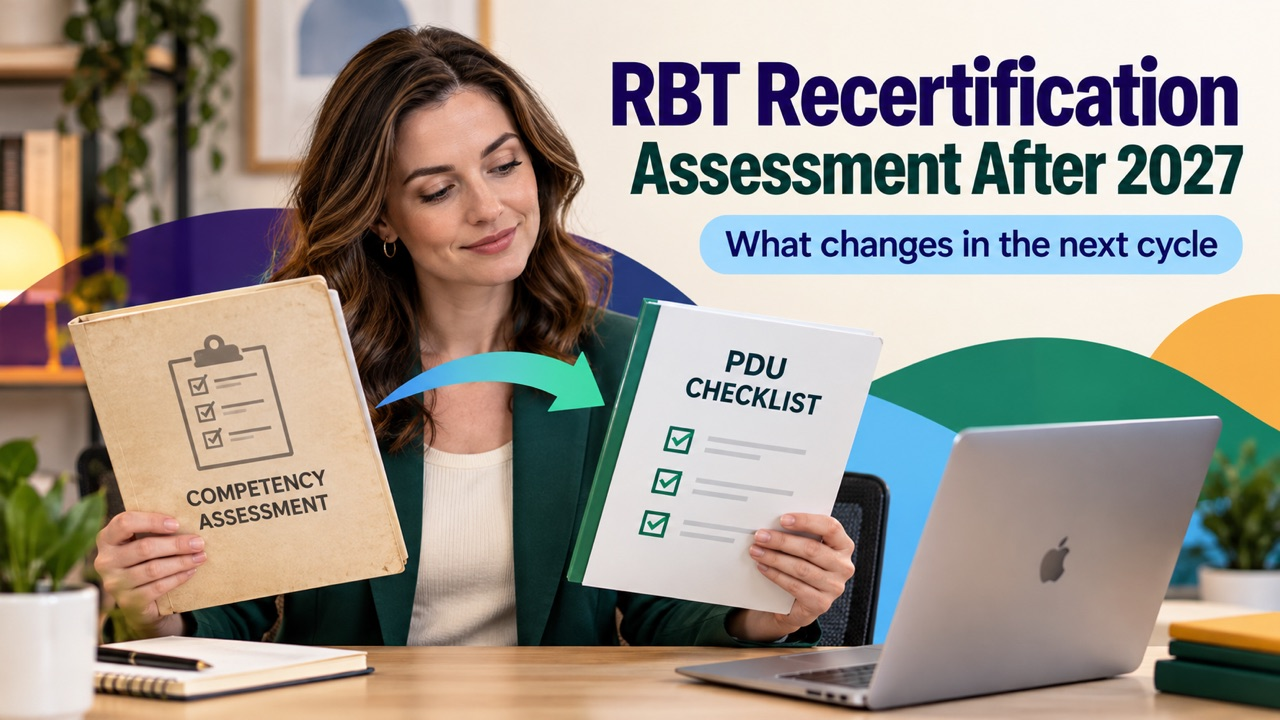
rbt recertification planning: this guide explains the planning and recordkeeping question behind the topic, while the current BACB Handbook, forms, and portal instructions control the final requirement.
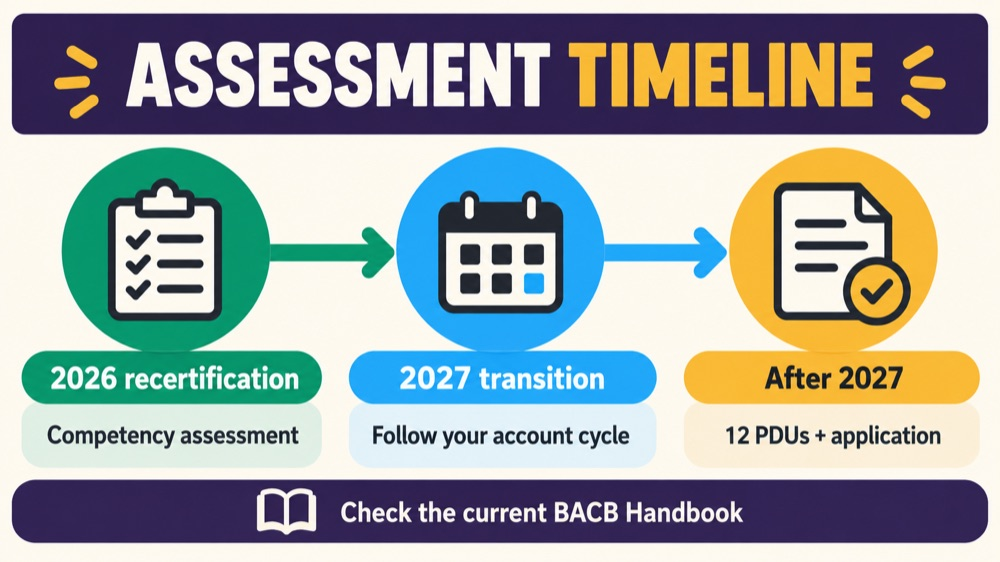
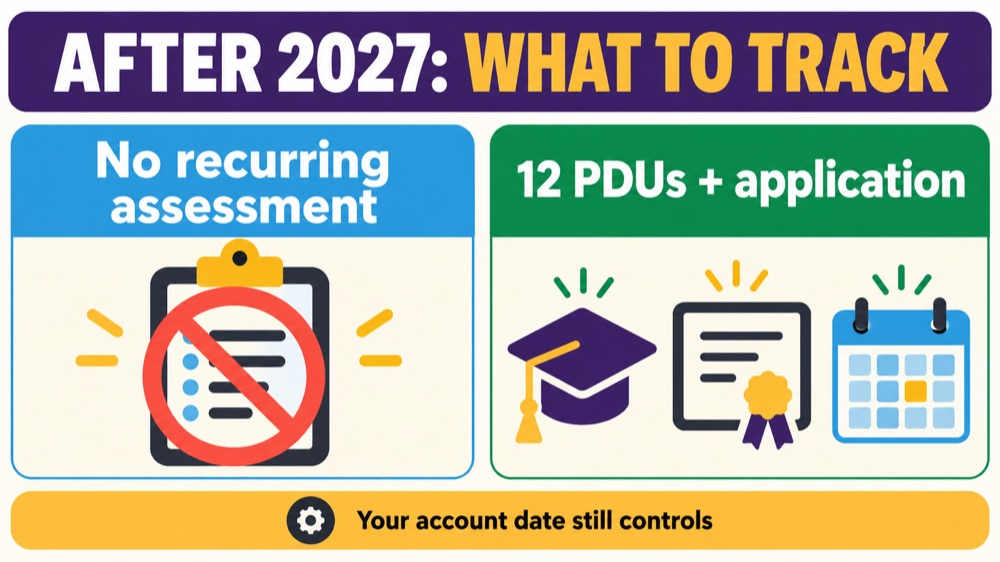
rbt recertification planning: Planning is different from predicting a policy change
RBT recertification planning is a personal recordkeeping task: map the current cycle, identify the required professional-development evidence, and leave time to submit complete information. It is different from predicting exactly how a future policy transition will work. For any question about a future cycle or an assessment change, the current BACB Handbook and official notices control.
A good plan is flexible. It records what is required today, what has already been completed, and which items still need official confirmation. That prevents an old checklist from being treated as a permanent rule.
Start with the certification and cycle dates
Write down the certification expiration date, the current recertification period, and the date on which the portal allows submission. Use the official account and Handbook rather than a calendar app as the source of truth. Then add internal reminder dates well before the deadline.
Keep the cycle date separate from event dates. A PDU event may occur on one day, a certificate may be issued later, and the recertification submission may happen later still. Each date serves a different recordkeeping purpose.
Build a PDU evidence tracker
For every professional-development activity, record the provider, activity title, date, number of PDUs claimed, topic, and document that supports completion. Save the certificate, agenda, transcript, or other evidence named by the current BACB guidance. If an activity is still pending, label it as pending instead of counting it as complete.
Review whether the activity type is eligible before relying on it. A certificate that says ‘training’ is not automatically proof that the activity counts for every recertification category. Check the current PDU guidance and keep a note of the reasoning used.
Use a monthly review rhythm
A short monthly review is easier than rebuilding a year of records at the deadline. Reconcile the tracker with the saved certificates, check the running total, and mark any activity that needs provider clarification. Put uncertain items in a separate review column instead of quietly adding them to the completed total.
This rhythm also shows whether the remaining activities are realistic. If the cycle is nearly over and the tracker is incomplete, contact the appropriate official or organizational source early. Do not wait until the portal closes and then assume an extension exists.
Prepare the submission file
Near the submission window, compare the tracker with the current portal fields and recertification instructions. Confirm names, dates, totals, payment or fee information, and any required attestations. Keep the final evidence in a clear folder and retain the upload confirmation.
Do not submit a document that you cannot explain. If a provider corrected a certificate, keep the final version and a note about the correction. If a PDU is uncertain, seek current clarification instead of relying on a social-media answer.
What to do when the rules change
When BACB publishes a new Handbook, form, or transition notice, compare it with your tracker and mark which rows are affected. Do not rewrite historical records to fit a new label. Preserve the original evidence and add a note explaining how the current instruction maps to it.
A transition article can explain a published change, but it cannot extend a deadline or decide whether an individual record qualifies. Link your internal plan to the official source and refresh it when the source is updated.
Frequently asked questions
Is a PDU tracker required by itself? The current BACB instructions control, but a tracker is a practical way to organize evidence and avoid a last-minute count error.
Can an old certificate be counted automatically? Check the current cycle rules and retain evidence that shows the activity details.
Does planning guarantee recertification? No. It supports readiness; BACB’s current requirements and review decide the outcome.
How to keep the decision clear
Before you close the file, write one sentence stating what the record proves and one sentence stating what it does not prove. For example, a training record can show completion, but it cannot by itself show that an application was approved. A signed form can show that an attestor made a confirmation, but it cannot replace a missing eligibility document. A calendar can show the dates you planned, but it cannot change an official deadline. This small distinction keeps a useful checklist from becoming an unsupported promise.
Save the current official source with the review date, then set a reminder to recheck it if your application or recertification cycle continues. Forms, handbook language, fees, portal instructions, and processing information can change. When a source changes, update the plan and preserve the earlier record rather than silently rewriting history. That approach makes the file easier for the applicant, provider, attestor, or assessor to understand later.
When the review is complete, record the next action, the person responsible for it, and the date you intend to revisit it. If the next action depends on an official response, label it as waiting rather than complete. If the next action is a document correction, keep the correction request with the file. This turns the article’s advice into a small workflow that can be checked by someone else without reinterpreting the whole history.
Keep the review brief enough to repeat. A dated checklist, a source link, and a clearly named next action are more useful than a long note with no owner. If another person takes over the file, they should be able to understand the status without changing any original record.
If the record is shared with a provider, attestor, assessor, or organization administrator, share only the portion needed for that person’s task. Keep a private note of what was sent, when it was sent, and whether a correction was requested. This is a practical privacy measure as well as a quality check: it reduces the chance that an old draft, a duplicate file, or an unrelated personal document is used by mistake.
Use the same review method whenever a date, form version, or portal instruction changes. First identify the official source, then compare the source with the saved record, then document the decision and next action. If the source is unclear, mark the item as needing confirmation. A transparent “waiting for confirmation” note is safer than filling in an uncertain answer and treating it as a completed requirement.
When possible, have a second person perform a visual check without changing the substance. A fresh review often catches a missing page, a mismatched name, an unreadable scan, or a date entered in the wrong field. Keep the reviewer’s note separate from the official form so the original record remains intact.
Source and scope: This is an educational summary of public BACB guidance, not individualized certification, legal, immigration, employment, or financial advice. Check the current BACB Handbook, forms, portal instructions, and organization records before acting.