
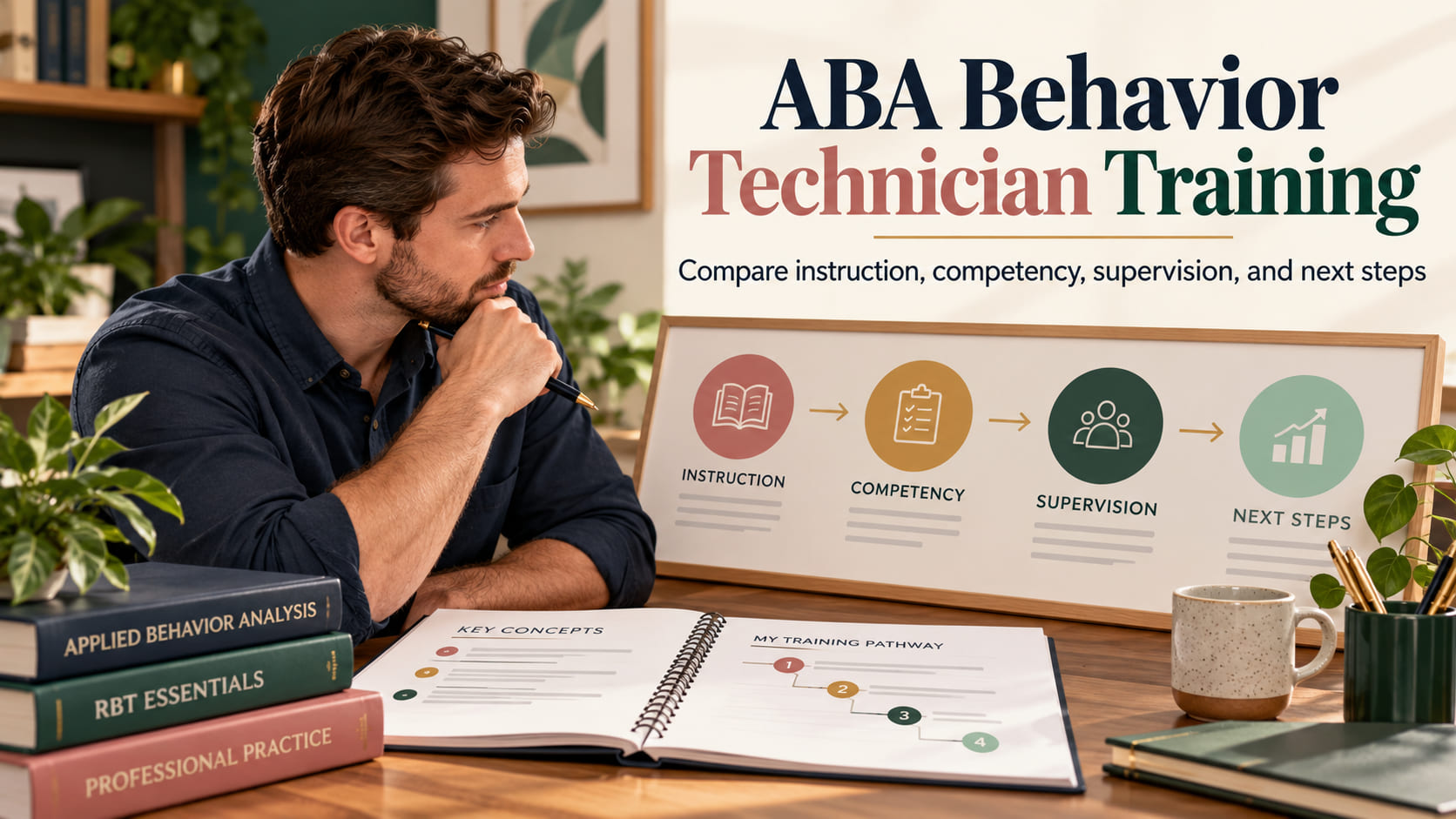
ABA behavior technician training should be evaluated by what it teaches, how learners practice, who observes competency, what the course does or does not satisfy, and how supervision is provided afterward. A course certificate is not automatically the same as a current RBT credential or an employment guarantee. Verify each step against current BACB materials and the provider’s written terms.
Table of Contents
- ABA behavior technician training: the short answer
- What a useful curriculum should cover
- Why practice and feedback matter
- How to think about competency evaluation
- Training versus ongoing supervision
- Questions to compare providers
- Training mistakes to avoid
- Frequently asked questions
ABA behavior technician training, RBT pathways, competency, supervision, and provider comparison
ABA Behavior Technician Training: What to Compare Before You Enroll
Compare instruction, practice, competency, supervision, official steps, records, and provider promises.
ABA behavior technician training should be evaluated by what it teaches, how learners practice, who observes competency, what the course does or does not satisfy, and how supervision is provided afterward. A course certificate is not automatically the same as a current RBT credential or an employment guarantee. Verify each step against current BACB materials and the provider’s written terms.
Good training is more than a video library. It should help a learner understand the role, practice safe implementation, receive feedback, protect privacy, collect data, communicate with a team, and recognize when a question belongs with a supervisor.
ABA behavior technician training: the short answer
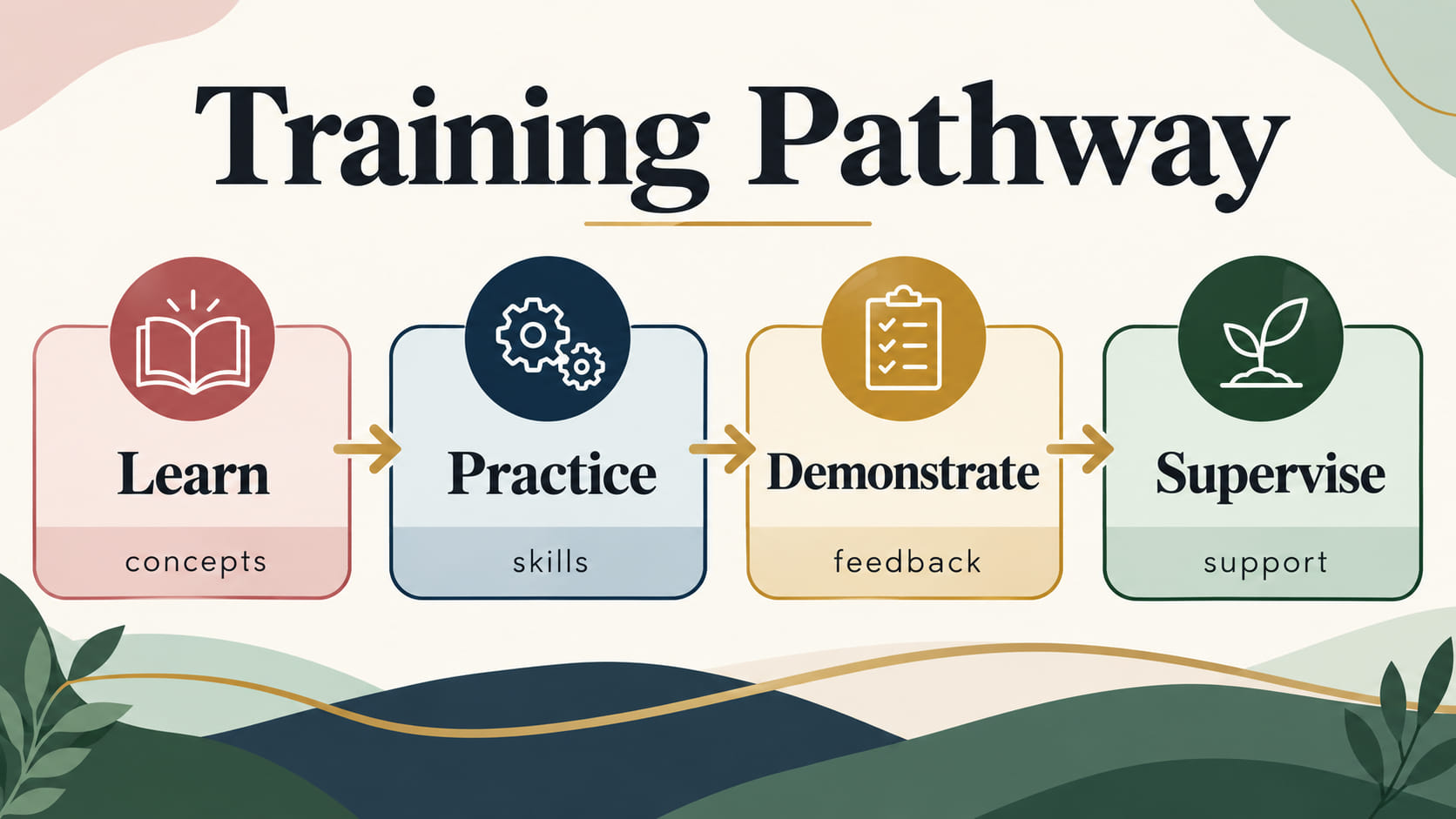
Before enrolling, separate the pathway into its parts:
- Instruction: What concepts and task skills are taught?
- Practice: Where can you rehearse the skills with feedback?
- Competency: Who observes performance and records the evaluation?
- Application and examination: Which official steps remain after the course?
- Supervision: Who provides direction and support once you begin assigned work?
If a provider combines these parts into one “instant certification” promise, ask for the exact written explanation. Current official requirements, not marketing language, determine what a course can count toward.
What a useful curriculum should cover
A strong curriculum connects concepts to the work a behavior technician is expected to perform. Topics may include measurement and data, assessment support, skill acquisition, behavior reduction procedures, prompting, reinforcement, generalization, documentation, privacy, ethics, and professional communication.
Look for clear learning objectives and examples that explain what the technician does, what the technician does not do, and when to ask for direction. A course that teaches vocabulary without role boundaries can leave a new worker confident but unsafe.
Training should also describe how materials, records, and examples protect privacy. Demonstration videos and case examples should be de-identified, and learners should not be encouraged to copy private client notes into assignments or portfolios.
Why practice and feedback matter
Behavior-technician work involves observable performance. A learner may understand a definition and still need practice presenting an instruction, delivering a prompt, recording data, following a schedule, or responding when the plan is unclear.
Look for active practice such as role-play, rehearsal, worked examples, simulated data, and specific feedback. “Correct” is less useful than feedback that says what was observed, which step was accurate, what needs to change, and how to try again.
Practice should not use real client information without authorization. A good program can teach the skill using fictional or de-identified scenarios and still make the decision points clear.
How to think about competency evaluation
Competency evaluation asks whether the learner can perform the defined skill under the applicable process. Before enrolling, ask who observes the performance, what rubric is used, whether feedback and a second attempt are available, how results are recorded, and which official step the evaluation does or does not represent.
A completion badge or quiz score may show participation or knowledge. It does not automatically demonstrate every hands-on skill, satisfy every official requirement, or authorize independent clinical decisions. The provider should explain the difference clearly.
If you cannot demonstrate a task safely, do not hide the gap to finish faster. Ask for more instruction, practice, or supervision. Skill development is more valuable than a record that only looks complete.
Training versus ongoing supervision
Training prepares a learner; supervision supports the work in the actual service setting. The supervisor and organization should explain assigned services, observation, feedback, data, records, escalation, and the limits of the role.
Do not assume that completing a course means you can work without required supervision. An RBT implements assigned services under supervision and should not independently diagnose, design treatment, change a plan, or supervise another person simply because training was completed.
Before accepting a job or placement, ask who the responsible supervisor is, how you reach them, how feedback is recorded, what happens if a meeting is missed, and which current materials control the process.
Questions to compare providers
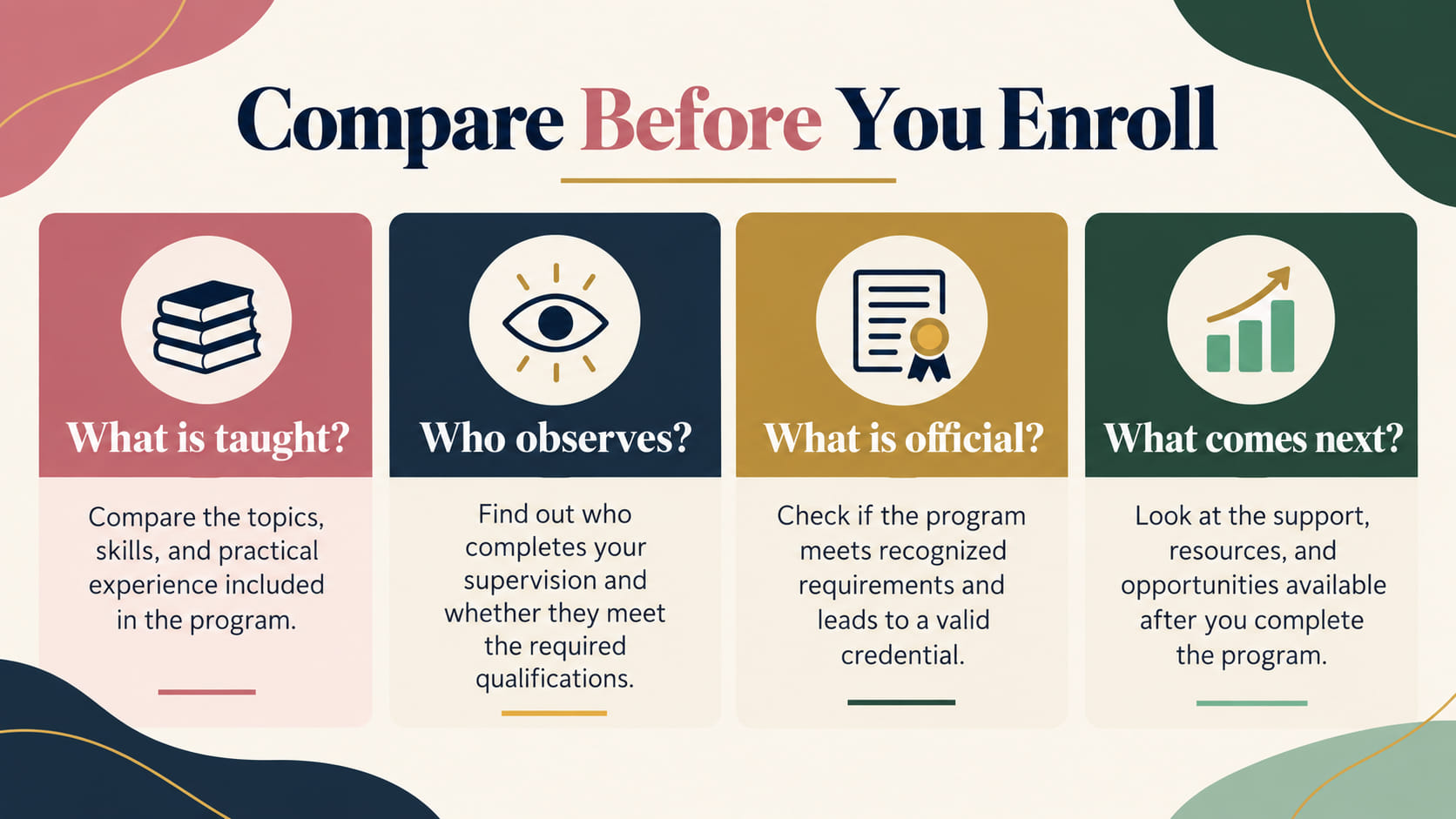
- Which credential or job role does the program prepare me to understand?
- Which current official requirement, if any, does the program satisfy?
- How much of the program is instruction, practice, feedback, and competency evaluation?
- Who observes performance, and what happens if a learner needs more practice?
- How are completion records, updates, refunds, and access periods handled?
- What does the program not replace: application, examination, supervision, experience, or maintenance?
- Does the provider promise certification, a passing score, a job, or a specific salary?
Compare the answer to your actual goal. Someone seeking a first technician role may need foundational concepts, practice, competency support, and a clear route to supervised work. Someone already working may need targeted review, updated official materials, or help with a specific skill. A single course should not pretend to be the right solution for every learner.
Also compare the total commitment, not only the advertised price. Consider instruction time, practice access, feedback, records, support after completion, update policy, and the cost of any separate official steps. A transparent provider makes those boundaries easy to find before you enroll and plan with realistic expectations today.
Training mistakes to avoid
- Confusing a course with a credential: training is one possible pathway step, not automatically the whole process.
- Buying a guarantee: no provider can control every official decision, score, employer, or outcome.
- Skipping practice: watching a lesson is not the same as demonstrating the skill.
- Ignoring updates: saved checklists can become inaccurate when official requirements change.
- Overstepping the role: training does not authorize independent diagnosis, treatment design, or supervision.
- Using private examples: never copy identifying client information into a course assignment or portfolio.
Frequently asked questions
Is ABA behavior technician training the same as RBT certification?
Not automatically. Training, competency, application, examination, supervision, and maintenance can be separate steps. Verify the current BACB process and what the specific provider actually delivers.
What makes behavior technician training useful?
Clear objectives, accurate concepts, role boundaries, practice, feedback, privacy protection, competency support, current materials, and transparent next steps make training more useful.
Can training guarantee a job?
No. A course cannot guarantee employment, pay, certification, examination results, or a specific client outcome. Treat guarantees as a reason to ask more questions.
What should I do after training?
Follow the current official pathway for the credential or role, confirm supervision, maintain records, and ask the responsible organization contact what step applies to your actual situation.
Role reminder: This is educational training-comparison information, not credentialing, employment, legal, or clinical advice. Verify current BACB requirements and provider terms before enrolling.
Official starting points: the BACB RBT page, RBT Handbook, RBT Test Content Outline, and supervision and training resources.
Ready to practice the RBT concepts you just reviewed?
Try an independent, original RBT practice resource with exam-style questions, scoring, and answer explanations.
References
- Behavior Analyst Certification Board. RBT Test Content Outline, 3rd edition.
- Behavior Analyst Certification Board. RBT Handbook.
- Behavior Analyst Certification Board. RBT Ethics Code.