
An ABA therapy behavior technician supports assigned services under supervision. The role may include preparing materials, following a behavior plan, teaching defined skills, collecting data, supporting communication, documenting a session, and reporting observations. The technician’s exact duties depend on the plan, setting, employer, competence, supervision, and current requirements.
Table of Contents
- ABA therapy behavior technician: the short answer
- Prepare for the assigned session
- Teach and implement the plan
- Measure what the plan defines
- Report, document, and communicate
- Protect technician boundaries
- Frequently asked questions
ABA therapy behavior technician role, session flow, data, communication, privacy, and supervision
ABA Therapy Behavior Technician: What the Role Looks Like in Session
A plain-language look at preparation, implementation, measurement, reporting, and role boundaries.
An ABA therapy behavior technician supports assigned services under supervision. The role may include preparing materials, following a behavior plan, teaching defined skills, collecting data, supporting communication, documenting a session, and reporting observations. Exact duties depend on the plan, setting, employer, competence, supervision, and current requirements.
A session is not simply a technician trying activities until something works. The technician follows the assigned procedure, watches the learner’s response, records the defined information, protects dignity and privacy, and asks for direction when the situation does not match the plan.
ABA therapy behavior technician: the short answer
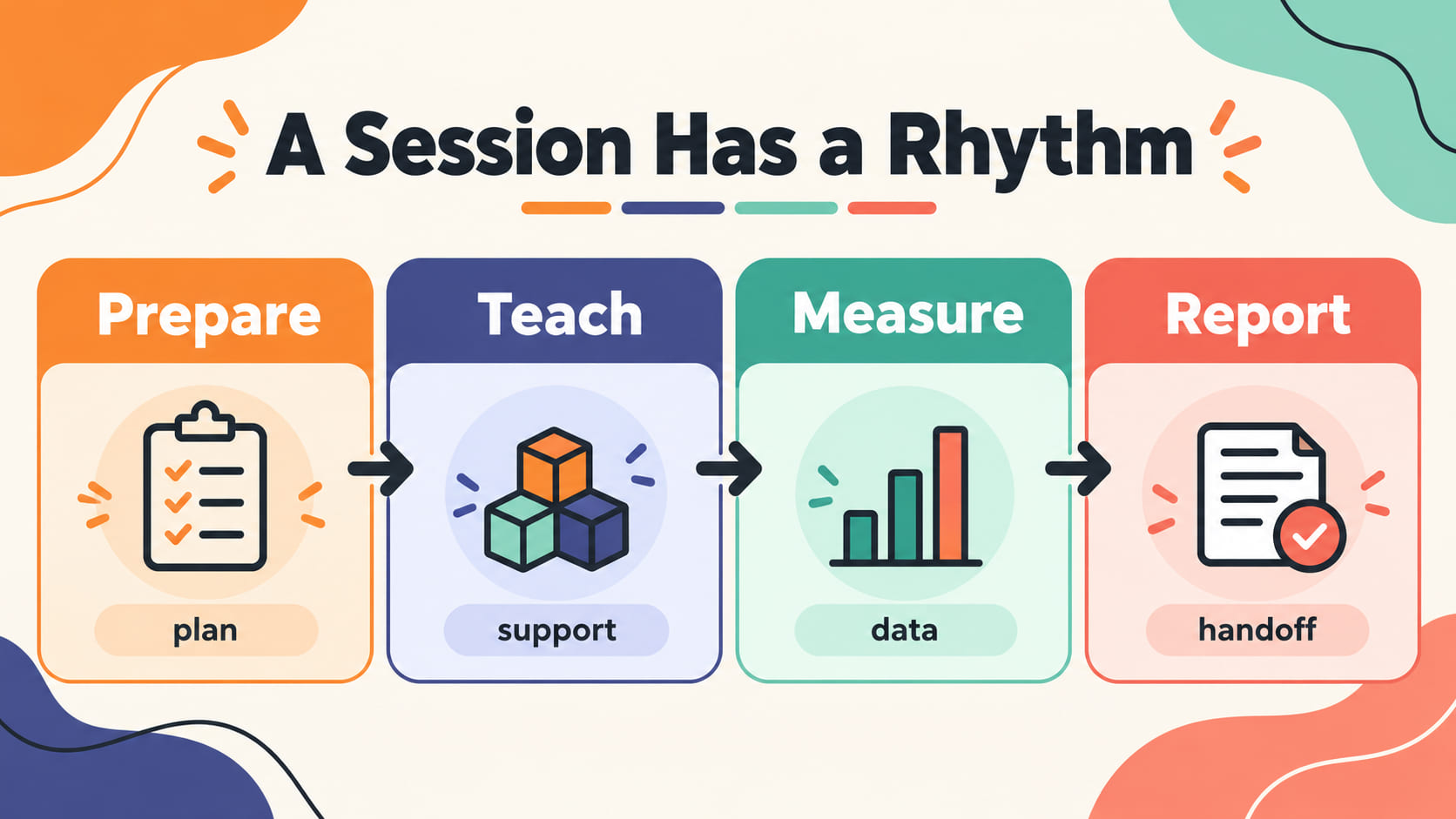
A supervised session often has four connected phases:
- Prepare: review the plan, materials, safety information, and data definitions.
- Teach: implement the assigned cues, prompts, reinforcement, and procedures.
- Measure: record the defined responses, opportunities, prompt levels, or other data.
- Report: document the session and communicate observations, barriers, questions, and safety concerns.

Prepare for the assigned session
Preparation begins with the current plan and the information the organization allows the technician to access. Review the targets, materials, prompt or reinforcement procedures, data definitions, safety steps, and communication route. If a plan is missing, unclear, or different from what the supervisor described, ask before improvising.
Prepare the setting without exposing private information. Use approved records, secure materials, and only the information needed for the assigned work. Do not take client notes, images, or identifying details to a personal device for convenience.
Preparation can also include noticing changes in the environment: a new person, a missing material, a schedule change, illness, fatigue, or a safety concern. Report relevant changes and ask how they affect the plan.
Teach and implement the plan
Implementation may involve presenting an instruction, arranging an opportunity, prompting a response, providing reinforcement, practicing communication, supporting a routine, or following a behavior-reduction procedure. Use the sequence, timing, and definitions in the assigned plan.
Consistency does not mean ignoring the learner’s dignity or communication. Use the least intrusive support specified, honor appropriate refusal and communication, and report distress or safety concerns. A technician should not force a response simply to make a data sheet look complete.
If the learner responds differently from expected, do not label the learner or rewrite the plan in the moment. Describe what happened, record the defined data, and ask the supervisor whether a change or review is needed.
Measure what the plan defines
Data may include frequency, duration, latency, interval measures, task steps, independent versus prompted responses, opportunities, or another operational definition. The plan should identify what counts, when to record it, and how to handle an unclear response.
Record what occurred rather than what you hoped would occur. If a prompt was delivered early, a material was unavailable, or an opportunity was interrupted, follow the correction and reporting process. Do not backfill, copy another person’s observations, or change a definition to make the session easier to score.
One session is not the whole story. The supervisor reviews patterns across relevant conditions and decides whether teaching, reinforcement, prompting, materials, or goals need review. The technician’s accurate data make that review possible.
Report, document, and communicate
Session documentation should be factual, timely, and stored in the approved system. Describe the services performed, relevant responses, defined data, barriers, communication, and follow-up as required by the organization. Avoid unnecessary personal opinions or identifying details.
Communicate observations through the right route. A technician can say, “The visual was unavailable, so I followed the backup direction and recorded the change,” or “The learner showed distress when the procedure began; I followed the safety step and need supervisor review.” These statements help the team respond without overstating what the technician knows.
Handoffs should include what the next person needs to know and nothing more. Do not discuss a client in public spaces, use a personal social account for session details, or share images without approved authorization.
Protect technician boundaries
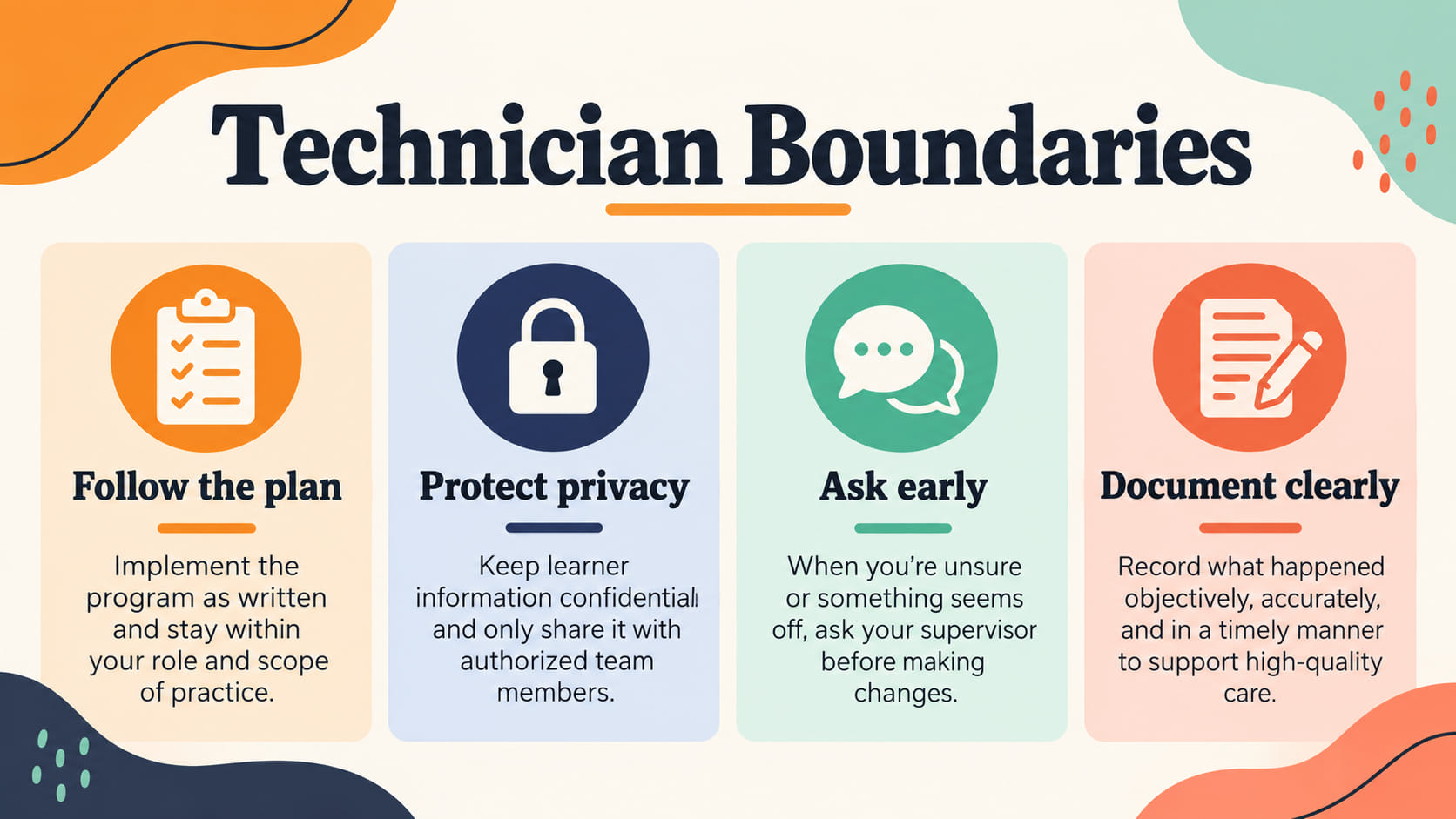
- Follow the assigned plan: do not independently design treatment or change the procedure.
- Stay within competence: ask for training, modeling, or supervision when a task is new or unclear.
- Protect privacy: use approved systems and minimum necessary information.
- Keep relationships professional: ask before gifts, private contact, favors, or social invitations.
- Use escalation: report safety, abuse, neglect, privacy, documentation, and supervision concerns through the approved route.
Working in therapy does not mean the technician works in isolation. The client and family may provide important information about routines, communication, preferences, health, or changes in the environment. Listen respectfully, protect private information, and bring clinically meaningful observations to the responsible supervisor rather than making a promise the role cannot support.
A good technician also prepares for transitions. Before ending a session, complete the required data and note, secure materials, communicate the next relevant step, and report anything that needs follow-up. Do not use a rushed handoff as a reason to omit an error, a safety concern, or an important change.
Supervision turns these observations into team decisions. The technician can describe the response and the context; the supervisor can review patterns, clarify procedures, provide feedback, and decide whether the plan needs adjustment. That division of responsibility protects both service quality and the technician’s scope.
When a session does not go as planned, the professional response is not to force a perfect-looking result. Keep the learner safe, follow the written safety direction, record the relevant facts, and ask for review. Honest information gives the team a better chance to improve the plan than a polished but inaccurate note. That is dependable technician work in practice for every session and each learner over time and context with care today, consistently.
Frequently asked questions
What does an ABA therapy behavior technician do?
The technician implements assigned services under supervision, collects defined data, documents sessions, supports teaching procedures, protects privacy and dignity, and reports observations or barriers.
Does every technician session look the same?
No. Session flow depends on the plan, learner, setting, goals, materials, safety needs, employer, and supervision. The role boundaries still apply.
Can a behavior technician change the plan during a session?
Follow the written procedure and ask the supervisor. A technician should not independently diagnose, design treatment, change the plan, or substitute a new intervention.
What should a technician do when the plan is unclear?
Pause the unclear commitment when safe, use the approved escalation route, describe the facts, and ask for direction. Do not hide the gap or rely on an informal workaround.
Role reminder: This is educational role information, not individualized clinical, credentialing, employment, legal, or treatment advice. Follow the assigned plan and ask the responsible supervisor about a specific situation.
Official starting points: the BACB RBT page, RBT Handbook, RBT Test Content Outline, and supervision and training resources.
Ready to practice the RBT concepts you just reviewed?
Try an independent, original RBT practice resource with exam-style questions, scoring, and answer explanations.
References
- Behavior Analyst Certification Board. RBT Test Content Outline, 3rd edition.
- Behavior Analyst Certification Board. RBT Handbook.
- Behavior Analyst Certification Board. RBT Ethics Code.