
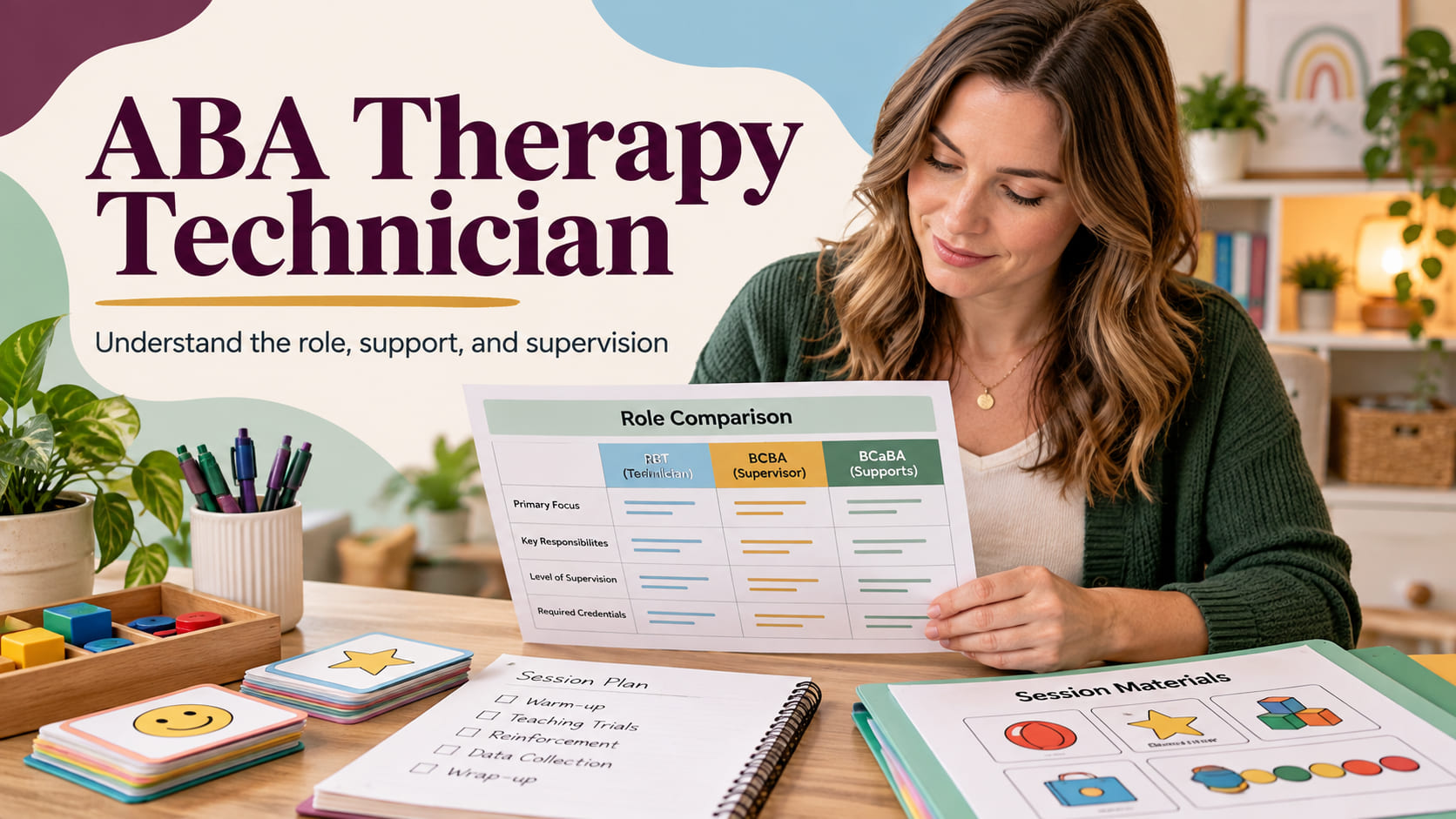
An ABA therapy technician is typically part of a supervised care team that implements assigned services, observes responses, records defined data, communicates relevant information, and asks for direction. The technician’s role is important but not interchangeable with the supervisor, analyst, caregiver, teacher, or other professional. Clear scope makes collaboration safer and more useful.
Table of Contents
- ABA therapy technician: the short answer
- What the technician does
- What the supervisor does
- How the care team coordinates
- Boundaries that protect the role
- How to build useful support
- Frequently asked questions
ABA therapy technician role clarity, supervision, care-team communication, data, and boundaries
ABA Therapy Technician: Role Clarity, Support, and Supervision
Understand how the technician fits within a supervised care team without confusing implementation with independent clinical authority.
An ABA therapy technician is typically part of a supervised care team that implements assigned services, observes responses, records defined data, communicates relevant information, and asks for direction. The technician’s role is important but not interchangeable with the supervisor, analyst, caregiver, teacher, or other professional. Clear scope makes collaboration safer and more useful.
Titles vary across employers. Read the actual duties, credential expectations, supervision arrangement, and documentation rules instead of assuming that a title means the same thing in every setting.
ABA therapy technician: the short answer
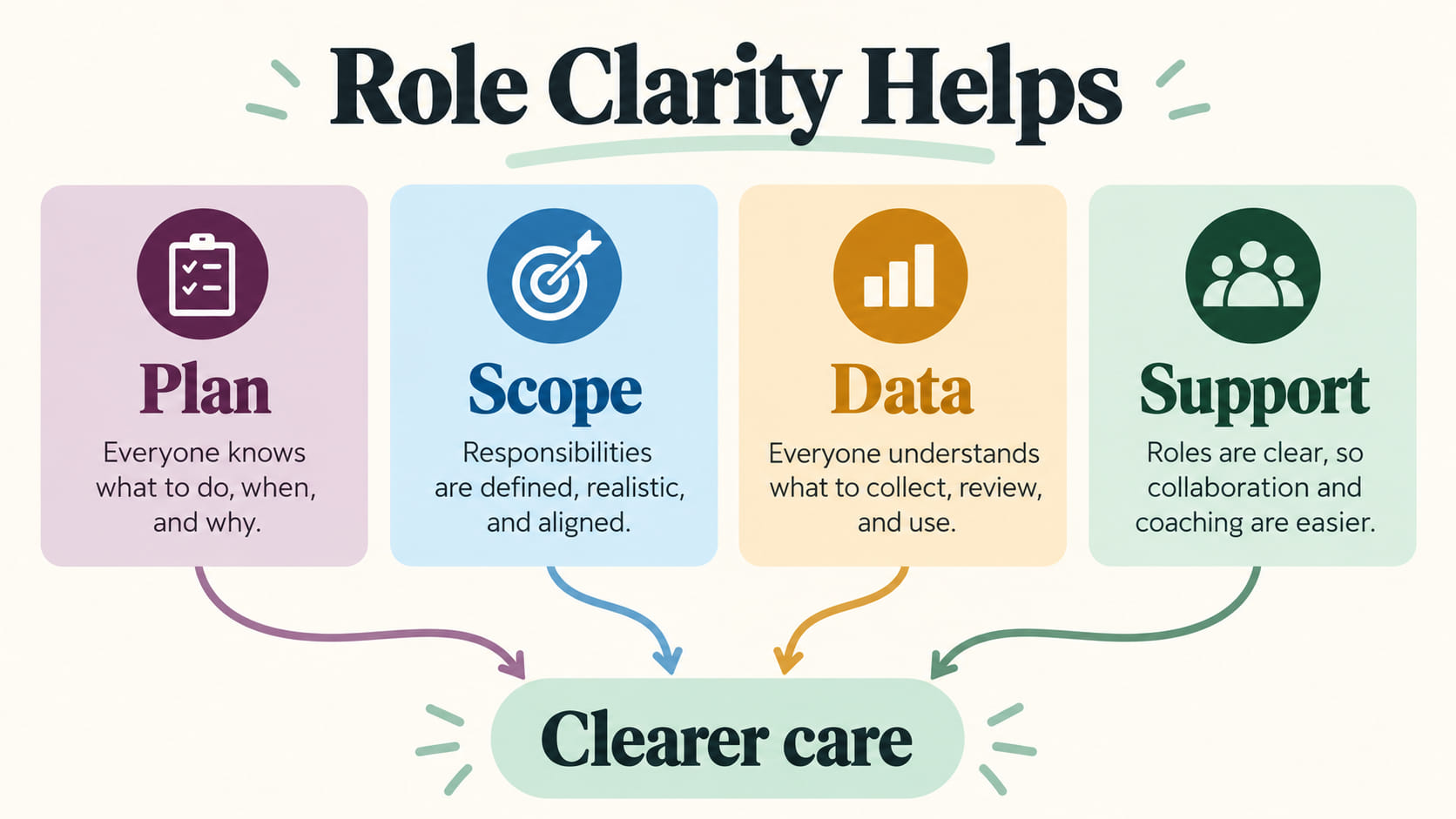
Role clarity answers four questions:
- What is the plan? Which assigned procedures, goals, materials, safety steps, and data definitions apply?
- What is the scope? Which actions can the technician perform, and which decisions require the supervisor?
- What is the evidence? What should be observed, recorded, communicated, and reviewed?
- What is the support? Who provides training, feedback, supervision, and escalation when the plan is unclear?
What the technician does
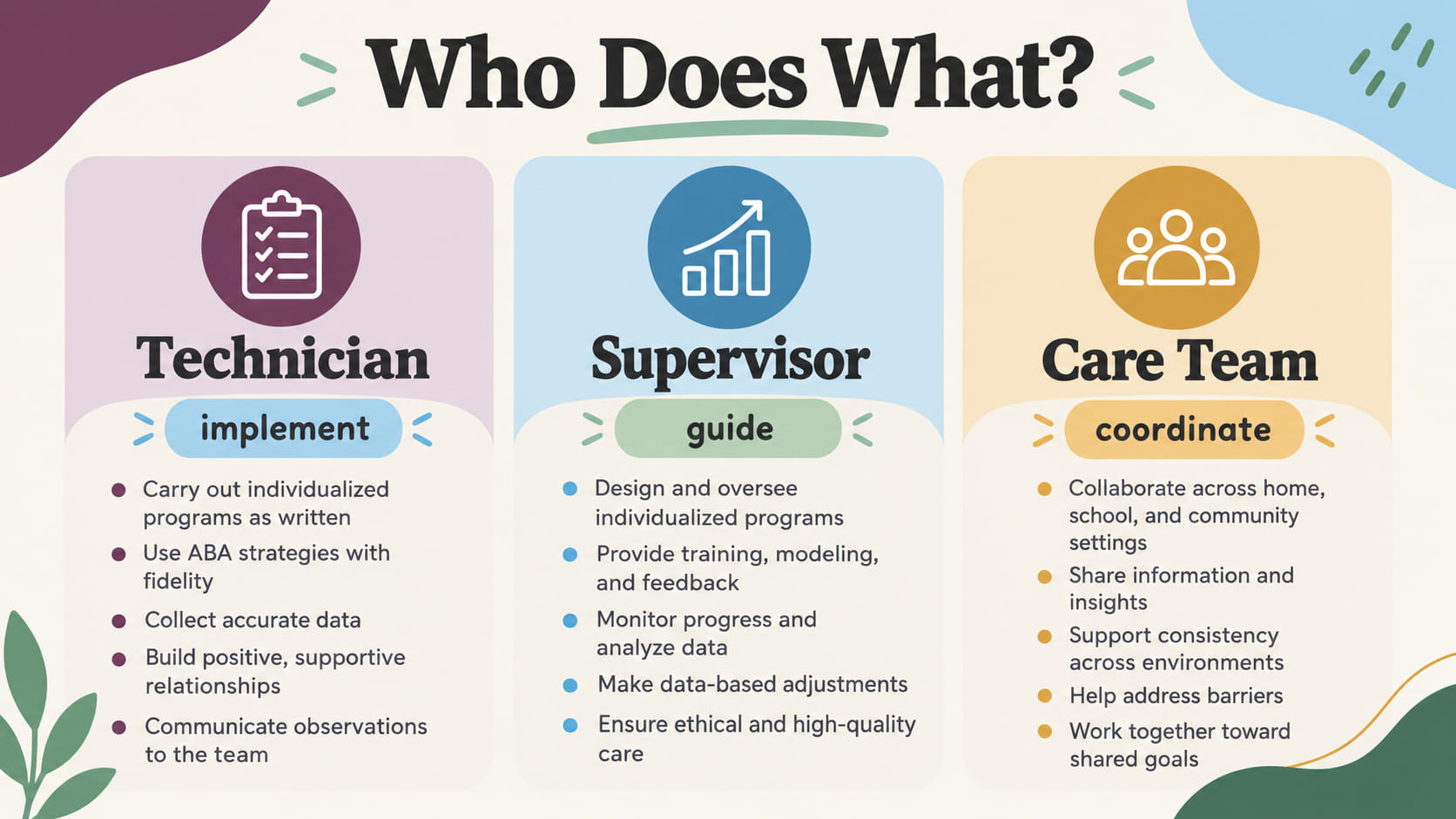
A technician may prepare materials, present assigned instructions, implement prompting or reinforcement procedures, support communication and skill practice, collect data, document sessions, and report observations. The exact work depends on the plan, learner, setting, employer, competence, and supervision.
Implementation includes fidelity and judgment about when to ask for help. If a material is missing, the learner responds differently, a safety issue appears, or the written instruction conflicts with the setting, the technician should report the facts and use the approved support route.
The technician can build a strong relationship without creating a private or dual relationship. Respectful communication, predictable routines, privacy, and honest data are part of professional support.
What the supervisor does
The supervisor provides direction, training, observation or review, feedback, and decisions within the applicable professional and organizational structure. The supervisor helps clarify the plan, interpret relevant patterns, address competence, and determine whether a change needs to be considered.
A technician should not independently diagnose, design treatment, change a behavior plan, select a new intervention, or supervise another person simply because a session is difficult or the technician has experience. Report observations and ask for direction.
Good supervision is specific. It explains what was observed, what the technician should do next, what data matter, how support will be provided, and when the team will review the result.
How the care team coordinates
Caregivers, teachers, supervisors, technicians, and other professionals may each hold relevant information. Coordination should clarify which information can be shared, through which approved channel, and who makes which decisions. The technician should not promise a family a plan change or disclose another person’s private information.
Handoffs are stronger when they are concise and factual. Share what happened, what was measured, what barrier appeared, what was already done, and what follow-up is needed. Avoid labels, speculation, and unnecessary private detail.
Consistency across settings is a team goal, not a reason for one person to work outside scope. If home, school, and therapy routines differ, report the difference and ask the supervisor how the plan should address it.
Boundaries that protect the role
- Plan: follow the written procedure and ask before changing it.
- Scope: represent training and experience accurately and escalate decisions outside the role.
- Data: record what happened without copying, backdating, or hiding errors.
- Privacy: use approved systems, minimum necessary information, and professional communication.
- Relationships: ask before gifts, private contact, favors, invitations, or other boundary changes.
- Safety: use the organization’s escalation route for urgent concerns, abuse, neglect, or unsafe procedures.
How to build useful support
Before starting, ask who supervises, how observation occurs, how questions are answered between sessions, where records are stored, and what happens when the supervisor is unavailable. Write down the approved route rather than relying on memory.
During supervision, bring one concrete observation, one question, and one next step. For example: “The learner needed a verbal prompt on three opportunities after the material changed. I recorded the prompt level. Should I continue the written sequence or wait for review?” This supports data-based direction without asking the technician to solve the whole case.
After feedback, confirm what will happen next and record it through the organization’s process. If the instruction remains unclear, ask again. A calm question early is usually easier to resolve than an undocumented change later.
Support is also practical. A technician may need access to current materials, a reliable place to document, enough time to review instructions, and a clear way to pause when a safety concern arises. If those conditions are missing, describe the operational problem specifically. “I did not have the current data sheet” is more useful than “the session felt disorganized,” because the team can correct the missing tool and decide how to handle the record.
Feedback should be connected to observable performance. Instead of treating a difficult session as a judgment about the person, review the instruction, opportunity, prompt, consequence, data definition, and environmental factors. This keeps coaching focused on what can be practiced and gives the supervisor better information for future training.
For families and learners, the clearest communication is usually predictable and modest: explain the technician’s assigned role, avoid promising outcomes, protect confidential information, and identify the supervisor for clinical questions. A technician can be warm and responsive while still directing plan changes and specialized questions to the person responsible for them.
When a handoff is needed, use the same structure each time: current goal, relevant observation, data or example, immediate safety status, and the question that needs an answer. This makes the technician’s contribution visible without overstating authority. It also helps the next team member locate the important information quickly.
Frequently asked questions
What does an ABA therapy technician do?
The technician implements assigned services under supervision, collects defined data, documents sessions, communicates observations, protects privacy and dignity, and asks for direction when a task is unclear or outside the role.
Is an ABA therapy technician the same as a behavior analyst?
No. Titles and duties vary, but a technician’s assigned implementation role should not be treated as independent behavior-analytic assessment, treatment design, or supervision.
Who supports the technician?
The responsible supervisor and organization should provide direction, training, observation or review, feedback, records, and escalation. The broader care team may coordinate information within privacy limits.
What if a technician disagrees with the plan?
Report the concern respectfully with the relevant facts, follow safety procedures, and ask for supervisor review. Do not silently change the plan or create a private workaround.
Role reminder: This is educational role information, not individualized clinical, credentialing, employment, legal, or treatment advice. Follow the assigned plan and ask the responsible supervisor about a specific situation.
Official starting points: the BACB RBT page, RBT Handbook, RBT Test Content Outline, and supervision and training resources.
Ready to practice the RBT concepts you just reviewed?
Try an independent, original RBT practice resource with exam-style questions, scoring, and answer explanations.
References
- Behavior Analyst Certification Board. RBT Test Content Outline, 3rd edition.
- Behavior Analyst Certification Board. RBT Handbook.
- Behavior Analyst Certification Board. RBT Ethics Code.