

When searching for a behavior technician near me, compare location, supervision, training, privacy, role details, and the questions a provider answers before choosing.
Table of Contents
- Behavior technician near me: what a local search can and cannot tell you
- Compare the important details
- Location, schedule, and access
- Supervision and role clarity
- Training, privacy, and communication
- Verify before sharing information
- Questions to ask
- Frequently asked questions
- References
LOCAL SEARCH · PROVIDER QUESTIONS
Behavior Technician Near Me: How to Choose
Compare location, supervision, training, privacy, role details, and questions before choosing.
When searching for a behavior technician near me, compare location, supervision, training, privacy, role details, and the questions a provider answers before choosing. A map result or directory listing can help you find possibilities, but it does not prove availability, credential status, insurance acceptance, quality, fit, or outcomes.
This guide is a local-search checklist, not a recommendation of a specific provider. Services, waitlists, staffing, payer rules, and job openings change. Verify current information directly and involve the appropriate qualified professional when making a clinical or service decision.
Behavior technician near me: what a local search can and cannot tell you
Search results can show a name, address, phone number, hours, reviews, or service description. They may not show who supervises the work, whether the information is current, how privacy is handled, what role a technician performs, or whether a provider is accepting new clients or applicants.
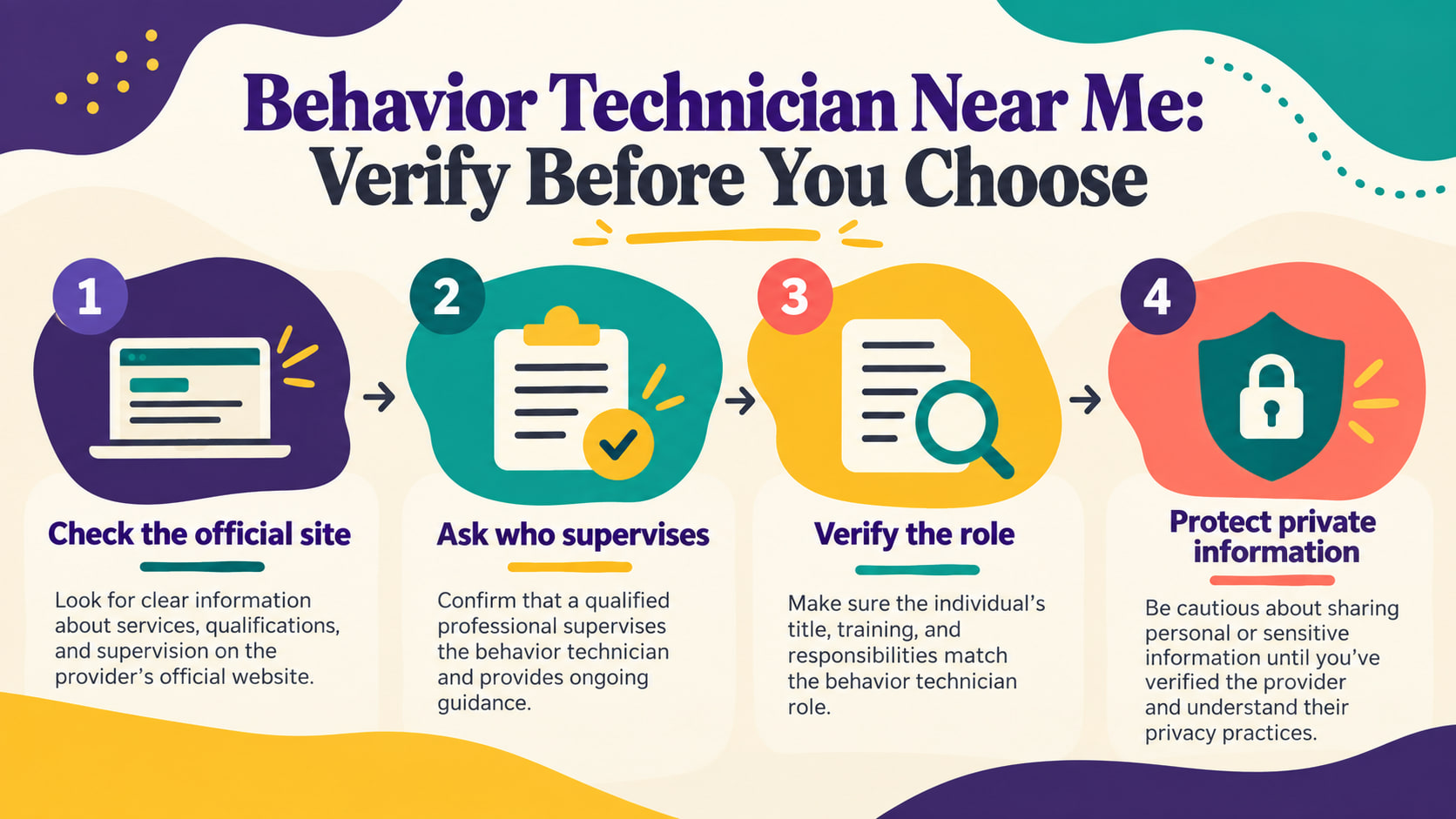
Read the official website and contact information carefully. Look for a current explanation of services, the responsible professional team, how inquiries are handled, and a privacy notice. If the page makes a credential claim, verify the status through the appropriate official route rather than relying only on a logo or profile badge.
Reviews can describe someone’s experience, but they are not a substitute for a current intake conversation. Do not post private client details in a public review or ask a technician to discuss another person’s services.
Compare the important details
Use the same questions for each option so the comparison is fair:
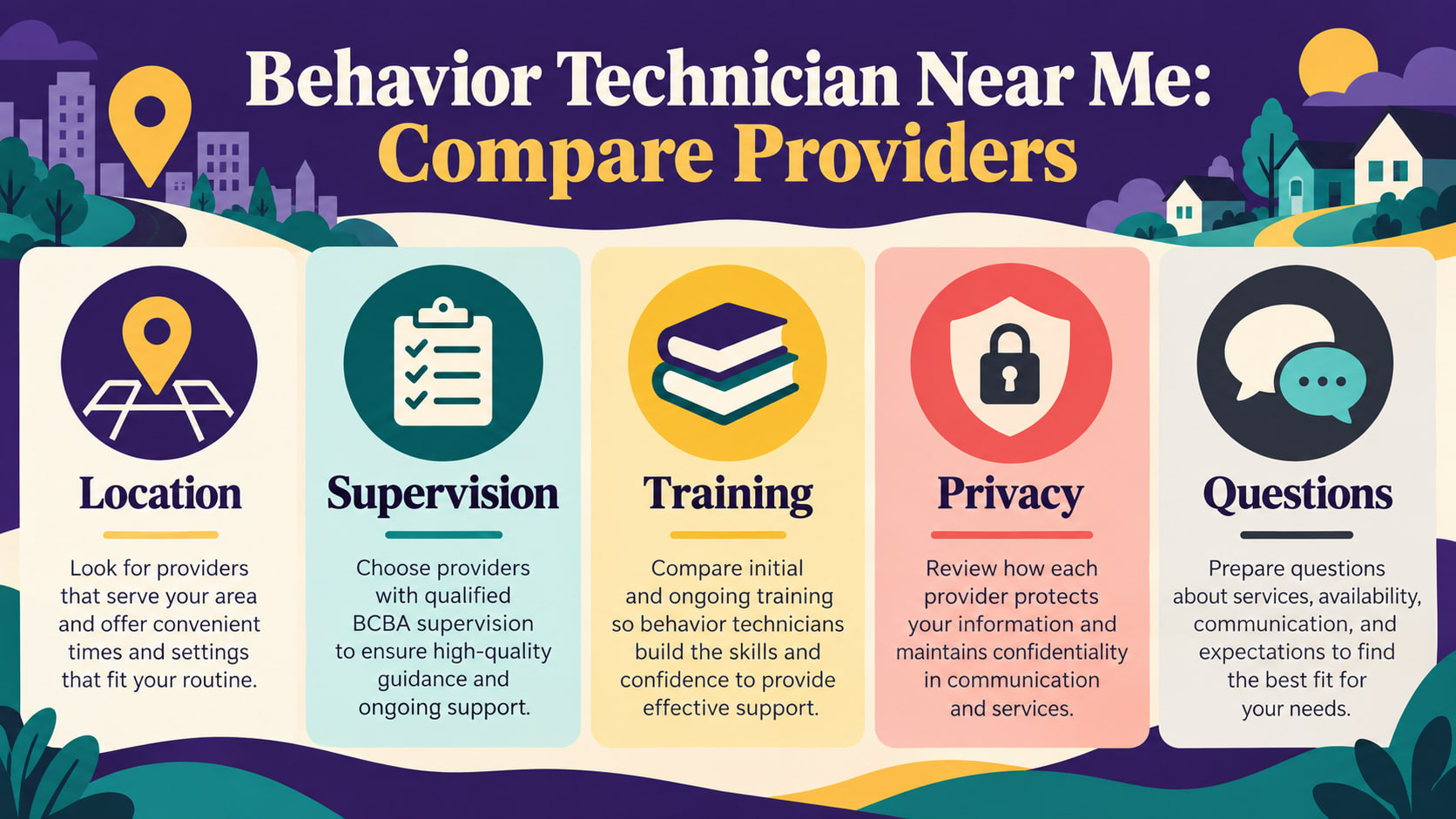
- Location: Where do services or training occur, and how are travel, parking, remote contact, or cancellations handled?
- Supervision: Who directs the plan, answers questions, reviews data, and handles safety concerns?
- Training: What orientation, competency review, or continuing support is provided?
- Privacy: Which channels and records are used for sensitive information?
- Questions: Does the provider answer clearly and avoid promising more than it can verify?
For a job search, ask about duties, pay, training, scheduling, and supervision. For a service search, ask about intake, scope, staffing, communication, consent, and the responsible professional. The phrase “behavior technician” does not by itself answer either set of questions.
Location, schedule, and access
Nearby is useful only if the arrangement is workable. Ask whether services occur in a center, home, school, community, or another setting; how often; for how long; and what happens when the schedule changes. Confirm whether a local listing reflects the current service area or an old address.
Ask about accessibility, language support, communication preferences, transportation, and the process for requesting an accommodation. Do not share more personal or medical information during an initial inquiry than the provider needs to route the question.
Waitlists and staffing can change quickly. Request the date of the answer and ask how the provider will contact you if an opening appears. Keep records in a private place and avoid posting identifying information while looking for help.
Supervision and role clarity
A technician implements assigned procedures under an approved plan and supervision process. Ask who is responsible for the clinical direction, how data are reviewed, how caregivers or staff communicate concerns, and what happens when the written procedure does not fit the situation.
Do not treat a technician as the person who independently diagnoses, selects goals, changes a treatment plan, or promises an outcome. A good provider can explain how the technician, supervisor, family, school, and other authorized professionals communicate.
If you are applying for a job, ask who supervises your work before accepting a role. If you are seeking services, ask who will answer clinical questions. If the answer is vague, pause before sharing sensitive information or agreeing to a new arrangement.
Training, privacy, and communication
Ask what training is required, who provides it, whether it is paid for a job, and how readiness is checked. A short orientation is not automatically a credential or proof of independent competence. Compare the employer’s information with current official requirements when a certification is mentioned.
For privacy, ask which phone number, portal, email, or record system is approved. Do not send a full record, password, photograph, or diagnosis to an unverified contact. Verify the organization through information you find independently if a message creates urgency or requests unusual access.
Good communication is specific. Ask who calls back, what information is needed, what the next step is, and when you should expect an answer. Save the written reply and update it if the provider says the service, staff, or availability has changed.
Compare the experience of contacting each option as well as the advertised service. A clear response should explain limits, fees or scheduling questions, supervision, and privacy without pressuring you to disclose everything immediately. If a provider cannot answer a basic role or contact question, that is useful information for your comparison.
Keep a short comparison note with the date, contact route, answer, and next step. Avoid copying private records into that note. If your situation changes, update the questions rather than assuming an old answer still describes the current staff, availability, or process.
Verify before sharing information
Before an intake or job conversation, check the official domain, contact details, responsible professional, and purpose of the request. Share the minimum necessary information through the approved channel. A legitimate provider should not need your password, a one-time security code, or unrelated client information.
Keep the distinction between a lead and a verified choice. A listing is a lead. A direct conversation clarifies fit. Official verification and written policy support trust. Your own informed decision should consider the current facts and the needs of the person receiving services.
Questions to ask
- Are you accepting new clients, applicants, or trainees right now?
- Who supervises the behavior technician and how are questions handled?
- What training, competency review, and privacy process apply?
- What setting, schedule, duties, and communication channels are involved?
- Which information do you need now, and how will it be protected?
- What is the next step if the plan or role is unclear?
Frequently asked questions
Does “near me” mean the provider is available?
No. Search results can be outdated. Verify current service area, staffing, waitlist, and intake or hiring status directly.
Can a behavior technician answer every clinical question?
No. Technicians work within assigned procedures and supervision. Ask the responsible qualified professional for clinical direction.
How can I protect privacy during a local search?
Use official contact routes, share the minimum necessary information, avoid public posts with identifying details, and never send passwords or security codes.
What if a listing promises guaranteed results?
Treat the claim cautiously. Ask for verifiable information about services, supervision, requirements, and outcomes without accepting a guarantee.
Source note: Review current official credential information, provider policies, privacy instructions, and supervision guidance. This article is educational and does not provide individualized legal, clinical, employment, or credentialing advice.
Ready to practice the RBT concepts you just reviewed?
Try an independent, original RBT practice resource with exam-style questions, scoring, and answer explanations.
References
- Behavior Analyst Certification Board. RBT Test Content Outline, 3rd edition.
- Behavior Analyst Certification Board. RBT Handbook.
- Behavior Analyst Certification Board. RBT Ethics Code.