

Home-based behavior technician programs can mean online training, employer onboarding, university coursework, or a package that combines education with support.
Table of Contents
- What home-based behavior technician programs may offer
- How to read reviews carefully
- Check the current curriculum
- Look for practice and feedback
- Compare access, privacy, and price
- Verify the RBT pathway
- Use a comparison scorecard
- Frequently asked questions
- References
RBT CAREER · TRAINING COMPARISON
Home-Based Behavior Technician Programs: How to Compare Reviews
A practical scorecard for checking curriculum, practice, instructor access, privacy, price, and the current RBT pathway before enrolling.
Home-based behavior technician programs can mean online training, employer onboarding, university coursework, or a package that combines education with support. Reviews can help you find questions to ask, but a star rating alone cannot show whether a program is current, practical, private, or aligned with the requirements that apply when you apply.
Use a scorecard instead of accepting a “top” label at face value. Check the current curriculum, hands-on practice, instructor access, assessment route, privacy, total price, and what the program does—and does not—provide. The current BACB materials and the provider’s written terms should control your decision.
What home-based behavior technician programs may offer
A home-based course may use recorded lessons, live meetings, readings, quizzes, discussion boards, simulations, or a combination. “Home-based” describes the learning location, not the quality or credential outcome. Ask whether the program is self-paced, instructor-led, or employer-supported and how learners get help when a concept or procedure is unclear.
Also separate a 40-hour training course from the entire RBT credentialing pathway. Training, competency assessment, application steps, examination, supervision, and renewal are related but distinct. A provider should explain which step its product covers and which steps require another qualified person or official process.
How to read reviews carefully
Reviews are useful evidence only when you understand what they measure. Look for the date, number of reviewers, review source, course version, and whether the comment concerns teaching, customer service, platform access, exam preparation, or employment help. A positive comment about fast videos does not prove that a course gives enough practice with data collection.
Be cautious with rankings that use undefined “best,” “top,” or “highest-rated” language. Ask how the list was made and whether the reviewer received compensation, affiliate revenue, or a free course. A ranking can be a starting point, not a certification or BACB endorsement.
Read negative reviews for patterns rather than isolated complaints. Repeated reports about missing instructor access, expired logins, unclear refunds, or outdated material deserve a written question before payment. Save the provider’s answer.
Separate a review of the learning experience from a review of the credential outcome. A learner may enjoy the platform while still needing more practice, a different assessment route, or additional supervision. Another learner may report a difficult course because it required careful data work. Look for details that help you judge fit, not a single universal verdict.
Check the current curriculum
Compare the course with the current official RBT training requirements and curriculum outline. Confirm the version date, content areas, instructional hours, instructor qualifications, completion documentation, and how the provider handles updates. A course built around an older edition may not be the right course for a current application.
Do not judge coverage by lesson count alone. Ask whether the course teaches observable definitions, measurement, documentation, skill acquisition, behavior reduction, ethics, supervision, and professional boundaries in a way a beginner can use. More videos do not automatically mean better preparation.
Look for practice and feedback
Behavior-technician work requires more than recognizing vocabulary. Look for practice with operational definitions, data forms, prompting, reinforcement, objective notes, privacy decisions, and communication with supervisors. Practice can be simulated, but the learner should know what a correct response looks like and how feedback is delivered.
Ask whether an instructor or qualified trainer reviews work, how quickly questions are answered, and whether learners can repeat a skill after correction. A quiz score may show recall; it does not by itself prove competence in a live service setting.
For home study, accessibility also matters. Check captions, transcripts, playback controls, mobile access, downloadable notes, and the process for requesting an accommodation. These features do not replace instructional quality, but they can determine whether the course is usable for you.
Compare access, privacy, and price
Write down the total cost, taxes, payment plan, refund window, access period, renewal or extension fees, required materials, and assessment fees. Ask whether the advertised price includes only a course or also includes a competency assessment, application help, supervision, or exam preparation.
Review privacy and technology terms. The platform should explain how accounts, recordings, quiz data, and support messages are handled. Never upload client names, photos, diagnoses, session notes, or identifiable data to a training platform unless an authorized process explicitly requires it and protects the information.
Verify the RBT pathway
Use current BACB sources to confirm what applies to your application date. Ask the provider whether its course is intended to satisfy the current training requirement, who is responsible for the competency assessment, and how the provider documents completion. Do not rely on a badge, affiliate page, or marketing phrase that does not identify the applicable official requirement.
A program cannot promise an RBT credential, exam pass, job, or supervision outcome. If a provider says it offers job placement or supervision, request the written scope, eligibility conditions, location limits, fees, and cancellation process. Keep the course decision separate from the decision about an employer or clinical supervisor.
Use a comparison scorecard
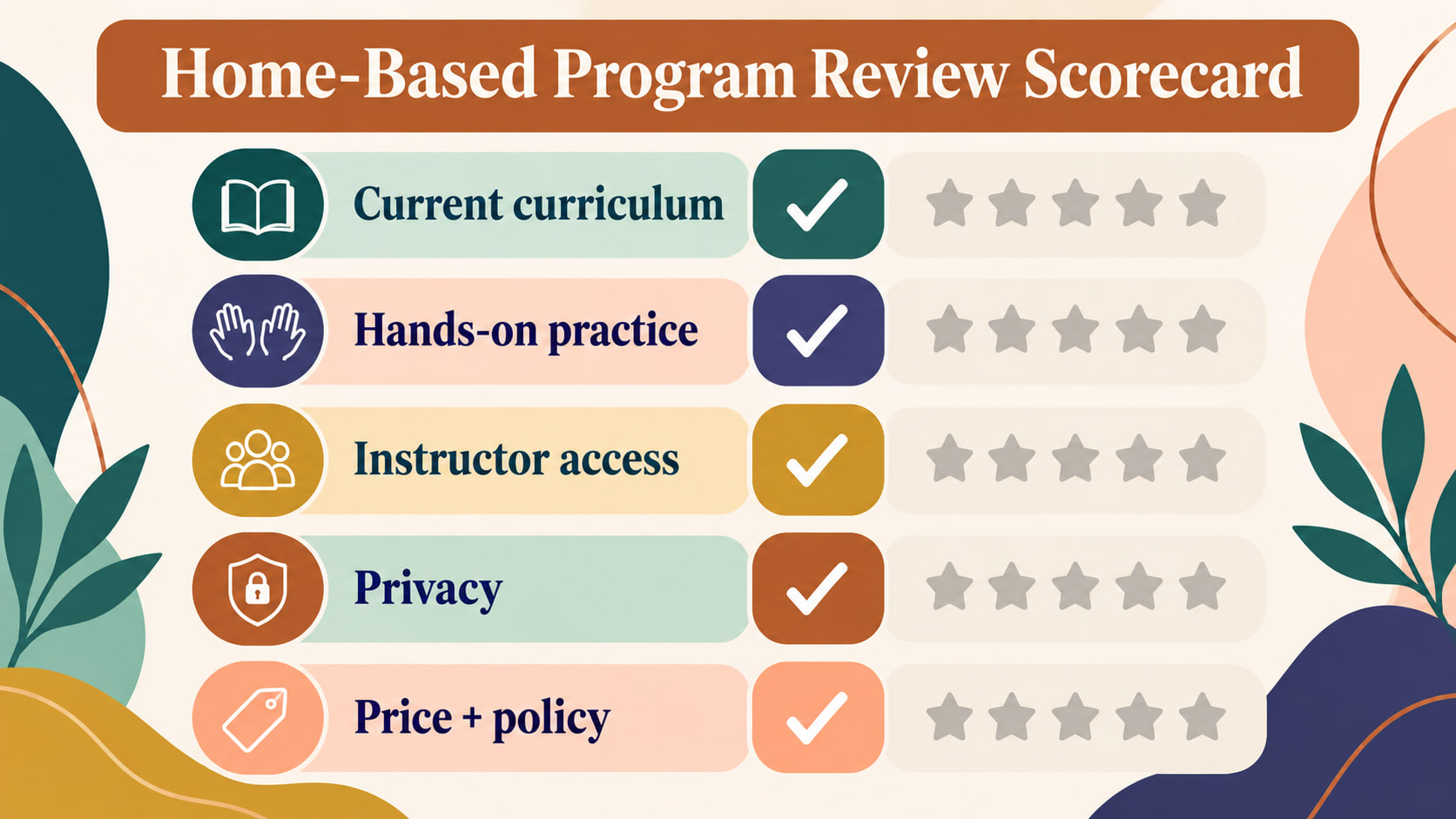
Score each program on evidence, not enthusiasm:
- Current curriculum: version and official source are visible.
- Hands-on practice: examples, simulations, or exercises connect concepts to work.
- Instructor access: a qualified person answers questions and gives feedback.
- Privacy: platform and study instructions protect client information.
- Price and policy: total cost, access, refund, and assessment limits are clear.
Mark any item that cannot be verified as “question,” not “yes.” Contact the provider and compare the answer with official sources. The best choice is the program that fits your needs and has transparent evidence—not necessarily the one with the loudest ranking.
Keep your comparison notes after enrollment. If the delivered course differs from the description, you will have a clear record of the promised curriculum, access, support, and policy. Do not upload private client information to prove a complaint or request help before final enrollment.
Frequently asked questions
What makes a home-based behavior technician program good?
Look for current content, relevant practice, qualified feedback, clear privacy and price policies, and an honest explanation of which credentialing steps the program covers.
Should I trust a top-reviewed program?
Use the review as a lead, then check review methodology, course date, source citations, instructor access, and written terms. “Top-reviewed” is not an official credential.
Can an online course replace supervision?
Do not assume so. Training, competency assessment, supervision, and employment support are distinct. Confirm the current pathway and who is responsible for each step.
What should I ask before paying?
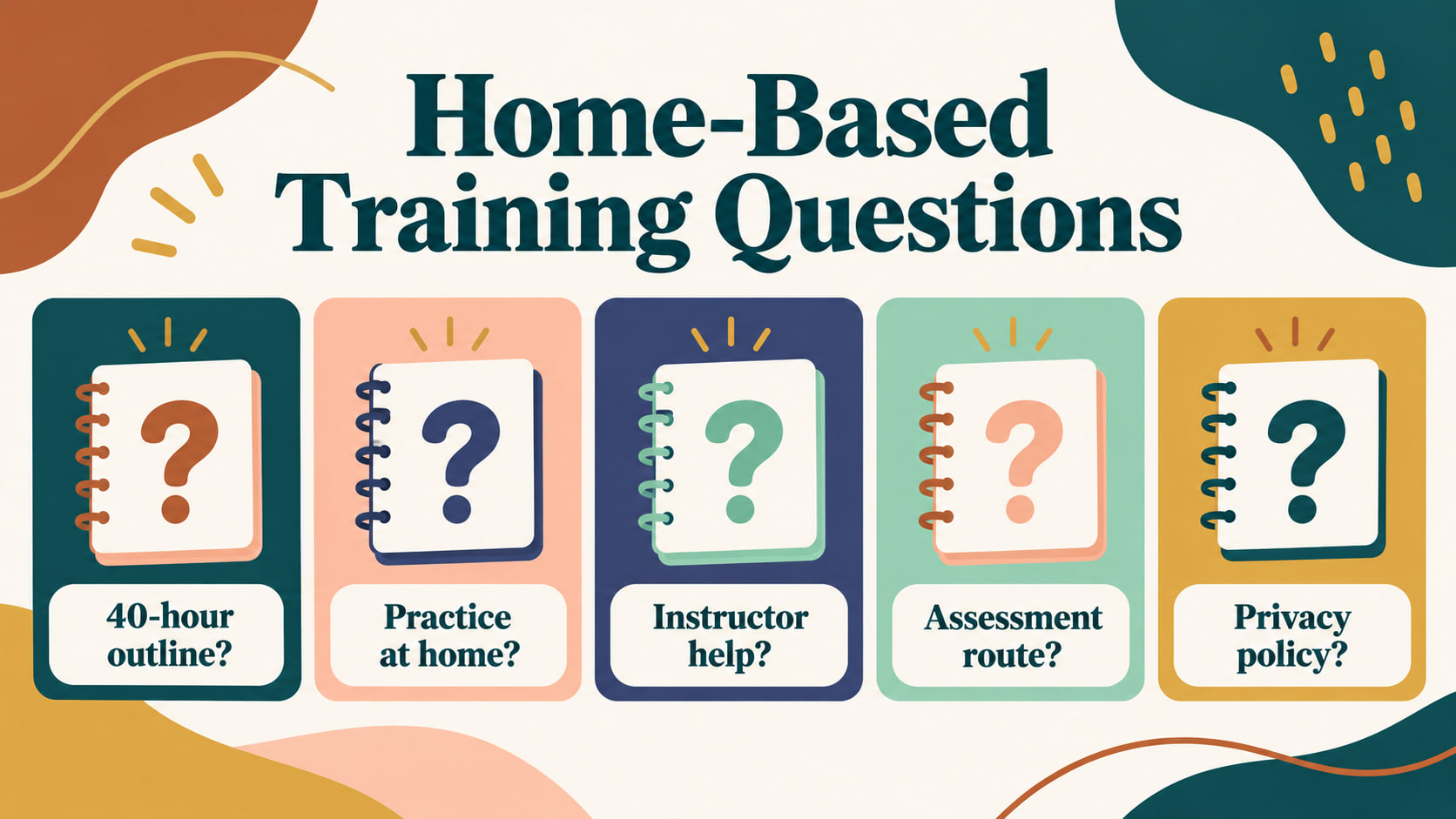
Ask about curriculum version, practice, instructor support, total cost, access period, refund terms, privacy, assessment route, and any claim about certification or job placement.
Source note: Review the current BACB RBT Handbook, RBT training requirements and curriculum outline, provider terms, privacy policy, and supervisor or employer direction for your situation. This article is educational and does not provide individualized legal, clinical, employment, or credentialing advice.
Ready to practice the RBT concepts you just reviewed?
Try an independent, original RBT practice resource with exam-style questions, scoring, and answer explanations.
References
- Behavior Analyst Certification Board. RBT Test Content Outline, 3rd edition.
- Behavior Analyst Certification Board. RBT Handbook.
- Behavior Analyst Certification Board. RBT Ethics Code.