

An assistant behavior technician may support behavior-analytic services by preparing materials, implementing assigned steps, recording defined data, and communicating observations. Because job titles vary, the phrase assistant behavior technician does not automatically establish a universal credential, scope, or level of authority. The actual duties, training, supervision, and workplace policy matter.
Table of Contents
- Assistant behavior technician: the short answer
- What the role may support
- How support and supervision work
- Scope and boundaries to clarify
- Questions to ask before starting
- How to build dependable performance
- Frequently asked questions
Assistant behavior technician duties, support, scope, supervision, documentation, and role questions
Assistant Behavior Technician: Duties, Support, and Scope
Understand what the title may mean, what to clarify before starting, and how to contribute safely within supervision.
An assistant behavior technician may support behavior-analytic services by preparing materials, implementing assigned steps, recording defined data, and communicating observations. Because job titles vary, the phrase does not automatically establish a universal credential, scope, or level of authority. The actual duties, training, supervision, and workplace policy matter.
Some organizations use “assistant” to describe an entry-level employee, a classroom or therapy support role, a trainee, or a person who works alongside a credentialed technician. Others may use a different title for similar work. Read the position description closely and ask how the organization separates support tasks, credentialed tasks, and decisions reserved for a supervisor or other professional.
Assistant behavior technician: the short answer
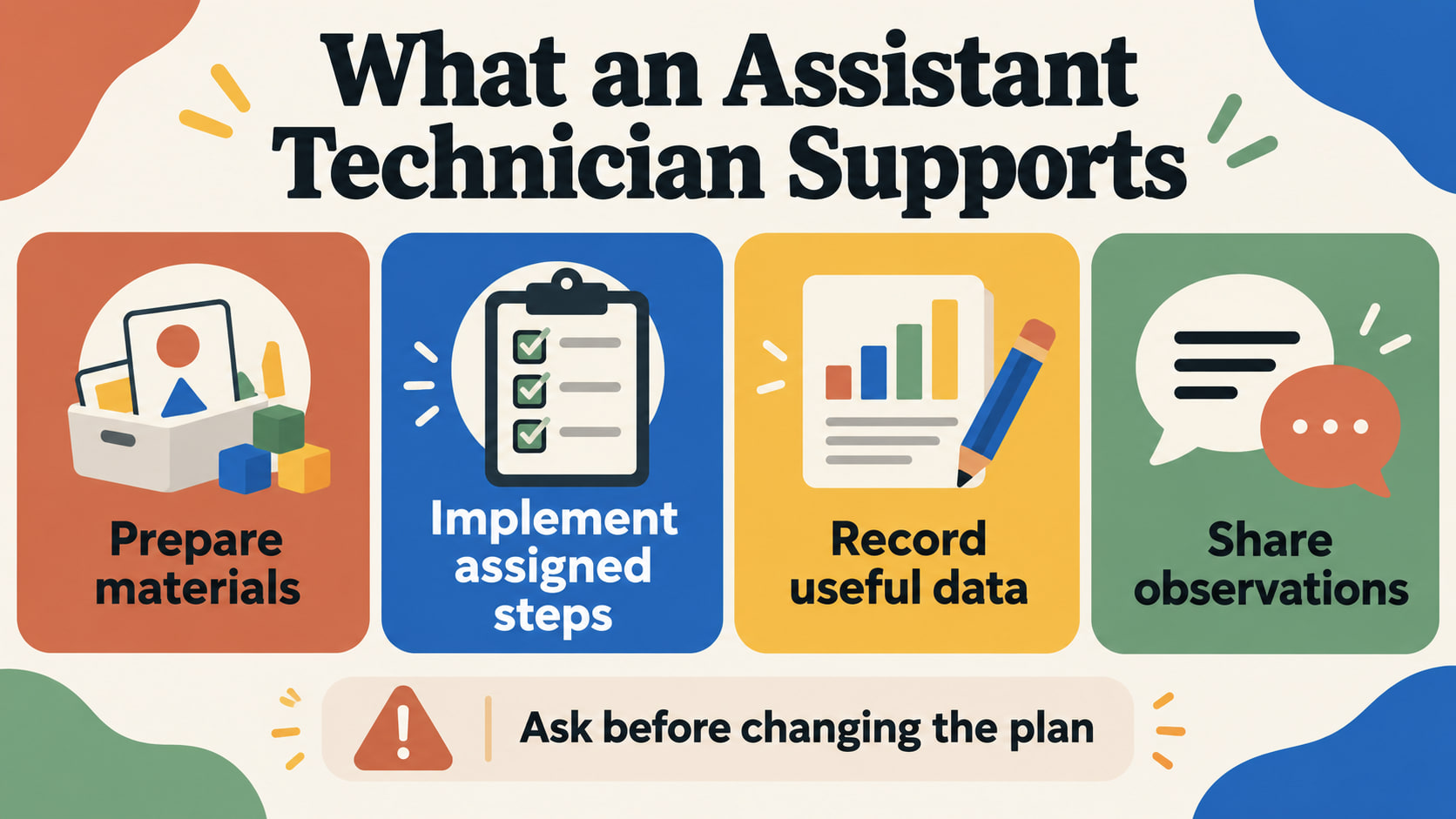
The role usually centers on supporting the plan rather than creating the plan. An assistant may help arrange the environment, prepare materials, follow assigned instructions, support communication or skill practice, collect defined information, document what occurred, and report barriers. The person’s exact responsibilities should match their training, competence, assignment, setting, and supervision.
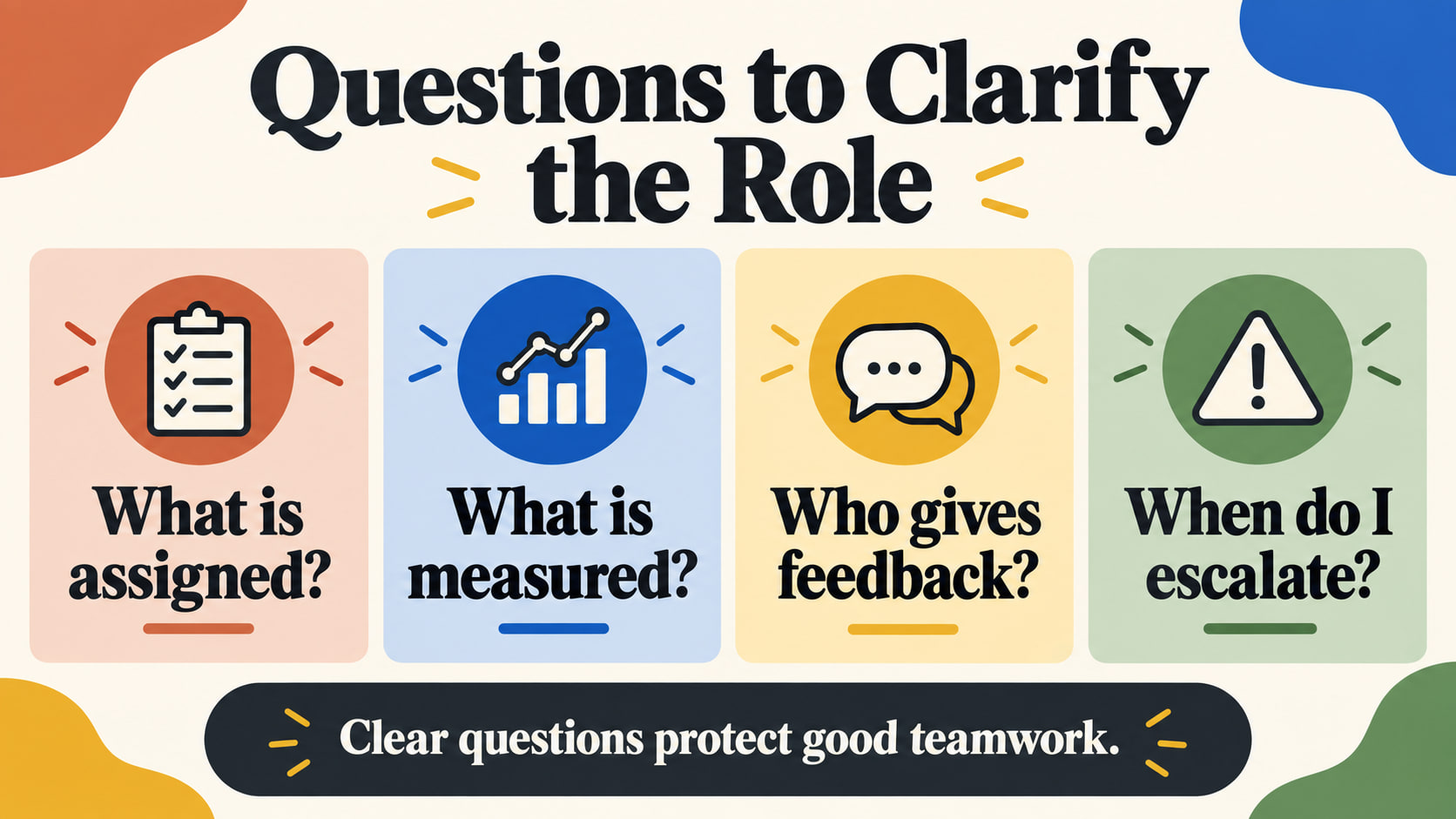
A good starting question is: “What am I expected to do, what am I not authorized to decide, and who answers questions when the written instruction is unclear?” Asking this early protects the learner and gives the assistant a practical route for getting help.
What the role may support
Preparation can include organizing approved materials, checking that the current instructions are available, preparing a workspace, and confirming the data form or system. Preparation is not a minor task. Missing materials or an outdated form can affect implementation and documentation, so report the problem instead of quietly substituting a new procedure.
Assigned implementation may involve presenting instructions, using approved prompting or reinforcement steps, supporting communication, practicing a defined skill, or helping maintain a predictable routine. Implementation should follow the current plan and the person’s training. If the learner’s response changes or the assistant cannot carry out a step safely, pause and use the approved support route.
Data and documentation should describe what was observed using the organization’s definitions. Avoid labels or guesses that are not part of the measurement system. If a mistake is made, follow the organization’s correction process. Never copy a prior record, backdate a note, or omit a relevant barrier just to make the session appear smooth.
Communication means sharing relevant facts through approved channels. A useful update can identify the goal or activity, the response that occurred, the prompt or support used, the data recorded, and the question that needs review. Keep private information limited to the people and systems authorized to receive it.
How support and supervision work
Before working independently on any assigned task, confirm who provides instruction, how competency is checked, how observation happens, and how questions are answered between sessions. The responsible supervisor or organization should make the role and escalation route understandable. A short written checklist can help an assistant remember who to contact and what information to bring.
Supervision is not only a meeting on a calendar. It can include direct observation, modeling, practice, feedback, review of documentation, and a decision about what the assistant is ready to do next. Feedback is strongest when it points to an observable action, such as the timing of a prompt, the accuracy of a data entry, or the completeness of a handoff.
If the supervisor is unavailable, follow the organization’s procedure. Do not turn a support role into an independent clinical role by making an unapproved plan change. Knowing when to pause and ask for direction is a professional strength, not a failure.
Scope and boundaries to clarify
Titles do not answer every scope question. Clarify whether the position requires a credential, is part of a credential pathway, or is an uncredentialed support position. Ask what training is provided, what tasks require demonstrated competence, and which decisions must be referred to the supervisor.
- Plan changes: report a concern and ask for review before changing targets, procedures, prompts, consequences, or safety steps.
- Clinical interpretation: share observations without presenting a diagnosis or treatment recommendation.
- Family communication: be respectful and clear, but refer plan, progress, and clinical questions to the responsible professional.
- Privacy: use approved records and communication channels and share only what is needed for the work.
- Relationships: follow policies about gifts, personal contact, social media, transportation, and other boundary risks.
- Safety: use the immediate escalation route for injury, abuse, neglect, unsafe instructions, or an urgent change in risk.
Questions to ask before starting
A short conversation can prevent months of confusion. Ask for the written job duties and then ask:
- What tasks will I perform during a typical shift, and which tasks are outside my role?
- Who is the supervisor, and how do I request feedback or clarification?
- What training and competency checks are required before I work on a task?
- What data definitions, documentation systems, and privacy rules apply?
- What should I do if the plan, materials, setting, or safety conditions do not match?
- Which credential or employment requirements are official, and which are employer preferences?
How to build dependable performance
Choose one observable skill at a time. For example, practice setting up materials before the session, recording the defined measure promptly, or giving a concise handoff. Ask for a model, practice with feedback, record the correction, and review whether the skill is consistent across the situations that matter to the role.
Track progress through evidence rather than a label. Examples include completed training, supervisor feedback, accurate records, consistent use of assigned procedures, and clear escalation when a task is outside scope. Experience can help, but it does not replace current instruction or a competency check for a new responsibility.
When discussing advancement, ask what “assistant” and “technician” mean in that organization, what duties change at each level, and how supervision continues. Compare those answers with current official credential materials if the position involves an RBT pathway. This keeps career decisions grounded in the actual role rather than an attractive title.
Frequently asked questions
Is an assistant behavior technician the same as an RBT?
Not automatically. An assistant behavior technician may be an employer title or support role, while RBT is a specific credential with current requirements. Check the person’s actual credential, assignment, supervision, and employer policy.
What does an assistant behavior technician do?
Possible duties include preparing materials, implementing assigned steps, supporting communication or skill practice, collecting defined data, documenting sessions, protecting privacy, and reporting observations or barriers. Duties vary by organization and setting.
Can an assistant change the behavior plan?
Experience or a job title does not automatically authorize a plan change. Report the concern and ask the responsible supervisor for direction, following the organization’s safety and escalation procedures.
What should I clarify before accepting the role?
Clarify duties, credential expectations, training, competency checks, supervision, documentation, privacy, pay and schedule policies, and the route for urgent questions. Ask for important expectations in writing.
Role reminder: This is educational role and career information, not individualized clinical, credentialing, employment, legal, or treatment advice. Confirm the actual duties with the employer and ask the responsible supervisor about a specific situation.
Official starting points: the BACB RBT page, RBT Handbook, RBT Test Content Outline, and supervision and training resources.
Ready to practice the RBT concepts you just reviewed?
Try an independent, original RBT practice resource with exam-style questions, scoring, and answer explanations.
References
- Behavior Analyst Certification Board. RBT Test Content Outline, 3rd edition.
- Behavior Analyst Certification Board. RBT Handbook.
- Behavior Analyst Certification Board. RBT Ethics Code.