
A behavior analyst technician certification search can combine two different professional pathways. An RBT is a technician credential for implementing assigned services under supervision, while a BCBA is a higher-level behavior-analytic credential with different education, examination, experience, and professional responsibilities. Compare the current official requirements before choosing a path.
Table of Contents
- Behavior analyst technician certification: the short answer
- What the RBT pathway represents
- What the BCBA pathway represents
- Compare the roles
- Choose a pathway without guessing
- Questions to ask before enrolling
- Common certification mistakes
- Frequently asked questions
BCBA and RBT roles, certification pathways, supervision, responsibilities, and next steps
BCBA RBT Certification: How the Roles and Pathways Differ
Compare the credentials by role, requirements, supervision, and responsibility before choosing your next step.
Behavior analyst technician certification searches can combine two different professional pathways. An RBT is a technician credential for implementing assigned services under supervision, while a BCBA is a higher-level behavior-analytic credential with different education, examination, experience, and professional responsibilities. Compare the current official requirements before choosing a path.
The exact steps can change, and a course provider’s marketing page is not the authority for either credential. Start with the current BACB pages and handbook, then compare the role to your education, time, budget, supervision access, and long-term goal.
Behavior analyst technician certification: the short answer
| Question | RBT | BCBA |
|---|---|---|
| What kind of role? | Technician implementation under supervision. | Higher-level behavior-analytic professional role with broader responsibilities. |
| What does training do? | Supports the applicable technician pathway steps. | Supports a separate education, experience, examination, and credential pathway. |
| Can one replace the other? | No. | No. |
| What controls the process? | Current BACB RBT materials and employer process. | Current BACB BCBA materials and applicable process. |
What the RBT pathway represents
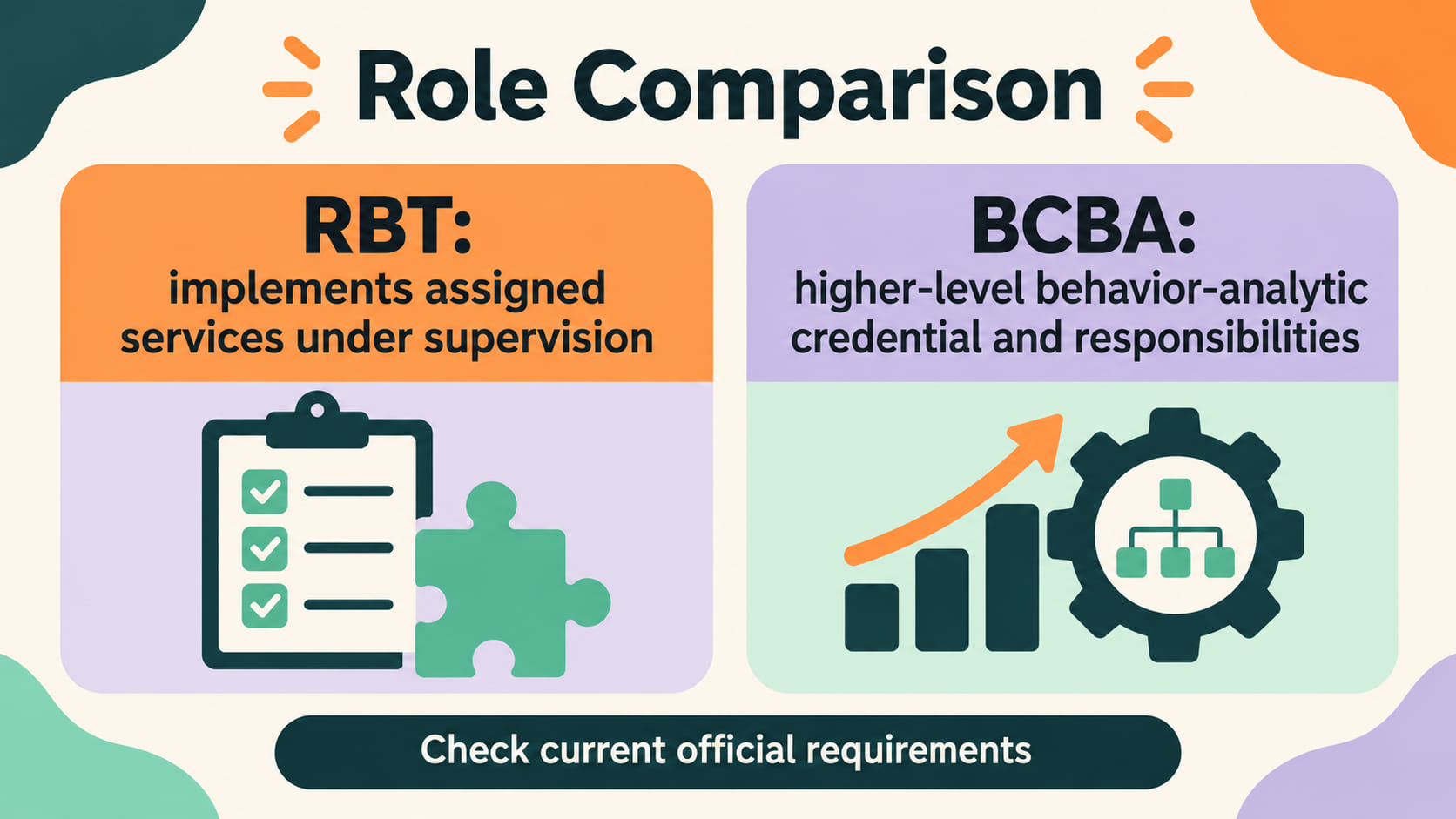
The RBT pathway prepares a technician to perform assigned behavior-analytic services under supervision. The work may include following a written plan, collecting defined data, implementing prompting or reinforcement procedures, supporting skill acquisition or behavior reduction, documenting sessions, protecting privacy, and communicating observations.
An RBT is not expected to independently diagnose, design a treatment plan, change a procedure because it seems convenient, or supervise another person simply because the technician has experience. Role clarity and supervision are part of competent practice.
RBT requirements are not just a training certificate. Depending on the current process, candidates may need to complete several separate steps involving eligibility, training, competency, application, examination, supervision, and maintenance. Verify the current sequence instead of relying on a saved checklist.
What the BCBA pathway represents
The BCBA pathway is a different professional credential with broader behavior-analytic responsibilities and its own education, experience, examination, and maintenance requirements. The current BACB BCBA page and handbook materials should be used to confirm the path that applies to the candidate.
A BCBA may have responsibilities involving assessment, behavior-analytic decision-making, program development, supervision, training, data review, and coordination, depending on the role and setting. The exact duties still depend on the employer, service model, applicable law, and the professional’s competence.
Do not assume that completing RBT steps automatically credits every BCBA requirement. If you want to progress, read the current BCBA eligibility and pathway information and ask the program or employer how your actual education and experience fit.
Compare the roles
The most useful comparison is practical:
- RBT implementation: carry out assigned procedures, record defined data, communicate observations, and seek direction.
- BCBA-level responsibilities: may include broader assessment, program, supervision, and behavior-analytic responsibilities within competence and applicable requirements.
- RBT supervision: the technician needs access to qualified direction and feedback.
- BCBA accountability: a credential does not eliminate the need to follow ethics, competence, documentation, privacy, and supervision standards.
Job titles can still be misleading. A person with a BCBA credential may work in a role with limited duties, while an RBT may have years of valuable implementation experience. Compare the actual role, decision authority, supervision, and requirements rather than using a title as a complete description.
Experience also travels differently between the pathways. RBT experience can demonstrate careful implementation, measurement, communication, and respect for supervision, but it does not automatically count as every BCBA eligibility component. Ask the current official organization and the program you are considering how education, fieldwork, supervision, and prior experience are evaluated.
Choose a pathway without guessing
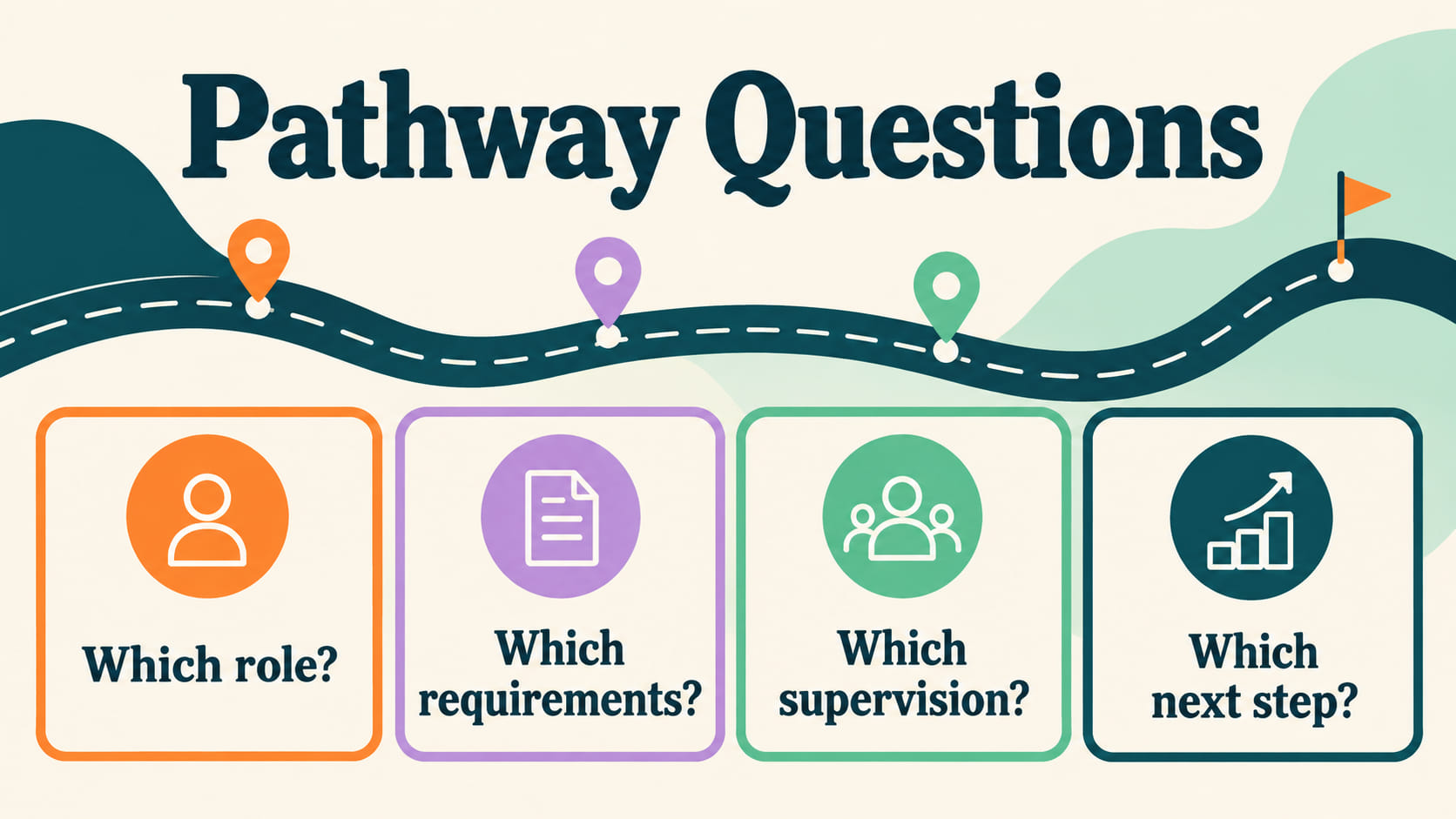
- Which role? Decide whether you want technician implementation, a future behavior-analytic professional role, or another career.
- Which requirements? Open the current official materials for that credential rather than a provider’s summary.
- Which supervision? Ask who teaches, observes, corrects, and supports your work at each stage.
- Which next step? Choose only the next verified action: compare programs, complete training, confirm eligibility, or ask the credentialing organization.
Questions to ask before enrolling
- Which credential or job does this course prepare me for?
- Which current official requirement does the course satisfy, if any?
- Who provides observation, competency feedback, and supervision?
- What does the provider not replace: application, examination, experience, supervision, or maintenance?
- What are the total cost, access period, record process, and update policy?
- Does the program promise certification, a job, a salary, or a pass result?
Common certification mistakes
- Combining the acronyms: RBT and BCBA are different credentials and roles.
- Confusing training with certification: a course is one possible step, not the whole pathway.
- Assuming experience replaces requirements: practical skill matters, but current credential rules still apply.
- Ignoring supervision: neither role is defined by a title alone; the work and support structure matter.
- Trusting guarantees: no provider can promise every approval, score, job, or pay outcome.
- Using old information: always confirm current handbook and transition materials.
Frequently asked questions
Can an RBT become a BCBA?
An RBT may choose to pursue a BCBA pathway, but the credentials are separate. Follow the current BCBA education, experience, examination, and maintenance requirements rather than assuming RBT certification completes them.
Is RBT certification required before BCBA certification?
Do not assume that it is universally required. Check the current BCBA eligibility materials and the pathway that applies to your education and experience.
Does a BCBA supervise every RBT?
RBT supervision must follow the current applicable requirements and the organization’s service structure. Verify who provides supervision and what the role includes before accepting a position.
Which credential should I choose?
Choose based on the work you want, the current official requirements, your education and time, supervision access, cost, and long-term goals. A credential provider should explain details without promising outcomes.
Role reminder: This is educational information, not credentialing, academic-admissions, employment, legal, or clinical advice. Verify the current BACB requirements for the credential and role you are considering.
Official starting points: the BACB RBT page, BCBA page, RBT Handbook, and supervision and training resources.
Ready to practice the RBT concepts you just reviewed?
Try an independent, original RBT practice resource with exam-style questions, scoring, and answer explanations.
References
- Behavior Analyst Certification Board. RBT Test Content Outline, 3rd edition.
- Behavior Analyst Certification Board. RBT Handbook.
- Behavior Analyst Certification Board. RBT Ethics Code.