

Behavior technician classes can mean a general introductory course, an employer training program, a structured curriculum, or one part of a current RBT pathway.
Table of Contents
- What behavior technician classes may include
- Review the class content
- Look for practice and feedback
- Understand assessment and supervision
- Check support and accessibility
- Read cost and policies
- Questions to ask providers
- Role boundaries and next steps
- Frequently asked questions
- References
RBT CAREER · PROGRAM GUIDE
Behavior Technician Classes: How to Choose a Strong Program
Compare course content, practice, assessment, support, policies, and the next step before you enroll.
Behavior technician classes can mean a general introductory course, an employer training program, a structured curriculum, or one part of a current RBT credentialing pathway. The label alone does not tell you what is included. Compare the syllabus, practice, assessment, supervision, support, and policies before you pay.
Use current official BACB materials for credentialing decisions. A course page can explain its own services, but it cannot guarantee certification, examination success, employment, or a particular supervision arrangement. This guide helps you evaluate the program rather than treating a marketing claim as proof.
What behavior technician classes may include
A class may teach terminology, measurement, skill acquisition, prompting, reinforcement, behavior reduction, documentation, ethics, and professional conduct. It may include videos, readings, quizzes, examples, or instructor feedback. Ask which items are included and which are optional.
Separate the stages that are often blended in advertisements: learning content, demonstrating competency, applying through the relevant process, receiving supervision, and preparing for an examination if applicable. A class can support one stage without providing the others. Look for a clear statement of what the provider does and what you must arrange independently.
Review the class content
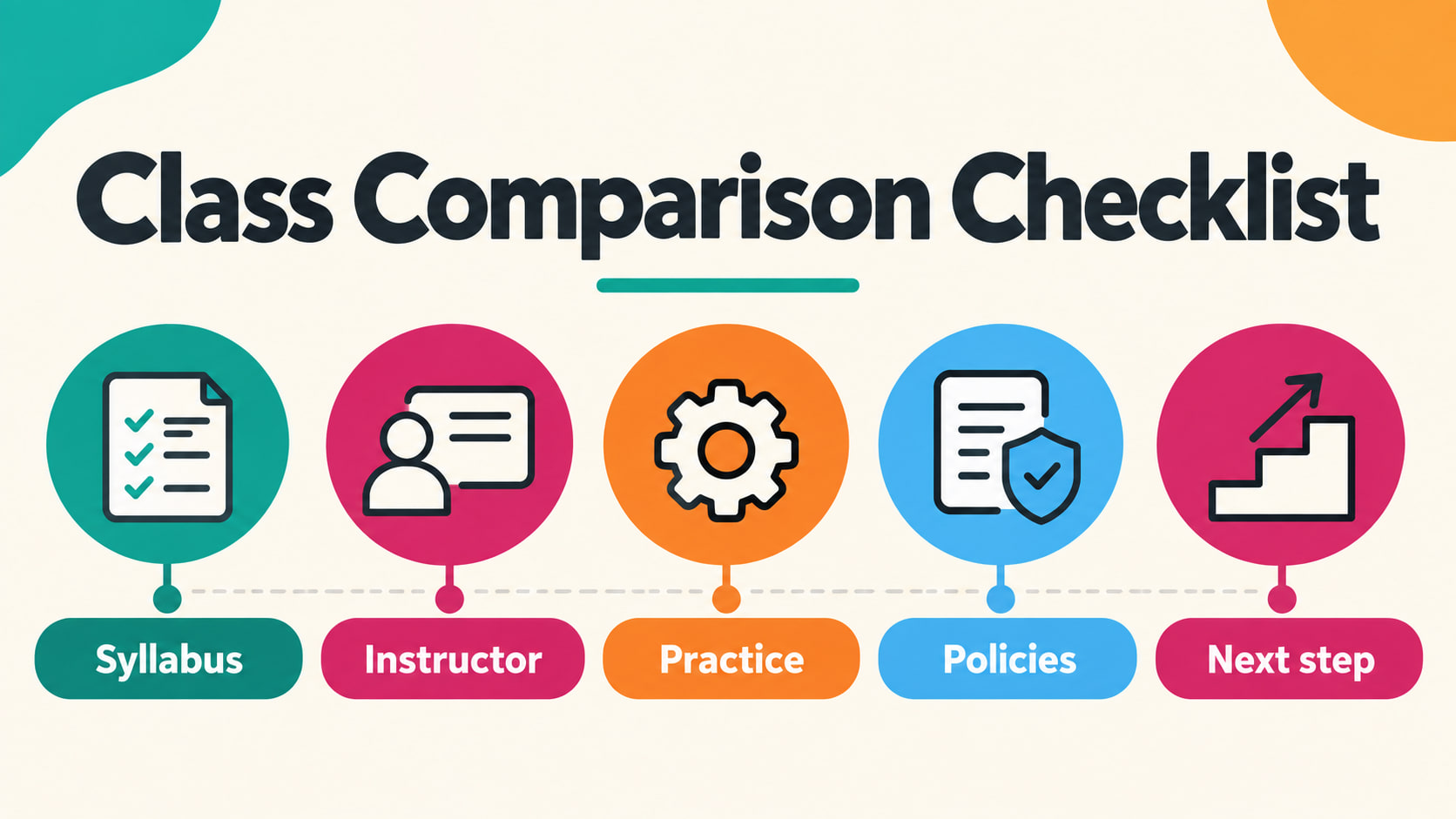
Start with the syllabus rather than the headline. A useful syllabus names topics, objectives, activities, and expected completion evidence. It identifies the source version or update date and explains how the lessons relate to current requirements. Be cautious when a page promises to teach “everything” without showing the structure.
Good lessons connect definitions to observable work. A student should practice identifying a behavior, choosing a measurement, following a teaching sequence, recording a response, and communicating a question. Examples should be clearly educational and original, not presented as official, recalled, leaked, or endorsed examination material.
Check whether the class discusses dignity, privacy, consent, professional boundaries, safety, and supervision. Technical vocabulary without role boundaries can leave a learner with an inaccurate idea of what a technician may decide independently.
Look for practice and feedback
Quizzes check recall; practice and feedback help reveal whether you can apply a concept. Look for scenarios that show the relevant condition, response, consequence, data rule, and next step. A useful explanation says why an answer fits instead of merely marking it correct.
Ask how feedback is delivered and whether you can ask questions. Find out whether practice records are saved, whether a retake is included, and whether the provider gives examples of common implementation errors. If a class offers only passive videos and a completion certificate, do not assume it demonstrates job competency.
Practice should not use identifiable client information. Use fictional or de-identified scenarios and follow the privacy rules of your employer or training provider. Learning accuracy includes protecting the people whose services are being discussed.
Understand assessment and supervision
Training and competency assessment are different. Ask who performs any assessment, what tasks are evaluated, what preparation is provided, and what record you receive. A quiz score or course completion badge is not automatically a competency assessment.
Supervision is also separate from class instruction. Confirm whether the provider offers supervision, refers you to a supervisor, or does not provide it. If supervision is offered, ask about observation, feedback, communication, cancellations, and the responsibilities of each person. Do not assume the instructor who teaches the class will supervise your work.
A responsible course explains that an RBT implements assigned procedures under supervision. Training does not authorize independent diagnosis, treatment design, plan changes, intervention selection, or decisions outside demonstrated competence.
Check support and accessibility
Compare the actual support window: instructor questions, office hours, technical help, captions, transcripts, accessible documents, and help when a platform fails. “Lifetime access” may describe login access but not lifetime updates or instructor responses.
Test the format on the device you will use. Ask whether the course works with your internet connection, whether progress saves, and whether materials can be reviewed during the access period. Read how the provider stores payment, identity, assessment, and learning records.
Reviews may reveal patterns, but evaluate their date, source, specific claim, and relevance. A high rating is not official endorsement and does not prove that a course fits your schedule, state, employer, accessibility needs, or current pathway.
Read cost and policies
Calculate total cost, including enrollment, assessment, retakes, extensions, books, supervision, technology, and any application-related fees. Ask which items are required and which are optional. Compare the same bundle of services across providers instead of comparing only headline prices.
Read refund, cancellation, transfer, expiration, and technical-failure policies before paying. Save a copy of the terms and syllabus because online pages can change. Ask whether access begins immediately and whether the course can be paused.
Be cautious with guarantees. A provider cannot control every examination result, credentialing decision, employer decision, or local requirement. A clear program describes what it supplies and directs official questions to current official sources.
Questions to ask providers
- What current official curriculum or requirement does this class address?
- What topics, activities, practice, and records are included?
- Who teaches the class and who handles any competency assessment?
- Is supervision included, referred, or not provided?
- How long does access last, and are updates included?
- What support and accessibility features are available?
- What is the complete cost, including retakes and extensions?
- What are the refund, privacy, and data-retention policies?
- When was the content last reviewed against current official sources?
Ask for answers in writing. If a provider cannot explain who handles each stage, does not identify its sources, or replaces details with a guarantee, treat that uncertainty as important comparison data.
Role boundaries and next steps
After class, continue to follow the current authorized plan and supervision. An RBT may implement trained services, collect data, report objective observations, and receive feedback. An RBT should not independently change targets, prompts, reinforcement arrangements, mastery criteria, behavior plans, or safety procedures.
Create a simple comparison table with columns for content, practice, assessment, supervision, support, cost, updates, and policies. Save the source or evidence for each answer. Then verify credentialing decisions with the current BACB Handbook and the requirements that apply to your situation.
Frequently asked questions
Are all behavior technician classes RBT courses?
No. Some are general education, some are employer training, and some address a particular part of an RBT pathway. Read the exact scope and current source version.
Does finishing a class make me an RBT?
No. Course completion is not automatically the same as competency assessment, supervision, application, examination, or credential approval.
How should I compare online classes?
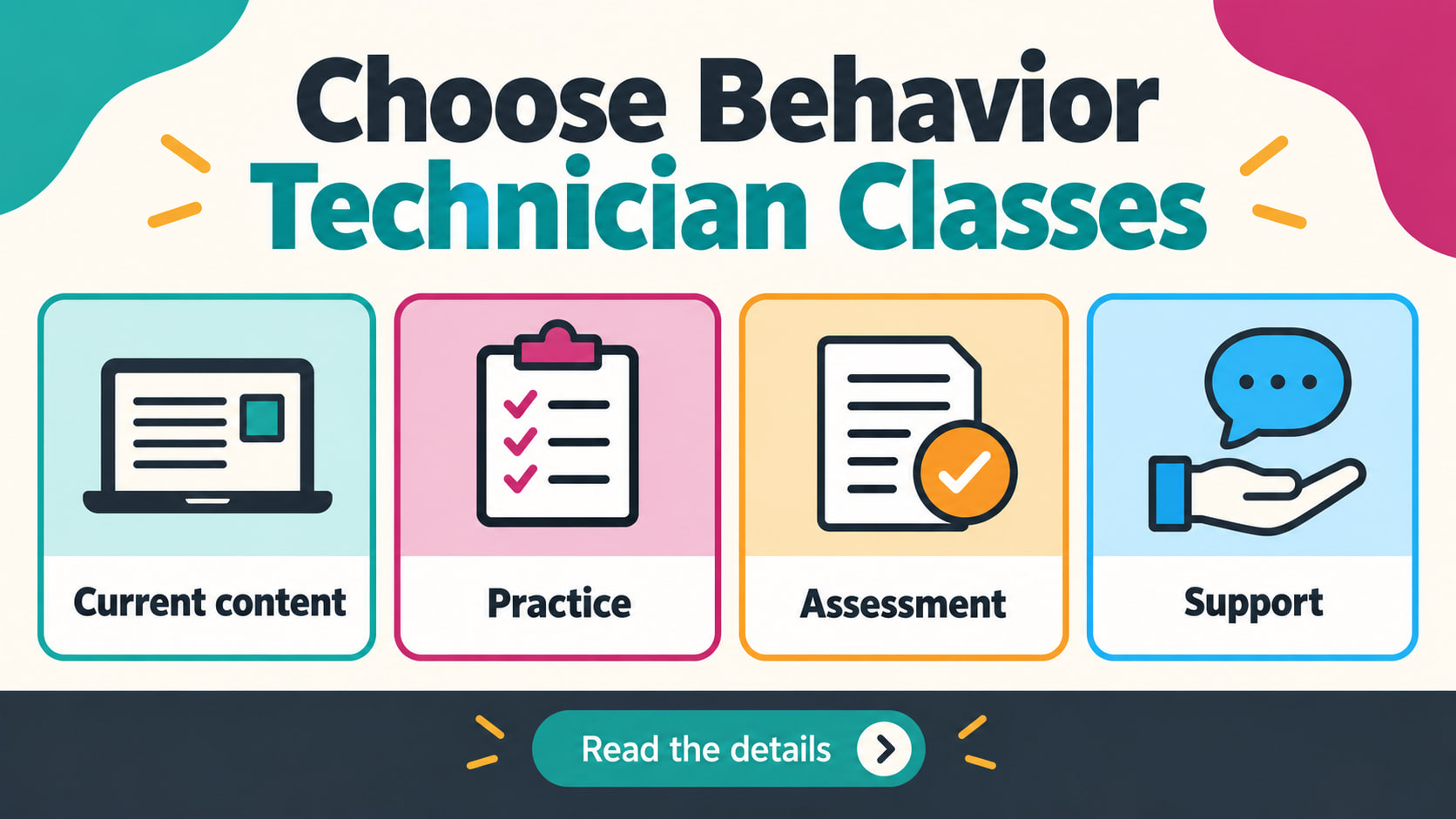
Compare current content, practice, feedback, assessment, supervision, accessibility, total cost, support, and written policies. Do not rely on ratings alone.
Can a class guarantee a job?
Be cautious. A provider can describe its curriculum and services but cannot control employer decisions or guarantee employment.
Source note: Review the current BACB Handbook, RBT materials, employer requirements, and supervisor direction for your situation. This article is educational and does not provide individualized legal, clinical, employment, or credentialing advice.
Ready to practice the RBT concepts you just reviewed?
Try an independent, original RBT practice resource with exam-style questions, scoring, and answer explanations.
References
- Behavior Analyst Certification Board. RBT Test Content Outline, 3rd edition.
- Behavior Analyst Certification Board. RBT Handbook.
- Behavior Analyst Certification Board. RBT Ethics Code.