

A behavior technician degree is not the same thing as RBT training, a competency assessment, or certification. Some behavior technician jobs may emphasize current entry requirements and supervised training, while others may ask for college coursework or a degree. Compare the actual job posting with current BACB materials before choosing a school or assuming a degree is required.
Table of Contents
- Behavior technician degree: the short answer
- Start with the actual requirements
- Separate the RBT pathway steps
- What a degree can and cannot do
- Compare education options
- Questions to ask before enrolling
- Common education mistakes
- Frequently asked questions
Behavior technician education, RBT training, competency, job postings, and career planning
Behavior Technician Degree: What Education Does the Role Require?
Separate entry requirements, RBT pathway steps, employer preferences, and optional degree growth before you enroll.
A behavior technician degree is not the same thing as RBT training, a competency assessment, or certification. Some behavior technician jobs may emphasize current entry requirements and supervised training, while others may ask for college coursework or a degree. Compare the actual job posting with current BACB materials before choosing a school or assuming a degree is required.
Education is a career decision, so check the cost, schedule, support, transferability, and outcome claims carefully. A certificate or degree can be useful, but it does not automatically authorize work outside a defined role or replace the steps that apply to an RBT credential.
Behavior technician degree: the short answer
Think in four separate questions:
- What does the current official RBT pathway require for the role I want?
- What does this employer require or prefer in its job posting?
- What training, competency, supervision, and documentation will I need?
- Would a degree support a longer-term goal, or am I paying for a credential the job does not use?
Start with the actual requirements
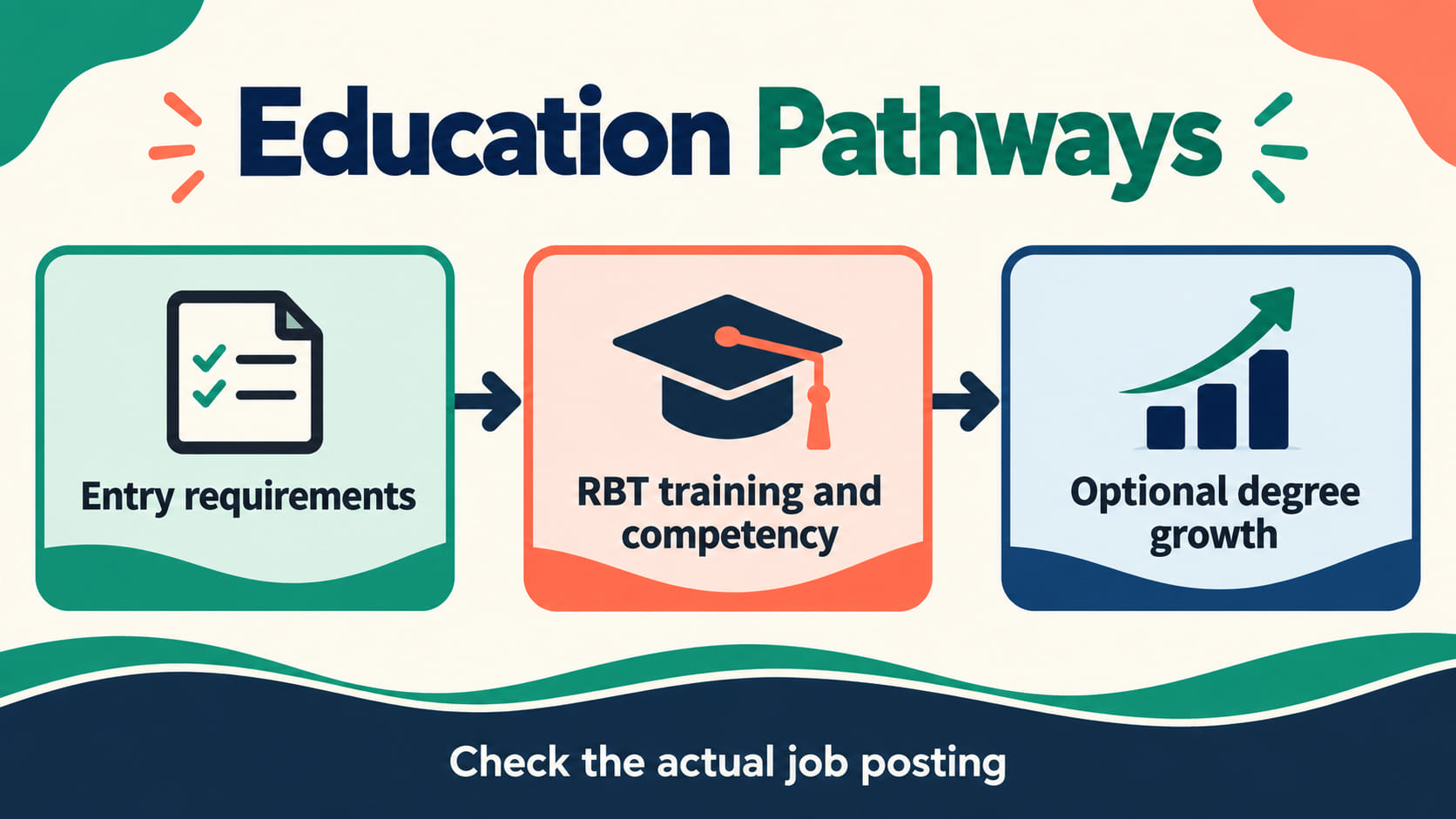
Open the current BACB RBT page and Handbook when evaluating an RBT-related role. Check the current information for eligibility, training, competency assessment, application, examination, supervision, and maintenance. Requirements and process details can change, so a school webpage or old job post should not be your only source.
Then read the actual employer posting. One organization may ask for a high-school-level credential and willingness to complete supervised training; another may prefer college coursework; another may require a degree for a different behavior-support job. “Behavior technician” is a job label, not a universal education standard.
Look for the difference between required and preferred. “Bachelor’s degree preferred” is not the same as “required.” Ask how the employer verifies training, what supervision is provided, and whether the role supports employees who are completing an applicable credential pathway.
Separate the RBT pathway steps
A degree does not replace training. If the role is an RBT position, the current pathway may include specific training, competency assessment, application, examination, supervision, and ongoing maintenance steps. Confirm each step in the current official materials and ask the employer which parts it supports.
A degree also does not replace supervised practice. A person can know academic concepts and still need feedback on objective measurement, implementation, documentation, communication, and role boundaries. Conversely, someone can build useful technician skills without having completed a four-year degree. Evaluate the actual training and supervision rather than assuming education level tells the whole story.
Do not let a school promise that one enrollment creates certification or a job. A course or degree provider may offer education, while the credentialing organization and employer control other decisions. Keep completion records, but verify what each record means before using it in an application.
What a degree can and cannot do
A degree may support broader study in psychology, education, behavior analysis, human services, or another related field. It can help with reading research, writing, communication, data interpretation, and planning a future path. The value depends on the curriculum, quality, cost, schedule, and the career goal you are actually pursuing.
A degree cannot by itself:
- guarantee an RBT credential, exam result, or employer offer;
- replace current role-specific training or competency assessment;
- authorize independent diagnosis, treatment design, or practice outside supervision;
- make an old course or policy current; or
- prove that a person can perform every task in every setting.
If a program advertises a degree as a shortcut to a protected credential or guaranteed salary, slow down. Ask which organization awards the credential, what the degree includes, what it does not include, and how current the information is.
Compare education options
| Option | What to inspect | Best question |
|---|---|---|
| Employer training | Curriculum, supervision, competency support, schedule, and records. | What will I learn and who will observe me? |
| Short course | Current content, trainer qualifications, practice, feedback, and what it does not replace. | Which official pathway step does this document? |
| Certificate program | Provider identity, curriculum, cost, access, recognition, and transferability. | Who recognizes this certificate and for what job? |
| Degree program | Accreditation information, total cost, time, coursework, support, and longer-term fit. | Does this degree match my actual career plan? |
Questions to ask before enrolling
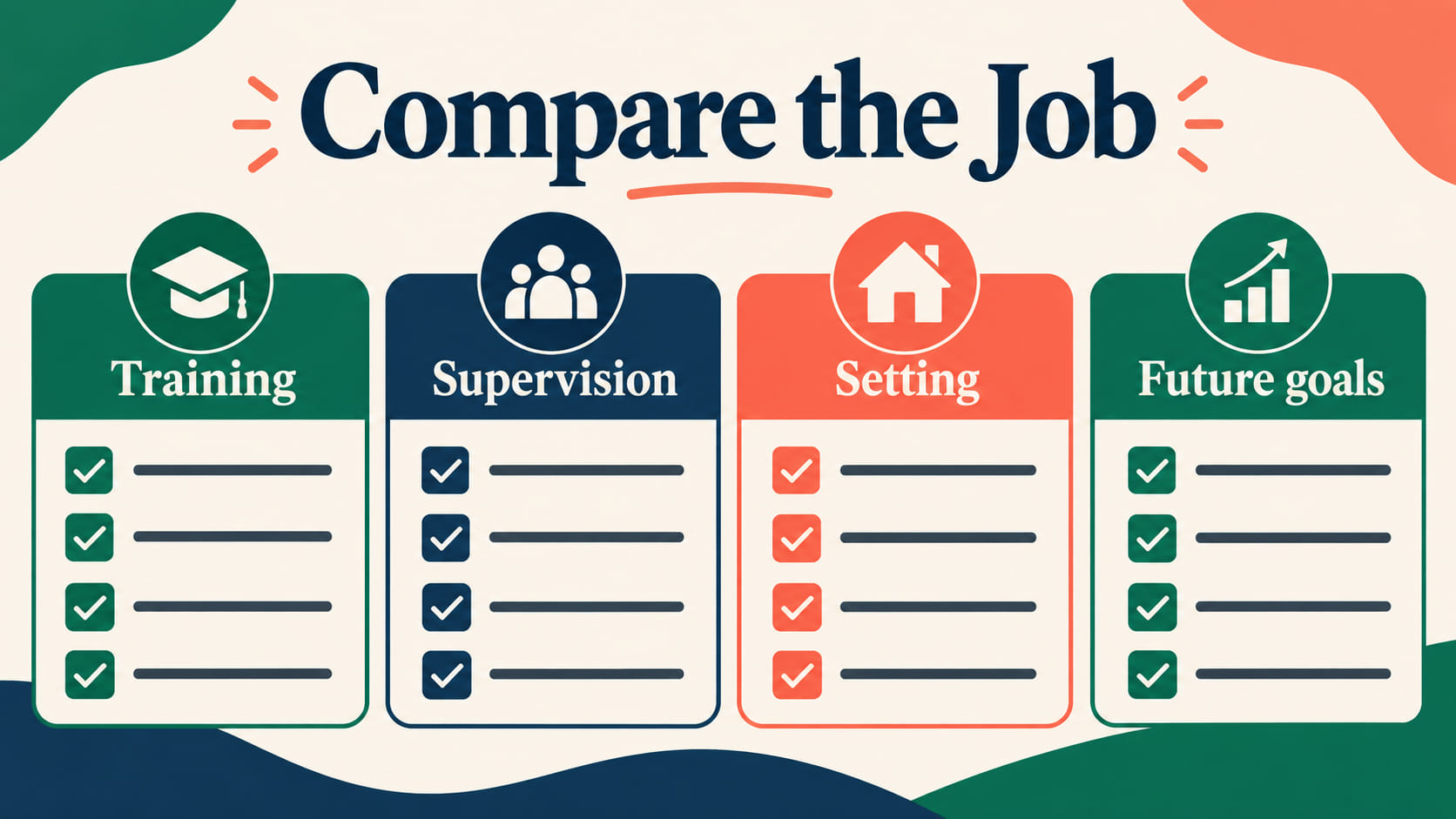
- Which current job or credential am I preparing for?
- What does the program teach, and how is practice or feedback provided?
- Does completion satisfy any specific employer or credentialing step, or is it only educational?
- What are the total tuition, materials, technology, travel, and time costs?
- Can I verify the school, provider, faculty, refund terms, and record process independently?
- Does the schedule fit the work, supervision, and family responsibilities I already have?
- What happens if the official requirements change while I am enrolled?
Common education mistakes
- Confusing degree with certification: they are separate achievements with different authorities.
- Using one job post as a universal rule: employer requirements vary by role and setting.
- Ignoring supervision: academic knowledge does not replace observed implementation and feedback.
- Believing guaranteed outcomes: no program can promise employment, certification, or pay.
- Skipping total-cost math: include tuition, time away from work, materials, travel, and renewal costs.
- Choosing a title instead of a curriculum: inspect what you will actually learn and practice.
Frequently asked questions
Do I need a degree to become a behavior technician?
There is no single answer for every job. Check the current RBT pathway if you are pursuing that credential, then read the actual employer posting for required and preferred education.
Does a degree make me an RBT?
No. A degree and the RBT credential pathway are separate. Follow the current official requirements for training, competency, application, examination, supervision, and maintenance.
Is a behavior-related degree useful?
It may be useful for academic learning or a longer-term career plan, but value depends on curriculum, cost, quality, schedule, and the jobs or credentials you intend to pursue.
Should I choose a degree before applying for jobs?
Compare job postings first. You may learn that an employer values supervised training and role fit more than a degree, or that a specific future role has a degree requirement. Verify before committing time and money.
Role reminder: This is educational information, not college-selection, financial-aid, employment, legal, or certification advice. Verify current BACB requirements and the actual employer or school requirements before making a decision.
Official starting points: the BACB RBT page, RBT Handbook, supervision and training resources, and RBT content outline.
Ready to practice the RBT concepts you just reviewed?
Try an independent, original RBT practice resource with exam-style questions, scoring, and answer explanations.
References
- Behavior Analyst Certification Board. RBT Test Content Outline, 3rd edition.
- Behavior Analyst Certification Board. RBT Handbook.
- Behavior Analyst Certification Board. RBT Ethics Code.