
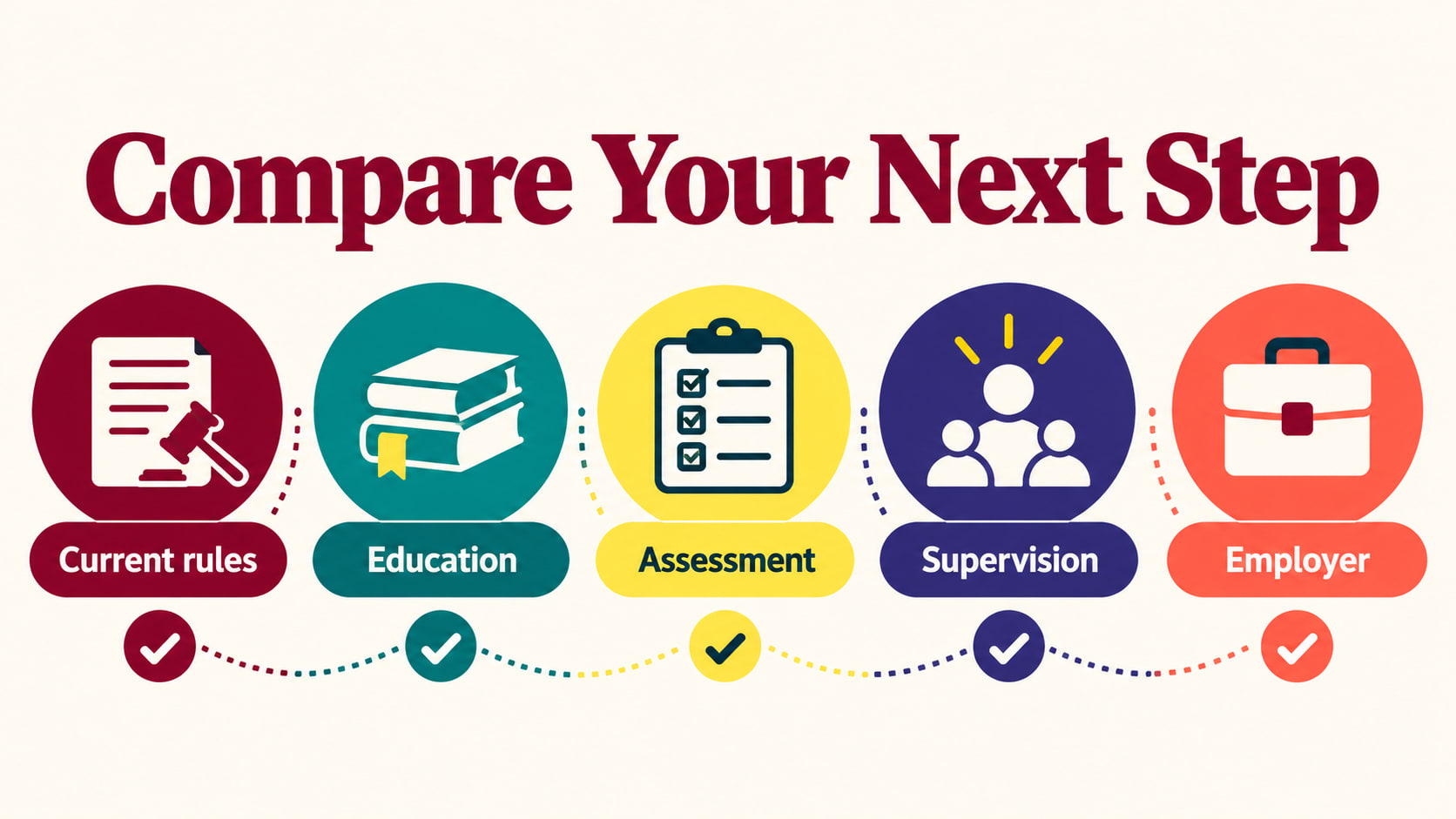
Behavior technician education requirements depend on the role, credential, employer, location, and current official rules.
Table of Contents
- What behavior technician education requirements may mean
- Training and curriculum
- Competency assessment
- Supervision and application
- Employer and local requirements
- Documents and verification
- Build a practical plan
- Frequently asked questions
- References
RBT CAREER · REQUIREMENTS GUIDE
Behavior Technician Education Requirements: Check the Current Path
Separate training, competency, supervision, application, and employer requirements before making a plan.
Behavior technician education requirements depend on the role, credential, employer, location, and current official rules. A job posting may use behavior technician as a general title, while RBT refers to a specific credential. Do not assume that one course, degree, or certificate satisfies every step.
Start with the current official BACB materials when your goal involves the RBT credential. Then compare the employer’s written requirements with the training, competency, supervision, application, and examination steps that apply to you. This guide helps organize that research; it does not provide individualized credentialing or employment advice.
What behavior technician education requirements may mean
“Education requirement” can refer to several different questions: Is a high school diploma or equivalent required? Is a particular training curriculum required? Must a person complete a competency assessment? Is ongoing supervision required? Does an employer require college coursework, experience, a background check, or a local certification?
Write each question separately. A provider’s course completion record documents what that provider says you completed; it does not automatically prove competency, supervision, application approval, examination success, or a credential. A degree may satisfy an employer preference without replacing a current credentialing step.

Training and curriculum
Check the current curriculum, source version, update date, learning objectives, delivery format, practice, and completion record. A useful course connects concepts to observable work such as measurement, skill acquisition, prompting, reinforcement, behavior reduction, documentation, ethics, and professional conduct.
Ask whether training is provided by an employer, a course provider, or another organization. Find out who answers questions, how missed concepts are reviewed, how long access lasts, and whether accessibility features are available. Be cautious with claims that a course guarantees certification, employment, or examination success.
Examples should be clearly educational and original. Avoid treating unofficial practice questions as official, recalled, leaked, or endorsed examination content. Current rules and administrative details can change, so record the source date you used.
Competency assessment
Instruction and competency assessment are separate. Instruction covers content; an assessment evaluates whether specified tasks can be demonstrated under the applicable process. Ask who performs the assessment, what tasks are evaluated, what preparation is provided, how appointments work, and what documentation you receive.
A quiz score or completion badge is not automatically a competency assessment. Confirm retake, expiration, cancellation, accessibility, and verification policies. If a program uses broad language such as “job ready,” ask which observable skills that phrase means and who makes the decision.
Supervision and application
Supervision is an ongoing professional relationship, not simply a training video. Ask whether the provider offers supervision, refers you to a supervisor, or provides no supervision service. If it is offered, request the observation, feedback, communication, cancellation, and privacy arrangements in writing.
Application steps are also distinct. Confirm which forms, signatures, identity details, fees, deadlines, and verifications apply, and use the current official handbook rather than an old checklist. Keep questions about administrative requirements separate from questions about what you will do in a client session.
Training and supervision do not authorize an RBT to independently diagnose, design treatment, change a learner’s plan, select an unapproved intervention, or make decisions outside demonstrated competence. Follow the current authorized procedures and ask for direction when something is unclear.
Employer and local requirements
Employers may add requirements such as a diploma, college coursework, experience with children or adults, a background check, CPR or safety training, driver’s license, schedule availability, or a specific credential. These are not necessarily universal education requirements. Read the actual job posting and ask which items are required, preferred, paid, and verified.
Location can matter. State law, payer rules, school policies, facility policies, and contract requirements may affect a role. Do not infer a legal requirement from a social-media post or a course advertisement. When a local rule matters, verify it with the responsible authority or employer.
Documents and verification
Create a folder for the current handbook, curriculum or syllabus, completion record, assessment instructions, supervision details, application receipts, employer posting, and written answers to your questions. Save the access date and source version. This makes it easier to identify what changed if a web page is updated.
Protect private information. Use approved storage, verify recipients, and avoid putting identity documents or client information into an informal group or public platform. A document is useful only if it is authentic, current, and relevant to the specific step you are evaluating.
Build a practical plan
- Define the role: Decide whether you are researching a general behavior technician job, RBT credentialing, or another position.
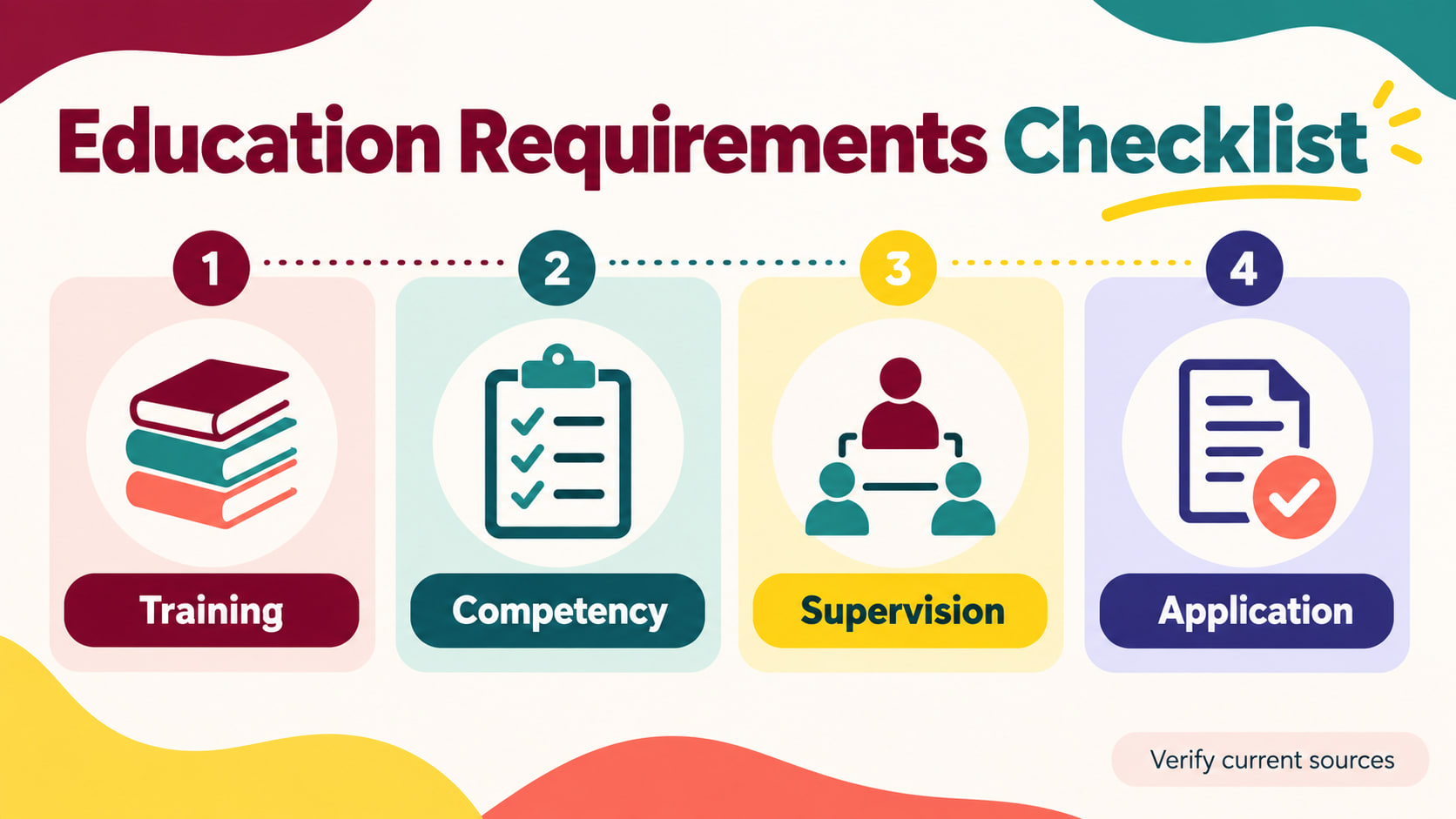
- List requirements: Separate education, training, competency, supervision, application, examination, employer, and local items.
- Verify sources: Check current official materials and the employer’s written requirements.
- Compare providers: Review curriculum, practice, support, total cost, policies, and updates.
- Track evidence: Save records and note unanswered questions before paying or submitting an application.
If your goal is employment, ask employers which requirements they actually enforce and whether training time, assessment, travel, meetings, or supervision are paid. Keep the employer decision separate from the course decision so marketing language does not stand in for a written job requirement.
Recheck the path if your plan changes from a general technician role to an RBT role, from one employer to another, or from one service setting to another. The same education history may be relevant but not sufficient for every position. Record the exact question you are answering instead of collecting certificates without a defined next step.
Also consider access and timing. Ask whether a course is self-paced or scheduled, whether assessment appointments are available, and how long records remain accessible. A practical plan accounts for deadlines, fees, transportation, technology, and support rather than treating education as a single purchase.
When you contact a provider or employer, ask one question at a time and save the response with the date. Useful questions include “Which current source supports this requirement?”, “Who verifies completion?”, and “What happens after this step?” Clear records reduce the chance that a general promise will be mistaken for a formal requirement.
Education planning is strongest when each requirement has an owner, a source, a deadline, and a document that proves completion. Use that four-part check before you pay a fee or submit personal information.
Frequently asked questions
Do all behavior technician jobs have the same education requirements?
No. Titles, employers, settings, payers, and locations can differ. Read the specific posting and verify any credential or local rule.
Does a degree replace RBT training?
Not automatically. A degree, training curriculum, competency assessment, supervision, application, and examination can be separate requirements.
Is a course certificate proof of a credential?
No. It documents course completion according to the provider. Confirm the current credentialing process and official status separately.
What should I do when sources conflict?
Pause the decision, record the conflict, and check the current official material or ask the responsible employer, supervisor, or authority for clarification.
Source note: Review the current BACB Handbook, RBT materials, employer requirements, applicable local rules, and supervisor direction for your situation. This article is educational and does not provide individualized legal, clinical, employment, or credentialing advice.
Ready to practice the RBT concepts you just reviewed?
Try an independent, original RBT practice resource with exam-style questions, scoring, and answer explanations.
References
- Behavior Analyst Certification Board. RBT Test Content Outline, 3rd edition.
- Behavior Analyst Certification Board. RBT Handbook.
- Behavior Analyst Certification Board. RBT Ethics Code.