

Behavior technician job requirements are more than a list of preferred traits. Before applying, check the actual duties, training or credential steps, observation and supervision, documentation systems, setting, schedule, safety expectations, and privacy responsibilities. Then compare those requirements with your current skills and the support the employer provides.
Table of Contents
- Behavior technician job requirements: the short answer
- Read the actual duties
- Check training and credential steps
- Review the skills employers really use
- Check the setting and support
- Questions to ask before applying
- Recognize red flags
- Frequently asked questions
Behavior technician duties, training, skills, supervision, documentation, setting, and application questions
Behavior Technician Job Requirements: What to Check Before You Apply
Read the whole job, not only the credential line: duties, supervision, setting, and support determine fit.
Behavior technician job requirements are more than a list of preferred traits. Before applying, check the actual duties, training or credential steps, observation and supervision, documentation systems, setting, schedule, safety expectations, and privacy responsibilities. Then compare those requirements with your current skills and the support the employer provides.
A job title is not a universal standard. One employer may use “behavior technician” for a trainee role; another may expect an RBT or different credential; another may combine technician work with transportation, classroom, or administrative duties. Read the details and ask for clarification before treating a posting as a career rule.
Behavior technician job requirements: the short answer
Use this checklist when reading a posting:
- What will I do during a typical session or shift?
- Which training, credential, background, health, or documentation steps are required?
- Who observes my work and provides supervision or feedback?
- Where will I work, how much travel is involved, and what schedule is expected?
- What privacy, safety, data, and communication procedures will I follow?
- What support exists if I do not yet meet a preferred requirement?
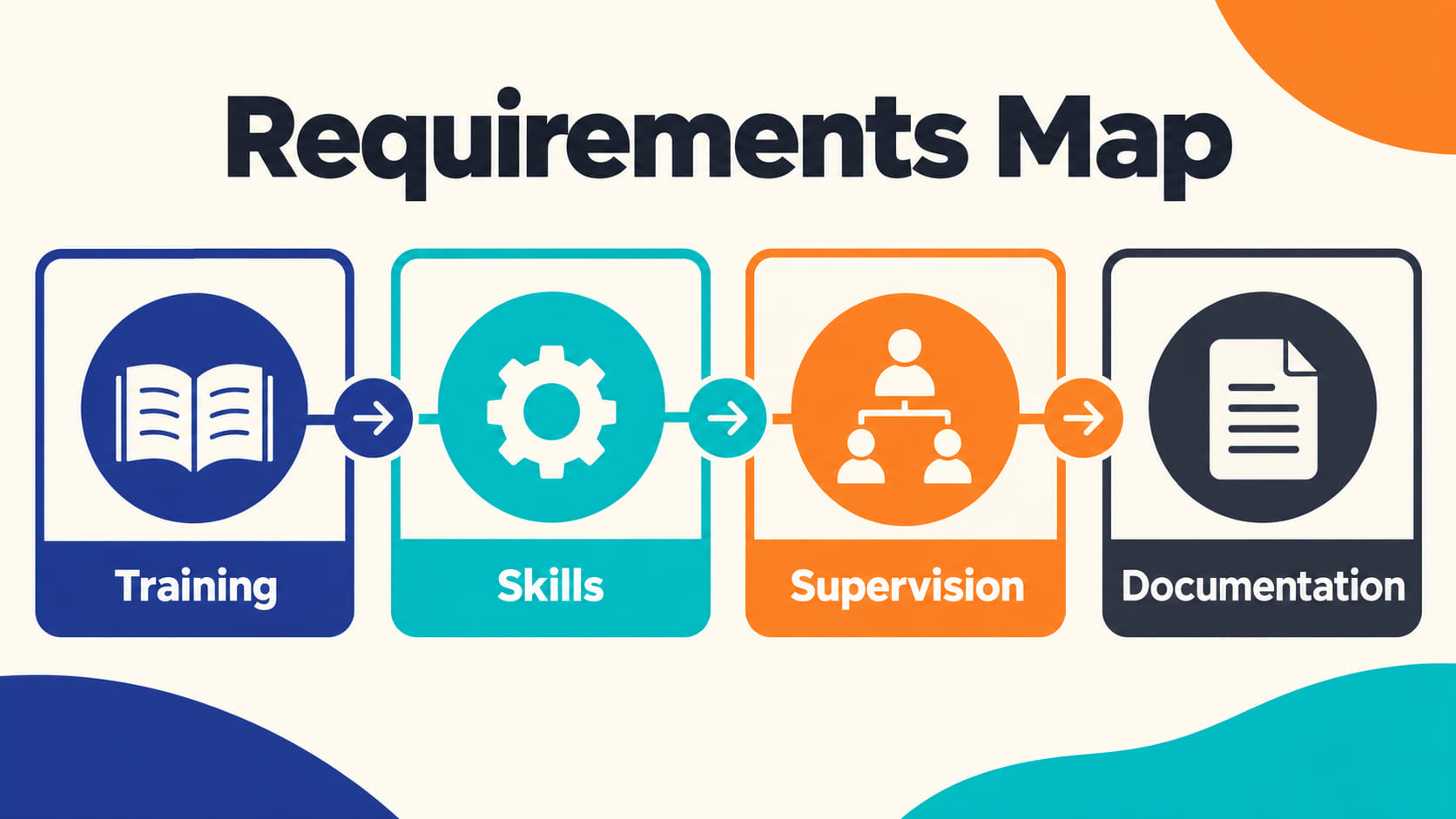
Read the actual duties
Look for observable responsibilities such as implementing assigned procedures, collecting defined data, preparing materials, communicating observations, participating in supervision, following safety instructions, and completing required records. These descriptions help you understand what you would actually do rather than what the title sounds like.
Check the boundaries too. A technician role should not quietly require independent diagnosis, treatment design, changing a plan without direction, or making decisions assigned to a qualified supervisor. If the posting says “manage your own cases” or “create treatment plans” without explaining the role and supervision, ask what those phrases mean.
Read the physical and logistical requirements honestly. A job may involve home visits, center routines, school collaboration, community practice, standing, travel, schedule changes, or working during evenings. Ask the employer or HR about essential functions and accommodation processes rather than guessing from a vague sentence.
Check training and credential steps
If the posting mentions RBT work, open the current BACB RBT page and Handbook. Check the current pathway information for training, competency assessment, application, examination, supervision, and maintenance. Do not assume that a short course, degree, or certificate replaces each step.
Separate “required” from “preferred.” A posting may require completion of a training step before start, or it may offer training after hire. Ask who provides instruction, who evaluates competency, how records are maintained, and whether the schedule allows time for feedback. A candidate should not have to infer the entire pathway from a marketing phrase.
Training should also cover privacy, documentation, communication, safety, and scope. Knowing terminology is useful, but the job requires accurate implementation and the ability to ask for direction when an instruction is missing or unclear.
Review the skills employers really use
Strong technician work often depends on practical habits:
- describing behavior objectively rather than using judgmental labels;
- recording the defined measurement system accurately;
- following a written procedure consistently while noticing safety concerns;
- accepting corrective feedback and asking focused questions;
- protecting client information in conversation, records, devices, and public settings;
- communicating changes, missed steps, and uncertainty through the supervision channel;
- maintaining professional boundaries with clients, families, coworkers, and community contacts.
A degree or previous work experience may be helpful, but it does not prove every skill. Use the posting and interview to identify what will be taught, what must already be demonstrated, and how the employer evaluates readiness.
Check the setting and support
Ask where services occur and who will be present. Home-based work may involve travel and family communication. Center-based work may involve group routines and multiple staff. School or community work may require coordination with people outside the employer. Each setting changes the privacy, schedule, documentation, and escalation questions.
Supervision should be specific. Ask who is available during a session, how feedback is delivered, how often observation occurs, how urgent questions are escalated, and what happens when a plan conflicts with a request from someone at the setting. A posting that lists client responsibility without support deserves closer review.
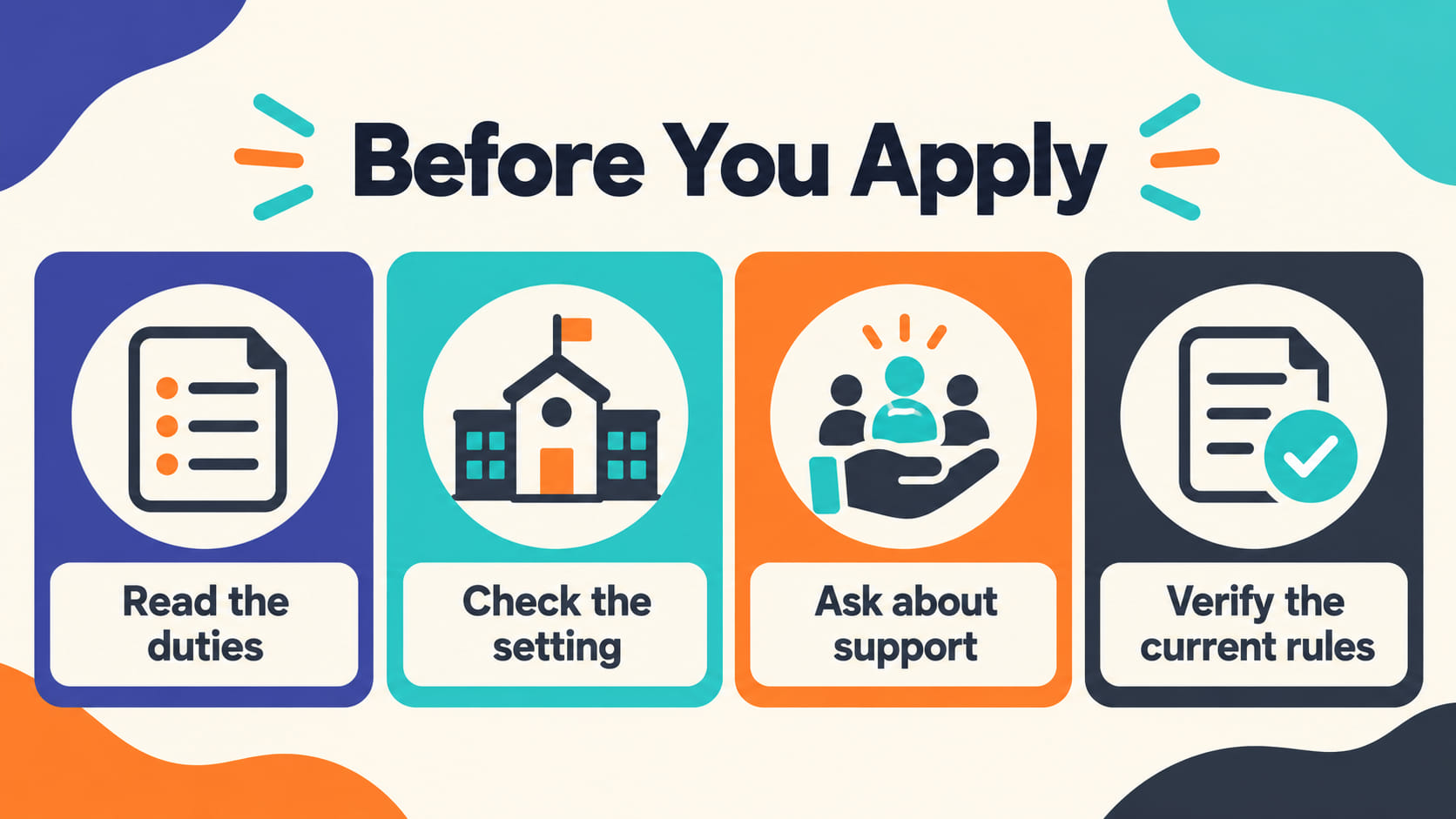
Questions to ask before applying
- What does a typical day or session look like?
- Which credential or training is required before the first shift, and which can be completed after hire?
- Who provides supervision and observes implementation?
- How are data, notes, incidents, cancellations, and schedule changes documented?
- What are the travel, physical, technology, and communication expectations?
- How does the organization protect client privacy and handle a safety concern?
- What does the employer mean by “independent,” “caseload,” or “manage sessions”?
Recognize red flags
- Unclear scope: the posting expects independent clinical decisions without explaining supervision.
- No support: the job lists client responsibility but no observer, trainer, or escalation route.
- Credential shortcuts: a certificate is treated as a replacement for the current official steps.
- Privacy shortcuts: candidates or new staff are asked to share real client records through personal tools.
- Hidden logistics: travel, schedule, physical duties, or cancellations are not explained until late.
- Guarantees: the posting promises certification, a fixed caseload, pay, or hours that depend on conditions outside the employer’s control.
Frequently asked questions
What are common behavior technician job requirements?
They may include assigned procedure implementation, objective data collection, documentation, privacy, communication, training, supervision, safety, and setting-specific schedule or travel expectations. The exact requirements vary by employer and role.
Do all behavior technician jobs require an RBT credential?
No single job label answers that. Read the actual posting and verify the current requirements for the credential or service role being offered.
What if I meet the preferred requirements but not every skill?
Ask what the employer trains, observes, and supports. A fair hiring process distinguishes required steps from preferred experience and explains how readiness is evaluated.
What should I do if a job expects work outside scope?
Ask for clarification before accepting the role. Review the current official guidance and use the employer’s HR or supervision channel. Do not agree to independent clinical decisions simply because a posting uses a broad title.
Role reminder: This is educational information, not employment, legal, accommodation, background-check, or certification advice. Verify current BACB requirements and the actual employer’s written job requirements.
Official starting points: the BACB RBT page, RBT Handbook, supervision and training resources, and RBT content outline.
Ready to practice the RBT concepts you just reviewed?
Try an independent, original RBT practice resource with exam-style questions, scoring, and answer explanations.
References
- Behavior Analyst Certification Board. RBT Test Content Outline, 3rd edition.
- Behavior Analyst Certification Board. RBT Handbook.
- Behavior Analyst Certification Board. RBT Ethics Code.