
When people search for a behavioral technician school, they may be looking for a college program, a private training provider, an employer pathway, or a short course that introduces ABA work.
Table of Contents
- What “behavioral technician school” can mean
- School, certificate, or course?
- Connect the program to the RBT pathway
- Check the current requirement version
- Compare campus and online support
- Verify trainer and supervision details
- Ask about records and documents
- Compare the full cost and time
- Spot program red flags
- Build a program comparison sheet
- FAQ
- Key takeaways
- Sources and scope
RBT TRAINING GUIDE · PROGRAM SELECTION
Behavioral Technician School: How to Choose a Program
Learn how to compare a school or training program by pathway fit, supervision, current requirements, documentation, and support after completion.
When people search for a behavioral technician school, they may be looking for a college program, a private training provider, an employer pathway, or a short course that introduces ABA work. Those options can have very different outcomes. A school may offer a broader academic credential, while a provider may offer a specific training program designed to support part of an RBT application. The right choice depends on the role you want, the jurisdiction where you plan to work, and the current requirements that apply to your application.
This article is a comparison guide, not a promise of eligibility or employment. RBT rules and document versions can change. Use the current BACB handbook and training outline as the final reference, and ask a program representative to show how its materials match the requirement you intend to use.
What “behavioral technician school” can mean
The phrase is broad. A program listed under this label may be:
- a college or vocational program with several behavior-support subjects;
- a private RBT training program with a defined completion certificate;
- an employer’s paid training and onboarding route;
- a continuing education option for an existing technician; or
- a general ABA introduction that is not designed for RBT eligibility.
Do not compare these products by name alone. Ask what the program teaches, what it documents, who oversees it, and what the learner can do next. A program can be valuable without being the right document for an RBT application.
School, certificate, or course?
A school usually describes an organization or longer educational setting. A certificate describes documentation of a defined program. A course describes a learning experience. They are not interchangeable terms.
For a career decision, separate three questions:
- Learning: Will the lessons help me understand technician responsibilities and behavior-analytic concepts?
- Eligibility documentation: Does the program state that it is designed to meet the current RBT training requirement, and will it provide the required record?
- Employment: Does the school or provider connect me to a real employer, supervisor, or hiring process?
One program may answer only the first question. Another may address the first two but not employment. A transparent program makes those boundaries clear instead of using one broad “career-ready” claim for all three.
Connect the program to the RBT pathway
RBT is a paraprofessional certification. RBTs assist with behavior-analytic services under the direction and close supervision of an RBT Supervisor or RBT Requirements Coordinator. A training program is one part of the pathway, not the credential itself.
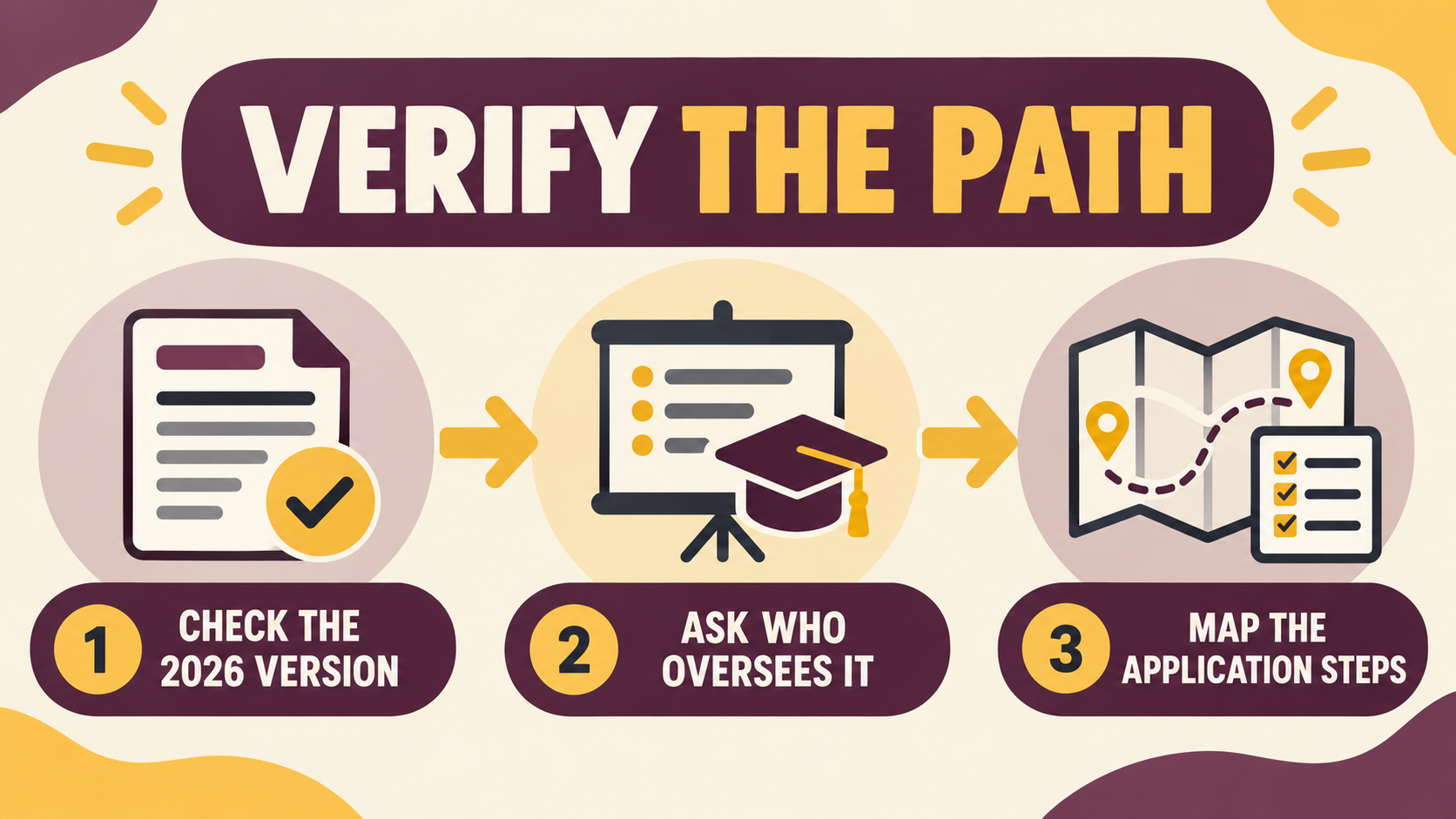
For applicants using the current 2026 pathway, training may need to be followed by an initial competency assessment, application documentation, an attestation or other eligibility steps, approval, and the examination. The current BACB materials specify which documents and versions apply. A school that offers a certificate should explain where its certificate fits and what it does not cover.
Ask whether the program is designed for a technician job title, for the current RBT training requirement, or for broader academic development. If the answer is “all of the above,” request a written breakdown. Clear separation makes it easier to compare programs without confusing a class completion certificate with certification.
Check the current requirement version
Start with the version, not the marketing headline. BACB’s 2026 training requirements say that applicants applying on or after January 1, 2026, must complete a training program that meets the 2026 requirements. A school page written before that date may still be online, and a search result may quote an older packet.
On the program page, look for:
- the exact requirement or curriculum outline the program follows;
- the date the training materials were updated;
- the total tracked training time and completion window;
- the name and certification details of the responsible trainer; and
- the wording and fields that appear on the final training certificate.
If the page only says “RBT approved,” ask the school to explain the claim. A private program should not imply that the BACB endorses it unless an official source supports that statement.
Compare campus and online support
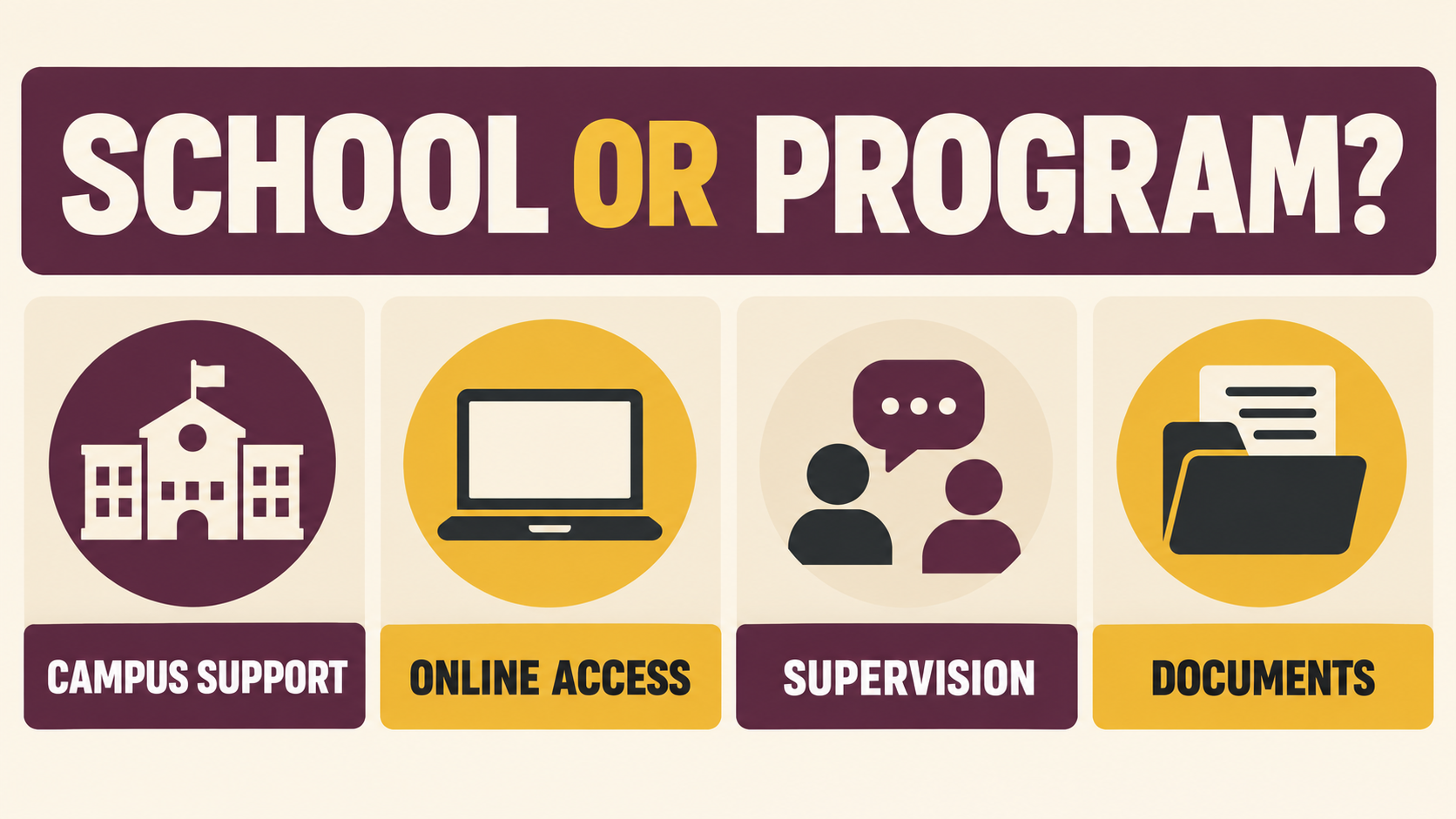
Campus, online, and blended options can all be workable. The useful comparison is the support a learner receives:
- Campus support: Is there a named instructor, office hour, lab, or student-support route?
- Online access: Can you access the full curriculum, activities, and records for the required completion period?
- Practice: Does the program include modeling, examples, nonexamples, role-play, feedback, quizzes, or discussion?
- Questions: Can a qualified instructor clarify a measurement, ethics, or service-delivery question?
- Accessibility: Are captions, transcripts, scheduling, and accommodations clearly described?
An attractive learning platform cannot replace a clear trainer and a reliable record. Conversely, an online program may work well when it offers active learning, responsive instruction, and complete documentation.
Verify trainer and supervision details
The current RBT 40-hour requirements identify a responsible trainer who designs and oversees the training. The responsible trainer must meet the stated certification and supervision-training requirements, identify themselves at the start and on training documentation, maintain records, and ensure the program follows the applicable rules. Assistant trainers may support delivery under the responsible trainer’s oversight.
Before enrolling, ask:
- Who is the responsible trainer?
- What credential and certification number can I verify?
- Who teaches the live or interactive portions?
- Who signs the certificate?
- How long will the school retain attendance and completion records?
- Who conducts the initial competency assessment, if that service is offered?
A school may teach you without being the organization that supervises you after hiring. Keep those functions separate. Training, assessment, ongoing supervision, and employment may involve different people.
Ask about records and documents
Documentation is one of the most useful ways to compare programs. Request a sample certificate or a written field list before paying. For the current 2026 training materials, the certificate documentation includes details such as the trainee’s name and BACB ID, training dates, time spent, responsible trainer information, applicable assistant-trainer information, and the required statement that the program is designed to meet the 2026 training eligibility requirement and is offered independent of the BACB.
Do not assume that every school certificate has the same meaning. Ask:
- Will the record show actual training time rather than only a course title?
- Will the dates fit the allowed completion window?
- Will the trainer sign or otherwise complete the required fields?
- How can I obtain a replacement record later?
- What happens if the provider updates the course before I apply?
Compare the full cost and time
Tuition is only one part of the decision. Add the cost of textbooks, platform access, assessment, application fees, background or registry checks, travel, examination, and any required supervision or coaching. Ask which items are included and which are optional.
Time matters too. The current 40-hour outline requires at least 40 hours across no fewer than 5 days and no more than 180 days. A program that appears fast because it hides required activities or counts optional reading as training time may create documentation problems later. Ask how the school records start and end dates, participation, and completion.
Spot program red flags
Pause before enrolling if you see any of these patterns:
- the program never identifies its requirement version;
- the school promises certification, employment, or exam success;
- trainer credentials are hidden behind a brand name;
- the certificate cannot be previewed or explained;
- the “40 hours” includes untracked browsing or unrelated material;
- the provider discourages checking the official BACB documents; or
- refund, access, and record-retention policies are missing.
A red flag is a reason to ask for evidence, not a conclusion by itself. A trustworthy school should answer requirement-based questions without asking you to rely only on testimonials or urgency.
Build a program comparison sheet
Compare programs using the same fields and save the source of each answer:
| Field | School or program A | School or program B |
|---|---|---|
| Program outcome and role | ||
| 2026 requirement version | ||
| Tracked hours and completion window | ||
| Responsible trainer | ||
| Campus, online, or blended support | ||
| Certificate and record policy | ||
| Assessment, supervisor, and employment boundaries | ||
| Total cost and refund terms |
Then contact each program with the unanswered questions. The best comparison is the one you can support with written evidence, not the one with the loudest headline.
FAQ
Does a behavioral technician school automatically make me an RBT?
No. A school or program may teach relevant skills or provide a training certificate, but certification requires the current eligibility, assessment, application, and examination steps.
Is a college program better than a short RBT training program?
They serve different goals. A college program may offer broader academic preparation, while a defined training program may be more direct for a particular eligibility requirement. Compare the outcome, documentation, cost, and timeline rather than assuming one format is always better.
Can an online school meet the training requirement?
The current outline allows in-person and/or online delivery when the program meets all required content, duration, delivery, trainer, and documentation conditions. Online access alone is not enough.
What should I verify first?
Verify the current requirement version and the responsible trainer. If a program cannot answer those questions, do not rely on its price or “career-ready” language.
Key takeaways
Choosing a behavioral technician school is a pathway decision. Define whether you want broad education, a specific RBT training record, employment support, or a combination. Then verify the current requirement version, trainer oversight, active learning, documentation, total cost, and post-training steps. Use official BACB materials for the final eligibility check and keep training separate from certification, supervision, and employment promises.
Ready to practice the RBT concepts you just reviewed?
Try an independent, original RBT practice resource with exam-style questions, scoring, and answer explanations.
References
- Behavior Analyst Certification Board. RBT Test Content Outline, 3rd edition.
- Behavior Analyst Certification Board. RBT Handbook.
- Behavior Analyst Certification Board. RBT Ethics Code.