
If you are searching for a behaviour technician course, you may be looking for an introduction to applied behavior analysis, a training program intended to support an RBT application, or a practical course for a technician role.
Table of Contents
- What people mean by a behaviour technician course
- How a course connects to RBT certification
- Check the current requirements first
- Confirm the 40-hour structure
- Verify the responsible trainer
- Look beyond the course format
- Read the certificate language
- Plan the steps after training
- Recognize course red flags
- Use a simple comparison worksheet
- FAQ
- Key takeaways
- Sources and scope
RBT TRAINING GUIDE · COURSE SELECTION
Behaviour Technician Course: What to Check Before You Enrol
A practical checklist for comparing course versions, trainer qualifications, delivery methods, certificates, and the steps that come after training.
If you are searching for a behaviour technician course, you may be looking for an introduction to applied behavior analysis, a training program intended to support an RBT application, or a practical course for a technician role. Those are related goals, but they are not automatically the same. The most important question is not whether a course has a polished sales page. It is whether the course’s version, content, trainer oversight, documentation, and next steps match the credential or job path you actually want.
This article is an educational comparison guide, not a certification decision or individualized career advice. Requirements can change, and the Behavior Analyst Certification Board (BACB) is the authority for current RBT eligibility and application documents. Read the current handbook and official training requirements before paying for a course.
What people mean by a behaviour technician course
The phrase can describe several different products:
- an introductory class explaining ABA concepts and technician responsibilities;
- a training program designed to meet the BACB’s RBT 40-hour training requirement;
- an employer’s onboarding or in-service training;
- a continuing education or skills refresher course; or
- a course aimed at a local job title that is not the same as RBT certification.
These products can vary in duration, supervision, assessment, documentation, and eligibility value. A course may be useful for learning without being designed to meet an RBT application requirement. Conversely, a program that is designed for RBT eligibility still does not give a learner certification by itself. Treat the word “course” as a starting point, then verify the exact outcome.
How a course connects to RBT certification
RBT is a paraprofessional certification. RBTs assist with behavior-analytic services under the direction and close supervision of an RBT Supervisor or RBT Requirements Coordinator. Training is one part of the pathway; it is not the entire pathway.
For a new applicant applying under the current 2026 requirements, the path can include meeting eligibility requirements, completing an acceptable 40-hour training, completing the required initial competency assessment, submitting the application materials, receiving approval, and passing the examination. The exact documents and timing should be checked against the current BACB handbook because transition rules and document versions matter.
That distinction helps prevent a common misunderstanding: “RBT course” is not the same as “RBT certification.” A provider can design a training program to meet an eligibility requirement, but the BACB does not turn a private course into a certification program merely because the course uses RBT terminology.
Check the current requirements first
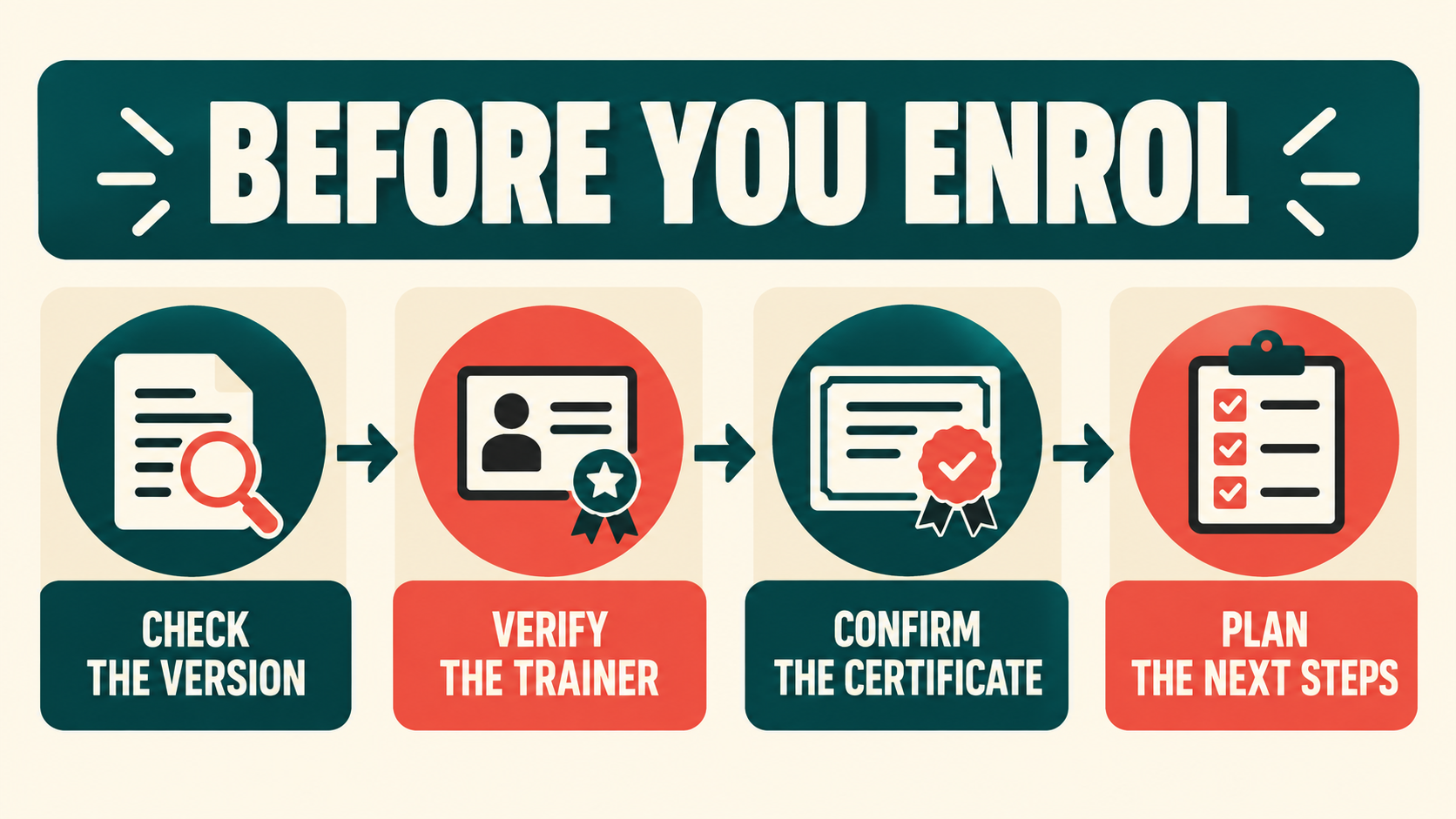
Before comparing instructors or prices, open the current official requirement page and write down the version that applies to your application date. The BACB’s 2026 40-hour training requirements state that applicants applying on or after January 1, 2026, must complete training that meets the 2026 requirements. Older pages, screenshots, and promotional copy may describe an earlier version.
Look for a course page that clearly identifies:
- the requirement version the course is designed to meet;
- the curriculum or content outline used;
- the training dates or completion window;
- the responsible trainer and their credentials; and
- the exact certificate documentation supplied at completion.
If a provider says only “BACB approved” without explaining what that means, pause and ask for documentation. The provider should not imply that the BACB endorses a particular private course unless an official source says so.
Confirm the 40-hour structure
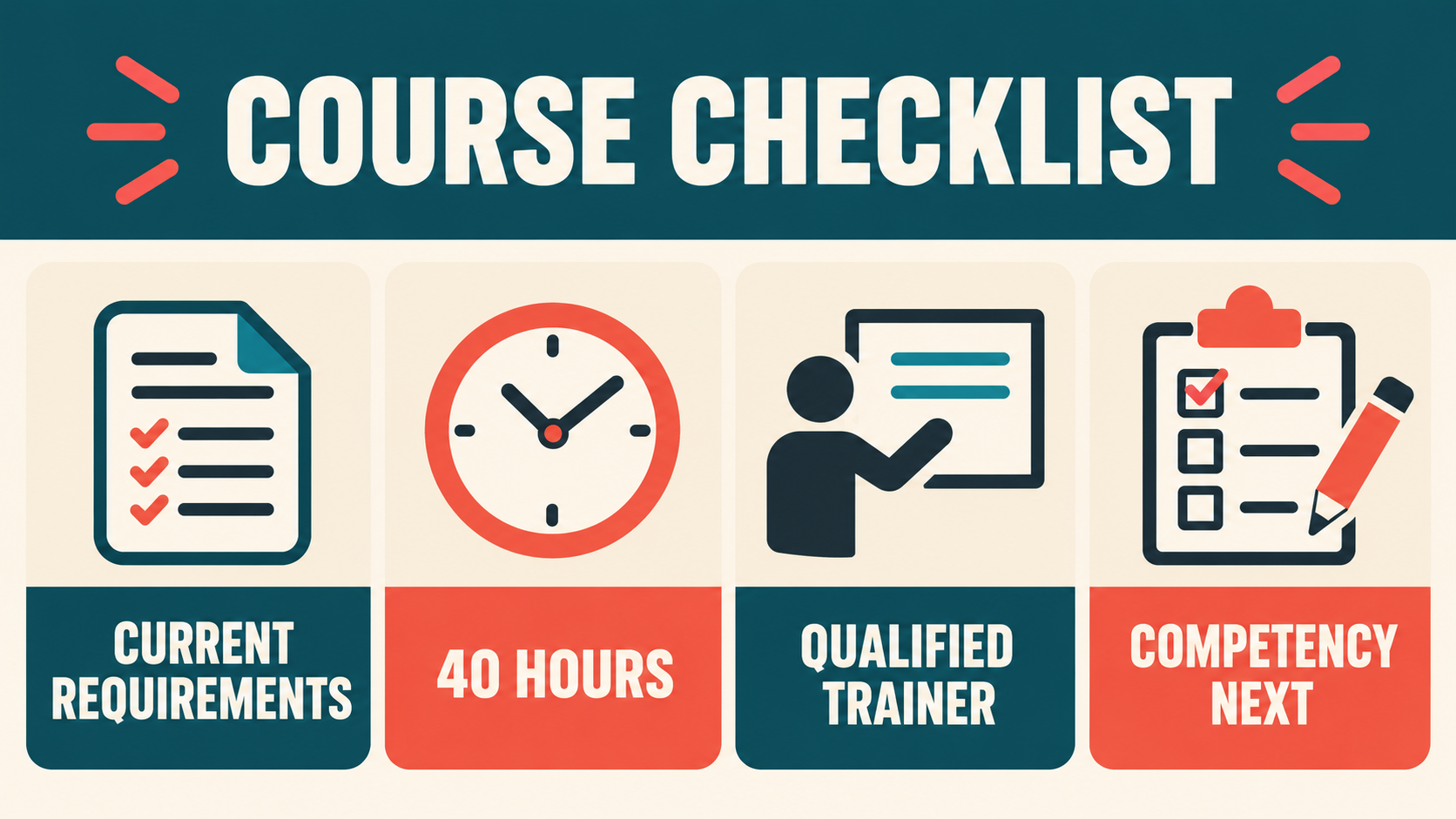
Under the BACB’s 2026 training outline, the course must cover the specified content in the context of behavior technician service delivery. The training must total at least 40 hours, be completed in no fewer than 5 days and no more than 180 days, and use an allowed delivery structure. Assigned reading alone does not count toward the overall training duration.
Ask the provider how the hours are calculated. A credible course should make it possible to distinguish instruction time from optional reading, marketing webinars, general orientation, or time spent waiting for access. If the advertised “40 hours” depends on untracked reading or a bundle of unrelated videos, the documentation may not mean what you expect.
Also check whether the course includes active learning. The current outline allows a combination of video-based or didactic instruction, modeling with examples and nonexamples, role-play with feedback, quizzes, interactive activities, and instructor-led discussion. A video library can be part of a course, but a learner should know what activities, checks, and records demonstrate completion.
Verify the responsible trainer
Trainer oversight is a central quality check. BACB’s current training requirements identify a responsible trainer who designs and oversees the program. The responsible trainer must meet the stated credential and supervision-training requirements, identify themselves at the outset and on the training documentation, maintain training records, and ensure the program follows the applicable requirements.
A provider may use assistant trainers, but that does not remove the responsible trainer’s accountability. Ask:
- Who is the responsible trainer?
- What is the trainer’s current certification status?
- Who will answer content or documentation questions?
- Will the trainer’s name and credentials appear on the certificate or required record?
- How does the provider retain attendance, activity, and completion records?
Be cautious with a course that lists only a brand name, anonymous instructors, or an unverified “expert team.” The learner needs a real route to verify who designed and oversaw the training.
Look beyond the course format
Online, in-person, and blended delivery can all be practical. Format alone does not tell you whether a course is useful or eligible. Compare the learning experience instead:
- Can you ask questions and receive instructor-led clarification?
- Are demonstrations tied to technician service delivery?
- Do activities include examples, nonexamples, rehearsal, or feedback?
- Can you access the content for the entire required completion window?
- Is attendance or completion recorded in a way you can document?
A short free course may be an excellent introduction and still not be a substitute for the current 40-hour training. Price and convenience are useful comparison factors, but they should come after requirement fit and documentation.
Read the certificate language
Do not wait until the final lesson to discover what the course certificate says. Ask for a sample certificate or written description before enrolling. The certificate should identify the learner, training program, dates or completion information, responsible trainer, and any statement required by the current rules.
The wording matters because “certificate of completion” can mean that you watched a provider’s material, while an application may require documentation showing that a specified training requirement was met. A certificate should not claim that the learner is an RBT, has passed the RBT exam, or is endorsed by the BACB unless that claim is supported by the appropriate authority.
Plan the steps after training
A good course explains what it does not do. After training, an applicant may still need an initial competency assessment, application documents, an eligible attestation, an approved application, and the examination. Timing rules can apply to the assessment and application, so plan around the current handbook rather than an old checklist.
Ask the provider these practical questions before you pay:
- Does this program state which current BACB training requirement it is designed to meet?
- Who completes or oversees the initial competency assessment?
- Is the assessment included, scheduled separately, or not offered?
- What documents will I receive and how long will records be retained?
- What support is available if a requirement changes before I apply?
No private course can guarantee application approval or examination success. The provider can give accurate records and preparation; the applicant remains responsible for checking current eligibility and submitting correct materials.
Recognize course red flags
Several warning signs deserve a pause:
- Outdated version: the page cites an old task list or training packet without a transition explanation.
- Guaranteed credential: the provider promises certification, a job, or exam success simply for paying.
- Unclear hours: the program counts optional reading, unrelated content, or untracked browsing as training time.
- Invisible trainer: credentials and responsible-trainer details are missing.
- Vague certificate: the provider will not show what completion documentation contains.
- Pressure to enroll: you are discouraged from checking the official handbook or asking for a refund policy.
One red flag does not prove that a course is invalid, but it does tell you to ask for evidence before enrolling. A transparent provider should welcome requirement-based questions.
Use a simple comparison worksheet
Put each course in a row and compare the same fields. Record the source or page where each answer appears:
| Check | Course A | Course B |
|---|---|---|
| Current requirement version | ||
| Total tracked hours and completion window | ||
| Responsible trainer and credentials | ||
| Active learning and feedback | ||
| Certificate details | ||
| Assessment and application support | ||
| Price, access, refund, and record policy |
The worksheet does not decide eligibility for you. It makes missing answers visible so you can verify them with the provider and the official BACB materials.
FAQ
Does every behaviour technician course qualify me to become an RBT?
No. Some courses are introductory, employer-based, or designed for general professional development. Confirm in writing whether the program is designed to meet the current RBT training requirement and then review the official eligibility pathway.
Is an online course acceptable?
The current BACB training requirements describe in-person and/or online delivery options, but the program still has to meet the content, duration, delivery, trainer, and documentation requirements. “Online” by itself is not proof of eligibility.
Can a course guarantee that I will pass the RBT exam?
No responsible provider can guarantee an exam result. A course can teach the required content and provide practice, while the applicant must meet eligibility requirements and pass the examination.
What should I check first?
Check the requirement version and responsible trainer first. If those details are unclear, price and marketing claims cannot tell you whether the program fits your intended pathway.
Key takeaways
Choosing a behaviour technician course is a documentation and fit decision, not just a price comparison. Verify the current requirement version, tracked hours, trainer oversight, active learning, certificate language, and post-training steps. Use the official BACB handbook and training outline as your reference, and treat any course as one part of the RBT pathway rather than a certification guarantee.
Ready to practice the RBT concepts you just reviewed?
Try an independent, original RBT practice resource with exam-style questions, scoring, and answer explanations.
References
- Behavior Analyst Certification Board. RBT Test Content Outline, 3rd edition.
- Behavior Analyst Certification Board. RBT Handbook.
- Behavior Analyst Certification Board. RBT Ethics Code.