

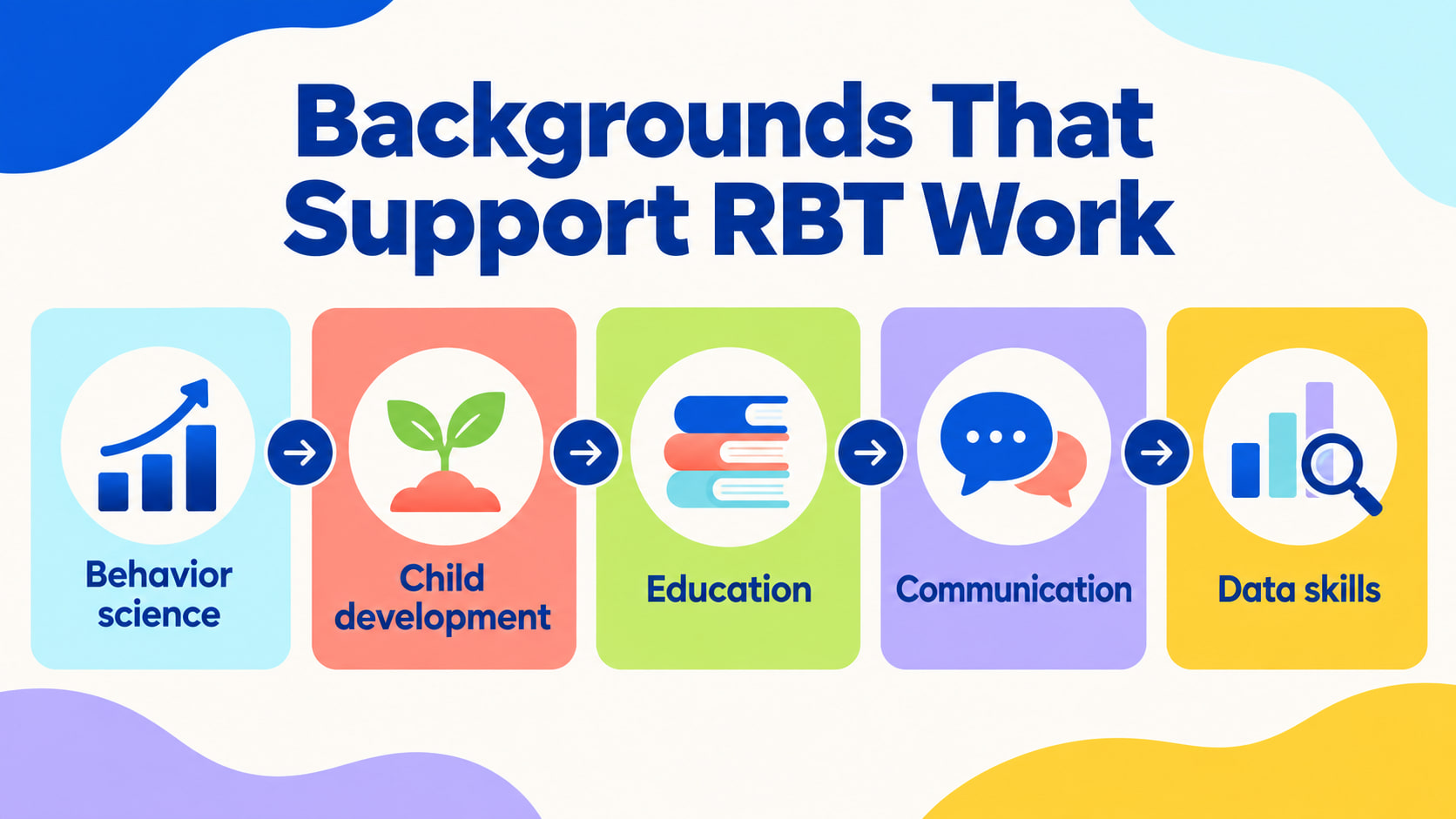
Training backgrounds for behavior technicians can include behavior science, child development, education, communication, and careful data work.
Table of Contents
- What training backgrounds for behavior technicians can mean
- Behavior science foundations
- Child development and learning
- Education and communication
- Data and documentation skills
- How to evaluate a training option
- Credential and role boundaries
- Frequently asked questions
- References
RBT CAREER · TRAINING FOUNDATIONS
Training Backgrounds for Behavior Technicians: What Helps RBT Work
How to evaluate relevant preparation in behavior science, child development, education, communication, and data skills without treating a background as a credential shortcut.
Training backgrounds for behavior technicians can include behavior science, child development, education, communication, and careful data work. These backgrounds may make some parts of RBT training easier to understand, but they do not automatically establish competence, satisfy certification requirements, or authorize independent clinical decisions.
Use this guide to compare learning foundations with the actual duties of an RBT. Check the current BACB requirements and employer process separately. A certificate, degree, or prior job title should be treated as context for training—not as a shortcut around current instruction, supervision, or competency assessment.
What training backgrounds for behavior technicians can mean
The phrase can refer to formal education, work experience, short courses, volunteer work, or skills developed in another support role. These categories are not interchangeable. A person may have strong communication experience but need more practice with operational definitions and data collection. Another person may understand behavior terminology but need training in dignity, privacy, prompting, or the specific client plan.
Start with the work the role requires. Ask whether the background helps a learner observe objectively, follow written procedures, record data accurately, communicate respectfully, respond to feedback, and recognize when to seek direction. Those are more useful questions than asking whether a background “looks impressive.”
Behavior science foundations
Introductory behavior science can help a learner understand observable behavior, antecedents, consequences, reinforcement, prompting, skill acquisition, and measurement. The value is practical when the learner can connect a definition to an example and then follow the authorized procedure without adding assumptions.
Study background is not the same as clinical authority. Knowing what reinforcement means does not authorize an RBT to choose a reinforcer, change a schedule, or design an intervention. The current plan and supervisor direction control implementation. A useful foundation helps the RBT ask a more precise question when the plan is unclear.
Child development and learning
Experience with child development, early learning, classrooms, camps, or family support may help someone notice communication, routines, play, independence, and age-related expectations. It can also support respectful interactions and realistic pacing.
However, a developmental expectation is not an operational definition. Avoid turning a general milestone into a conclusion about one learner. Record observable responses, follow the target definition, and bring concerns about progress or skill acquisition to the supervisor. A background in child development should make observation more careful, not more speculative.
Education and communication
Teaching, tutoring, coaching, and communication backgrounds can support clear instructions, active listening, modeling, feedback, and collaboration. These skills are useful when they remain aligned with the teaching procedure. An RBT may need to deliver an instruction consistently, use an authorized prompt, reinforce a response as programmed, and report what occurred.
Do not import an old classroom strategy simply because it worked in another setting. Classroom management, parenting advice, and behavior-analytic procedures may use similar words while having different definitions and limits. Ask which part of the current plan applies and what should happen when the learner responds differently than expected.
Data and documentation skills
Data skills are often more important than a particular job title. A strong learner can distinguish observation from interpretation, use the specified measure, record events at the right time, and identify missing or ambiguous information. Familiarity with spreadsheets can help organize information, but it does not replace learning the operational definition or recording rule.
Practice with fictional scenarios before handling real client information. For each scenario, identify the response, measurement, start and stop points, and what would be written in the approved record. Never change a measure because another one feels easier. Ask the supervisor how to handle a missed opportunity, device problem, or unclear event.
How to evaluate a training option
When comparing a course, degree, workshop, or employer onboarding program, check five features:
- Relevant: Does it teach skills connected to behavior-technician duties rather than only broad theory?
- Current: Does it identify its date, sources, and relationship to current BACB materials?
- Supervised: Does it explain who provides feedback and how competence is demonstrated?
- Observable: Does it include practice with definitions, data, procedures, communication, and documentation?
- Honest: Does it clearly state what the training does not provide, such as certification or independent clinical authority?
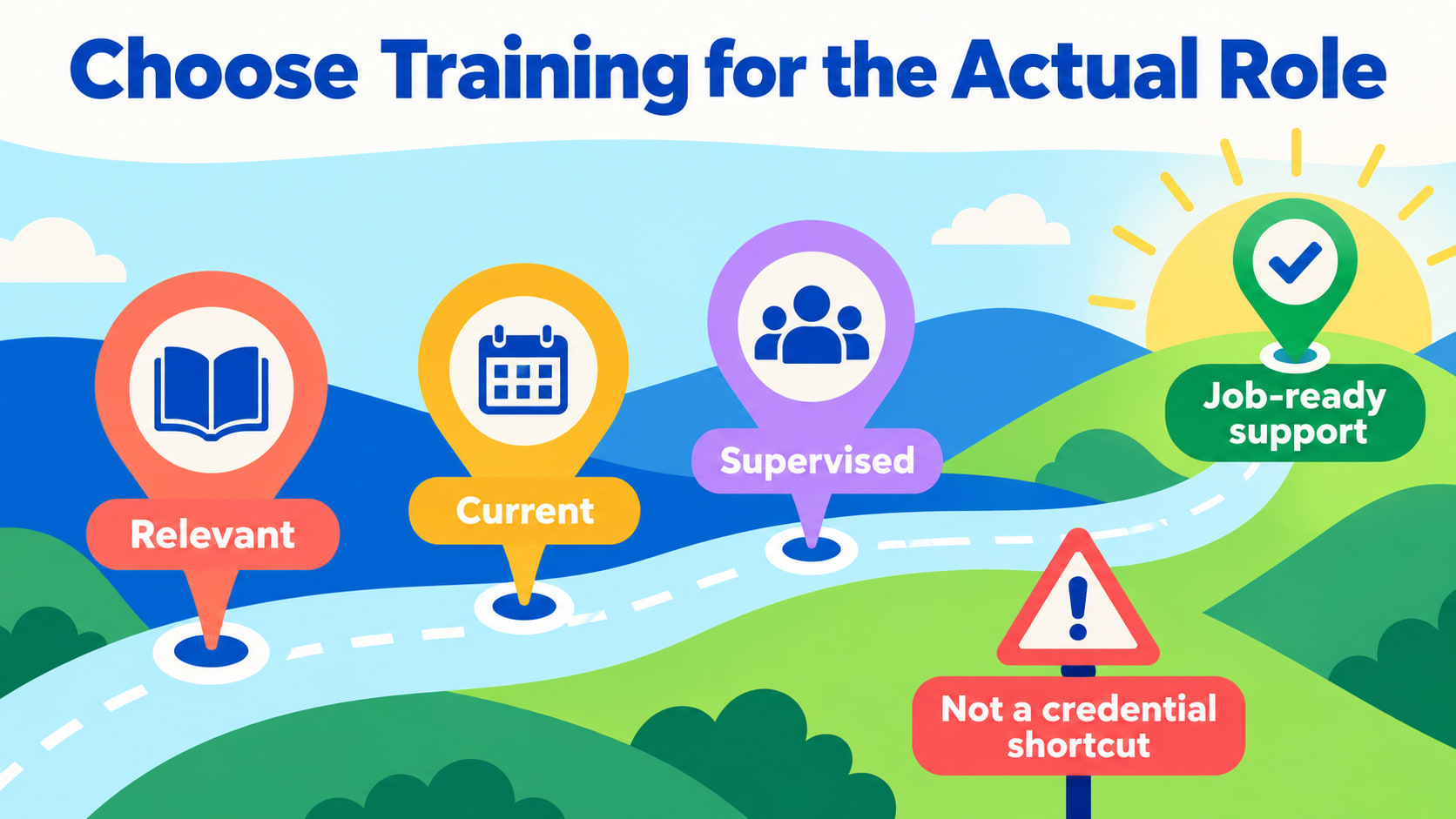
Be cautious when a provider promises guaranteed certification, instant competence, or a way around supervised requirements. Ask for the syllabus, instructor qualifications, practical components, refund terms, and the exact credential or completion record provided. Verify claims with the official source rather than relying on a marketing badge.
Also compare the support after the course. Can learners ask questions, repeat a skill, see an example of objective documentation, and receive correction before working independently? Training that only delivers information may leave a learner unsure how to apply a definition or record a response. A strong pathway makes the handoff to workplace orientation and supervision explicit.
Credential and role boundaries
Prior education and experience can support learning, but the current credentialing pathway, employer requirements, training, supervision, and competency assessment still apply. Do not represent a related degree or short course as an RBT credential. Do not represent volunteer experience as proof that a person can perform every procedure safely.
For applicants, the most useful comparison is often not “Which background sounds best?” but “Where are my gaps?” Make a short inventory of measurement, teaching procedures, communication, ethics, documentation, and supervision. Use the inventory to choose the next approved learning step and to tell a supervisor exactly where more practice is needed.
An RBT works within training and authorization, protects client dignity and privacy, implements assigned procedures, records objectively, and seeks direction when a question is outside the role. Background knowledge should improve humility and communication, not encourage independent treatment changes or unsupported certainty.
Frequently asked questions
Is a psychology degree required to become an RBT?
Do not assume that a particular degree replaces the current BACB and employer requirements. Check the current official pathway and the specific training and assessment steps that apply.
Which background is best for behavior technician work?
The best preparation is relevant, current, supervised, and practical. Behavior science, child development, education, communication, and data skills can all help, but no single background guarantees performance.
Does classroom experience count as RBT experience?
It may provide transferable skills, but classroom duties and RBT duties are not identical. Learn the current procedures, definitions, data rules, privacy requirements, and supervision process.
Can an online certificate replace supervised training?
Do not rely on a marketing claim. Compare the course with current official requirements and ask the employer or supervisor what training and assessment are still required.
Source note: Review the current BACB RBT Handbook, RBT content outline, official certification requirements, employer process, and supervisor direction for your situation. This article is educational and does not provide individualized legal, clinical, employment, or credentialing advice.
Ready to practice the RBT concepts you just reviewed?
Try an independent, original RBT practice resource with exam-style questions, scoring, and answer explanations.
References
- Behavior Analyst Certification Board. RBT Test Content Outline, 3rd edition.
- Behavior Analyst Certification Board. RBT Handbook.
- Behavior Analyst Certification Board. RBT Ethics Code.