
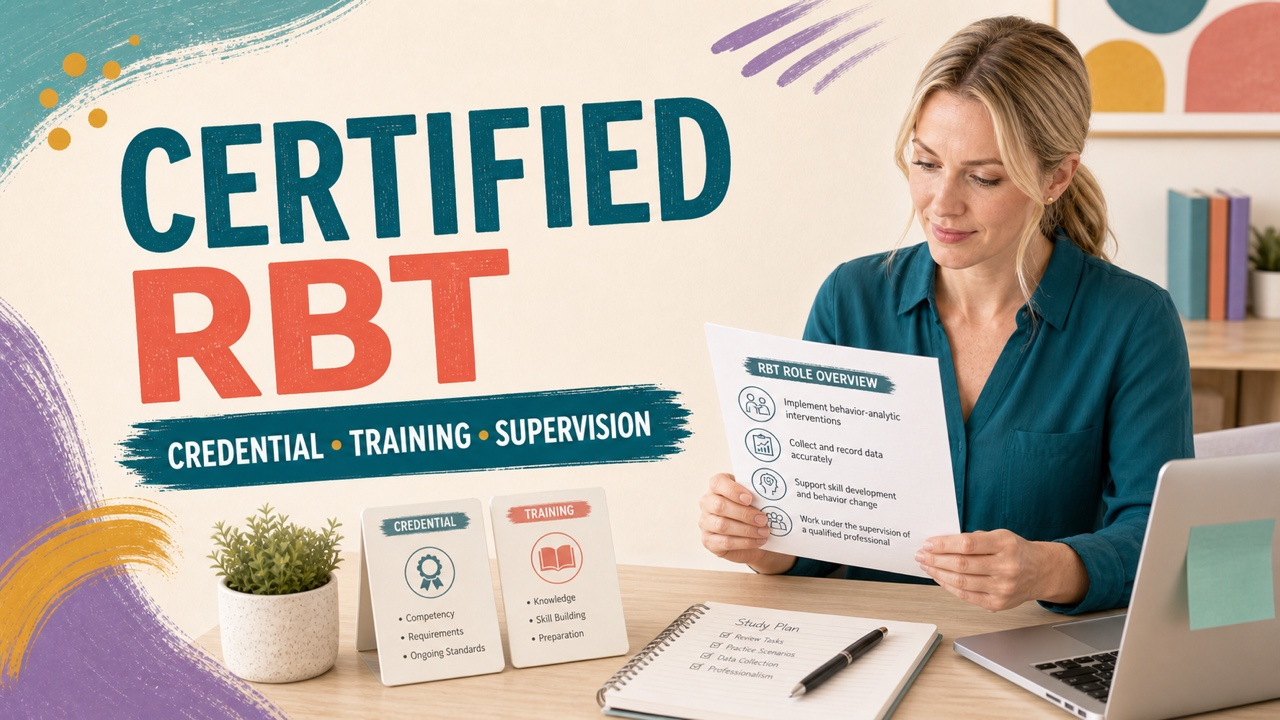
The phrase certified registered behavior technician combines a credential title with a status claim, so it deserves careful wording. A person is not a certified Registered Behavior Technician merely because they completed a course, passed a provider quiz, received a certificate of completion, or works in a behavior-support setting. The current BACB process controls the RBT credential. RBT Training is an independent study resource and is not affiliated with or endorsed by BACB.
Table of Contents
- certified registered behavior technician: credential versus label
- A practical status-verification framework
- How candidates can organize preparation
- What the credential does not authorize
- Use the current outline without overstating it
- Use precise language in public and clinical records
- Frequently Asked Questions
- References
Quick answer: Verify three things separately: the organization that issued the credential, whether the credential is current, and whether the person is working within the required direction and supervision structure. Keep training completion, application progress, and credential status as different records.
Study boundary: This is independent exam-preparation content, not an official BACB handbook, certification decision, task answer key, application determination, or source of secure exam material. The examples in this article are newly written for study. They are not official, recalled, leaked, or BACB-endorsed exam questions. Requirements and policies can change, so use the current BACB handbook and your supervisor or requirements coordinator for decisions about an individual application or client program.
certified registered behavior technician: credential versus label
People use job titles and search phrases loosely. “Behavior technician,” “RBT candidate,” “trainee,” and “certified registered behavior technician” are not interchangeable. The first may be an employer’s job label, the second may describe an application stage, and the third should be used only when the relevant BACB credential status is verified. When a profile or résumé is unclear, ask what the title means in that organization.
This distinction protects candidates and clients. It keeps a course provider from being mistaken for the credentialing organization, and it prevents a study article from sounding like an application decision. When a fact affects eligibility, use the current official Handbook or ask BACB rather than relying on a general explanation.
A practical status-verification framework
- Identify the credential: Write the exact credential name instead of a broad phrase such as “ABA certified.”
- Identify the issuer: Check whether the claim refers to BACB, an employer, a university, or a private training provider.
- Check current status: Use the official process or approved verification route that applies to the claim.
- Check the role: Confirm the supervision and direction structure for the services being provided.
- Check the scope: Do not infer permission to diagnose, select a function, or change a plan from the credential alone.
For example: A résumé says “certified” next to a course title but does not identify a BACB credential. The careful interpretation is “course completed,” pending verification of any separate RBT status. Clear wording is more useful than a stronger-sounding but unsupported claim.
How candidates can organize preparation
Start by reading current official sources and noting the version date. Then organize the preparation steps and documentation that the current process asks for. Connect study topics to the outline: observable definitions, measurement, prompting, reinforcement, teaching procedures, documentation, ethical conduct, and supervision. Use original scenarios to rehearse decisions, and keep a separate list of questions for the requirements coordinator.
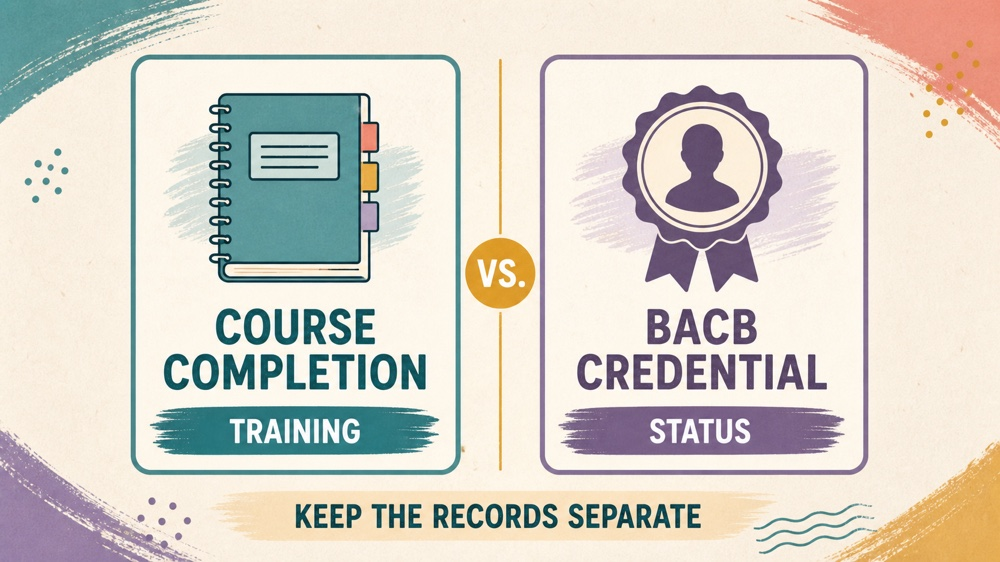
A training provider may explain concepts and issue its own completion record. That support can be valuable, but it does not make the provider the BACB or make the learner a certified Registered Behavior Technician. Avoid language that blends the two records.
What the credential does not authorize
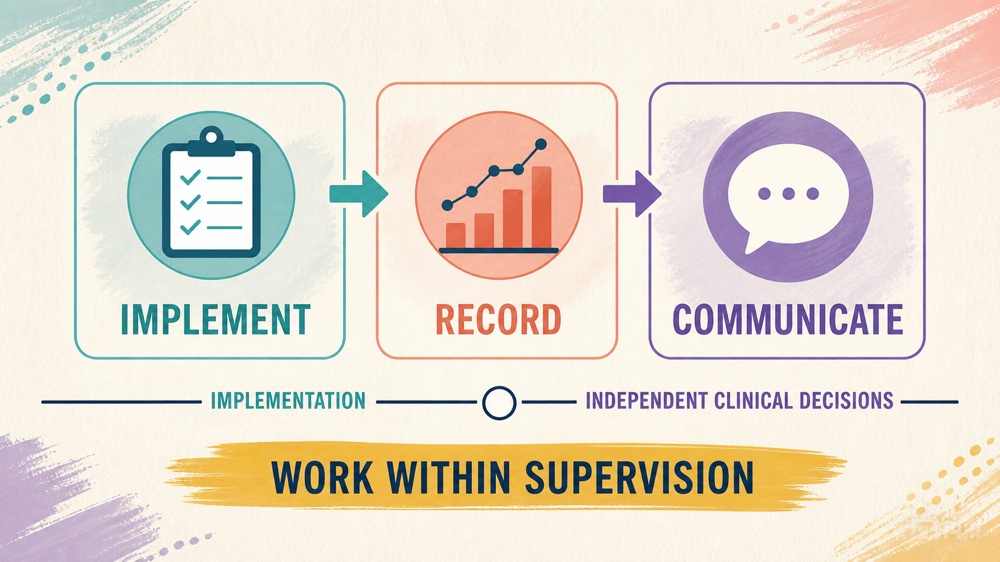
An RBT is a paraprofessional who provides services under required direction and supervision. When trained and authorized, an RBT may implement written procedures, collect data, support skill acquisition, document objectively, and communicate concerns. Credential status does not independently authorize diagnosis, assessment conclusions, functional claims, treatment-plan changes, or decisions outside the written plan.
If a safety event or unclear instruction occurs, follow the plan’s immediate safety and communication route. A careful note records what happened, what was measured, what assistance was provided, and who was contacted. It does not turn an observation into a clinical conclusion.
Use the current outline without overstating it
The current RBT Test Content Outline is a content blueprint. It can help candidates sort notes and identify practice gaps, but it is not a list of secure questions, a credential, or an application approval. For each practice item, ask whether the answer depends on a definition, a measurement rule, an authorized procedure, or supervision.
Current exam frame: The current RBT Test Content Outline (3rd ed.) applies beginning January 1, 2026. It describes 43 tasks across six content domains. The current examination format is 75 scored questions plus 10 unscored pilot questions, four answer choices per item, and a 90-minute testing period. These facts explain the study frame; they do not turn an independent guide into an official BACB resource.
These details establish a current study frame only. The current Handbook controls changing requirements, and neither a study resource nor a practice score can determine or promise an individual examination outcome.
Use precise language in public and clinical records
In a public profile, distinguish “RBT credential” from “completed RBT preparation course.” In a clinical record, avoid adding credential claims that are not needed for the observation. Protect identifying information and use the organization’s approved system. If a title is unclear, ask the supervisor or organization to define it before using it in a client-facing context.
- Say what is verified and what is still pending.
- Use the issuer’s exact credential name.
- Keep course completion separate from certification status.
- Describe supervision and authorization accurately.
- Recheck current official sources when requirements change.
Study the RBT concepts behind the title
Use independent study materials to review measurement, teaching, documentation, ethics, and supervision, then verify credential questions against current BACB sources.
Review the RBT resource →
Frequently Asked Questions
What is a certified registered behavior technician?
It is a person who holds the applicable BACB Registered Behavior Technician credential. The current official process controls whether the credential is issued and maintained.
Does finishing a course make someone an RBT?
No. Course completion and BACB credential status are separate records.
Can an RBT work independently?
The RBT role remains within required direction and supervision. Certification does not authorize independent diagnosis or plan changes.
How can a candidate avoid a misleading credential claim?
Name the issuer, distinguish training completion from certification, verify current status, and avoid claiming more scope than the role permits.
Are these official BACB examination questions?
No. The examples are newly written independent study content and are not official, recalled, leaked, or BACB-endorsed exam questions.
References
- Behavior Analyst Certification Board: Registered Behavior Technician Handbook, updated June 2026.
- Behavior Analyst Certification Board: RBT Test Content Outline (3rd ed.).
- Behavior Analyst Certification Board: RBT resources.
- Behavior Analyst Certification Board: RBT Ethics Code.
- RBT Training: independent exam study materials.