

Is being a behavior technician hard? The honest answer is that the work can be demanding, but difficulty depends on training, support, caseload, communication, and the fit between the role and the person. RBTs implement assigned behavior-analytic services under direction and close supervision; they do not work as independent treatment designers. The daily challenge is often the combination of careful observation, consistent teaching, accurate data, emotional regulation, documentation, and professional boundaries. This independent guide explains what makes the role challenging and what makes it learnable. Use it to prepare questions for a supervisor or employer, not to predict one person’s experience. A realistic view is more useful than either a promise that the job is easy or a dramatic warning that the job is impossible. The right preparation turns vague anxiety into specific skills, routines, and support requests.
Table of Contents
- What makes behavior technician work challenging?
- The first learning curve is precision
- Emotional regulation is part of the job
- Data collection takes attention
- Consistency does not mean doing everything alone
- How to assess a workplace before accepting
- Build a manageable study and work routine
- Signs that you need more support
- Is being a behavior technician hard? A practical checklist
- Frequently Asked Questions
- References
Continue your RBT study with RBT exam study materials and original practice resources.
Quick answer: Treat is being a behavior technician hard as a source-controlled RBT study topic. Define the issue, connect it to observable action, use original examples, and keep the supervision boundary visible.
Study boundary: This independent guide is educational content. It is not a BACB policy, certification decision, legal opinion, answer key, or guarantee of examination success. Examples are original and are not official, recalled, leaked, or BACB-endorsed questions.
Current exam context: The current BACB RBT Test Content Outline describes 43 tasks across six domains; the examination includes 75 scored questions and 10 unscored pilot questions in a 90-minute testing period. Verify the current handbook and outline before relying on a time-sensitive detail.
What makes behavior technician work challenging?
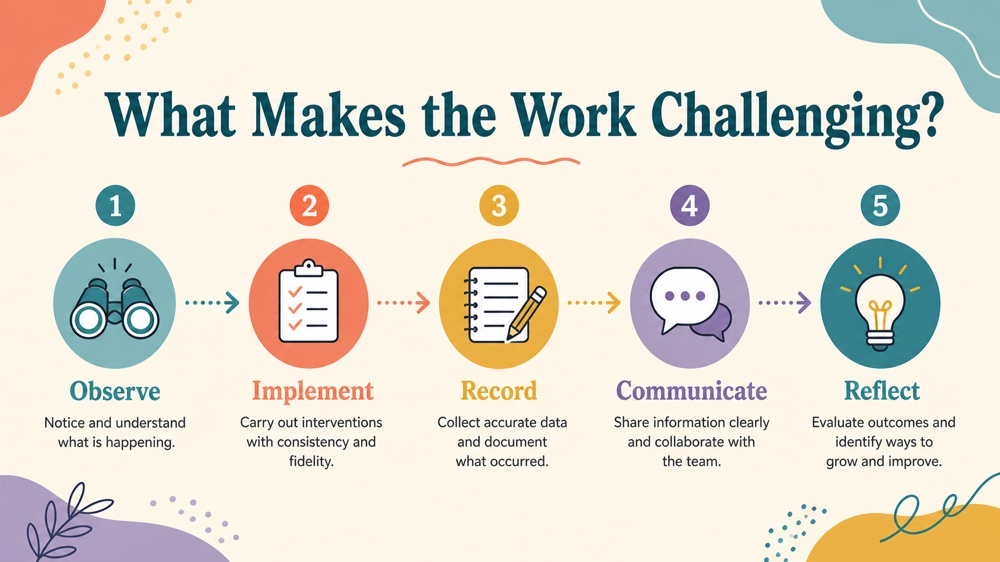
The role asks you to notice small changes, follow a written plan, respond calmly when behavior changes, and record what occurred without embellishment. Those demands happen in real time, often while the learner, family, or setting is changing. Difficulty is not proof that someone is failing; it is a signal to identify the skill or support that needs strengthening.
The first learning curve is precision
New technicians may need practice with operational definitions, measurement rules, prompting, reinforcement, error correction, and session notes. Ordinary words such as calm, better, or difficult are not enough for reliable data. Training becomes easier when each term is tied to an observable action, a start and stop rule, and the written program.
Emotional regulation is part of the job
A session can include refusal, escalation, unexpected schedule changes, or slow progress. The technician must protect dignity and safety while following the assigned plan. Prepare by rehearsing neutral language, pause points, safety procedures, and the route for calling the supervisor. You are responsible for professional conduct, not for controlling every outcome.
Data collection takes attention
Collecting data while teaching or supporting routines can feel difficult at first. Use the approved measure, define what one mark means, and avoid filling gaps from memory. A short pre-session check of materials and a post-session check of notes can reduce preventable errors. If the measure is not clear, ask before improvising.
Consistency does not mean doing everything alone
RBT practice is supervised. Consistency means implementing the assigned procedure as trained, communicating changes, and documenting relevant facts. It does not mean independently diagnosing, redesigning treatment, changing reinforcement criteria, or making promises to a family. A strong support system makes consistent work more realistic.
How to assess a workplace before accepting
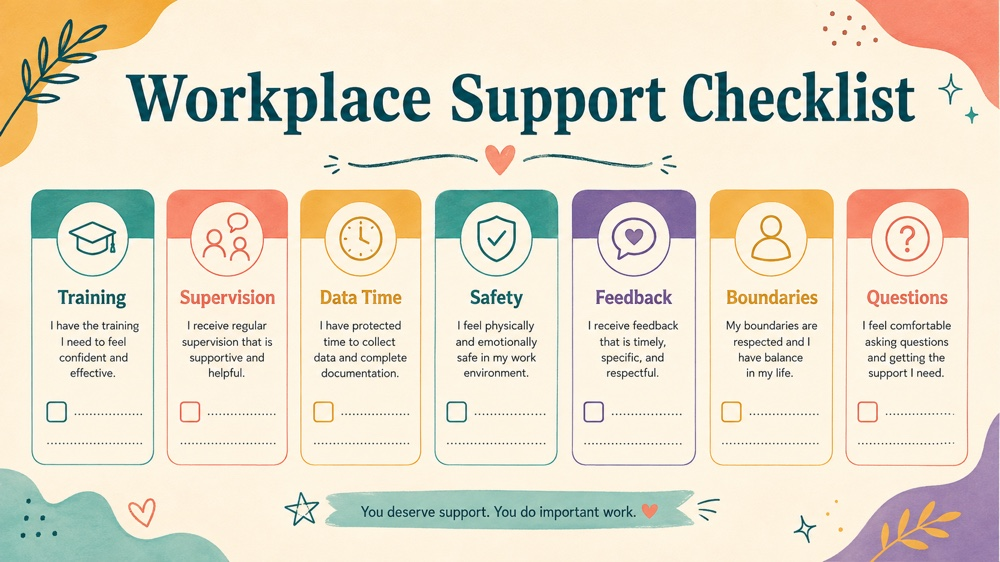
Ask about orientation, observation, supervision frequency, feedback, travel, cancellations, documentation time, safety training, pay rules, and who answers urgent questions. Ask how the employer handles a mismatch between a written plan and what happens in the setting. Specific answers reveal more than a general statement that training is provided.
Build a manageable study and work routine
Use short retrieval sessions, one skill target at a time, original scenarios, and a source log. After work, record one observable success, one uncertainty, and one question for supervision. Separate fatigue from lack of ability; sleep, schedule, transportation, and caseload can affect performance. Revisit the plan with the supervisor rather than silently compensating.
Signs that you need more support
- You are asked to perform a procedure you have not been trained to implement.
- The written plan is unclear or conflicts with a safety instruction.
- You cannot collect the assigned data reliably during the session.
- Feedback is absent, vague, or focused on blame rather than skill building.
- Privacy, consent, or professional boundaries are being ignored.
- You feel unsafe or are pressured to work outside your competence.
- You need clarification but do not know who is responsible for answering.
Is being a behavior technician hard? A practical checklist
- Can I describe the daily duties in observable terms?
- Do I know who supervises me and how feedback is delivered?
- Have I practiced the assigned data system?
- Do I know the safety and escalation route?
- Can I state what is outside my role?
- Have I asked about documentation and travel time?
- Do I have a plan for recording questions and reviewing them?
Being a behavior technician can be demanding, and it can also be learnable with training, supervision, safe conditions, and realistic expectations. RBT Training is independent educational content and is not affiliated with or endorsed by BACB.
Practice the concept
Review is being a behavior technician hard with original RBT scenarios, current-source reminders, and clear role boundaries.
Review the RBT study resource →
Frequently Asked Questions
Is being a behavior technician hard for beginners?
It can feel demanding while you learn precision, data collection, communication, and routines. Training and close supervision make the learning curve more manageable.
What is the hardest part of RBT work?
The answer varies, but common challenges include consistent implementation, accurate data during active sessions, emotional regulation, and clear communication.
Should an RBT work independently?
RBTs implement assigned services under direction and close supervision; the role does not authorize independent clinical decisions.
Are the examples official BACB questions?
No. They are original educational scenarios and are not official, recalled, leaked, or BACB-endorsed.
References
- Behavior Analyst Certification Board: Registered Behavior Technician Handbook, updated June 2026.
- Behavior Analyst Certification Board: RBT Test Content Outline (3rd ed.).
- Behavior Analyst Certification Board: RBT resources.
- Behavior Analyst Certification Board: ethics resources.
- Behavior Analyst Certification Board: RBT Ethics Code (2.0).