

A registered behavior technician skills resume should show what you can do in observable, job-related language. Replace vague claims with evidence about objective data, assigned procedure implementation, communication, documentation, privacy, feedback, and scope. Keep examples de-identified and never claim independent clinical decisions that belong to a supervisor.
Table of Contents
- Registered behavior technician skills resume: the short answer
- Choose the right skill categories
- Write stronger resume bullets
- Show evidence without exaggeration
- Protect client privacy
- Avoid common resume mistakes
- Final resume checklist
- Frequently asked questions
RBT resume skills, evidence, data, implementation, communication, privacy, and scope
Registered Behavior Technician Skills Resume: Turn Work Into Evidence
Use observable, honest bullets that show how you work without exposing client information or overstating your role.
A registered behavior technician skills resume should show what you can do in observable, job-related language. Replace vague claims with evidence about objective data, assigned procedure implementation, communication, documentation, privacy, feedback, and scope. Keep examples de-identified and never claim independent clinical decisions that belong to a supervisor.
Your resume should also state your credential status accurately. Training completed, an application submitted, examination authorization, certification, and current maintenance are not interchangeable. Use the current official process and your actual records when describing them.
Registered behavior technician skills resume: the short answer
Build the skills section around four questions:
- What observable work did I perform?
- What procedure, data system, communication practice, or privacy rule did I use?
- What evidence can I describe without identifying a client?
- What result can I state honestly, without claiming causation or clinical authority I do not have?
Choose the right skill categories
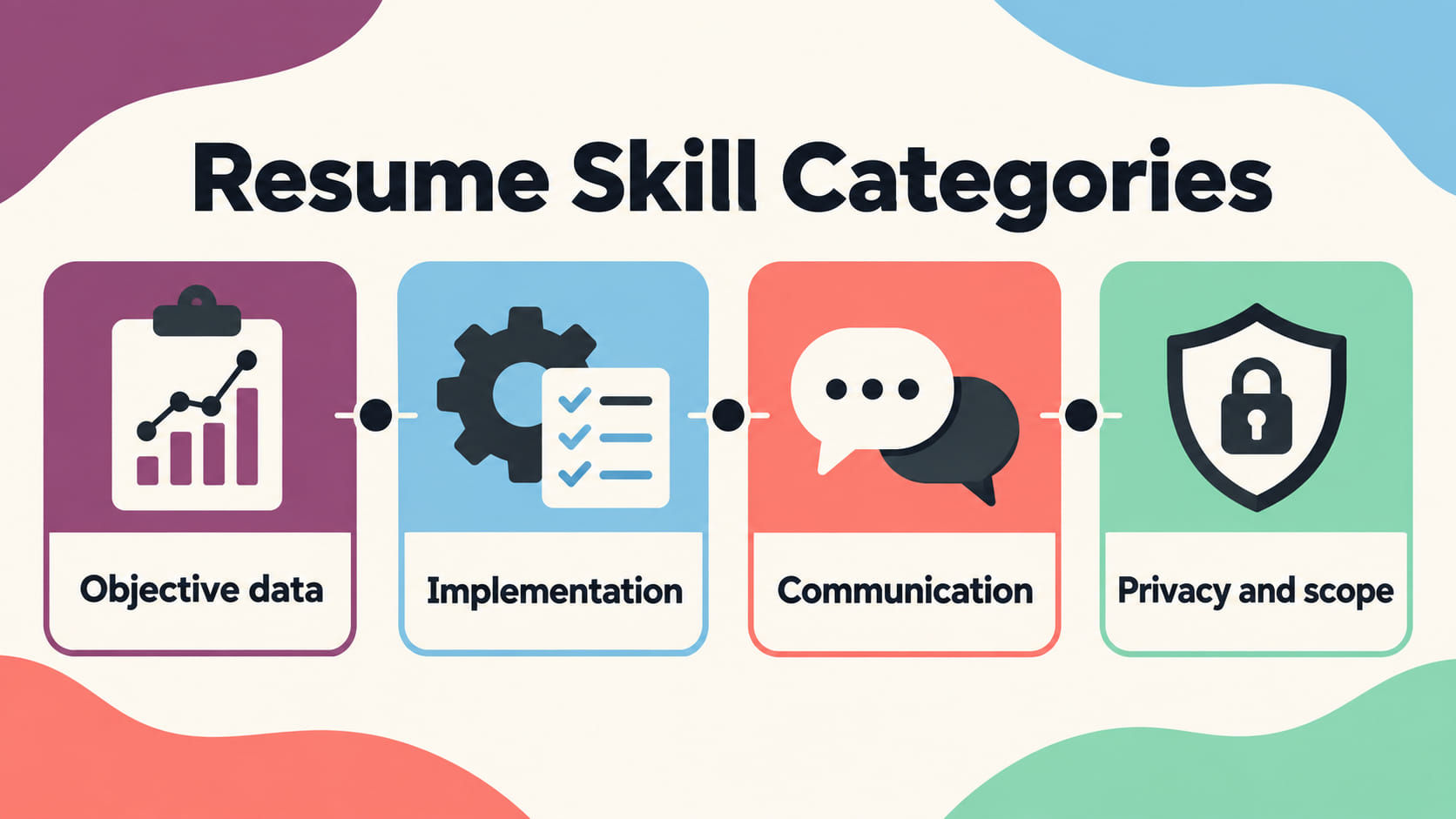
Objective data: describe how you recorded a defined measurement system, entered data accurately, checked for missing information, or communicated an unusual pattern. Avoid claiming that you independently selected the measurement system unless that was genuinely part of your role.
Implementation: mention following assigned skill-acquisition, behavior-reduction, prompting, reinforcement, or data-collection procedures under supervision. Use the language of implementation, not independent plan design. If you practiced a procedure in training rather than with clients, label it as training practice.
Communication: show that you gave objective updates, asked focused questions, accepted feedback, coordinated with the team through approved channels, or used a taught communication support. “Great communicator” is less useful than a specific behavior.
Privacy and scope: show that you protected records, used approved systems, avoided public disclosure, recognized uncertainty, and escalated a question. These skills help an employer see how you protect clients and work within supervision.
Reliability and organization: if accurate, describe punctual documentation, preparation of materials, consistent use of checklists, and timely communication about schedule or safety changes. Do not turn attendance into a promise you cannot support.
Write stronger resume bullets
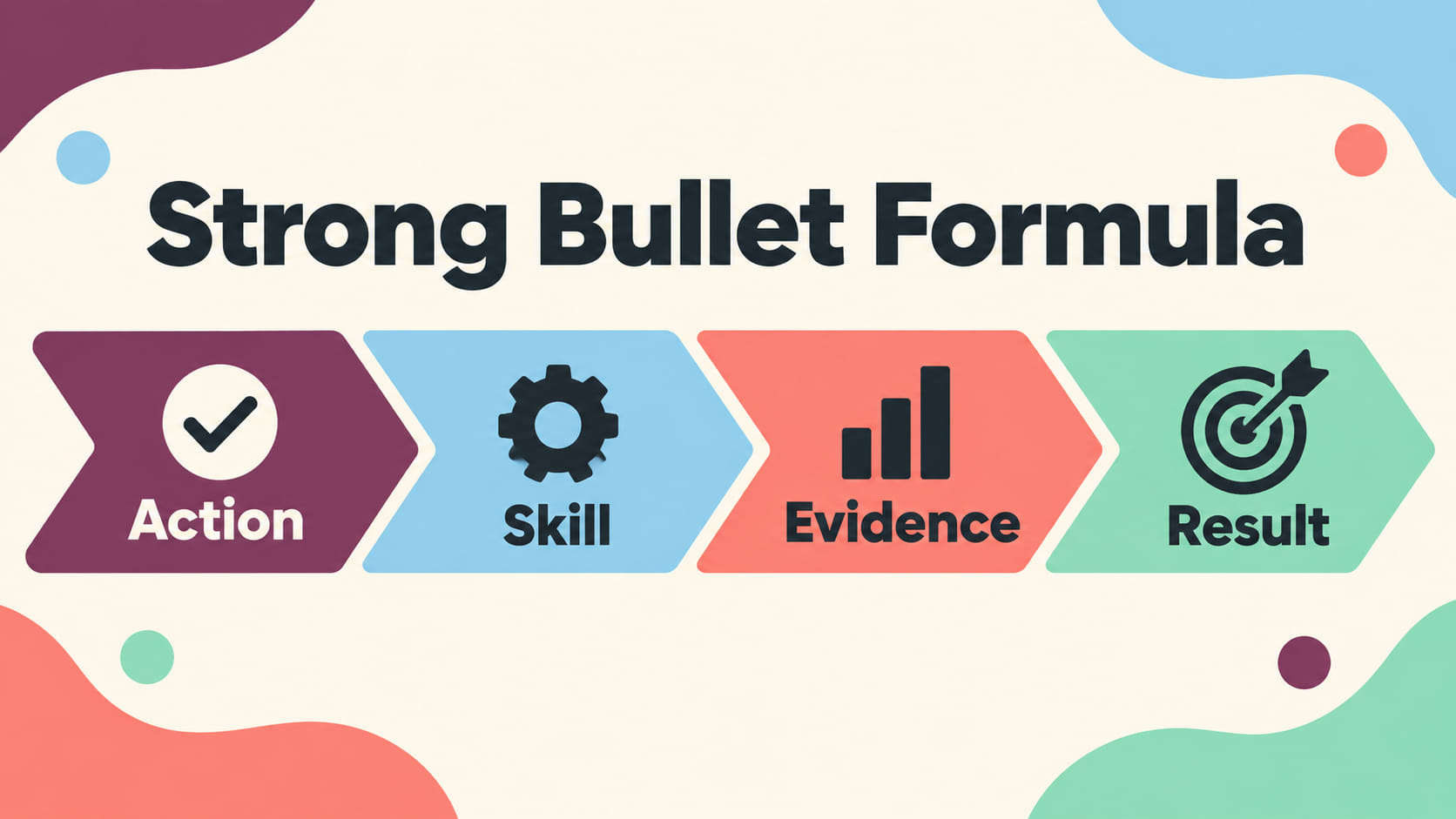
A useful bullet often follows this formula: action + skill + evidence + result. For example:
- “Recorded assigned frequency and duration measures in the approved data system, checked entries for completeness, and raised unclear definitions during supervision.”
- “Implemented supervisor-directed prompting and reinforcement procedures across scheduled practice opportunities while documenting prompts and learner responses objectively.”
- “Prepared de-identified session materials, followed privacy procedures, and communicated safety or plan questions through the designated supervision channel.”
These bullets show actions without claiming an unsupported clinical outcome. If you have a real measurable result, state the source and context honestly: “completed documentation for scheduled sessions with no missing required fields during the reviewed period.” Do not invent percentages, caseloads, or improvement claims.
Show evidence without exaggeration
Separate experience from exposure. “Implemented a supervisor-directed procedure during paid sessions” is different from “studied reinforcement in a course.” Both can matter, but an employer needs to know where the skill was learned and whether it was observed.
Use accurate verbs:
- Implemented: you carried out an assigned procedure.
- Recorded: you entered or maintained defined data or documentation.
- Observed: you watched a model or session and learned from it.
- Practiced: you rehearsed a skill in training or role-play.
- Escalated: you brought uncertainty, risk, or a mismatch to the correct supervisor.
- Supported: you helped with preparation, communication, or a team process within your role.
Avoid verbs such as diagnosed, designed treatment, prescribed, or independently modified a plan unless a different role and qualification genuinely authorize them. An RBT resume should make supervision and scope visible, not hide them.
Protect client privacy
Never put a client’s name, initials, diagnosis, address, school, exact schedule, photo, video, record excerpt, or uniquely identifying story into a resume. Even a “success story” can identify a person when combined with a setting and date.
Use neutral descriptions such as “pediatric home-based services” only when the description is necessary and not identifying. If a number or result could identify a client or reveal a private record, leave it out or use an approved aggregate description. Ask the employer or supervisor if you are unsure.
Do not send a private client note as a writing sample. Create an original fictional example or use a properly authorized template that contains no real information. Privacy is part of the skill you are demonstrating.
Avoid common resume mistakes
- Vague traits: replace “hardworking” with a job-related action and evidence.
- Credential confusion: distinguish training, application, examination, certification, and maintenance.
- Scope inflation: do not describe supervised implementation as independent clinical design.
- Invented outcomes: never create numbers, pass rates, caseloads, or client improvements.
- Client details: remove names, locations, dates, images, and recognizable stories.
- Keyword stuffing: use a few accurate skills in context instead of repeating the same phrase.
Final resume checklist
- Every skill is connected to work, training, observation, or practice truthfully.
- RBT credential status and dates are accurate.
- Bullets describe observable actions and avoid unsupported clinical claims.
- Supervision, feedback, communication, privacy, and documentation skills are visible.
- No client or caregiver can be identified from the examples.
- The job’s actual duties and setting are reflected in the language.
- The resume does not promise certification, employment, or a clinical outcome.
Frequently asked questions
What skills belong on a registered behavior technician resume?
Use accurate, job-related skills such as objective data collection, assigned procedure implementation, documentation, communication, privacy, accepting feedback, preparation, and recognizing when to seek supervision.
How do I describe RBT experience without sharing client information?
Use de-identified setting and task descriptions, remove names and unique details, and avoid copying notes or stories. If a result could identify a client, leave it out or use an approved aggregate description.
Can I list RBT training before certification?
Yes, if you describe it accurately as training and state your current credential status. Do not imply that a course, application, or exam authorization equals current certification.
Should an RBT resume say “independent”?
Use the word carefully. Describe independent organization or timely documentation only when accurate, and keep clinical implementation, plan changes, and decisions within the applicable supervision and scope boundaries.
Role reminder: This is educational information, not hiring, certification, employment, or clinical advice. Represent your actual experience accurately, protect privacy, and verify current credential details before applying.
Official starting points: the BACB RBT page, RBT Handbook, supervision and training resources, and RBT Ethics Code.
Ready to practice the RBT concepts you just reviewed?
Try an independent, original RBT practice resource with exam-style questions, scoring, and answer explanations.
References
- Behavior Analyst Certification Board. RBT Test Content Outline, 3rd edition.
- Behavior Analyst Certification Board. RBT Handbook.
- Behavior Analyst Certification Board. RBT Ethics Code.