
The 25 essential skills for the successful behavior analyst are not a personality type or a promise of career success. They are practice habits: define behavior clearly, use evidence, communicate with a team, protect dignity and privacy, stay within competence, accept feedback, and follow through on decisions. Different roles require different levels of responsibility, so the current credentialing and supervision requirements still matter.
Table of Contents
- 25 essential skills for the successful behavior analyst: the short answer
- Skills for observing and using evidence
- Skills for planning and practice
- Skills for communication and collaboration
- Skills for ethical professional work
- How to build the skills without overclaiming
- Frequently asked questions
Behavior analyst skills, evidence use, ethics, collaboration, supervision, and professional growth
25 Essential Skills for the Successful Behavior Analyst
A practical map of habits that support clear evidence, ethical judgment, teamwork, and dependable follow-through.
The 25 essential skills for the successful behavior analyst are not a personality type or a promise of career success. They are practice habits: define behavior clearly, use evidence, communicate with a team, protect dignity and privacy, stay within competence, accept feedback, and follow through on decisions. Different roles require different levels of responsibility, so current credentialing and supervision requirements still matter.
A list is most useful when it becomes observable. Instead of saying “be a good communicator,” ask whether the professional can explain a decision, listen to a concern, document the relevant facts, and confirm the next step without exposing private information.
25 essential skills for the successful behavior analyst: review list
Use the list as a review prompt, not as a promise that one article replaces supervised training or professional judgment. Connect each skill to the role, current policy, and the evidence you are expected to document.
25 essential skills for the successful behavior analyst: practice plan
Choose one skill at a time, identify the observable behavior, practice it with appropriate guidance, and record the feedback that changes the next attempt.
25 essential skills for the successful behavior analyst: the short answer
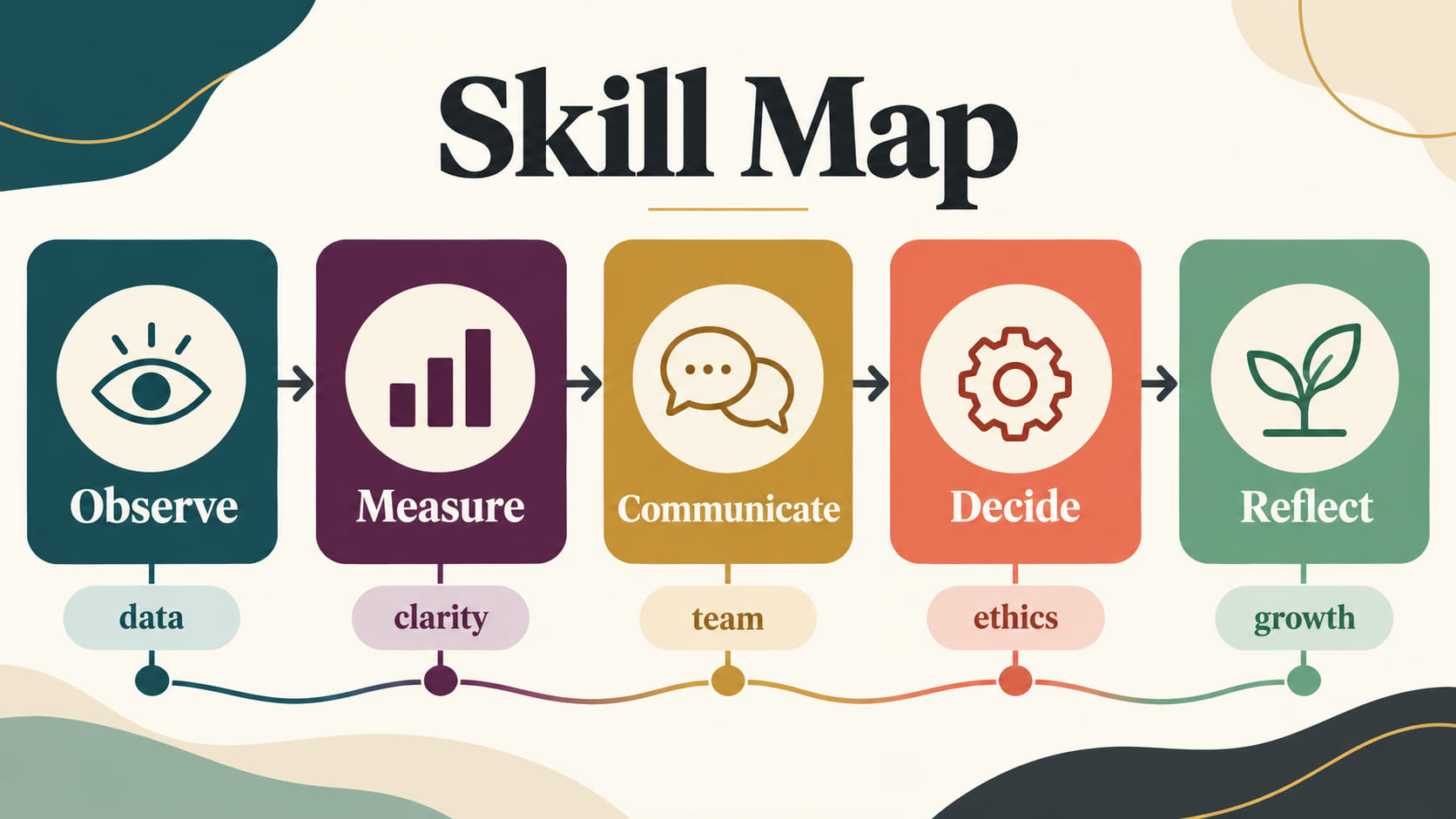
Think of the skills in five groups:
- Evidence: observe, define, measure, graph, analyze.
- Practice: assess, plan, teach, adapt, evaluate.
- Collaboration: listen, explain, coordinate, train, give feedback.
- Professionalism: protect privacy, respect dignity, stay competent, manage boundaries, use ethics.
- Follow-through: prioritize, document, reflect, escalate, improve.
Skills for observing and using evidence
- Observe carefully: notice what happens before, during, and after a response without replacing facts with assumptions.
- Define behavior: use observable, measurable language so different team members can identify the response consistently.
- Measure consistently: select and use the defined measurement system rather than changing it to make a session look better.
- Organize data: keep records accurate, timely, privacy-protective, and useful for the decision at hand.
- Read patterns: compare data across relevant conditions and avoid treating one point as a complete conclusion.
Evidence skill is not the same as using numbers to sound authoritative. A useful analyst can explain what the data do show, what they do not show, and what additional information is needed.
Skills for planning and practice
- Ask a focused question: connect assessment and intervention decisions to a meaningful, observable concern.
- Assess context: consider setting events, communication, task demands, materials, skills, preferences, and barriers.
- Plan clearly: describe who does what, when, with which materials, and how progress will be reviewed.
- Teach systematically: use consistent cues, prompts, reinforcement, error correction, and fading when assigned.
- Evaluate effects: check whether the plan changes the defined outcome under relevant conditions.
Planning skill includes knowing when not to improvise. An RBT or trainee may observe and report useful information, but the level of independent decision-making depends on role, competence, supervision, and current requirements.
Skills for communication and collaboration
- Listen for the person’s priorities: make space for the learner, family, and team to describe what matters to them.
- Explain without jargon: translate technical terms into clear, respectful language.
- Ask clarifying questions: confirm the goal, procedure, data definition, and responsibility before acting.
- Coordinate roles: make handoffs, schedules, records, and decision authority visible to the team.
- Give usable feedback: describe the observed behavior, the impact, the next step, and the support needed.
Collaboration does not mean agreeing with every request. A professional can acknowledge a concern, explain a boundary, and bring a disagreement to the appropriate review process without becoming dismissive or defensive.
Skills for ethical professional work
- Protect privacy: use only necessary information and approved communication and record systems.
- Respect dignity: communicate about people respectfully and avoid unnecessary coercion, shame, or exposure.
- Know your scope: identify what you can do, what needs supervision, and what requires another professional.
- Use supervision: bring uncertainty, risk, errors, and limits to the responsible supervisor early.
- Manage boundaries: recognize gifts, social contact, conflicts, dual relationships, and private favors as reviewable issues.
- Recognize conflicts: identify when incentives, relationships, or competing duties could affect judgment.
- Respond to risk: use the organization’s escalation route for safety, privacy, abuse, neglect, or other urgent concerns.
- Document honestly: record what happened, what was observed, and what was decided without copying, backdating, or hiding errors.
- Accept correction: treat feedback as information for better practice rather than as a threat to identity.
- Keep learning: review current official sources, seek training, and update procedures when requirements or evidence change.
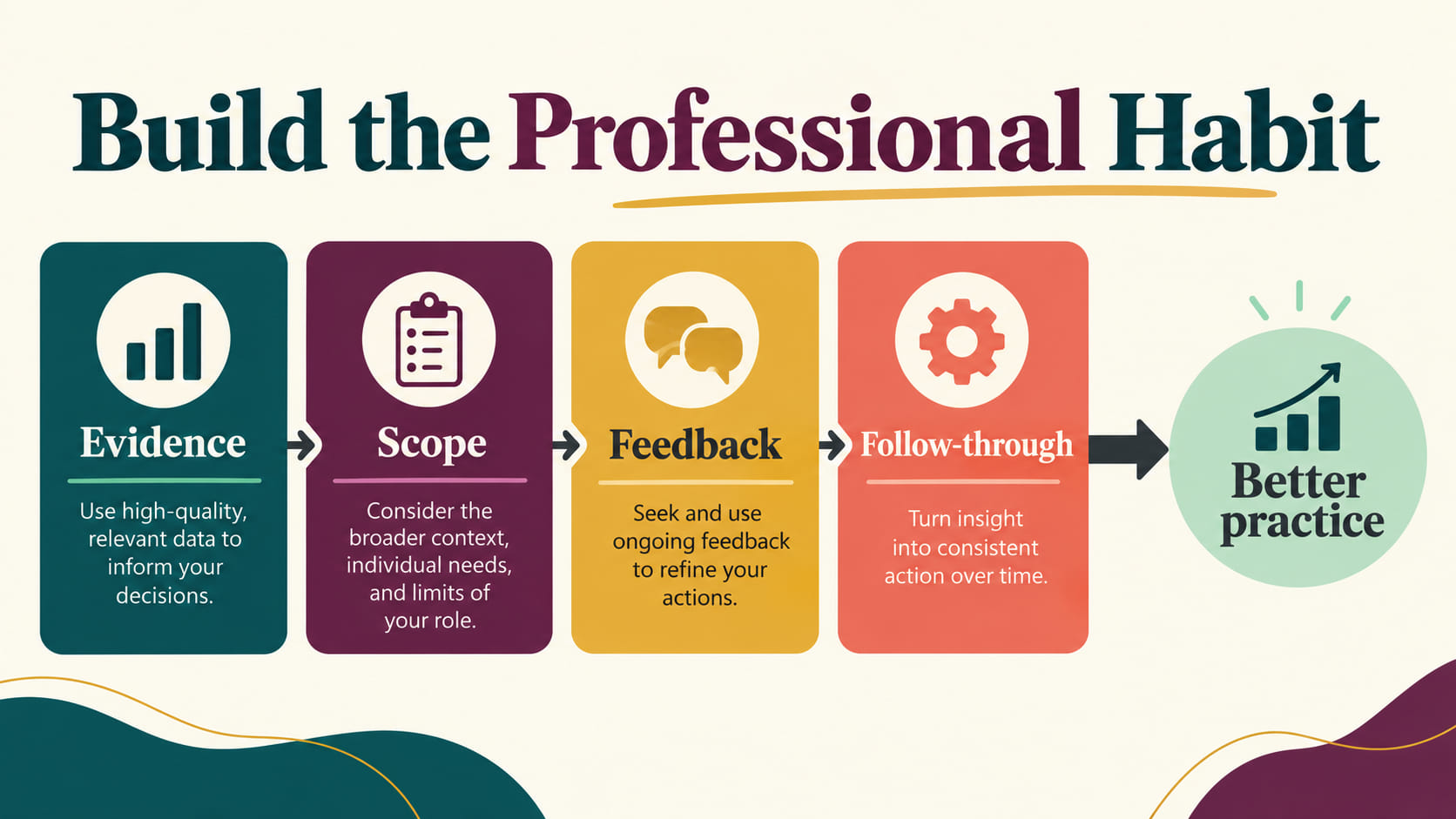
These skills reinforce one another. Measurement without listening can miss what is meaningful. Communication without evidence can become opinion. Scope awareness without follow-through can leave a concern unresolved. Ethical judgment is strongest when it is visible in ordinary habits: accurate notes, clear handoffs, timely questions, and decisions that can be explained to the people affected.
For a team leader, the list can become a coaching agenda. Pick one behavior, define what competent performance looks like, observe it, and give feedback. For a learner or technician, it can become a supervision agenda. Bring one example, one uncertainty, and one next step rather than trying to prove that every skill is already complete.
Progress is easier to see when the practice target is small, observable, and reviewed repeatedly. That approach also makes it easier to change the support when the evidence shows that a different kind of training is needed.
How to build the skills without overclaiming
Choose one skill and make it observable for the next week. For example, after each supervision contact, write one sentence describing the instruction, one sentence describing the action, and one question that remains. A mentor can review the examples and give specific feedback.
Use a portfolio carefully. De-identify examples, do not copy private notes, and describe only work you actually performed. A certificate, job title, or completed course does not prove every skill on this list. Evidence of skill should match the role and the supervision available.
Finally, keep the list developmental rather than punitive. A successful professional is not someone who never needs help. It is someone who recognizes limits, asks early, uses evidence, protects the person receiving services, and follows through on the next responsible action.
Frequently asked questions
Are these 25 skills required for certification?
This is an educational skills map, not a replacement for current BACB eligibility, examination, supervision, or maintenance requirements. Verify the credential-specific rules in current official materials.
Which skill should a new professional build first?
Start with clear observation, measurement, communication, scope awareness, and supervision. These habits support safer learning across many settings.
Can an RBT use this list?
Yes, as a professional-development map, while staying within the RBT role. RBTs implement assigned services under supervision and should not independently diagnose, design treatment, or supervise.
Does having the skills guarantee success?
No. Outcomes depend on role, training, supervision, setting, opportunities, competence, and many factors outside a checklist. The list supports reflection, not a promise.
Role reminder: This is educational professional-development information, not credentialing, employment, legal, or clinical advice. Verify current BACB requirements and work within the role and supervision structure that applies to you.
Official starting points: the BACB BCBA page, RBT Ethics Code, ethics codes page, and supervision and training resources.
Ready to practice the RBT concepts you just reviewed?
Try an independent, original RBT practice resource with exam-style questions, scoring, and answer explanations.
References
- Behavior Analyst Certification Board. RBT Test Content Outline, 3rd edition.
- Behavior Analyst Certification Board. RBT Handbook.
- Behavior Analyst Certification Board. RBT Ethics Code.