
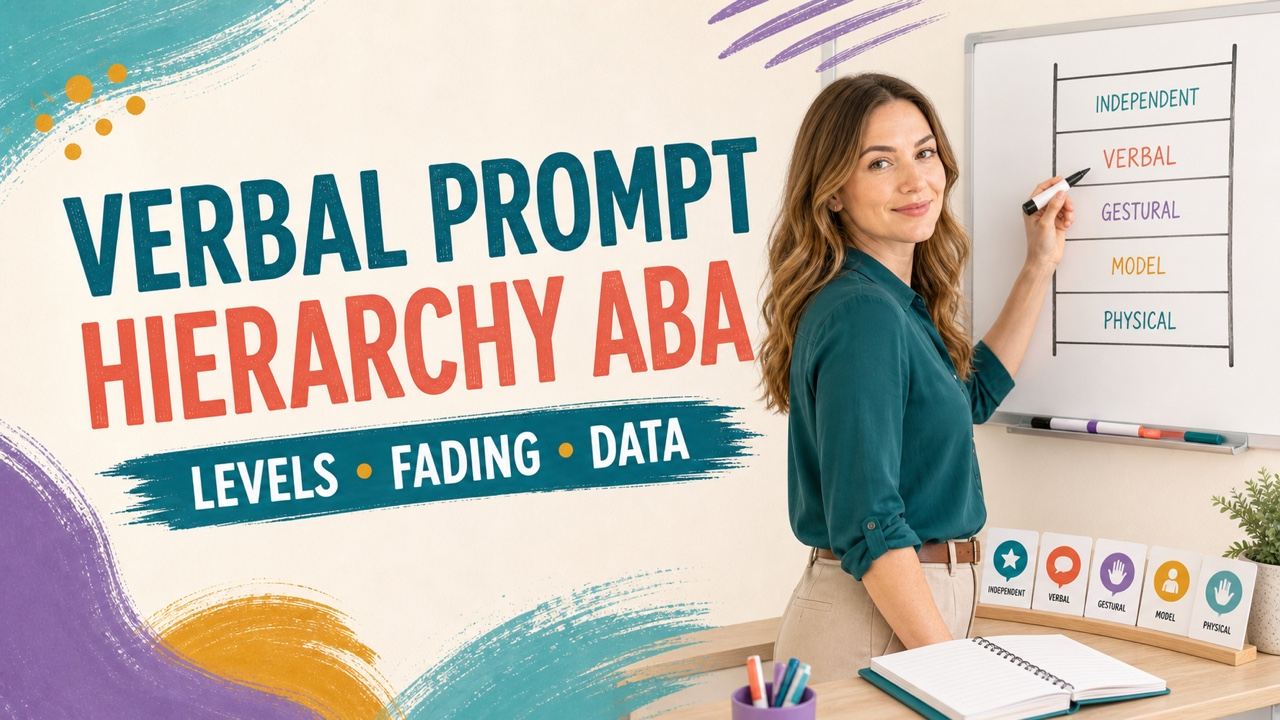
verbal prompt hierarchy aba is a study phrase about arranging spoken assistance so a learner can contact the intended response with the least help that works. The exact levels and decision rules belong to the written teaching procedure; an RBT should not invent a hierarchy or change a prompt plan because one level feels convenient. RBT Training is an independent study resource and is not affiliated with or endorsed by BACB.
Table of Contents
- verbal prompt hierarchy aba: start with the definition
- How a verbal prompt hierarchy can be organized
- A concrete study example
- Prompt fading and time delay
- Common verbal-prompt mistakes
- Study verbal prompts with role boundaries
- Frequently Asked Questions
- References
Quick answer: A verbal prompt is spoken assistance that increases the chance of a target response. A verbal-prompt hierarchy organizes the available assistance, often from less intrusive to more intrusive or in the direction specified by the plan. Study the definition, the prompt code, the fading rule, and the supervisor’s instructions together.
Study boundary: This is independent exam-preparation content, not an official BACB handbook, certification decision, task answer key, application determination, or source of secure exam material. The examples in this article are newly written for study. They are not official, recalled, leaked, or BACB-endorsed exam questions. Requirements and policies can change, so use the current BACB handbook and your supervisor or requirements coordinator for decisions about an individual application or client program.
verbal prompt hierarchy aba: start with the definition
First separate the instruction from the prompt. The instruction or discriminative stimulus sets the opportunity; a verbal prompt adds assistance after or alongside that opportunity according to the program. Praise, feedback, and a conversational comment may be useful, but they are not automatically a verbal prompt. Use the local operational definition and data sheet rather than scoring by intuition.
Also ask what counts as one response. A learner may repeat a word, point to a card, or complete a step after a spoken cue. The plan may score that response as prompted, partially prompted, or incorrect depending on the defined rule. The same phrase can have a different scoring meaning in a different program.
How a verbal prompt hierarchy can be organized
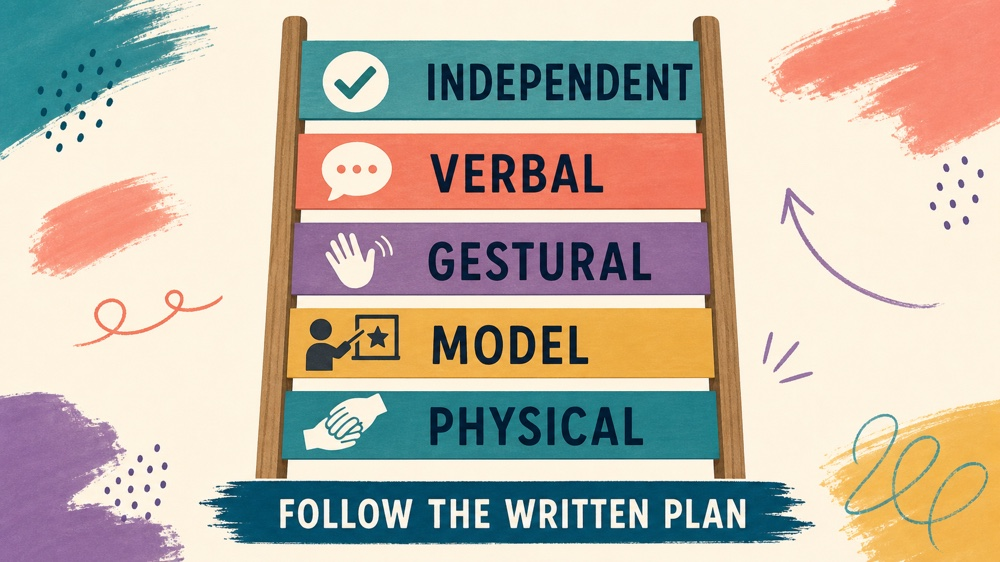
A hierarchy is a decision aid, not a universal script. One program may begin with a brief cue and increase support when the learner does not respond; another may use a time-delay arrangement or a most-to-least sequence for a specific skill. The relevant order is the one trained and authorized by the supervising team.
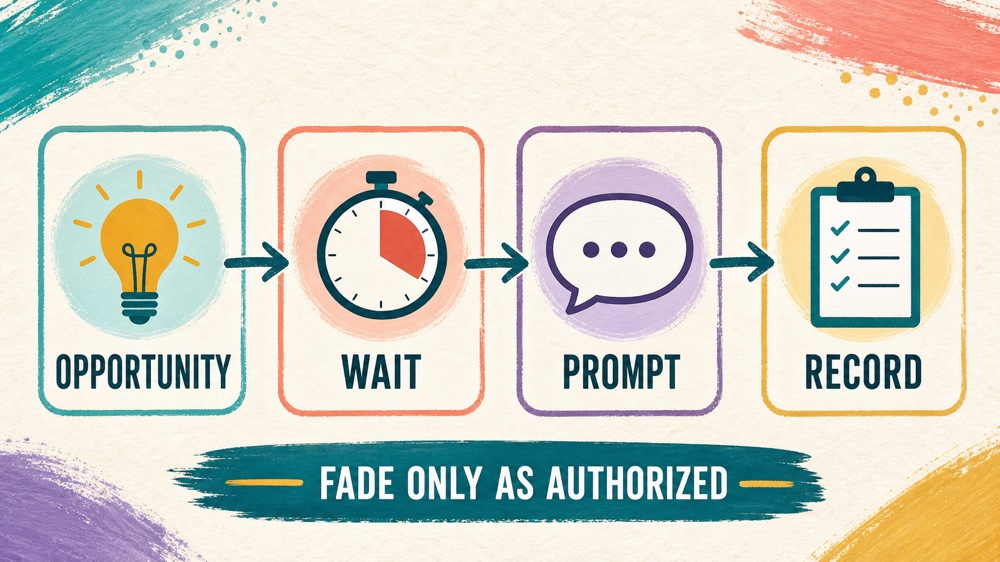
- Identify the target: State the observable response and the opportunity.
- Read the prompt rule: Note the exact words, timing, and code for each level.
- Deliver as trained: Use the programmed level and wait for the defined response window.
- Record the result: Mark independent, prompted, error, or no response as the plan directs.
- Fade only as authorized: Do not remove or add help independently.
A concrete study example
For example: A teaching plan defines an independent request as handing over a break card within 5 seconds of the opportunity without a spoken cue. If the learner does not respond, the plan directs the technician to deliver a short verbal prompt, then record the response as prompted when the card is handed over. The RBT records the category and asks for direction if the timing or wording is unclear.
The example does not authorize a new prompt sequence. It shows why a practice question should make the definition, timing, prompt level, and scoring rule visible. A correct answer usually follows the written procedure rather than the helper’s personal preference.
Prompt fading and time delay
Prompt fading reduces assistance so the target response can occur with less support, while time delay changes the time between the opportunity and the prompt according to a programmed plan. Both concepts require careful implementation. If a prompt is faded too quickly, errors may rise; if it is left in place without a plan, independence may be obscured. An RBT follows the programmed steps and communicates observed patterns.
When a learner responds after a spoken cue, avoid describing the performance as independent unless the data definition supports that label. Record the prompt and the outcome. When the learner makes an error or does not respond, follow the correction and safety procedures that were taught.
Common verbal-prompt mistakes
- Repeating an instruction several times without recording the prompt.
- Changing the words in a prompt because the original wording feels unnatural.
- Giving a hint before the programmed observation window has ended.
- Scoring a prompted response as independent because the final action was correct.
- Fading assistance without authorization or a data rule.
- Writing an inferred reason for an error instead of describing the observable event.
Study verbal prompts with role boundaries
For each practice scenario, underline the target, opportunity, prompt, response window, and scoring rule. Then ask whether the requested action is implementation or plan design. An RBT may implement an authorized prompt procedure, collect data, and communicate uncertainty when trained and directed to do so. Selecting a new hierarchy, changing the teaching plan, or making a clinical interpretation requires appropriate supervisor direction.
Current exam frame: The current RBT Test Content Outline (3rd ed.) applies beginning January 1, 2026. It describes 43 tasks across six content domains. The current examination format is 75 scored questions plus 10 unscored pilot questions, four answer choices per item, and a 90-minute testing period. These facts explain the study frame; they do not turn an independent guide into an official BACB resource.
The current outline can organize prompt and skill-acquisition study, but it does not provide secure questions or determine a candidate’s result. Use the current Handbook for changing requirements and use the written program for client decisions.
Practice prompt and fading decisions
Use independent RBT-style scenarios to distinguish instructions, verbal prompts, prompt levels, and safe supervision steps.
Review the RBT resource →
Frequently Asked Questions
What is a verbal prompt in ABA?
It is spoken assistance used according to a teaching procedure to increase the chance of a defined response. The local plan controls its wording and timing.
Is every spoken comment a verbal prompt?
No. An instruction, praise statement, feedback, and prompt may have different functions. Use the program’s definitions and codes.
Who chooses the verbal prompt hierarchy?
The responsible clinical team selects and trains the procedure. An RBT implements the written plan and asks for direction before changing it.
Does prompt fading make a response independent automatically?
No. Independence depends on the operational definition and data rule. Record the assistance that occurred.
Are these official BACB questions?
No. The scenarios are newly written independent study content and are not official, recalled, leaked, or BACB-endorsed exam questions.
References
- Behavior Analyst Certification Board: Registered Behavior Technician Handbook, updated June 2026.
- Behavior Analyst Certification Board: RBT Test Content Outline (3rd ed.).
- Behavior Analyst Certification Board: RBT resources.
- Behavior Analyst Certification Board: RBT Ethics Code.
- RBT Training: free independent RBT practice questions.