
An RBT supervision log is a practical record of when you provided behavior-analytic services, when supervision occurred, who provided it, how it was delivered, and what direct observation or supporting evidence exists.
Table of Contents
- RBT supervision log: quick answer
- Why an RBT supervision log matters
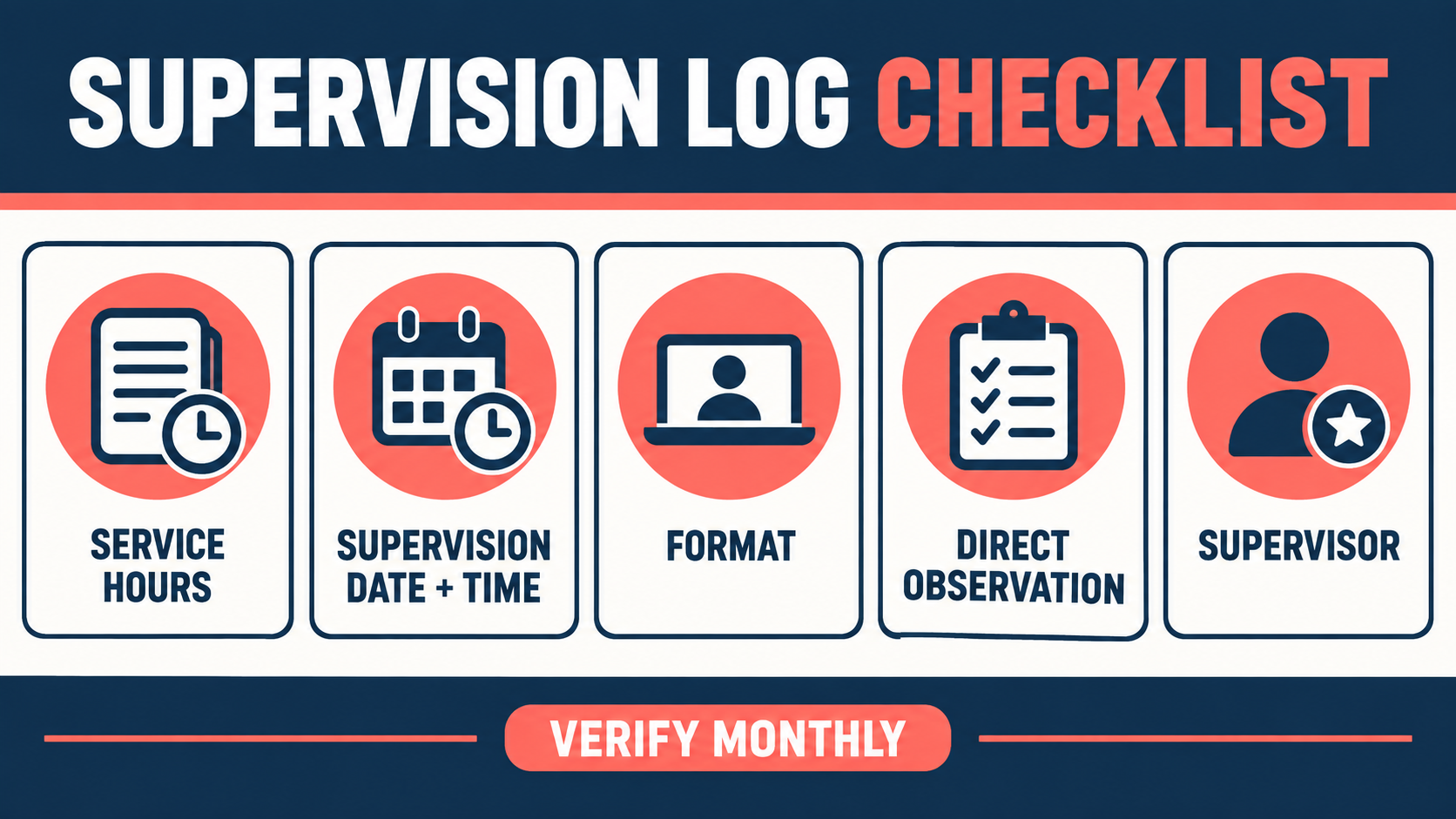
- Fields to include in an RBT supervision log
- Track service hours separately from supervision hours
- Record each supervision event while it is fresh
- Document direct observation clearly
- Use a monthly RBT supervision log workflow
- Review the log with the supervisor
- Protect and retain the record
- What to do when an RBT supervision log has a gap
- Common RBT supervision log mistakes
- Frequently asked questions
RBT supervision documentation and monthly readiness
RBT Supervision Log: What to Record Each Month
An RBT supervision log is a practical record of when you provided behavior-analytic services, when supervision occurred, who provided it, how it was delivered, and what direct observation or supporting evidence exists. A clear log helps an RBT and supervisor compare the month’s activity before a missing detail becomes a compliance problem.
RBT supervision log: quick answer
Use one approved, secure record to track the dates and times you provided behavior-analytic services, the dates and duration of supervision, the format of each supervision contact, direct observations, and the supervisor or Requirements Coordinator involved. Review the record during the month, reconcile it with session or scheduling records, and ask about discrepancies before the month closes.
The log is evidence of what happened; it is not a substitute for supervision. An RBT should not create a fictional entry, relabel an email as a supervision meeting, or decide alone that a gap is acceptable. If a requirement appears incomplete, tell the responsible supervisor promptly and follow the current reporting process.
Why an RBT supervision log matters
Supervision is easier to evaluate when the record is specific. A calendar may show that a meeting was scheduled, while a supervision log can show whether it actually occurred, how long it lasted, what format was used, and whether direct observation took place. A session note may describe client services, but it may not contain every field needed to demonstrate the supervision relationship.
The current BACB Handbook describes supervision documentation as a shared responsibility of the RBT and the RBT Supervisor or RBT Requirements Coordinator. It identifies records such as service days and times, supervision dates and duration, supervision format, direct-observation dates, supervisor names, proof of the supervisor’s relationship to the client, and additional documentation when records disagree. The exact form or software can differ by employer, but the information should remain traceable.
Good logging also improves the supervision conversation. Instead of asking, “Did we meet enough this month?” the RBT and supervisor can ask, “Which service hours are included, which two contacts were face-to-face and real time, where is the observation recorded, and what should we correct?”
Fields to include in an RBT supervision log
Use the organization’s approved template first. If you are building a personal checklist to help you prepare, compare it against the current Handbook and your supervisor’s instructions. A practical log may include:
- Month and organization: Identify the calendar month and the organization or client-service relationship being tracked.
- Service dates and times: Record when behavior-analytic services were provided, using the same source of truth used by the employer.
- Supervision date and duration: Record when the contact happened and how long it lasted.
- Format: Note whether the contact was individual or an interactive small-group event, as applicable.
- Supervisor identity: Record the supervisor or Requirements Coordinator who provided or coordinated the supervision.
- Direct observation: Identify the meeting in which the supervisor directly observed the RBT working with a client, and retain supporting evidence if required.
- Client or relationship evidence: Keep only the minimum approved information needed to show the supervisor’s relationship to the client.
- Notes about discrepancies: Link to the approved correction, session note, incident record, or communication when records do not match.
Do not add sensitive details simply because a spreadsheet has room for them. A log should be accurate, useful, and limited to what the authorized process requires.
Track service hours separately from supervision hours
One of the most common mistakes is recording only the supervision meeting and forgetting the service-hour denominator. The month’s supervision review depends on knowing how many hours of behavior-analytic services were provided and which organization or relationship those hours belong to. Use the approved payroll, scheduling, billing, or clinical record rather than estimating from memory.
Keep the categories distinct:
- Service hours: Time spent providing behavior-analytic services as an RBT.
- Supervision duration: Time spent in the supervision contact.
- Other training or meetings: Time that may be valuable but is not automatically supervision.
If you work for more than one organization, ask how each relationship must be tracked. Do not combine records just because the same supervisor serves multiple locations. When the source records use different definitions or rounding rules, pause and ask for direction instead of silently changing the numbers.
Record each supervision event while it is fresh
Enter the event soon after it occurs, not at the end of the year. Write the date, start and end time or duration, format, supervisor, and any observation indicator required by the form. If the contact occurred through real-time video conferencing or another permitted method, record it according to the supervisor’s approved documentation procedure.
Do not count a message thread, a forwarded slide deck, or passive video review as supervision merely because it contains professional information. Ask the supervisor how an event should be classified when the format is unclear. A log should reflect the event that actually happened, not the event that would have satisfied a requirement.
Short, factual notes are usually easier to reconcile than vague notes. For example, “April 18, 3:00–3:45 p.m.; individual; supervisor J. Smith; direct observation occurred” is more useful than “met with supervisor.” Do not put client-identifying details in a general log unless the approved form requires them.
Document direct observation clearly
A supervision log should make it possible to identify whether direct observation occurred and when. The observation field is not a rating of your performance and it is not an invitation to write a clinical conclusion. It is a factual link between the supervision event and the observation evidence maintained through the authorized system.
Check the supervisor’s process for what counts as supporting documentation. It may involve an approved supervision form, a session record, or another secure record. If a supervisor observed part of a session but the form asks for a specific date or meeting, ask how the event should be entered. Do not backdate an observation or copy a previous entry.
Use a monthly RBT supervision log workflow
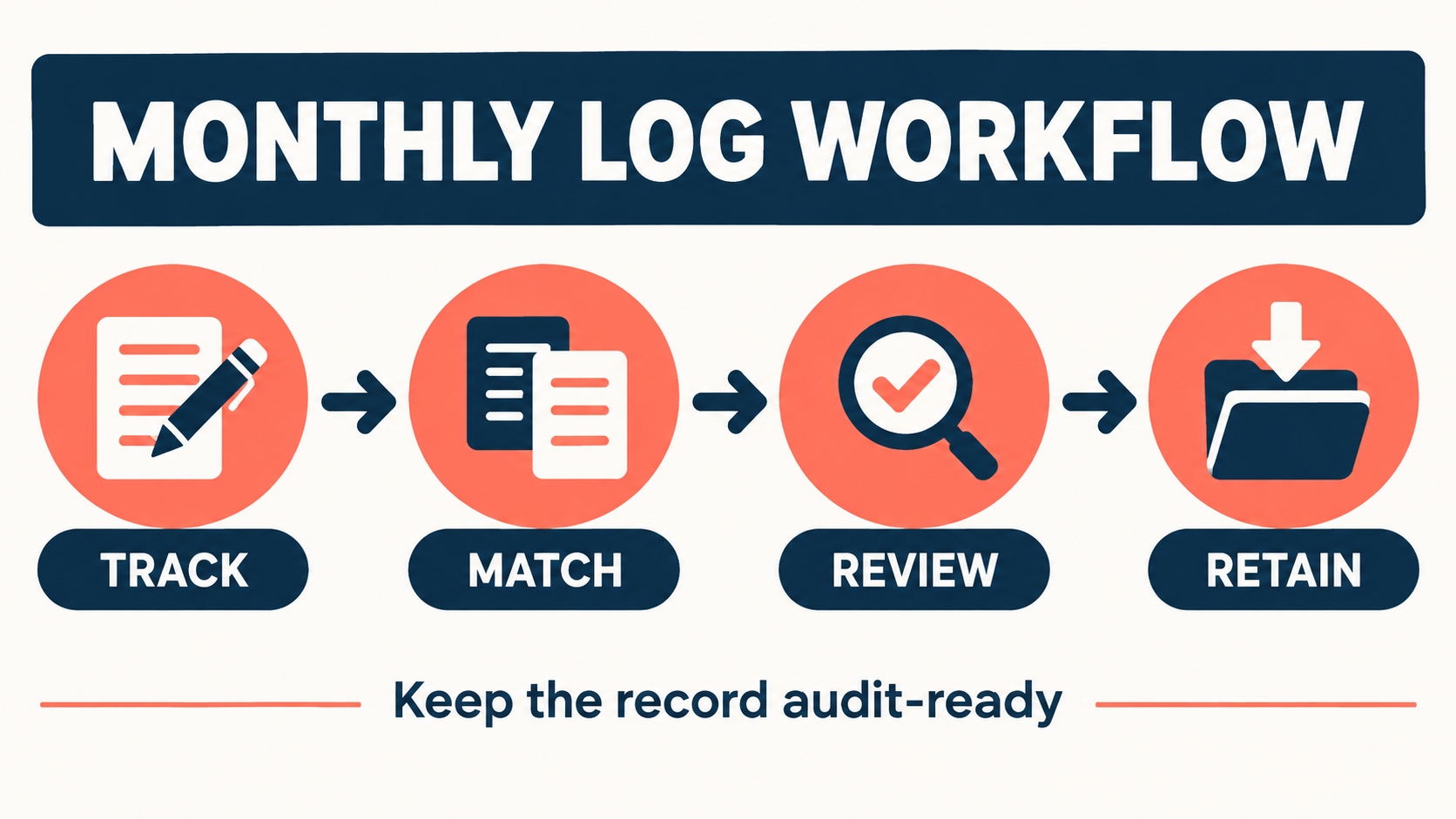
A repeatable workflow reduces last-minute reconstruction:
- Track: Add service dates and supervision events as they happen.
- Match: Compare the log with approved calendars, session records, and supervision forms.
- Review: Ask the supervisor to confirm the format, observation, relationship, and any missing evidence.
- Retain: Store the completed record in the authorized location and preserve the correction trail.
Set a weekly reminder to check the log, then complete a month-end review early enough to ask questions. A reminder is a quality-control tool, not proof that the requirement was met. Only the actual documented event and the applicable current rules answer that question.
Review the log with the supervisor
Bring specific questions to supervision. You might ask, “I have 72 service hours in the approved record. Which log entry documents the observation?” or “This meeting included several RBTs; should it be labeled group, and where should the individual contact appear?” Specific questions help the supervisor identify whether the issue is a missing entry, a classification problem, or a requirement that still needs attention.
If multiple supervisors provide supervision, confirm who is responsible for maintaining the central record and how each person’s documentation connects. The current BACB resources distinguish the roles of RBT Supervisors and RBT Requirements Coordinators. Do not assume that a supervisor’s verbal reassurance removes the need for the required record.
Protect and retain the record
Use the employer’s approved electronic system or paper process. Do not keep the only copy in a personal notes app, an unencrypted spreadsheet, a personal email account, or a social-media message. Limit access to authorized people and avoid unnecessary names, diagnoses, addresses, or other identifying information.
The current BACB Handbook states that the RBT and supervisor or Requirements Coordinator must retain supervision documentation for at least seven years, including when the supervisory relationship ends or another person assumes responsibility. Your organization, payer, law, or contract may impose additional requirements. Follow the longest applicable approved rule and ask who owns the record when you leave an employer.
What to do when an RBT supervision log has a gap
Do not fill a gap from memory without labeling the source, and never invent a date, duration, observation, or signature. First compare the log with the approved calendar, session record, and supervisor documentation. Then tell the supervisor or Requirements Coordinator exactly what is missing and ask how to correct it.
If the month may not meet a requirement, escalate early. Ask whether additional supervision can be scheduled, what documentation is required, and whether the organization has a reporting or self-reporting process. If you do not have an RBT Supervisor or Requirements Coordinator on record, or if you are told to provide services without required oversight, stop and seek direction through the appropriate channel before representing yourself as active.
Common RBT supervision log mistakes
- Logging only meetings: Track the service-hour source too.
- Using “supervision” for every training: Classify the event based on what actually occurred.
- Backdating: Correct the record transparently through the approved process.
- Leaving the observation vague: Identify the event and supporting record.
- Combining employers: Ask how each service relationship must be maintained.
- Storing client information in a personal tool: Use an authorized secure system.
- Waiting until renewal: Review monthly so discrepancies can be addressed while evidence is available.
Frequently asked questions
What should an RBT supervision log include?
It should include the approved record of service dates and times, supervision dates and duration, format, direct-observation dates, supervisor names, relationship evidence, and any additional documentation needed to explain discrepancies. Confirm the exact fields with the current BACB Handbook and supervisor.
Can I make my own RBT supervision log?
You can use a personal checklist to prepare, but the official record must follow the employer’s and supervisor’s approved process. A personal spreadsheet should not replace the authorized record or store unnecessary protected information.
Does a calendar count as a supervision log?
A calendar may support the record, but it may not contain every required field. Use it as a cross-check unless the organization explicitly designates it as the approved documentation system.
How long should RBT supervision records be retained?
The current BACB Handbook states at least seven years for supervision documentation. Check whether your employer, payer, law, or contract requires a longer period or a different storage process.
What if my log and my supervisor’s record disagree?
Do not silently overwrite either record. Preserve the original information, identify the discrepancy, and ask the supervisor or Requirements Coordinator how to document the correction.
Is an RBT supervision log the same as an RBT session note?
No. A session note documents service delivery, while a supervision log documents supervision and the evidence needed to review it. Some organizations link the records, but one does not automatically replace the other.
Official sources: BACB Registered Behavior Technician Handbook; BACB RBT supervision resources; BACB Supervision Checklist for RBTs; BACB Supervision, Assessment, Training, and Oversight. Retrieved September 28, 2026. Requirements can change, so verify the current source before relying on a form or deadline.
Ready to practice the RBT concepts you just reviewed?
Try an independent, original RBT practice resource with exam-style questions, scoring, and answer explanations.
References
- Behavior Analyst Certification Board. RBT Test Content Outline, 3rd edition.
- Behavior Analyst Certification Board. RBT Handbook.
- Behavior Analyst Certification Board. RBT Ethics Code.