
Liability insurance for RBT should not be evaluated from a marketing headline alone. Before buying a policy or signing a contractor agreement, identify who is responsible for coverage and what work is insured.
Table of Contents
- Liability insurance for RBT: quick answer
- What liability insurance means in an RBT context
- Who may provide coverage?
- Policy types to compare
- Liability insurance checklist for an RBT
- Employee versus contractor questions
- Claims, incidents, and reporting
- Privacy and client information
- Cost and contract questions
- Red flags before buying or signing
- A safer next-step sequence
- Frequently asked questions
RBT employment, contracts, and risk questions
Liability Insurance for RBT: What to Check First
Liability insurance for RBT should not be evaluated from a marketing headline alone. Before buying a policy or signing a contractor agreement, identify who is responsible for coverage, what work is insured, what exclusions apply, how a claim must be reported, and whether the policy matches your actual role and location.
Liability insurance for RBT: quick answer
First ask whether you are an employee, an agency worker, or being asked to contract independently. Then request the written coverage details: named insured, covered services, limits, exclusions, claims process, policy dates, location, and who pays the premium or deductible. Compare those details with the services you actually perform under supervision.
Do not assume that an RBT credential automatically tells you who carries insurance. Do not assume that an employer’s policy covers every personal action, side job, commute, telehealth arrangement, or independent contract. The answer comes from the policy and contract, not from the job title alone.
What liability insurance means in an RBT context
“Liability insurance” is a broad phrase. A policy may respond to allegations of professional negligence, bodily injury, property damage, privacy-related events, or another defined risk. Those categories are not interchangeable, and a policy may exclude a situation that sounds similar in everyday language.
For an RBT, the relevant facts may include working under an RBT Supervisor or Requirements Coordinator, providing services in a home, clinic, school, community, or through an approved remote format, handling client information, following a written plan, and communicating with caregivers or other providers. The policy should be evaluated against those actual activities and the organization’s structure.
Insurance does not replace competent practice, supervision, documentation, emergency procedures, or the RBT Ethics Code. It is a financial risk-transfer tool with terms and limits. It does not authorize a procedure, make an unqualified person competent, or protect conduct that a policy excludes.
Who may provide coverage?
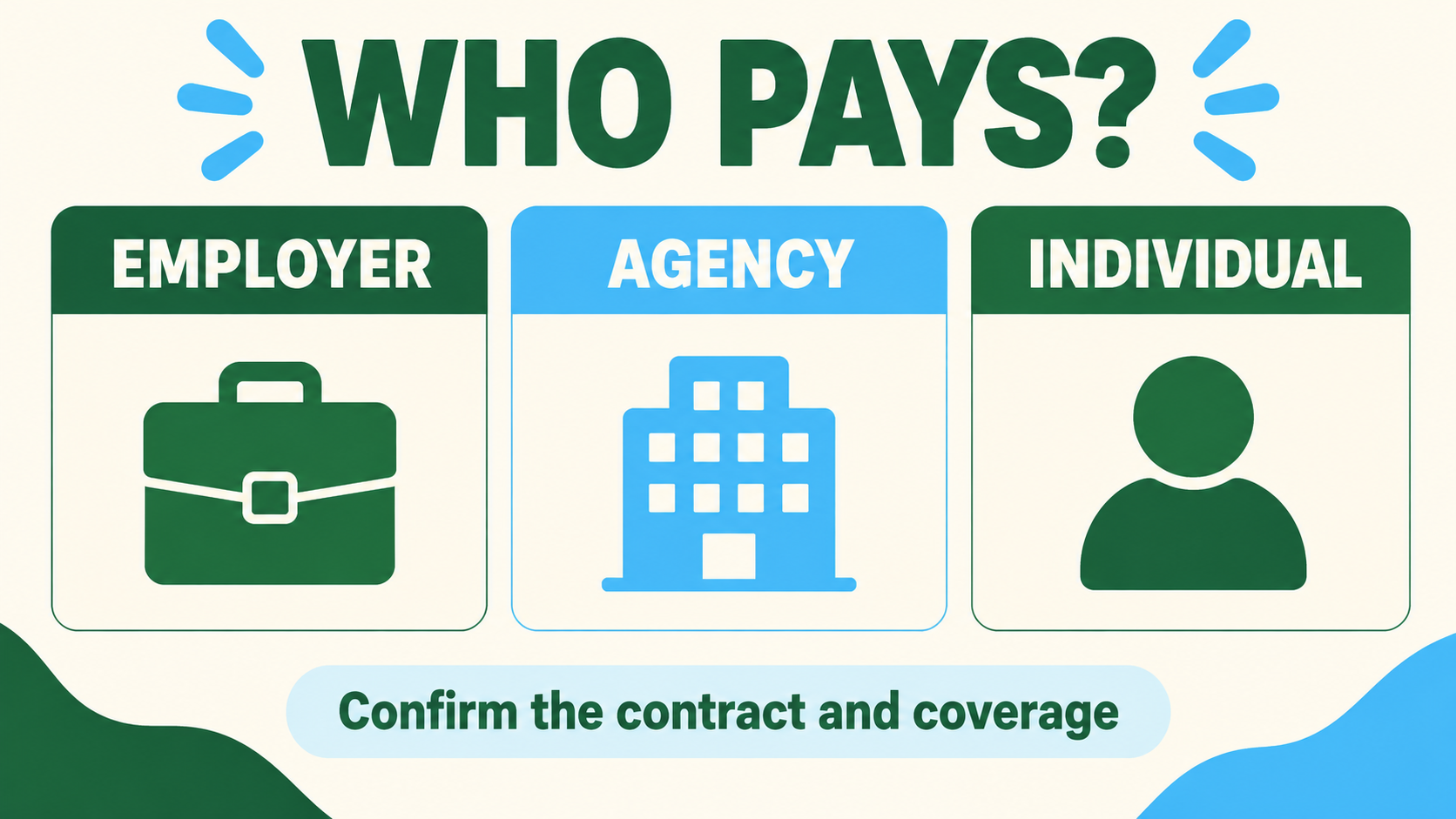
There are three common possibilities, but the labels are not enough; request evidence in writing.
- Employer: An agency may maintain a business policy that covers employees while they perform assigned services within the policy terms.
- Agency or staffing organization: A staffing entity may arrange coverage for work delivered through its contracts, while the client site or payer may impose additional requirements.
- Individual: A person who owns a business or accepts an independent contract may be asked to obtain a personal or business policy. Whether that arrangement is legally appropriate depends on the facts and applicable law.
Ask for the policy name, certificate of insurance or other proof the organization is authorized to share, effective dates, and the exact role covered. Do not upload a client’s protected information to an insurer or broker simply to ask a general question.
Policy types to compare
Ask a licensed insurance professional to explain which coverage categories apply to your situation. Common terms may include:
- Professional liability: May address allegations connected to professional services, subject to definitions, limits, and exclusions.
- General liability: May address certain bodily injury or property damage risks, but it may not replace professional coverage.
- Business owner or agency coverage: An organization may combine several protections, with employees, contractors, locations, and activities defined in the policy.
- Cyber or privacy coverage: May address specified data incidents, but it does not make an unapproved app or disclosure permissible.
- Workers’ compensation or employment coverage: This is a separate employer and jurisdiction question; do not confuse it with professional liability.
The labels are only a starting point. The policy’s insuring agreement, definitions, exclusions, endorsements, limits, and reporting conditions control. Ask for plain-language examples of what is covered and not covered.
Liability insurance checklist for an RBT
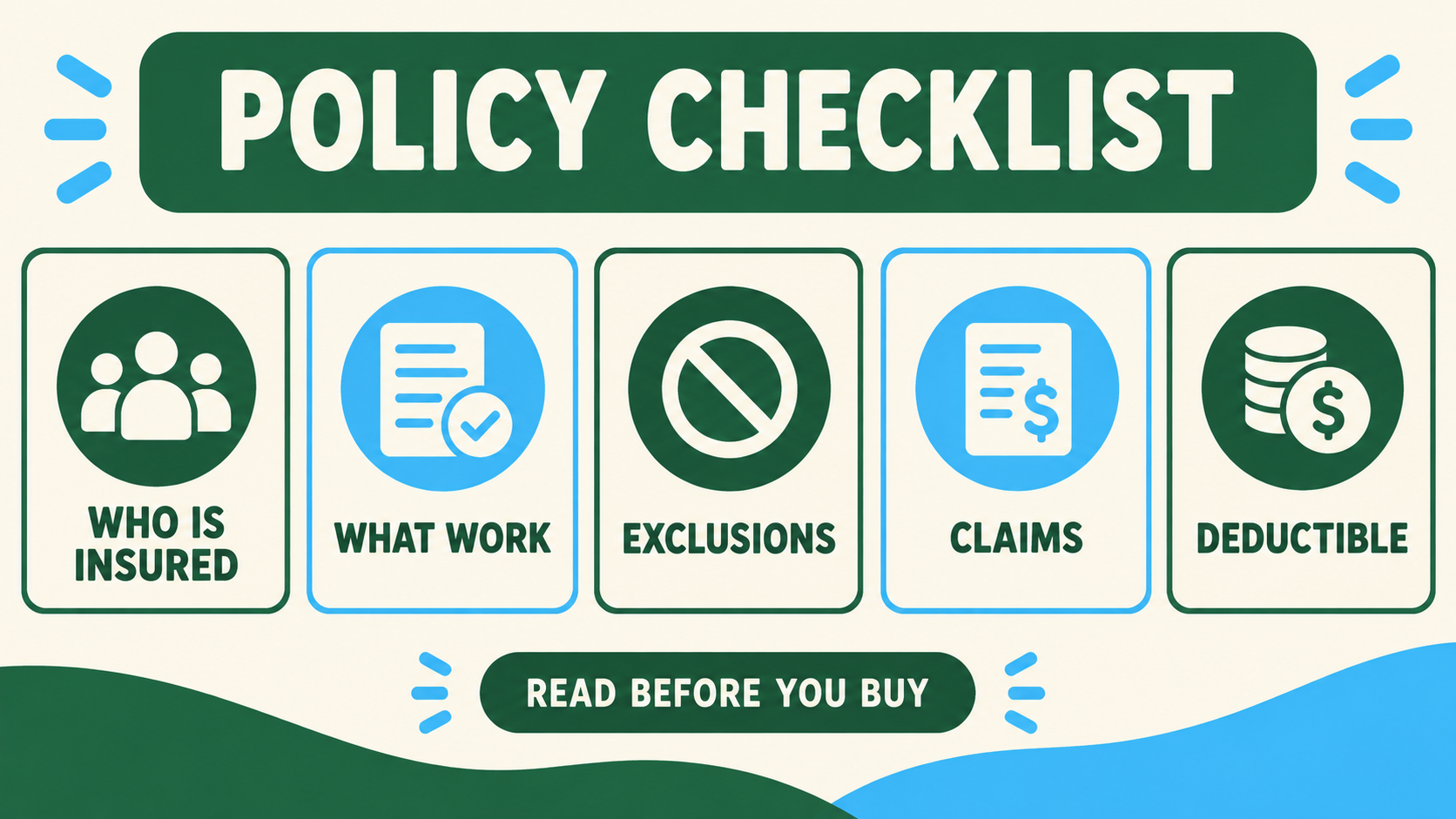
Before you pay for a policy or accept a contract, ask these questions:
- Who is insured? Is the named insured you, the employer, the agency, or a business entity? Are additional insureds or vicarious liability terms relevant?
- What work is covered? Does the policy describe behavior-technician services, supervised ABA services, the settings you use, and the locations where you work?
- Who is the supervisor? Does the policy or contract require services to be performed under a named supervision structure?
- What is excluded? Check intentional acts, criminal acts, sexual misconduct, abuse allegations, health-care activities, transportation, driving, independent work, and services outside the written scope. The exact exclusions vary.
- What are the limits? Identify per-claim and aggregate limits, defense costs, sublimits, and whether legal defense reduces the limit.
- What is the deductible? Confirm who pays it and when.
- How are claims reported? Note the notice deadline, required contact, consent-to-settle language, and whether the policy is claims-made or occurrence-based.
- Where does it apply? Check states, territories, home visits, schools, community work, travel between sites, and approved virtual services.
- When does it start and end? Confirm retroactive dates, renewal, cancellation, and any tail or extended reporting option.
- What proof is required? Ask whether the employer, payer, school, or client requests a certificate of insurance and what exact wording is needed.
Save the policy documents and the questions you asked. If the answer is verbal, request a written confirmation or ask the licensed professional where the answer appears in the policy.
Employee versus contractor questions
The insurance question often appears inside a larger employment-classification question. An organization may call someone an “independent contractor,” but a label alone does not determine the legal relationship. The current BACB Handbook discusses the distinction between employees and independent contractors and directs readers to relevant tax guidance; it also advises consulting an appropriate professional.
Before accepting an arrangement, ask:
- Who controls the schedule, client assignment, training, supervision, and procedures?
- Who supplies the records, materials, and secure communication system?
- Who bills the payer and handles cancellations?
- Who carries professional and general liability coverage?
- Who pays for a claim, deductible, legal defense, or required reporting?
- Does the contract require you to purchase insurance, name another party, or maintain a specific limit?
- What happens to coverage when the contract ends?
Do not choose a tax or insurance structure solely because it appears cheaper. Ask a qualified professional to review the full facts, including control, payment, risk, and state-specific rules.
Claims, incidents, and reporting
If an incident occurs, follow the employer’s incident and emergency procedure first. Make the client safe, contact emergency services when required, notify the supervisor or designated contact, and preserve objective records. Do not wait to report a time-sensitive risk while you search for the perfect insurance language.
Then ask the organization or insurer how a notice must be made. Do not admit liability, promise payment, alter records, or send confidential client material to an outside person without authorization. Record what happened, who was contacted, when, and what instruction was received.
A policy may require prompt notice even when you are unsure whether the event is a claim. Let the policy, employer, and licensed professional guide that decision. The BACB Ethics Code and Handbook also address reporting and professional responsibilities; insurance is only one part of the response.
Privacy and client information
Insurance questions do not suspend privacy obligations. Use approved channels, minimum necessary information, and the organization’s authorization process. A broker does not automatically have the right to receive a client’s name, diagnosis, treatment plan, photo, or session note.
Ask whether the employer’s policy includes privacy or cyber protections, but do not treat a cyber endorsement as permission to use a personal messaging app. Continue following the written privacy, documentation, and disclosure requirements that govern the service.
Cost and contract questions
Premium is only one cost. Compare the deductible, policy limit, defense-cost treatment, renewal price, tail coverage, required endorsements, contract fees, and the risk of a gap between policies. A low premium with a narrow definition of covered work may not fit an RBT’s arrangement; a higher limit may also come with exclusions that matter more than the number.
Ask who pays the premium and whether the cost is deducted from compensation. If an employer says its policy covers you, ask whether that protection applies to your assigned services and whether you are an insured, an employee covered by vicarious liability, or neither. Get the answer in writing before relying on it.
Red flags before buying or signing
- The seller promises that one policy covers every ABA, medical, driving, and home-care risk.
- The policy does not clearly identify the insured person, entity, role, or service setting.
- The contract requires coverage but will not explain the limit, deductible, or reporting deadline.
- You are asked to send full client records to obtain a quote.
- The arrangement calls you a contractor but gives no clear answer about supervision, billing, records, or insurance.
- The policy excludes the work you actually perform or requires a supervisor structure you do not have.
- The seller pressures you to buy before providing the declarations page, exclusions, or cancellation terms.
A safer next-step sequence
- Read the employment or contractor agreement and highlight every insurance obligation.
- Ask the employer or agency whether its current policy covers your exact assigned work.
- Request the policy evidence, dates, limits, exclusions, deductible, and claim-reporting route.
- Compare any individual policy against the employer’s coverage to identify gaps or duplication.
- Ask a licensed insurance professional and, when classification or liability is material, an attorney or tax professional to review the facts.
- Keep current proof of coverage and update the supervisor or agency when the policy changes.
Bottom line: liability insurance for an RBT should be evaluated from the actual work, contract, supervision structure, location, and policy language. Confirm who pays, who is insured, what is covered, what is excluded, and how incidents are reported before you rely on the protection.
Frequently asked questions
Does every RBT need individual liability insurance?
Do not assume that every RBT has the same obligation. Coverage may depend on the employer, agency, contract, payer, location, and applicable law. Ask for the written requirement and have a licensed professional explain the policy.
Does an employer’s insurance automatically cover an RBT?
Not automatically. Ask whether the policy covers your role, assigned services, work settings, locations, and dates, and whether you are covered as an employee or under another defined status.
Is professional liability the same as general liability?
No. They can address different categories of risk. Ask the insurer to explain the definitions, exclusions, limits, and whether both categories are relevant to your work.
Should an RBT buy insurance before starting work?
Follow the written contract and ask the employer or agency before purchasing. Buying a policy without checking the covered role, supervisor structure, and exclusions can create false confidence or duplicate coverage.
What should I do after an incident?
Follow the emergency and workplace reporting procedure, notify the supervisor or designated contact, preserve objective records, and ask how to notify the insurer if required. Do not admit liability, alter records, or disclose client information without authorization.
Can insurance replace supervision or the RBT Ethics Code?
No. Insurance does not make a procedure authorized or competent and does not replace supervision, documentation, privacy, emergency response, or ethical conduct.
Official sources: BACB Registered Behavior Technician Handbook; BACB RBT Ethics Code (2.0); BACB RBT ethics resources; BACB Consumer Resources. Retrieved September 28, 2026. This article is educational and does not provide legal, tax, employment, or insurance advice.
Ready to practice the RBT concepts you just reviewed?
Try an independent, original RBT practice resource with exam-style questions, scoring, and answer explanations.
References
- Behavior Analyst Certification Board. RBT Test Content Outline, 3rd edition.
- Behavior Analyst Certification Board. RBT Handbook.
- Behavior Analyst Certification Board. RBT Ethics Code.