

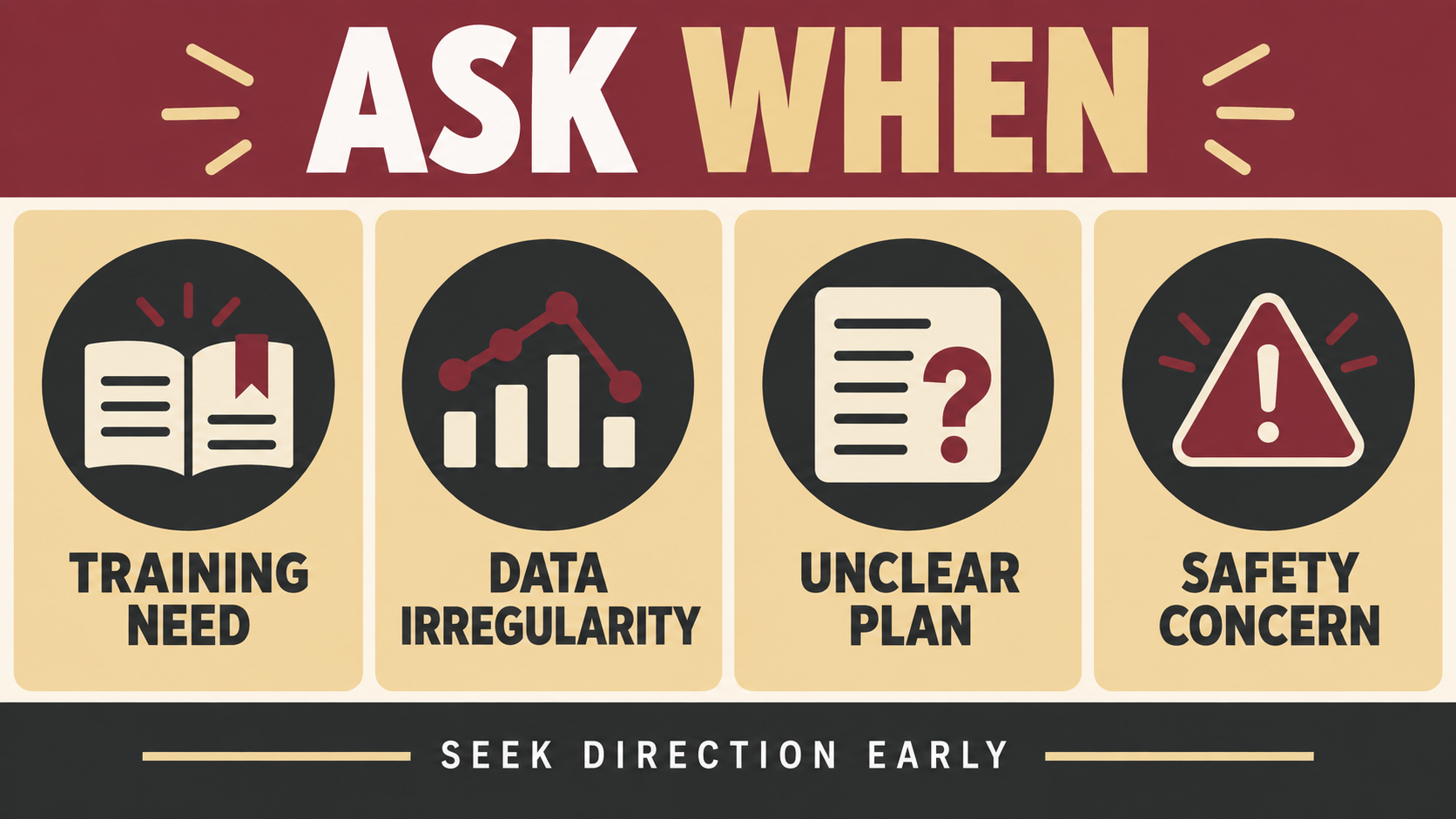
Seek clinical direction RBT questions usually arise when the written plan is unclear, data do not make sense, a new skill needs training, or a safety concern changes the next step.
Table of Contents
- Seek clinical direction RBT: quick answer
- What seeking clinical direction means
- When should an RBT ask for direction?
- Training needs: ask before practicing alone
- Data irregularities: preserve the original record
- Unclear or conflicting plan instructions
- Safety concerns and urgent direction
- How to ask for clinical direction clearly
- Follow the chain of command
- Document and follow up
- Common mistakes when seeking clinical direction
- Frequently asked questions
RBT clinical direction, supervision, and scope of practice
Seek Clinical Direction RBT: When to Ask Your Supervisor
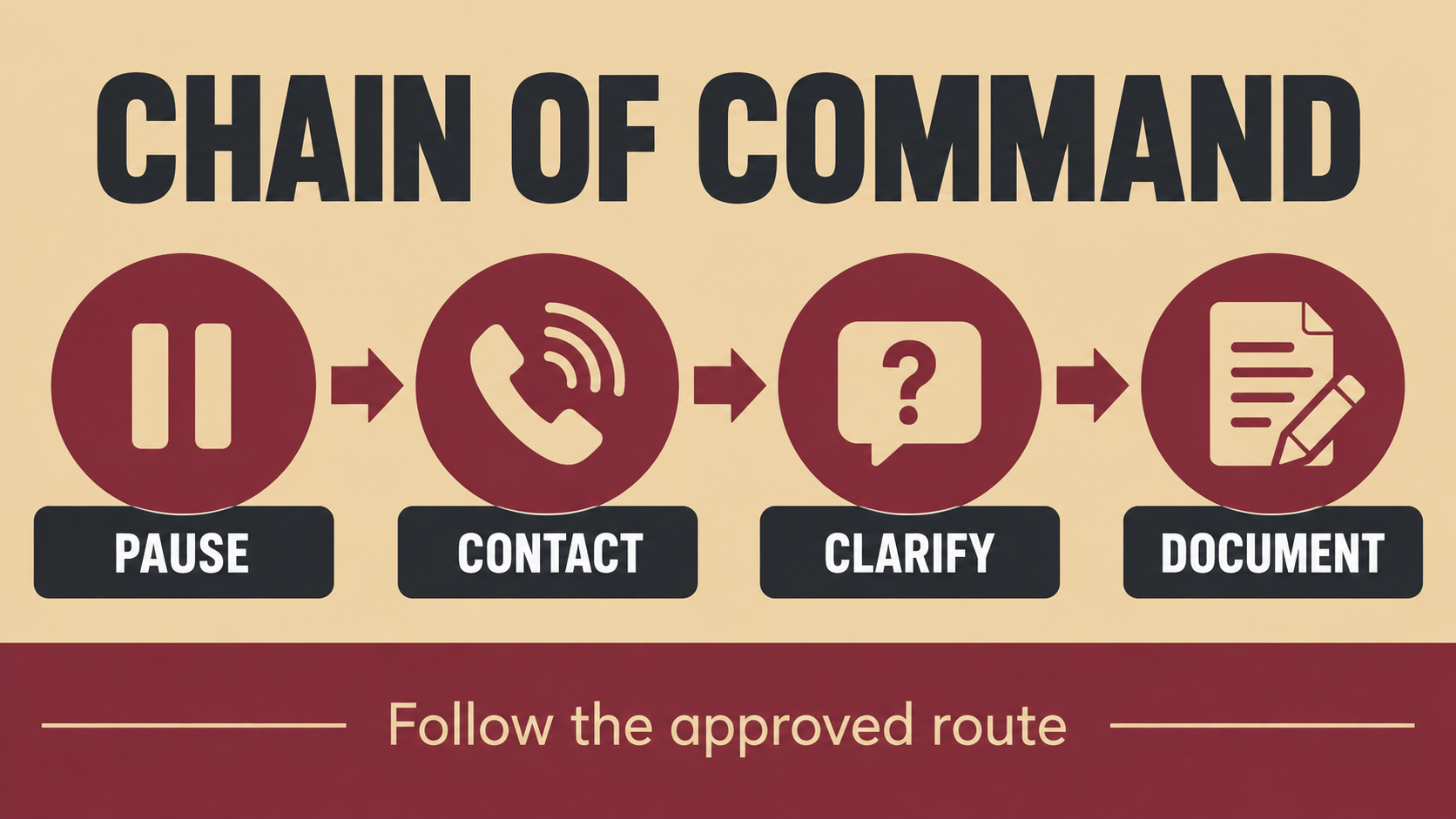
Seek clinical direction RBT questions usually arise when the written plan is unclear, data do not make sense, a new skill needs training, or a safety concern changes the next step. An RBT’s responsibility is to pause when appropriate, communicate the facts through the approved route, prioritize the supervisor’s direction, and document what happened.
Seek clinical direction RBT: quick answer
Ask the supervisor promptly when you need training, see a data irregularity, cannot identify the current procedure, receive conflicting instructions, encounter a safety concern, or are asked to do something outside your demonstrated competence. State what happened, what you did within the current plan, and what decision or instruction you need.
The 2026 RBT Test Content Outline lists seeking and prioritizing clinical direction from a supervisor in a timely manner, including training needs, data irregularities, and following the chain of command. Asking is not a sign that you failed. It is how an RBT protects client dignity, maintains competence, and avoids making a solo clinical decision.
What seeking clinical direction means
Clinical direction is guidance from the person authorized to supervise and direct the service. It may include clarifying a written procedure, deciding what data to collect, arranging training, reviewing a change in client variables, or determining which escalation route applies.
Seeking direction does not mean asking the supervisor to approve every ordinary step that is already clearly described and within your competence. It means recognizing when the next action requires information, authority, training, or judgment that you do not have. The goal is timely, accurate communication—not a long message that hides the decision point.
An RBT should not use “I was waiting for direction” to delay an emergency response. Follow the emergency procedure first when immediate safety is involved, then notify the supervisor and complete the required documentation.
When should an RBT ask for direction?
Use a simple pause-and-check question: “Can I implement the next step safely, competently, and exactly as written?” If the answer is no or unclear, seek direction. Common triggers include:
- The supervisor introduces a procedure you have not been trained to implement.
- A data pattern appears inconsistent with the session record or measurement definition.
- The written plan does not address the situation you encounter.
- Two authorized people give conflicting instructions.
- A caregiver, teacher, or provider suggests a change that requires clinical review.
- An illness, medication change, schedule change, or setting change may affect progress.
- A safety event reaches the threshold identified in the plan or emergency procedure.
- You are asked to provide a service or make a decision outside your competence or role.
When in doubt, describe the uncertainty instead of guessing. A clear question gives the supervisor something actionable to answer.
Training needs: ask before practicing alone
If a new program, prompt procedure, measurement system, or safety response is introduced, ask what training is required before you implement it independently. Effective supervision may include instructions, modeling, rehearsal, feedback, and observation of service delivery.
Useful wording is: “I understand the goal, but I have not yet practiced the new prompting sequence with feedback. Can we schedule modeling and rehearsal before I use it independently?” This is more precise than “I don’t get it,” and it gives the supervisor a chance to arrange the right support.
Also ask when your performance shows a skill gap. “I made two errors entering the interval data today. Can you review the definition and observe one practice opportunity?” protects the record and creates a learning plan. Do not hide a training need because you are worried it will look unprofessional.
Data irregularities: preserve the original record
Data irregularities can include a missing interval, an impossible value, a mismatch between raw tally and summary, a sudden change in measurement conditions, or a procedure that was not implemented as written. First preserve the original information. Then state the discrepancy and ask what correction or follow-up is authorized.
Example: “The session summary shows six responses, but the raw tally has four. I have not overwritten either record. Which source should we review, and how should I document the correction?” This is different from silently changing six to four or choosing the number that makes the trend look more consistent.
Report variables that may affect progress, such as illness, medication changes, or schedule changes, without claiming that the variable caused the behavior. The supervisor can decide whether more data, a program review, or another action is needed.
Unclear or conflicting plan instructions
Pause when the current written plan does not answer the situation. Check the approved source first: a current protocol, supervisor message, or authorized update. If the sources disagree, do not combine them into a new procedure.
Say: “The printed protocol says to offer the choice before the demand, while the portal version says after the demand. I have not changed the sequence. Which version is current, and where should the update be recorded?” This protects procedural fidelity and gives the supervisor a clear discrepancy to resolve.
Do not let a caregiver, teacher, coworker, or online post become an unofficial plan change. You can listen and report the suggestion; clinical direction remains with the authorized team.
Safety concerns and urgent direction
If there is immediate danger, a serious injury, a medical emergency, or another threshold identified by the written plan, use the emergency procedure. Call the appropriate emergency service or follow the required safety steps first. Notify the supervisor through the urgent route as soon as it is safe.
For a serious but nonemergency question, contact the supervisor the same day. State the risk, observable facts, immediate action taken, and direction needed. Do not spend time debating a clinical explanation or trying an unapproved intervention while a safety concern is unresolved.
How to ask for clinical direction clearly
A short message can follow four parts:
- Context: Give the date, setting, client-service context, and relevant source.
- Observation: State what you saw, measured, or were told without a diagnosis.
- Action: Say what you did under the current plan and what you did not change.
- Question: Ask for one clear decision, next step, training, or escalation route.
Example: “During today’s home session, the caregiver reported a new medication schedule. I observed lower engagement during the first 15 minutes and continued the current plan. Should I complete the variable report, collect additional data, or pause a specific procedure until you review it?”
If the supervisor needs more information, provide it through the approved channel. If the question is urgent, put the urgency in the first sentence and use the organization’s urgent contact method.
Follow the chain of command
The chain of command tells you who to contact when the primary supervisor is unavailable or when a concern remains unresolved. Learn it before an urgent moment: supervisor, Requirements Coordinator, clinical director, on-call contact, or other approved route.
Do not send a sensitive client matter to a large group chat simply because it is fast. Use the designated secure system and the smallest authorized audience. If a coworker gives a different instruction, document the conflict and ask the responsible supervisor which direction is current.
If you have made a reasonable attempt and no one responds, keep the original message and contact the next approved person. Do not treat silence as permission to improvise. For serious ongoing concerns, follow workplace and current BACB reporting resources.
Document and follow up
Record the concern, the source, the time you contacted the supervisor, the response received, and the action taken through the approved documentation route. The exact record may be a session note, communication log, incident form, training record, or another authorized system.
Close the loop: confirm whether the direction applies only to the current session or changes the written plan, where the update is stored, and what should happen if the same problem occurs again. Never backdate a direction or erase the original discrepancy.
Common mistakes when seeking clinical direction
- Waiting for a routine meeting: Use the urgent or same-day route when timing matters.
- Asking a vague question: State the observation, action taken, and decision needed.
- Changing the plan while waiting: Follow the current plan or emergency procedure; do not invent a replacement.
- Deleting the original data: Preserve the record and document the correction path.
- Skipping the chain of command: Use the approved backup contact instead of broadcasting private details.
- Confusing reassurance with direction: Ask what to do, where to record it, and when the instruction applies.
- Hiding a training need: Request modeling, rehearsal, feedback, or observation before independent implementation.
Frequently asked questions
When should an RBT seek clinical direction?
Seek direction promptly for training needs, data irregularities, unclear or conflicting plans, variables that may affect progress, safety concerns, and actions outside your competence or role.
What does seek and prioritize clinical direction mean?
It means recognizing when the next decision requires supervisor authority or guidance, communicating the facts through the right route, and treating the direction as a priority when timing or safety matters.
Can an RBT change a procedure while waiting for the supervisor?
Do not independently change the behavior plan. Follow the current written plan or emergency procedure, protect safety, and ask the supervisor what is authorized.
What if the supervisor does not respond?
Use the approved chain of command, keep a record of your attempt, and escalate according to workplace policy. Silence is not permission to improvise or ignore an urgent concern.
How should an RBT report a data error?
Preserve the original record, identify the exact discrepancy, state what you did, and ask the supervisor how to correct and document it. Do not overwrite data to make it look consistent.
Is seeking direction a sign that an RBT is incompetent?
No. Asking for training or clarification is part of competent, supervised practice. The important skills are recognizing the limit, communicating promptly, following the direction, and learning the procedure.
Official sources: BACB RBT Test Content Outline (3rd ed.); BACB RBT 2026 40-Hour Training Requirements and Curriculum Outline; BACB RBT supervision resources; BACB Supervision, Assessment, Training, and Oversight. Retrieved September 28, 2026. Verify current requirements and follow the workplace emergency procedure.
Ready to practice the RBT concepts you just reviewed?
Try an independent, original RBT practice resource with exam-style questions, scoring, and answer explanations.
References
- Behavior Analyst Certification Board. RBT Test Content Outline, 3rd edition.
- Behavior Analyst Certification Board. RBT Handbook.
- Behavior Analyst Certification Board. RBT Ethics Code.