

A practical way to ask this is simple: before a session the RBT must ensure more than a bag of materials is ready. A safe start includes reviewing current procedures, preparing the environment and data tools, checking client readiness, and knowing how to obtain supervisor direction.
Table of Contents
- What readiness means before a session
- Before a session the RBT must ensure: plan review
- How to prepare the environment and materials
- Before a session the RBT must ensure data collection
- How to prepare the client for service delivery
- Before a session the RBT must ensure privacy and records
- What to do when readiness is blocked
- Common pre-session mistakes
- Frequently asked questions
- References
RBT PRACTICE GUIDE · PRE-SESSION READINESS
Before a Session, the RBT Must Ensure: A Practical Readiness Checklist
Review the plan, prepare the environment, check your data tools, support client readiness, and know when to ask for supervisor direction.
A practical way to ask this is simple: before a session the RBT must ensure more than a bag of materials is ready. A safe start includes reviewing the current procedures, preparing the environment and data tools, checking client readiness, and knowing how to obtain supervisor direction. The BACB’s 2026 RBT training curriculum specifically includes readiness, reviewing procedures and prior session documentation, preparing the environment, and preparing the client for service delivery.
This is a general readiness checklist, not a replacement for a client-specific plan, employer policy, or emergency procedure. Your supervisor’s written directions and the current service setting control what you do.
What readiness means before a session
Readiness means you can begin the session within your role, with the information and materials needed to implement the assigned procedures accurately. It includes both practical preparation and professional judgment. If a critical detail is missing, “being ready” may mean pausing and asking the designated supervisor what to do next.
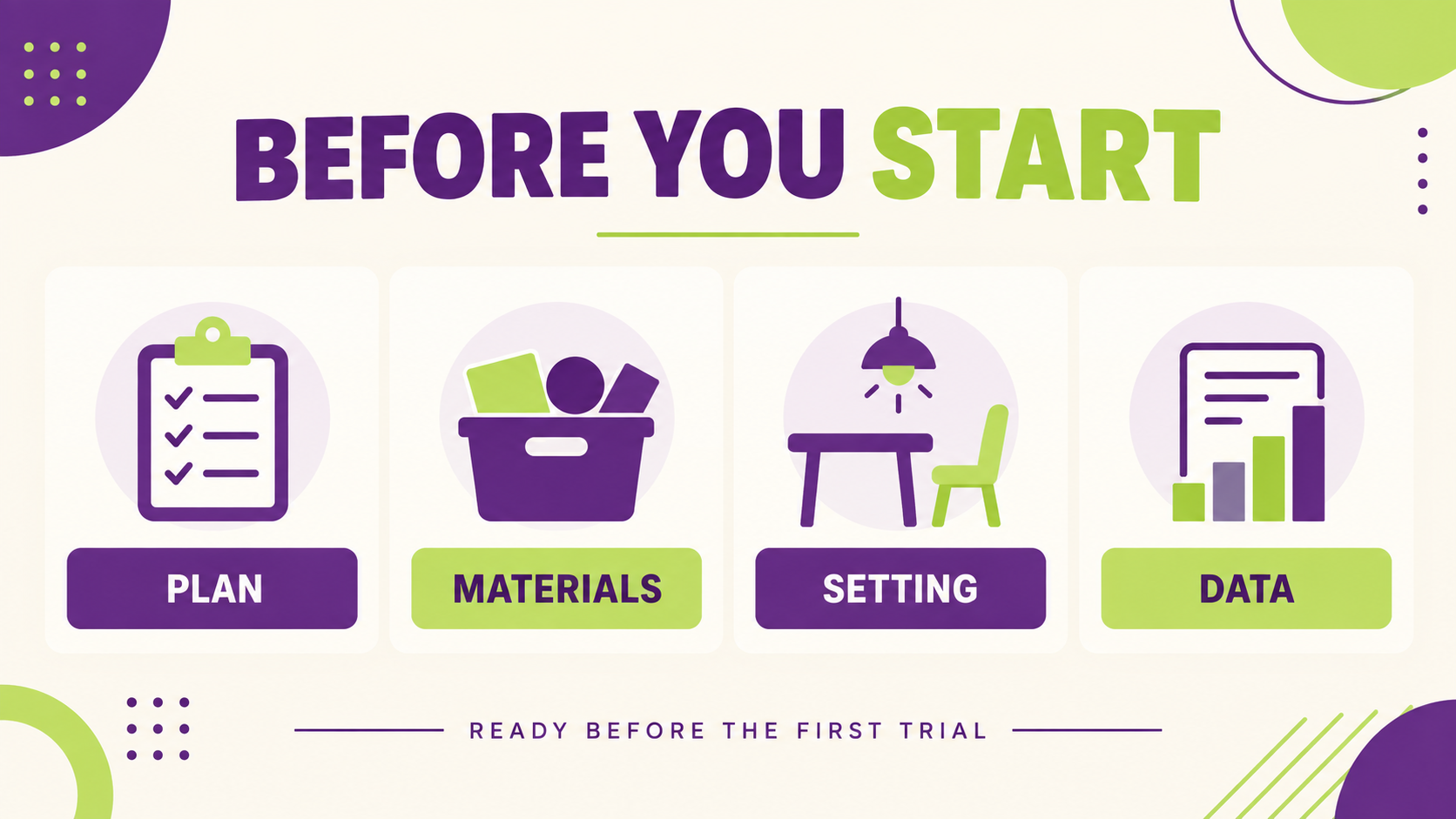
A useful pre-session check asks four questions:
- Plan: Do I know the current procedures, targets, prompts, measurements, and role limits?
- Place: Is the environment safe, private enough, and arranged for the session activities?
- Process: Do I have the correct materials and data tools, and do I know how to use them?
- Person: Is the client ready to participate, and what do I do if assent, safety, or access is different today?
Before a session the RBT must ensure: plan review
Start with the most recent approved plan and session information available to you. Review the goals or targets you are assigned, the operational definitions, the teaching or behavior-reduction procedures, the data system, and any supervisor notes that affect today’s implementation. Do not rely on memory if a current document is available.
Look for changes since the last session. A new target, updated prompt, revised material, or change in setting may require specific instruction. If the document is unclear or two sources conflict, do not choose the version that seems easiest. Record the discrepancy and contact the supervisor or designated coordinator through the approved channel.
Also check your own readiness. If you have not been trained or observed implementing a new step, identify that before the client arrives. Ask for modeling, rehearsal, feedback, or observation as appropriate. A pre-session question is safer than improvising during service delivery.
How to prepare the environment and materials
Prepare the environment for the actual procedures, not for an imagined perfect session. Gather the materials named in the plan, check that they are usable, arrange them so you can deliver instructions consistently, and remove unnecessary distractions when the plan calls for that adjustment.
Check practical access:
- Are the teaching materials, reinforcers, visual supports, timers, or response forms available?
- Are devices charged, logged into the approved account, and ready without exposing another client’s information?
- Is the room arranged so you can observe and record the target behavior or skill?
- Are safety materials and emergency contacts available according to the setting’s procedure?
- Is there a backup plan for a missing item that has already been approved by the supervisor?
Do not create a new intervention because a material is missing. If the plan depends on an item you cannot access, follow the established process and ask for direction. “I brought something similar” is not the same as having authorization to substitute it.
Before a session the RBT must ensure data collection
Confirm what you are measuring before the session starts. Review the operational definition, measurement dimension, start and stop rules, data sheet or approved app, and the time or event that begins the observation. If the plan uses frequency, duration, latency, interval recording, percentage correct, or another measure, make sure you know the recording rule rather than choosing one in the moment.
Check that your data system matches the target. A data sheet that has the wrong client, date, target, or session length can create a record problem before the first response occurs. Correct errors through your employer’s process and protect any confidential information you handle.
Be ready to document relevant variables without turning them into conclusions. If the caregiver reports illness, poor sleep, medication change, schedule disruption, or another event, record the report through the approved process and ask the supervisor what additional documentation is needed. Do not infer a medical cause or announce that the variable explains the behavior.
How to prepare the client for service delivery
Preparation includes the client’s readiness, not just the technician’s materials. Follow the plan for greeting, rapport, transition, choice, communication, and assent. Use the procedures you are trained and authorized to implement. A client may need time to transition, access to an approved choice, or a different introduction to the activity.
Pay attention to changes in communication, affect, health information shared by the caregiver, or signs that the planned activity cannot begin as written. Respond within your role and follow the supervisor’s or setting’s instructions. Do not pressure the client to participate simply because the schedule says the session has started.
Client readiness is not a promise that the session will go smoothly. It is a reason to begin with observation, respect, and flexibility within the approved plan. If the plan does not explain what to do when assent or access changes, seek direction before making a new clinical decision.
Before a session the RBT must ensure privacy and records
Before opening a record or device, verify that you are using the approved account and the correct client information. Keep notes, data, images, messages, and printed materials away from people who are not authorized to see them. Use the organization’s storage and communication systems; do not move client information to a personal app because it is convenient.
Think about privacy in the physical environment too. Position a screen away from visitors, collect printed data when it is no longer needed, and avoid discussing client details in hallways or public spaces. If you discover a privacy problem, follow the employer’s reporting procedure and inform the appropriate supervisor promptly.
What to do when readiness is blocked
Some barriers can be solved within routine preparation: charging a device, locating the approved data sheet, or arranging the room. Other barriers require direction. Use this escalation pattern:
- Describe the barrier: “The current plan names a visual support, but it is not in the materials provided.”
- State what you checked: “I checked the approved materials folder and the session kit.”
- Explain the impact: “I cannot implement that step as written without the support.”
- Ask for the next step: “Should I wait for the approved item, use a specified alternative, or contact the backup supervisor?”
For immediate safety concerns, use the setting’s emergency and chain-of-command procedure. For ordinary uncertainty, contact the designated supervisor in the expected channel and document the direction you receive. Do not quietly turn a missing instruction into a new procedure.
Common pre-session mistakes
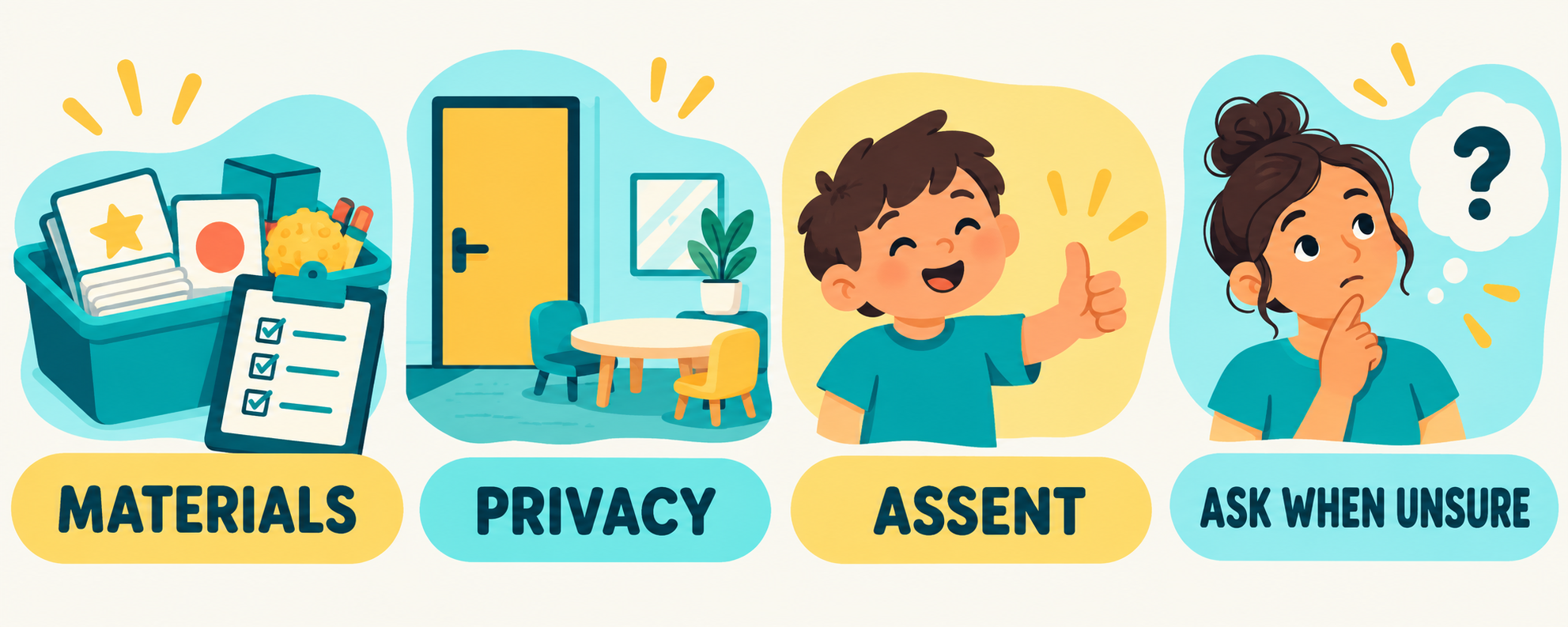
- Using an old plan: Always check the current approved instructions and recent documentation.
- Preparing materials without checking data: A session can look organized while the measurement system is wrong.
- Substituting materials independently: Ask before changing what the plan requires.
- Ignoring client readiness: A schedule does not eliminate the need to follow assent and safety procedures.
- Using a personal device or message app: Follow approved privacy and record systems.
- Waiting until after the session to report a barrier: Escalate a critical uncertainty before implementation.
Frequently asked questions
What should an RBT review before a session?
Review the current procedures, prior session documentation, assigned targets, operational definitions, data-collection rules, materials, and any supervisor directions that affect the session.
Does preparing the environment mean changing it freely?
No. Arrange the environment and gather materials according to the plan and setting procedures. Ask before making a substitution or environmental change that could affect implementation.
What if the client is not ready to begin?
Follow the approved transition, rapport, choice, and assent procedures. If the plan does not address the situation or safety is affected, contact the designated supervisor or follow the emergency process.
Is a pre-session checklist required everywhere?
Employers and supervisors may use different forms. The general principles—review, prepare, protect privacy, check data tools, and obtain direction when needed—should be adapted to the current plan and workplace.
Bottom line: Before a session, the RBT must ensure that the plan, environment, materials, data system, client-readiness process, privacy controls, and supervision path are ready enough for safe implementation. When a required detail is missing, asking for direction is part of readiness—not a failure of preparation.
Ready to practice the RBT concepts you just reviewed?
Try an independent, original RBT practice resource with exam-style questions, scoring, and answer explanations.
References
- Behavior Analyst Certification Board. RBT Test Content Outline, 3rd edition.
- Behavior Analyst Certification Board. RBT Handbook.
- Behavior Analyst Certification Board. RBT Ethics Code.