

RBT burnout is not a character flaw or a diagnosis that an article can make; it is a practical signal to examine workload, recovery, supervision, role clarity, and support.
Table of Contents
- RBT burnout: quick answer
- What RBT burnout can look like
- Common signals to notice
- Look at the work system, not just yourself
- Boundaries that protect service quality
- The support loop
- When more urgent help is needed
- Common RBT burnout mistakes
- Frequently asked questions
- Official source note
RBT wellbeing, sustainable practice, supervision, and workplace support
RBT Burnout: Signs, Boundaries, and Support
RBT burnout is not a character flaw and it is not a diagnosis that an article can make. It is a practical signal to examine workload, recovery, supervision, role clarity, and support. This guide helps RBTs notice patterns, communicate early, and ask for changes without abandoning client dignity or professional responsibilities.
RBT burnout: quick answer
RBT burnout is a pattern of sustained exhaustion, detachment, reduced recovery, or growing difficulty maintaining reliable work—not a label that proves why a person feels that way. Start by noticing the pattern, checking immediate safety and competence, and telling a supervisor or employer what support is needed. Useful support may involve workload review, schedule changes, protected breaks, clearer materials, additional training, closer feedback, or access to a qualified health professional.
An RBT should not hide errors, push through an unsafe situation, or independently change a client’s plan because work has become overwhelming. The current BACB framework places RBT services under close, ongoing supervision and emphasizes ethical, competent service. Asking for help early can protect both the RBT and the client.
What RBT burnout can look like
Burnout is often easier to see as a pattern than as one bad day. A demanding session, a difficult commute, or a short night of sleep does not automatically mean burnout. The concern grows when strain continues and recovery does not restore the person’s usual ability to attend, communicate, learn, and work within the plan.
For an RBT, the pattern may appear in the work itself: arriving depleted, losing patience more quickly, feeling detached from the purpose of service, making preventable documentation errors, avoiding supervision conversations, or needing all available time off just to return to baseline. These observations are signals for a support conversation, not a self-diagnosis.
Use respectful language. Instead of saying “I am failing,” describe the observable pattern: “For the last three weeks, I have had trouble recovering between consecutive sessions and I made two documentation errors that required correction. I need to review the schedule, break structure, and supervision support.” Specific information makes it easier for a supervisor to respond.
Common signals to notice
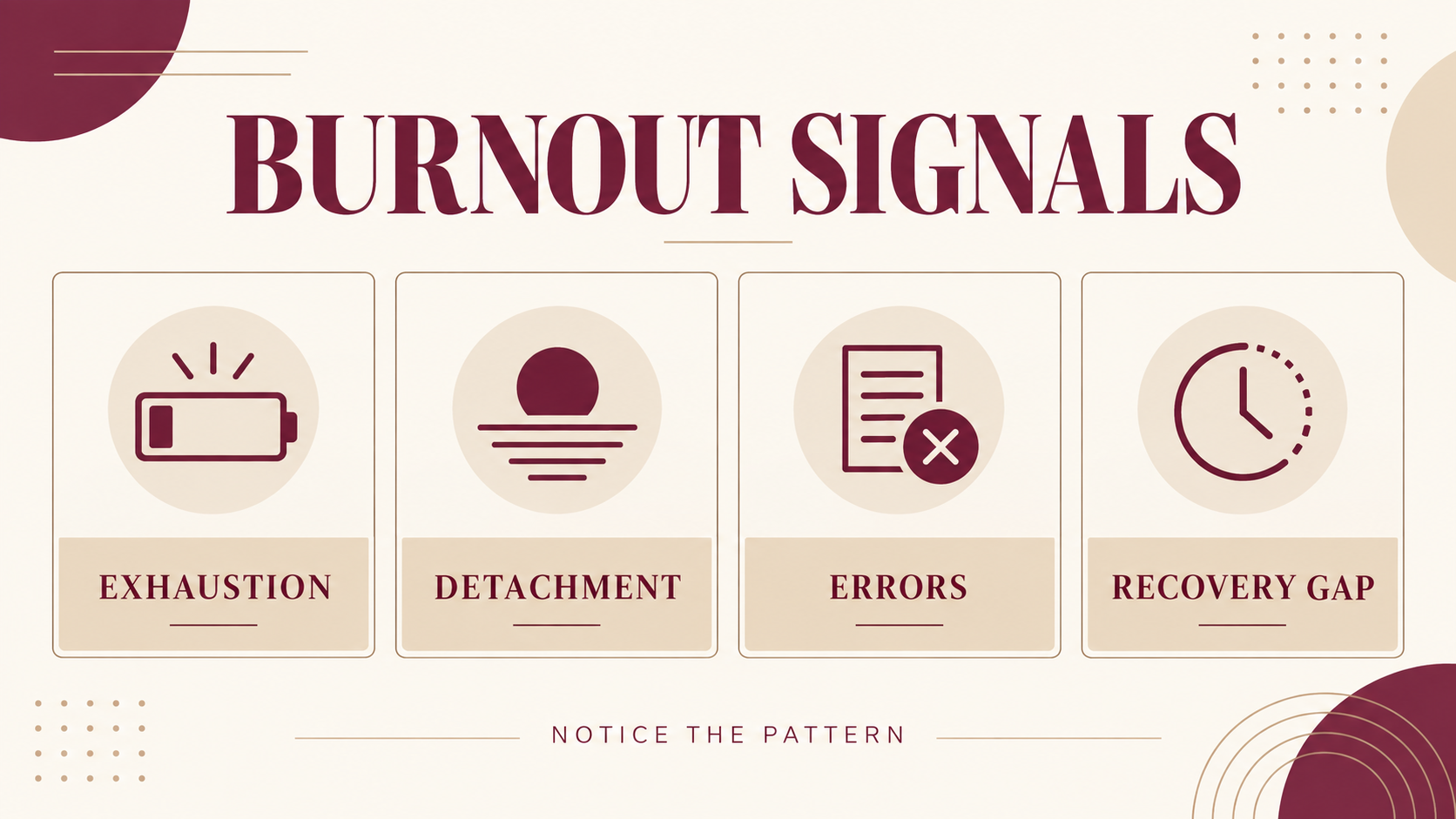
- Exhaustion: persistent physical or mental depletion, reduced recovery between shifts, or difficulty staying attentive.
- Detachment: feeling numb, unusually cynical, or disconnected from clients, caregivers, coworkers, or the purpose of service.
- Errors: more missed steps, late notes, measurement confusion, forgotten materials, or difficulty following a familiar routine.
- Recovery gap: days off, meals, sleep, or ordinary restorative activities no longer seem to restore capacity.
- Boundary strain: accepting extra work repeatedly, answering work messages at all hours, skipping breaks, or feeling unable to say that a request exceeds current capacity.
These signs can also come from sleep problems, depression, anxiety, medication effects, illness, grief, trauma, financial stress, or other conditions. That is why an article should not diagnose you. If symptoms are persistent, severe, or affecting daily life, consider speaking with a qualified health professional or using an employee assistance or community resource.
Look at the work system, not just yourself
RBT burnout is often discussed as an individual self-care problem, but working conditions matter. Review the structure around the RBT:
- Are session blocks realistic, or is there no transition time for travel, setup, data, and notes?
- Is the current plan clear, or are staff receiving conflicting instructions?
- Can the RBT reach a qualified supervisor when a safety, data, or competence question appears?
- Are breaks protected in practice, or do cancellations and coverage gaps erase them?
- Does training include modeling, rehearsal, feedback, and opportunities to ask questions?
- Are caseload, travel, documentation, and emotional demands being reviewed rather than assumed to be unlimited?
Bring patterns rather than accusations. “I have three back-to-back community sessions with no travel buffer on Mondays, and notes are regularly completed after my scheduled end time” gives a manager something to investigate. It also distinguishes a workload problem from a personal failure.
Supervision is one part of the support system, but it cannot solve every employment issue. A supervisor can provide clinical direction, feedback, and training; an employer may control scheduling, staffing, pay, leave, and workplace accommodations. Ask the right person for the right kind of change.
Boundaries that protect service quality
Professional boundaries are not a refusal to care. They are conditions that help an RBT deliver reliable, ethical service. A boundary can be a clear statement about time, role, communication, safety, or competence:
- “I can complete the note in the approved system during my scheduled documentation time; I cannot promise an accurate note while driving between visits.”
- “I have not been trained on this procedure. I need modeling and feedback before I implement it.”
- “The current schedule leaves no safe travel time. Can we review the sequence before the next community session?”
- “I can report the caregiver’s request, but I cannot change the intervention without supervisor direction.”
Set boundaries early and in writing when appropriate. Keep client information in approved channels, avoid venting identifiable details on social media, and follow workplace policies for schedule or leave requests. A boundary should be paired with the next workable step: a meeting, a coverage request, a training plan, or an escalation contact.
The support loop
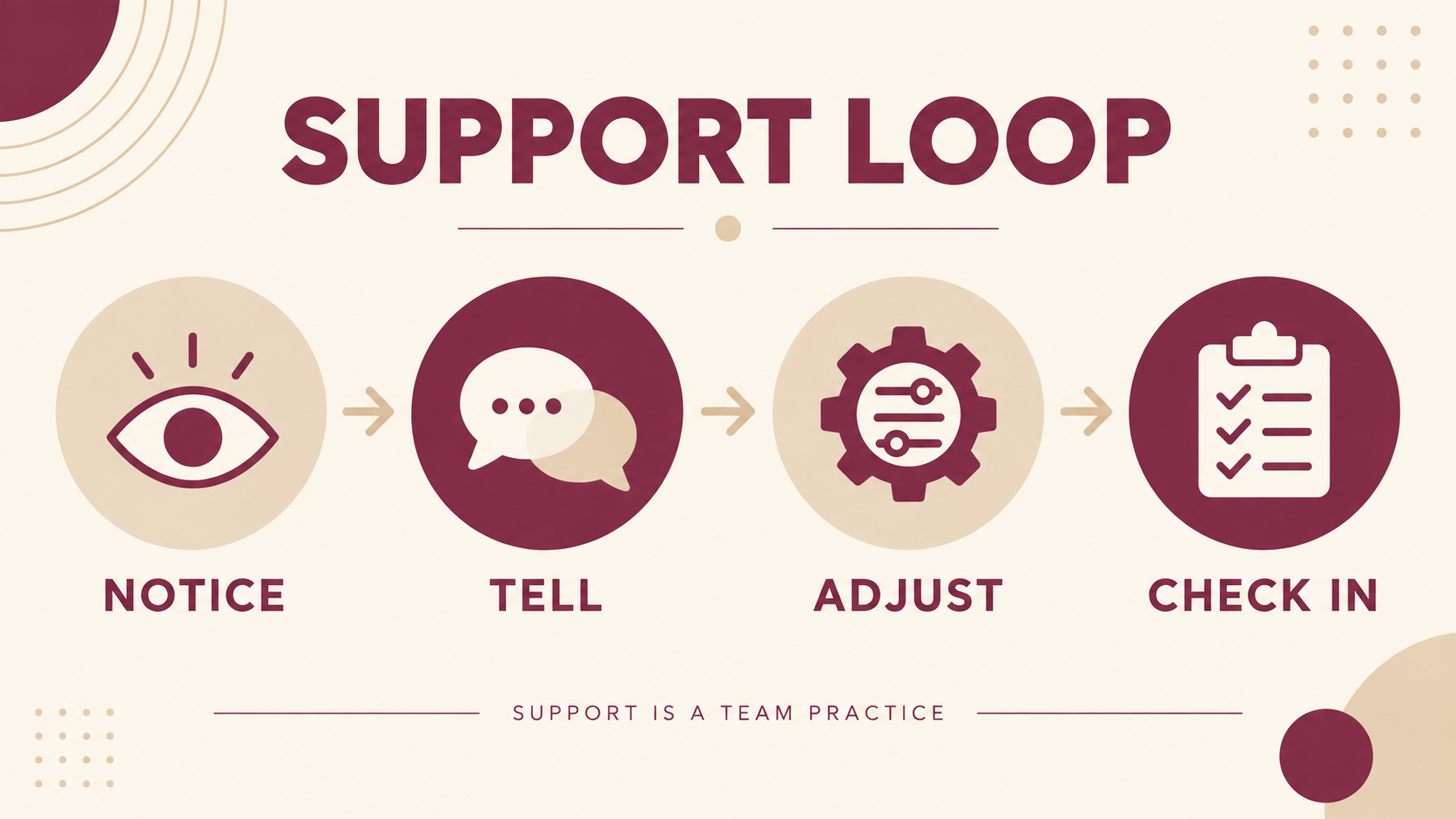
A simple support loop keeps burnout conversations concrete:
- Notice: identify the pattern, time period, work conditions, and effect on attention, documentation, or recovery.
- Tell: communicate early to the supervisor, manager, or health professional who can address that part of the problem.
- Adjust: agree on a specific change, such as protected breaks, a schedule review, training, reduced consecutive sessions, or a referral to support.
- Check in: set a date to review whether the adjustment helped and whether client service remains safe and reliable.
A useful conversation includes four pieces: what you observe, how long it has been happening, what work condition may be contributing, and what support you are requesting. For example: “For two weeks I have been finishing notes late after four consecutive sessions, and yesterday I missed a data entry step. I need a schedule review and a check-in about documentation time before I take another full block.”
Keep the client’s needs in view without using them to erase your own limits. If you are too depleted to implement safely or accurately, saying so is responsible. The supervisor can determine the clinical and staffing response; the RBT should not conceal the capacity problem until service quality suffers.
When more urgent help is needed
Some situations need immediate escalation: thoughts of harming yourself or someone else, inability to maintain client safety, severe impairment, a crisis in the setting, or pressure to work outside competence. Follow emergency procedures and contact local emergency or crisis resources when necessary. If the concern is health-related, a qualified clinician is the right person to assess it.
Within the workplace, report an unsafe assignment or a serious competence concern through the designated chain of command. Do not continue a dangerous procedure to avoid disappointing a supervisor, and do not make an unauthorized restrictive or clinical change. Document facts through the approved system after immediate safety is addressed.
If the problem is a recurring workload or boundary issue and the first conversation does not resolve it, use the next employer or compliance channel. Keep the communication factual, confidential, and focused on the requested remedy. Retaliation, discrimination, leave, and accommodation questions may require qualified employment or legal guidance outside the scope of this article.
Common RBT burnout mistakes
- Calling it laziness: treat a sustained pattern as information worth reviewing.
- Waiting for a crisis: raise recovery, errors, or schedule concerns before safety is affected.
- Using self-care as the only fix: examine workload, supervision, training, and staffing too.
- Hiding errors: report and correct documentation problems through the authorized process.
- Changing the plan alone: request clinical direction rather than improvising.
- Sharing identifiable details publicly: protect client confidentiality while seeking support.
Frequently asked questions
Is RBT burnout a formal diagnosis?
This article uses burnout as a workplace wellbeing description, not a diagnosis. A qualified health professional should evaluate persistent or severe symptoms.
Should I tell my supervisor?
If strain is affecting attention, documentation, competence, safety, or attendance, a timely conversation is appropriate. Share observable patterns and request specific support.
Can supervision help with burnout?
Supervision can support feedback, training, role clarity, and clinical direction. Workload, pay, leave, and accommodations may require a manager, human resources, or a health professional as well.
What if I need to step away from work?
Follow the employer’s leave and safety procedures and seek qualified medical or mental-health support when needed. Do not make a client-care decision based only on an internet checklist.
Official source note
This educational guide was checked against the current BACB RBT Handbook, RBT ethics resources, and RBT professional-development guidance retrieved September 28, 2026. Requirements and workplace resources can change. Follow your employer’s policies, current BACB materials, and qualified health or emergency professionals for individualized support.
Role boundary: This article is general education, not medical, mental-health, employment, legal, or emergency advice. Protect client safety and confidentiality, seek supervisor direction, and use qualified professional support when needed.
Ready to practice the RBT concepts you just reviewed?
Try an independent, original RBT practice resource with exam-style questions, scoring, and answer explanations.
References
- Behavior Analyst Certification Board. RBT Test Content Outline, 3rd edition.
- Behavior Analyst Certification Board. RBT Handbook.
- Behavior Analyst Certification Board. RBT Ethics Code.