

RBT client boundaries help protect the learner, family, RBT, supervisor, and service team. They clarify what belongs to the behavior-technician role, which communication channels are approved, and when a request needs supervisor direction.
Table of Contents
- RBT client boundaries: quick answer
- What client boundaries mean
- Stay inside the defined role
- Communication boundaries
- Time, location, and personal requests
- Privacy and information boundaries
- Gifts, money, and favors
- How to say no professionally
- When to escalate to a supervisor
- Documenting a boundary concern
- Frequently asked questions
- Official source note
Professional roles, communication, time, privacy, requests, referrals, and safe escalation
RBT Client Boundaries: Clear Roles and Safer Care
RBT client boundaries help protect the learner, family, RBT, supervisor, and service team. They clarify what belongs to the behavior-technician role, which communication channels are approved, when personal contact should stop, and when a request needs supervisor direction. This guide turns common boundary questions into practical actions without replacing the current plan, employer policy, or RBT Ethics Code.
RBT client boundaries: quick answer
Keep the relationship professional, follow the authorized plan, use approved communication channels, protect confidential information, and ask the supervisor before accepting a new request that changes the role. An RBT can be warm, respectful, and responsive without becoming a family friend, babysitter, therapist, independent decision maker, or private service provider for the client.
A boundary is not a wall against collaboration. It is a clear agreement about responsibility, access, time, information, and decision making. When a request could affect client safety, privacy, treatment, billing, supervision, or professional judgment, pause the nonurgent response and route it through the supervisor or workplace process.
What client boundaries mean
An RBT provides behavior-technician services within a clearly defined role under close, ongoing supervision. That role may include implementing an authorized procedure, collecting data, writing a session note, practicing a skill, communicating an observation, and receiving feedback. It does not automatically include every task a caregiver, teacher, client, or coworker might request.
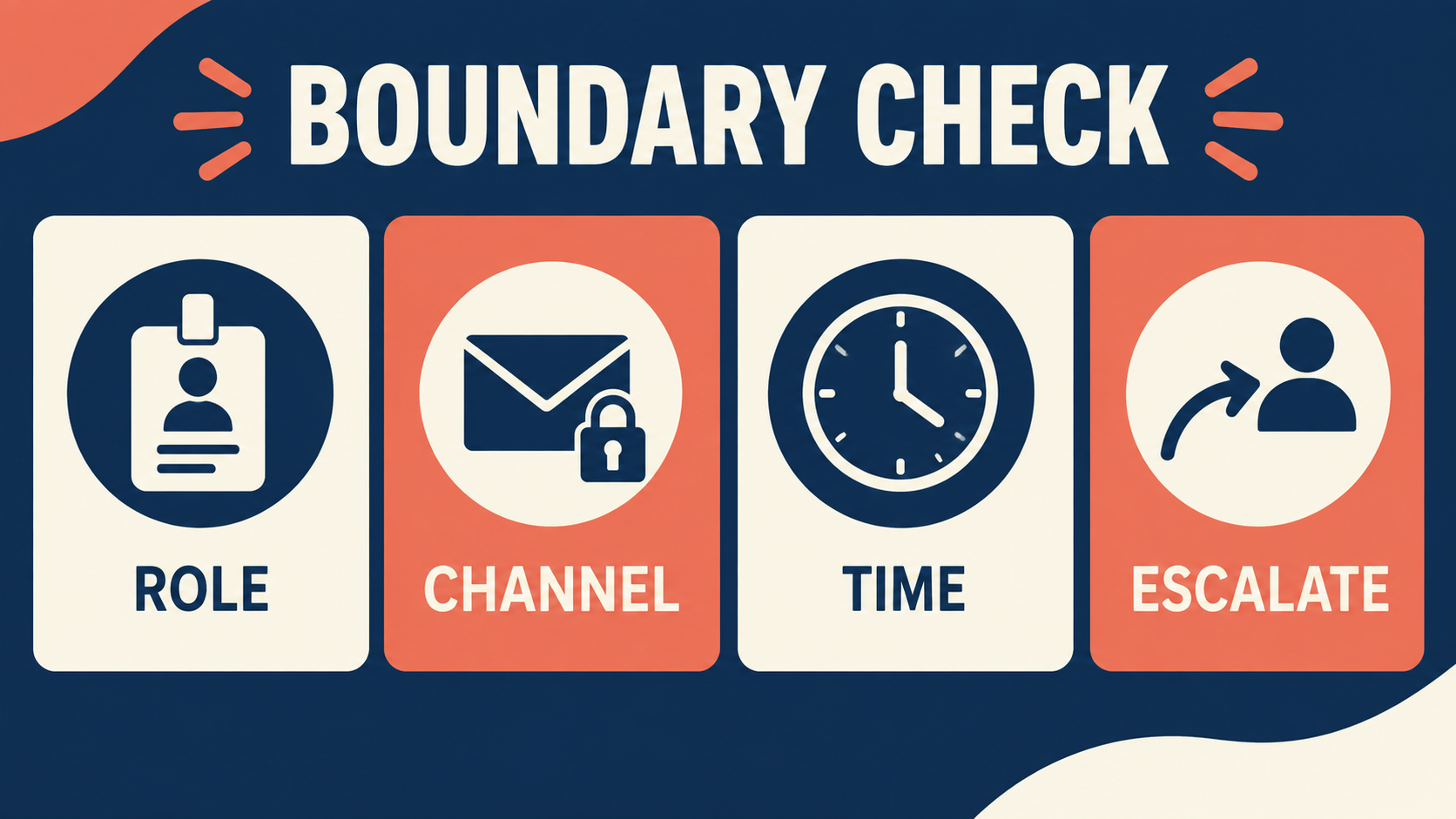
Boundaries answer four questions:
- Who am I here to be? An RBT working under the assigned supervision and plan.
- What am I authorized to do? The procedures, tasks, and communications defined by the current service arrangement.
- Where and when does the role operate? The approved setting, schedule, channel, and service period.
- Who makes the next decision? The supervisor, employer, school team, caregiver, or other responsible person identified by the process.
When one answer is unclear, do not fill the gap with personal judgment. Ask for direction. A boundary keeps an RBT from making a promise that the service team cannot support or a decision the RBT is not authorized to make.
Stay inside the defined role
RBTs can be highly skilled and still have a defined scope. Do not diagnose, independently assess a new condition, rewrite a behavior plan, change a goal, promise an outcome, or introduce an unfamiliar intervention because a client or caregiver asks. Report the request and observable context to the supervisor.
Role clarity also applies to practical tasks. An RBT may support the target skills in the plan, but should not quietly become a housekeeper, driver, babysitter, personal assistant, tutor, or family counselor unless a separate authorized role and policy clearly address the service. Even a small “can you just…” request can create confusion about billing, responsibility, supervision, or client safety.
If the setting changes, check the plan and supervision route. A home visit, school activity, community outing, telehealth contact, or family meeting may require different permissions, privacy steps, safety procedures, and communication boundaries. Do not treat an informal invitation as authorization to expand the service.
Communication boundaries
Use the communication channel named by the employer or service organization. This may be an agency platform, secure email, approved phone line, scheduling system, or another documented route. A caregiver’s personal text message does not automatically authorize a substantive clinical conversation on your personal phone.
Keep messages factual, necessary, and role appropriate. An RBT can acknowledge a concern, confirm an approved appointment detail, describe an observable event, or route a question. The RBT should not debate a diagnosis, promise a plan change, discuss another client, or share a private opinion about the supervisor or family.
Set response expectations instead of being available at all hours. Follow the organization’s policy for urgent and nonurgent messages. If a person contacts you outside the service window, you can say, “I received your message. I will route this through the approved team channel and follow the response process.” In an emergency, use the emergency or mandated-reporting instructions first.
Boundaries should be consistent across families. Avoid special personal channels, secret nicknames, private social media connections, or a pattern of responding faster to one family because of friendship or pressure. Consistency protects both fairness and professional judgment.
Time, location, and personal requests
Keep service time and personal time distinguishable. Do not routinely extend a session, arrive early for an unpaid favor, stay after the service to provide childcare, or meet a client socially without approval. If a session runs late because of a safety or service event, document it and follow the scheduling and billing process.
Family routines can make boundaries feel awkward. A caregiver may ask the RBT to pick up groceries, watch a sibling, attend a private celebration, or help with a personal project. The respectful response is not to judge the request. Thank the person, state that the task is outside the assigned role or needs approval, and route it to the supervisor when appropriate.
Location also matters. Do not use a client’s home as a place to store personal items, invite friends, conduct unrelated business, or create content. Do not invite a client or caregiver into your home or personal social circle unless a specific authorized process and policy address the contact. When in doubt, keep the relationship within the service setting and ask before changing it.
Privacy and information boundaries
RBT client boundaries include information boundaries. Protect names, photos, video, voice, schedules, addresses, school details, health information, data, session notes, and indirect combinations that could identify someone. Share only the necessary information with an authorized recipient through the approved channel.
Do not use a personal phone gallery, personal cloud drive, public document, social media post, or unapproved app as a convenient record. Avoid discussing a client in public places, with friends, or with coworkers who do not need the information. If a caregiver asks what another learner is doing, do not answer with a comparison or identifying detail.
When you need help, de-identify the question as far as the approved process allows and ask the supervisor. If a safety concern or legal reporting duty requires disclosure, follow the required route and document the action. A boundary protects privacy; it does not block necessary protection from harm.
Gifts, money, and favors
Gifts and financial exchanges can change expectations. The RBT Ethics Code limits gifts from clients, stakeholders, or supervisors above $10 US dollars or the equivalent purchasing power, and an employer may use a stricter rule. Repeated small gifts, cash, discounts, loans, paid side work, or special favors can also create pressure even when each item seems minor.
Do not borrow money, sell personal products, accept a private job from a client’s family, or make a financial promise through the service relationship without explicit policy and supervisor direction. If a person offers a gift unexpectedly, say that you need to check the organization’s policy. Do not hide the exchange to avoid an uncomfortable conversation.
Boundary decisions should not punish the client or family. If a gift must be returned, ask the supervisor for language that preserves dignity. The goal is a clear professional relationship, not embarrassment.
How to say no professionally
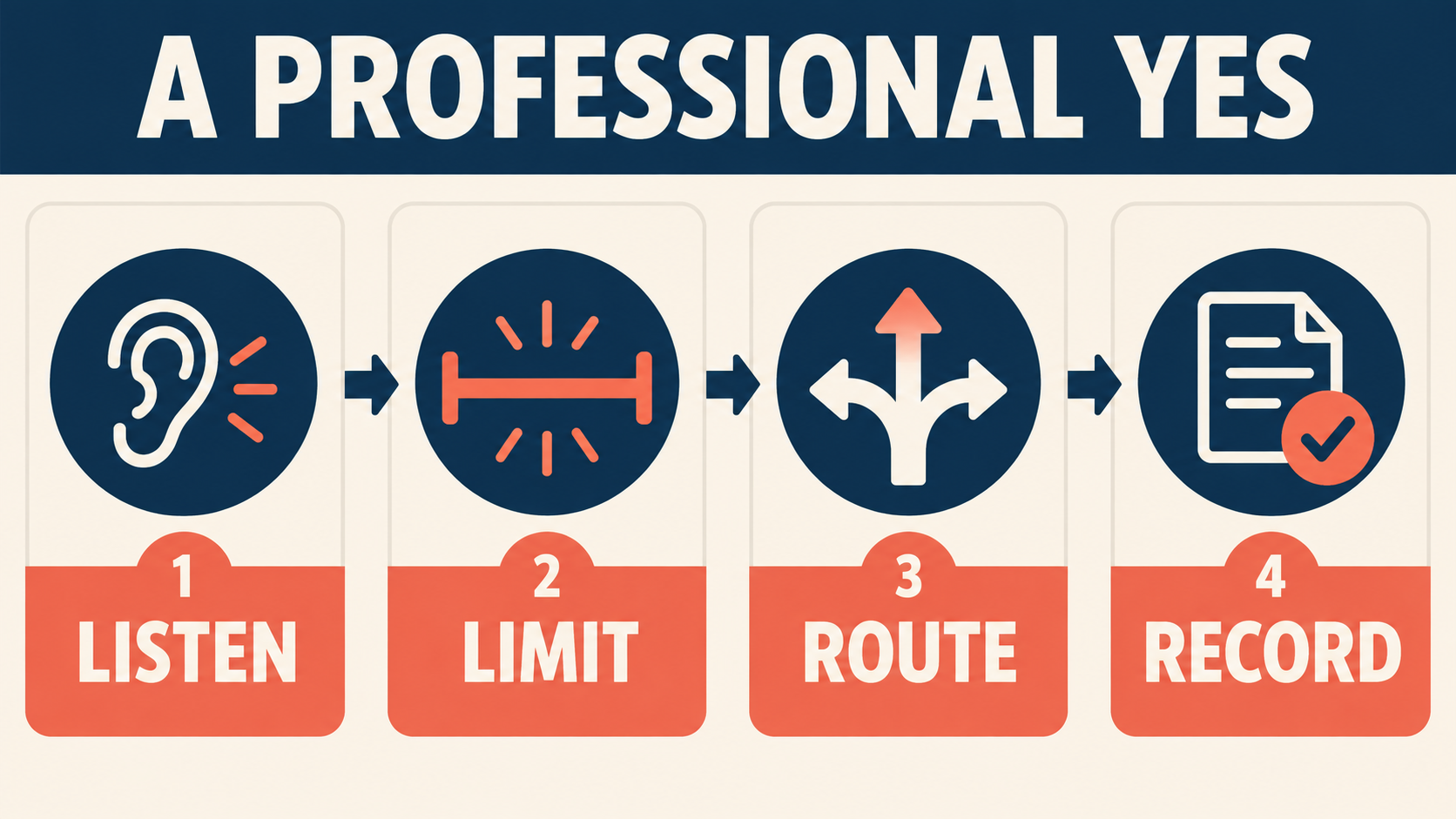
A boundary can be kind and direct. Use four parts: acknowledge the request, state the limit, give the approved next route, and document or follow up when needed.
- “I understand why that would be helpful. Driving outside the assigned service is not my role, so I will ask my supervisor what support is available.”
- “I cannot discuss another client. I can talk with my supervisor about the general procedure that applies to your question.”
- “Thank you for thinking of me. I need to check the gift policy before accepting anything.”
- “I can record what I observed, but I cannot change the goal or plan. I will send your request to the supervisor.”
- “I am not available through personal social media for service communication. Please use the approved agency channel.”
Avoid long explanations that disclose private information or invite negotiation. If the person keeps pressing, repeat the limit and escalate. A clear “no” protects the working relationship better than an uncertain promise.
When to escalate to a supervisor
Contact the supervisor when a request changes the service, creates a personal or financial connection, involves private information, affects a schedule or billing record, asks you to work outside competence, or makes you feel unable to say no. Also ask for direction when the client’s rights, safety, dignity, or access to service may be affected.
Give the supervisor useful facts: who made the request in their professional role, what was asked, when it occurred, what you said, whether anything was already shared or accepted, and what decision you need. Avoid labels such as “the family is manipulative.” Describe the observable request and its impact on the role.
If the supervisor is part of the boundary concern, use the supervisor’s manager, human resources, compliance contact, or another appropriate entity. If there is immediate danger, abuse, or a mandated-reporting duty, follow the emergency and reporting procedure first. Do not wait for a routine supervision meeting when the risk is urgent.
Documenting a boundary concern
Record a boundary concern through the approved system when policy requires it. Include the relevant date, request, observable facts, response, person contacted, direction received, and outcome. Keep the record professional and minimum necessary.
For example: “At 4:15 p.m., the caregiver asked whether I could provide weekend childcare. I stated that childcare is outside my assigned role and said I would route the question to the supervisor. I sent the supervisor a factual message through the agency platform and did not accept payment or make a private arrangement.”
Do not create an informal secret log on a personal device, erase messages, or copy client details into a public document. Preserve relevant evidence under the organization’s retention and privacy process. Documentation helps the team see a pattern and decide whether reassignment, training, or a written boundary plan is needed.
Frequently asked questions
Can an RBT be friendly with a client?
Yes. Warmth, respect, encouragement, and rapport are part of humane service. The boundary is keeping the interaction within the professional role and approved plan rather than creating a private relationship that changes expectations or access.
Can an RBT connect with a caregiver on social media?
Follow the employer and supervisor policy. Personal social connections can create privacy, communication, and role confusion, so do not accept or initiate the connection without checking the approved boundary rules.
What if a client asks for my personal phone number?
Use the approved service contact instead. You can explain that work communication must use the team channel and ask the supervisor how to handle the request.
Can an RBT refuse a task?
An RBT should not silently abandon an assigned service, but should speak up when a task is outside the defined role, training, plan, or safety requirements. State the concern and seek supervisor direction promptly.
Official source note
This educational guide was checked against the BACB RBT Ethics Code (2.0), including standards 1.03, 1.06, 1.10–1.12, 2.08–2.10, and the glossary, retrieved September 28, 2026. Employer, payer, school, state, legal, privacy, and workplace requirements may add requirements or differ.
Role boundary: This article is general education, not individualized legal, clinical, ethics, or employment advice. Follow the current plan, supervisor direction, employer policy, approved communication systems, applicable law, and required reporting process.
Ready to practice the RBT concepts you just reviewed?
Try an independent, original RBT practice resource with exam-style questions, scoring, and answer explanations.
References
- Behavior Analyst Certification Board. RBT Test Content Outline, 3rd edition.
- Behavior Analyst Certification Board. RBT Handbook.
- Behavior Analyst Certification Board. RBT Ethics Code.