

The chain of command RBT professionals use is a communication pathway for getting the right question to the right person.
Table of Contents
- Chain of command RBT: quick answer
- What the chain of command means
- Safety and urgent escalation
- Routine clinical questions
- When the plan is unclear
- When data or documentation conflict
- How to make a clean handoff
- Privacy and communication channels
- RBT role boundaries
- Frequently Asked Questions
Who to contact, how to escalate, and how to keep communication objective
Chain of Command RBT: Who to Ask First and How to Handoff
The chain of command RBT professionals use is a communication pathway for getting the right question to the right person. It does not mean ignoring a safety concern or passing a problem around. It means knowing which issue belongs with the on-site supervisor, responsible clinical team, organization, or emergency process. A clear pathway helps protect the learner, preserve data, respect confidentiality, and keep an RBT from making an independent clinical change.
Chain of command RBT: quick answer
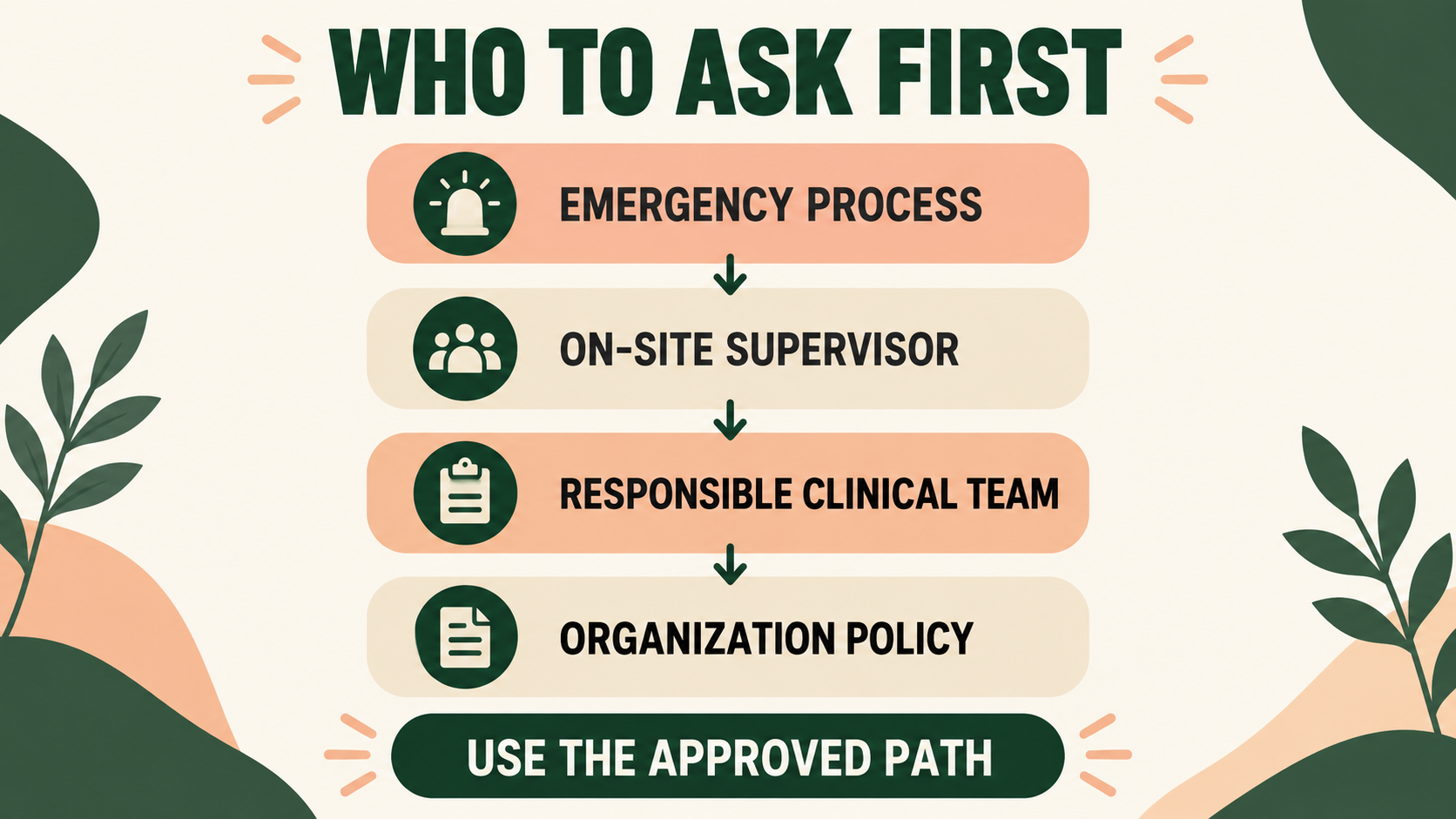
Use the organization’s approved pathway. Immediate safety concerns go to the emergency or crisis process first. A routine implementation question usually goes to the on-site supervisor or designated supervisor. Questions about program design, assessment, treatment changes, or recurring clinical patterns go to the responsible clinical team through the supervisor. Administrative, scheduling, or policy questions may go to the organization’s designated contact.
If you are unsure which level applies, state the facts and ask the most available authorized person how to route the issue. Do not delay urgent help while trying to identify the perfect title. The chain is a guide for responsible escalation, not a reason to remain silent.
What the chain of command means
A chain of command has three useful purposes: it identifies responsibility, prevents contradictory instructions, and creates a record of how a concern was handled. It should be defined by the employer, provider, school, or clinical organization. Job titles vary, so learn the actual names, contact methods, backup contacts, and after-hours instructions in your setting.
Keep communication proportional. A missing pen may be a routine supply issue. A missing safety instruction, an unexplained change in a behavior-reduction procedure, or a request for confidential information may require faster guidance. The content and risk of the question determine the priority.
Safety and urgent escalation
If someone is in immediate danger, follow the setting’s emergency and crisis procedures and contact the designated help. Use only actions you are trained and authorized to perform. Do not turn a general article into a crisis protocol. The correct response depends on the current plan, setting, staffing, and local requirements.
After the immediate risk is addressed, report what happened through the required channel. Document observable facts, actions taken, who was contacted, and the follow-up instruction. If you do not know whether an event meets the urgent threshold, use the approved escalation path and describe the risk clearly.
Routine clinical questions
Routine questions include a missing program step, an unclear prompt sequence, a material that is unavailable, or a learner response that does not fit the written instructions. Start with the person designated for day-to-day supervision. Bring the current plan, the relevant data, and one focused question.
For example: “The program lists a least-to-most prompt sequence, but the third prompt is not defined. The learner has responded independently on two trials and not responded on three. Which authorized step should I use next, and how should I record this?” This is more useful than “The program is not working.”
When the plan is unclear
Check the current version before escalating a routine question. Compare the target, operational definition, materials, prompt, consequence, data rule, and safety note. If two documents conflict, do not choose the version you prefer. Pause the disputed change and ask which instruction controls.
Do not independently add a target, change a mastery criterion, switch a consequence, or introduce a new tool. State the barrier and request direction. If the supervisor is unavailable, follow the organization’s backup process and document the attempt. Never use a personal workaround that could alter data or expose confidential information.
When data or documentation conflict
Separate what you observed from what you think it means. State the event, measurement, time, setting, and procedure implemented. If the paper form says one response but your contemporaneous note says two, use the authorized correction process. Do not silently overwrite another person’s record.
A recurring data conflict may need the responsible clinical team, especially when the measurement affects treatment decisions, safety, or progress reporting. Bring the definition you used, the raw observation, and the exact point of disagreement. A single number does not prove why a behavior occurred, but a pattern of recording problems is a reason to seek review.
How to make a clean handoff
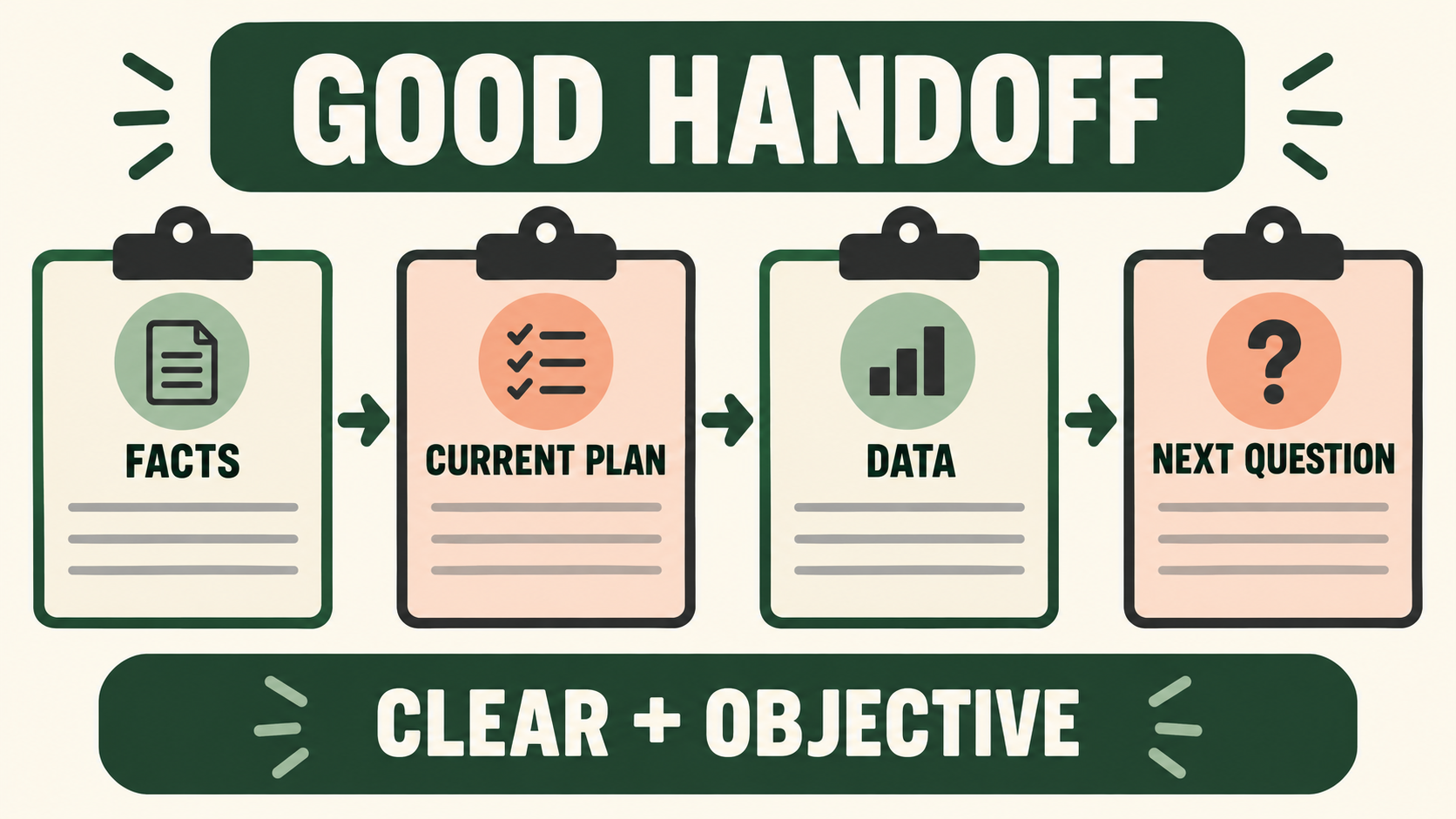
A clean handoff is short, factual, and actionable. Include:
- Facts: what happened, where, and when.
- Current plan: the instruction or version you followed.
- Data: the relevant count, duration, prompt level, missing item, or safety detail.
- Next question: the decision that needs clarification and the urgency.
Repeat the direction back in your own words. Confirm who will update the written plan, what you should do meanwhile, how to document the conversation, and when follow-up will happen. A handoff is complete when responsibility and next action are clear.
Privacy and communication channels
Use approved communication and record systems. Do not send identifiable client details through a personal messaging app, store photos on a personal device, or paste confidential notes into an unapproved tool. If the usual channel is unavailable, ask the organization for the authorized alternative.
Share only the information needed for the recipient to act. A clear handoff is not a reason to forward an entire record or discuss a client in a public space. Follow the current ethics, privacy, and organization policies.
RBT role boundaries
An RBT can implement assigned procedures, collect defined data, report barriers, ask questions, and document objective events. An RBT should not independently design treatment, interpret a diagnosis as a clinical decision, change a procedure, select a new consequence, or promise a caregiver that the plan will be changed.
Following a chain of command does not mean refusing to think. It means bringing useful observations to the person responsible for the clinical decision. The strongest communication is specific enough to support a decision and humble enough to distinguish evidence from interpretation.
Frequently Asked Questions
What is the chain of command for an RBT?
It is the setting’s approved route for escalating safety, clinical, data, administrative, and policy questions to the appropriate responsible person.
Who should an RBT ask first?
For a routine implementation question, ask the designated supervisor or on-site supervisor. For immediate danger, follow the emergency process first. Use the organization’s backup route when the usual contact is unavailable.
Can an RBT skip the supervisor and contact the clinical team?
Follow the organization’s communication policy. Some issues are routed through the supervisor; urgent safety or reporting rules may require a different path. When unsure, ask the approved contact how to route it.
What should a handoff include?
Include observable facts, the current plan, relevant data, the urgency, and the exact next-step question. Confirm who owns the follow-up.
Where can I confirm RBT responsibilities?
Review the BACB RBT Ethics Code, the RBT Handbook, and your organization’s current policy. This article is educational and does not replace supervision or emergency procedures.
Source note: This article was reviewed against current BACB RBT resources and supervision/documentation practices on September 29, 2026. RBT Training is independent educational content and is not affiliated with or endorsed by the BACB.
Ready to practice the RBT concepts you just reviewed?
Try an independent, original RBT practice resource with exam-style questions, scoring, and answer explanations.
References
- Behavior Analyst Certification Board. RBT Test Content Outline, 3rd edition.
- Behavior Analyst Certification Board. RBT Handbook.
- Behavior Analyst Certification Board. RBT Ethics Code.