
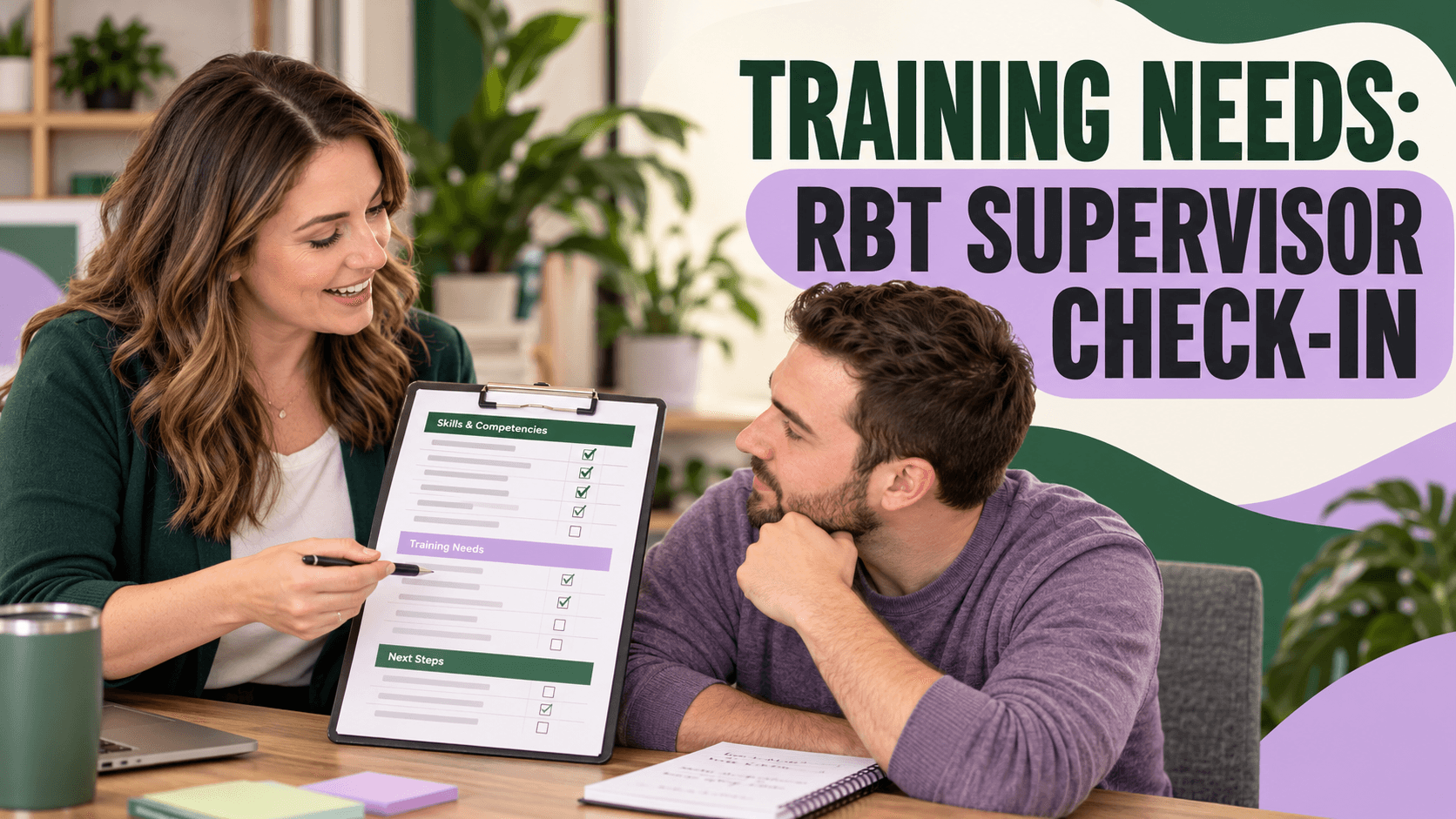
The search phrase training needs RBT supervisor points to a practical supervision question: how should an RBT and supervisor identify the technician’s current training needs, decide what to practice, and check whether the support helped?
Table of Contents
- What “training needs RBT supervisor” means
- Why discuss training needs?
- What to review before the meeting
- Review current skills and competency
- Bring data and documentation examples
- Identify procedure gaps
- Discuss communication and boundaries
- Turn a gap into a practice plan
- Follow up and review again
- FAQ
- Key takeaways
- Sources and scope
RBT PRACTICE GUIDE · SUPERVISION CHECK-IN
Training Needs RBT Supervisor: A Practical Check-In Guide
Use examples, current skill evidence, data, and clear questions to turn an RBT supervisor meeting into a focused training plan.
The search phrase training needs RBT supervisor points to a practical supervision question: how should an RBT and supervisor identify the technician’s current training needs, decide what to practice, and check whether the support helped? The answer is not a generic list of weaknesses. A useful check-in connects observable performance, current data, the authorized plan, and the tasks the RBT is expected to perform.
BACB supervision materials describe discussion of an RBT’s competency assessment, current skill set, training needs, and expected tasks. This article turns that idea into a meeting workflow. It does not replace an organization’s supervision policy, the current RBT Handbook, or the supervisor’s clinical direction.
What “training needs RBT supervisor” means
A training-needs conversation can happen when an RBT is onboarding, preparing for a new learner, reviewing a competency assessment, learning a new procedure, or noticing uncertainty during service delivery. It can also happen after data or feedback shows that a step is not being implemented consistently.
The goal is to answer four questions:
- What task is the RBT expected to perform?
- What evidence shows the current level of performance?
- Which specific step or condition needs practice?
- How will the supervisor and RBT know that the next practice attempt improved?
This framing keeps the discussion about performance and support rather than personality or blame.
Why discuss training needs?
RBTs implement behavior-analytic services under the direction and close supervision of an RBT Supervisor or RBT Requirements Coordinator. Clear supervision helps the technician understand expectations, ask for guidance in a timely way, and stay within current competence and role boundaries.
A training-needs check-in can prevent small uncertainties from becoming repeated errors. It can also identify strengths to maintain, not only gaps to fix. For example, an RBT may collect frequency data accurately but need more practice with duration recording, or may implement a teaching sequence well but need a clearer handoff format. The plan should be specific enough to teach and observe.
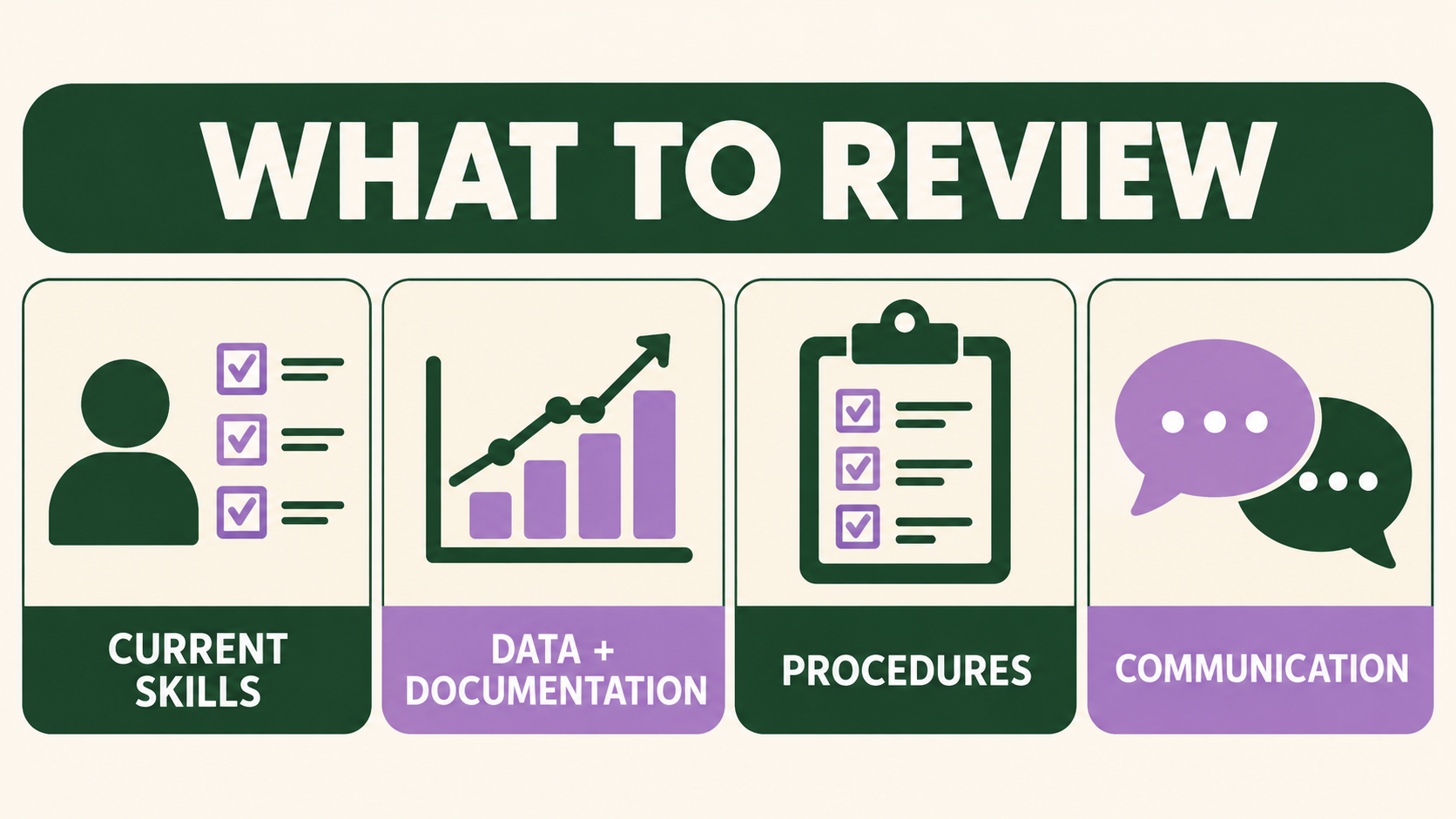
What to review before the meeting
Bring the documents and examples that define the work:
- the current learner-specific plan and operational definitions;
- the latest competency-assessment results or skill checklist;
- recent data sheets, graphs, or documentation samples as permitted;
- the procedure, task analysis, or teaching materials that feel unclear;
- feedback already received from the supervisor or team; and
- questions about safety, communication, privacy, or escalation.
Use approved channels and protect confidential information. Bring only what is needed for the supervision discussion and follow the organization’s rules for storing or sharing records.
Review current skills and competency
Start with the task, not the label. Instead of saying “I need more training,” name the performance:
- “I can set up the data sheet, but I am unsure when one episode ends and another begins.”
- “I can run the first three steps of the teaching sequence, but I lose my place when the learner needs a prompt.”
- “I can describe the target response, but I need feedback on choosing the correct measurement.”
- “I can document the session facts, but my summary is too long and includes interpretations.”
These statements give the supervisor something to observe, model, rehearse, and measure. They also make it easier to distinguish a knowledge question from a fluency problem, a materials problem, or a plan-clarity problem.
Bring data and documentation examples
Data can show where a training need appears, but one data point rarely explains the whole issue. Look for repeated patterns across sessions, targets, staff, or conditions when those comparisons are appropriate and authorized.
Review whether the RBT is:
- using the current operational definition;
- recording the measure named in the plan;
- entering data completely and on time;
- documenting variables that may affect progress; and
- separating objective observations from hypotheses or opinions.
The supervisor can then decide whether the need is more instruction, a model, rehearsal with feedback, a revised job aid, or clarification of the authorized procedure.
Identify procedure gaps
A procedure gap may occur at one step rather than across the entire intervention. Map the sequence and identify where performance changes. For instance, an RBT may prepare materials correctly, deliver the instruction, and record the response, but skip the planned prompt delay. A short practice session can target that step instead of repeating an entire training course.
Ask the supervisor to demonstrate the expected performance and explain the decision points. Then rehearse the task using examples and nonexamples where appropriate. If the written plan conflicts with what a team member says, pause and ask which authorized version controls. Do not silently combine two procedures.
Discuss communication and boundaries
Training needs can involve communication as much as technical performance. The RBT and supervisor should clarify how to report concerns, when to seek direction, which channel to use, and what information belongs in a session note versus a direct supervision message.
Good questions include:
- “What should I do first if the plan does not cover this event?”
- “Who should I contact during and after the session?”
- “Which facts should go in the service note?”
- “What is the urgent or emergency pathway?”
- “Which decisions are outside my role and need supervisor direction?”
Professional boundaries are part of competence. A training plan should include privacy, respectful communication, multiple-relationship risks, and the organization’s approved documentation and escalation practices.
Turn a gap into a practice plan
A useful training plan names the skill, teaching method, criterion, and review date. For example:
| Plan element | Example question |
|---|---|
| Target skill | What exact task or step needs improvement? |
| Instruction | What explanation, model, or job aid will be used? |
| Practice | Where will the RBT rehearse the task? |
| Feedback | What will the supervisor observe and correct? |
| Criterion | What performance level counts as ready for the next step? |
| Review | When will the team check maintenance and generalization? |
The criterion should be appropriate to the task and set by the responsible supervisor or program. Avoid inventing a percentage simply because it sounds precise. The supervisor should define what accurate performance looks like and how it will be evaluated.
Follow up and review again
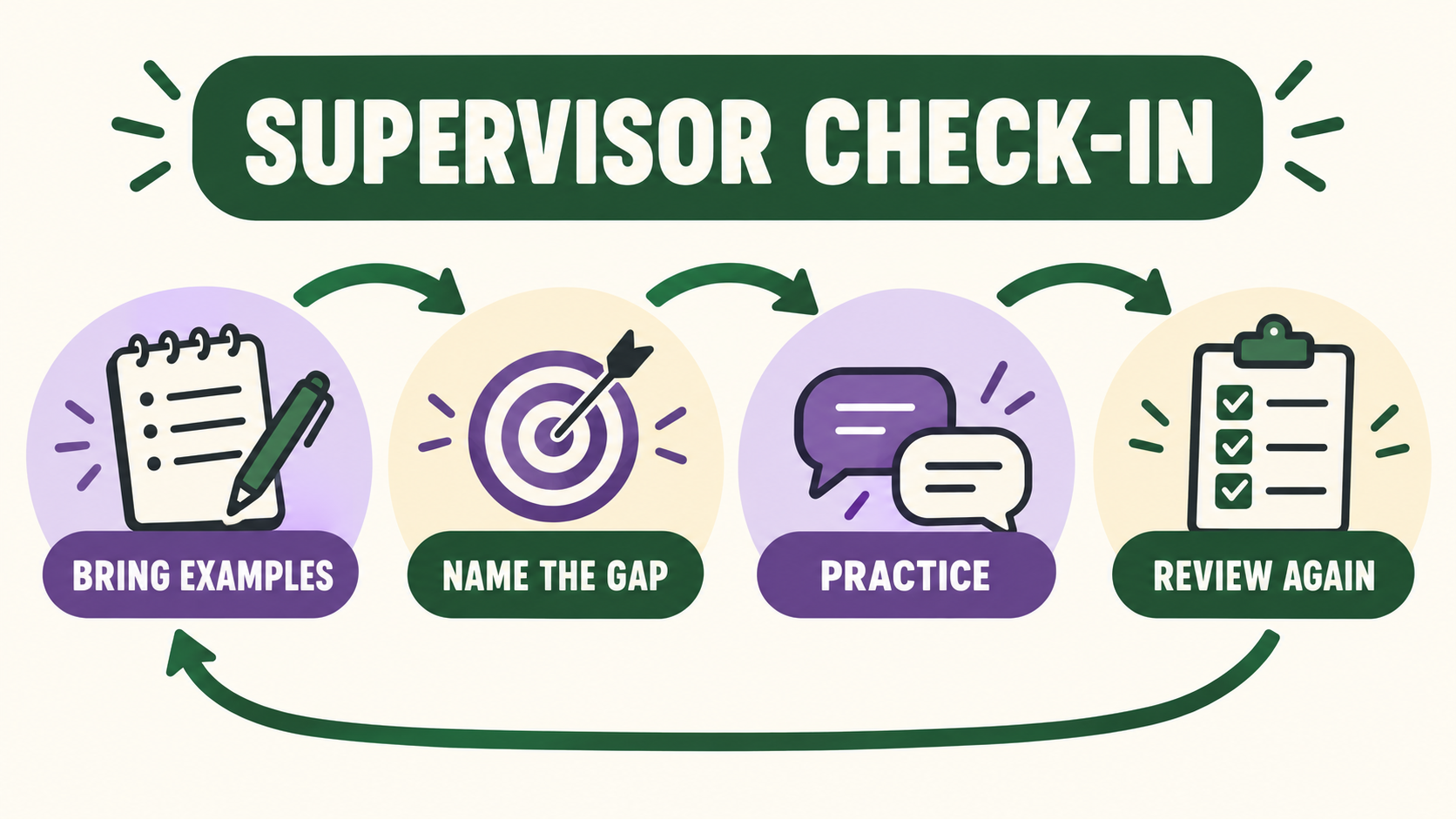
Training is not complete when a meeting ends. The RBT should practice as directed, record the relevant performance information, and bring questions back to supervision. The supervisor can review whether the skill transfers to the actual setting and whether more support is needed.
Use a short follow-up note:
- What was practiced?
- What feedback was given?
- What changed on the next attempt?
- What remains unclear?
- What is the next review date or condition?
If performance changes because the learner, setting, materials, or schedule changes, report the relevant variable. Do not assume that success in one practice context proves fluency in every context.
FAQ
Who identifies an RBT’s training needs?
The RBT and supervisor can identify needs together using current skill evidence, competency-assessment information, data, feedback, and expected tasks. The supervisor directs the training plan and determines what work the RBT is ready to perform.
What should an RBT bring to a supervisor meeting?
Bring specific questions, recent permitted examples, the relevant plan or task analysis, data or documentation that needs review, and a clear description of what feels difficult. Avoid sharing unnecessary confidential information.
Does a training need mean the RBT is failing?
No. Training needs are normal in onboarding, new procedures, new settings, and ongoing professional development. The useful question is what support will improve observable performance.
Can an RBT change a procedure after noticing a gap?
No. The RBT should follow the current authorized plan and ask the supervisor for direction. A training discussion can identify a problem without giving the RBT independent authority to rewrite the intervention.
Key takeaways
A productive training-needs conversation connects current skills, data, procedures, communication, and the tasks expected of the RBT. Bring examples, name the exact performance gap, practice with feedback, and schedule a review. This keeps supervision objective, collaborative, and aligned with the current plan and professional boundaries.
Ready to practice the RBT concepts you just reviewed?
Try an independent, original RBT practice resource with exam-style questions, scoring, and answer explanations.
References
- Behavior Analyst Certification Board. RBT Test Content Outline, 3rd edition.
- Behavior Analyst Certification Board. RBT Handbook.
- Behavior Analyst Certification Board. RBT Ethics Code.