

An RBT session note is a professional record of what occurred during service, what data were collected, what communication mattered, and what follow-up is needed.
Table of Contents
- What an RBT session note is for
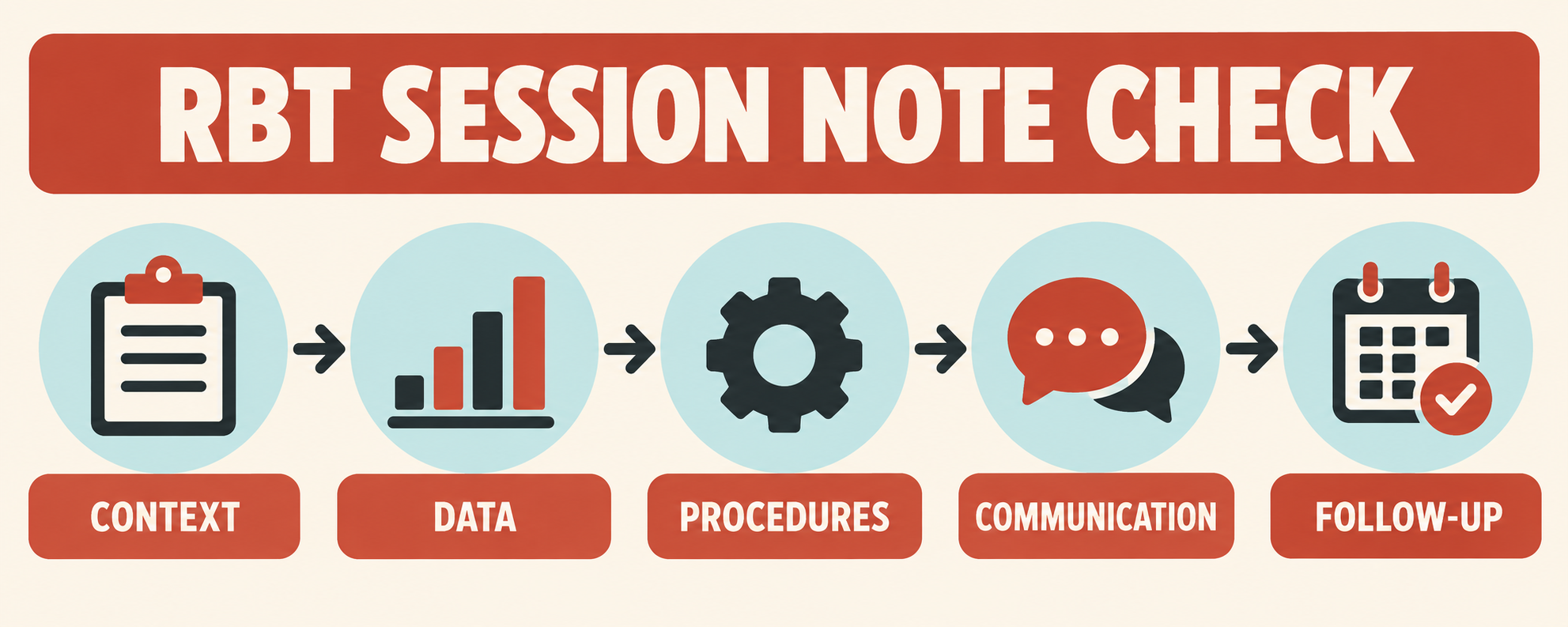
- The core fields to capture
- Write observable facts
- When to complete the note
- Record communication and follow-up
- Protect privacy and record access
- Review before signing or submitting
- Common session-note mistakes
- FAQ
- References
RBT PRACTICE GUIDE · DOCUMENTATION
RBT Session Note: What to Record, When to Write It, and How to Protect Privacy
Build a reliable documentation habit around objective facts, data, communication, follow-up, and the privacy rules that govern client records.
An RBT session note is a professional record of what occurred during service, what data were collected, what procedures were implemented, what communication mattered, and what follow-up is needed. It is not a personal diary, a diagnosis, or a place to defend every decision with speculation.
The exact template and deadline depend on the employer, payer, setting, and applicable law. This guide gives a documentation framework. Use the authorized system, follow supervisor direction, and ask when a required field or event is unclear.
What an RBT session note is for
A session note creates a usable record for the people who are responsible for service continuity. It can help a supervisor understand what was implemented, connect the note with the raw data, identify a change that needs attention, and coordinate the next session. It may also be part of billing or quality review, which makes accuracy and timing important.
A good note answers practical questions:
- When and where did the session occur?
- Who was present in the role-relevant context?
- Which authorized programs or procedures were implemented?
- What observable responses and data were recorded?
- What relevant communication, barrier, or safety event occurred?
- What needs supervisor attention before the next session?
The core fields to capture
Your organization may use different labels, but most RBT session notes need a consistent set of facts. Confirm the required fields in the system rather than adding private details simply because a note looks more complete.
- Session information: date, start and end time, setting, service type, and the identifier required by the authorized record system.
- People and context: relevant participants, changes in the environment, and any absence or transition that affected implementation.
- Programs implemented: the authorized skill-acquisition or behavior-reduction programs addressed, using the plan’s language where appropriate.
- Data connection: where the raw data are stored, which measurement procedures were used, and any data-quality issue that needs review.
- Response and support: prompts, reinforcement, teaching arrangements, or other steps implemented according to the current plan.
- Communication and follow-up: relevant caregiver or supervisor communication, unresolved questions, safety events, and the next action.
Write observable facts
The RBT Test Content Outline expects behavior and environment to be described in observable and measurable terms. That principle applies to the note as well as the data sheet. Write what a reader could see, hear, count, or verify from the record.
Compare these two styles:
- Weak: “The client was noncompliant because he wanted attention.”
- Stronger: “After the instruction to place the materials in the bin, the client pushed the materials to the floor and did not begin the task for 45 seconds. The programmed prompt and reinforcement procedure were implemented as written.”
The stronger statement does not claim a private motive. It records the instruction, observable response, duration, and implementation detail. If the team has an authorized hypothesis or assessment result, reference it according to the plan; do not turn a hypothesis into a fact in your own wording.
When to complete the note
Complete the note according to the organization’s deadline, ideally while the details are fresh and before the record is needed for review. Delayed writing increases the chance of confusing events, omitting a communication, or copying a detail from memory that cannot be verified.
If you discover an error after signing, use the approved correction process. Do not quietly delete an important entry or backdate a note to make it appear contemporaneous. A transparent correction with the current date and reason is usually safer than an invisible rewrite, but the authorized record policy controls the exact method.
Record communication and follow-up
Document job-related communication that changes what the team needs to know: a supervisor clarification, a caregiver report that requires routing, a safety concern, a missing material, a data irregularity, or a conflict between instructions. State who was contacted, when, the observable issue, and what direction was received or remains pending.
Do not use the session note to make a clinical change. If the plan is unclear, record the question and follow the organization’s chain of command. If the issue is urgent, use the approved urgent pathway first and then complete the required documentation. The note is a record of communication and action, not permission to improvise.
Protect privacy and record access
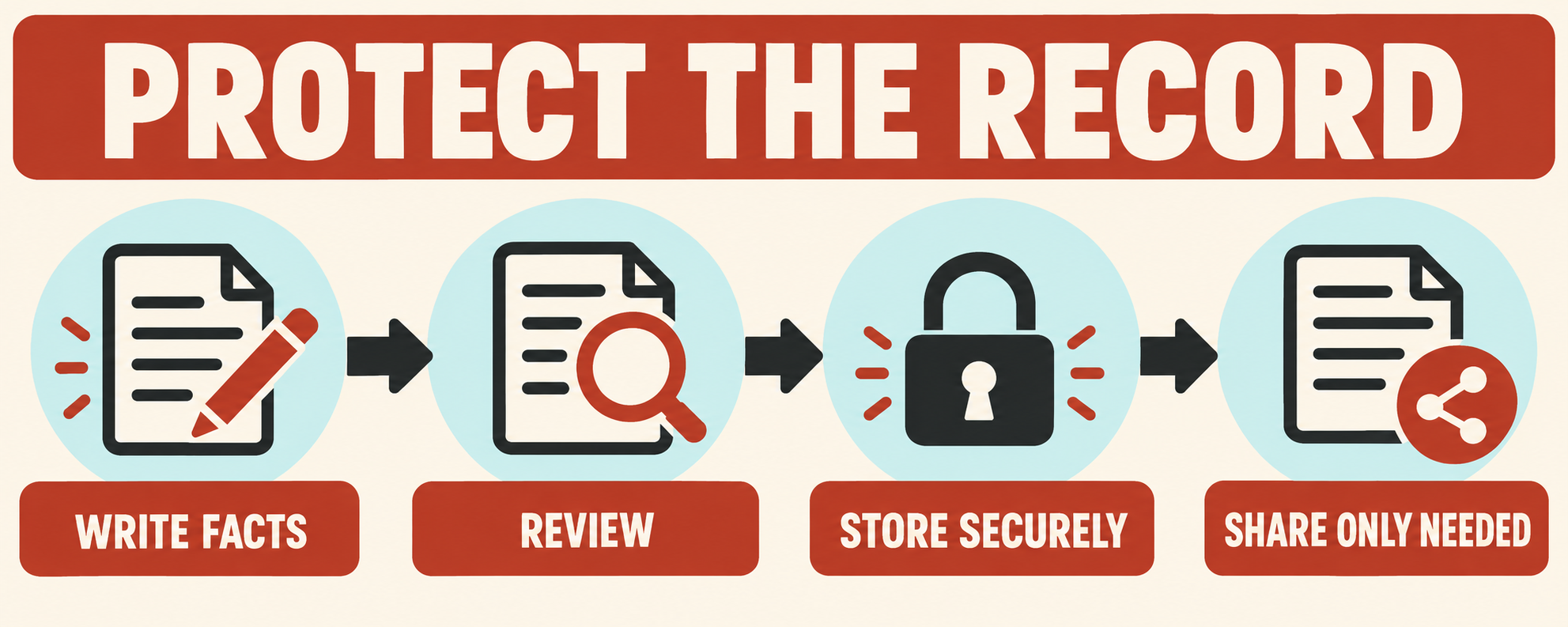
The RBT Ethics Code (2.0) requires confidentiality and privacy when handling client information and records. Use the authorized platform, share only the information necessary for the job, and keep screenshots or drafts out of personal messaging apps unless the organization expressly authorizes the channel and its protections.
Do not add names, diagnoses, photos, family details, or narrative background that the note does not require. Do not post a note, image, or recognizable story on social media. Protect access credentials and follow the employer’s retention, storage, transfer, and disposal rules.
Review before signing or submitting
Use a short final review:
- Are the date, time, setting, and required identifiers correct?
- Does the note match the raw data without inventing a result?
- Are the procedures described the ones actually authorized and implemented?
- Have observations been separated from interpretations?
- Did you record relevant communication, safety events, or unanswered questions?
- Is the information limited to what the record needs?
- Is the note submitted through the correct channel and within the required deadline?
Common session-note mistakes
One mistake is writing a note that sounds clinically impressive but does not connect to the data. Another is copying yesterday’s note and changing only the date. Templates can save time, but every statement must describe the current session. A third mistake is using a diagnosis, emotion, or presumed function as if it were an observed event.
Also avoid reporting “no behavior” when the data sheet simply has no entry, claiming that a treatment worked because one session looked different, or hiding a missed step to make the record look clean. If a procedure was not implemented as written, state the relevant fact and route it to the supervisor according to policy.
FAQ
Is an RBT session note the same as raw data?
No. The note summarizes service context, implementation, communication, and follow-up. Raw data remain the detailed measurement record required by the authorized system.
Can I use one template for every client?
A general structure may help, but required fields and individualized plans differ. Use the organization’s approved template and never copy client-specific content into the wrong record.
Can I write the note later from memory?
Follow the required deadline and write as soon as practical. If a delay occurs, do not guess or backdate. Use the approved late-entry or correction process and document only facts you can support.
Should I include my opinion about why behavior happened?
Do not present an unverified interpretation as fact. Record observable events, use the plan’s authorized language, and ask the supervisor when an analysis or clinical decision is needed.
Bottom line: a strong RBT session note is timely, factual, connected to the data, limited to necessary information, and clear about follow-up. Document what happened and what was implemented; route clinical questions instead of solving them inside the note.
Ready to practice the RBT concepts you just reviewed?
Try an independent, original RBT practice resource with exam-style questions, scoring, and answer explanations.
References
- Behavior Analyst Certification Board. RBT Test Content Outline, 3rd edition.
- Behavior Analyst Certification Board. RBT Handbook.
- Behavior Analyst Certification Board. RBT Ethics Code.