

RBT insurance questions usually involve two separate jobs: the RBT documents assigned services accurately, while the employer or authorized provider handles coverage, authorization, and billing decisions.
Table of Contents
- What RBT insurance questions usually mean
- RBT insurance: the role-based workflow
- What belongs in an objective session note
- How to handle authorization questions
- What belongs to billing staff or providers
- Protect client and payer information
- When to report a discrepancy
- Common RBT insurance mistakes
- Frequently asked questions
- References
RBT WORKPLACE GUIDE · DOCUMENTATION AND COVERAGE
RBT Insurance: Documentation, Authorizations, and Scope Boundaries
Know what to record, what to report, and which coverage or billing decisions belong to the employer or authorized provider.
RBT insurance questions usually involve two separate jobs: the RBT documents assigned services accurately, while the employer or authorized provider handles coverage, authorization, and billing decisions. An RBT is a paraprofessional who works under direction and close supervision; the credential does not make the technician an insurance representative, coder, claims specialist, or legal adviser.
This guide is role-based, not insurance or legal advice. Payer rules, authorizations, forms, codes, contracts, and deadlines vary. Use the employer’s procedure, the client agreement, supervisor direction, and the payer’s official materials for the exact situation.
What RBT insurance questions usually mean
Families and technicians may use “insurance” to mean several different things:
- Whether a plan includes a particular benefit or service.
- Whether the payer authorized a service for a date range or number of units.
- Whether a session note contains the information the organization needs for its claim process.
- Whether a claim was submitted, denied, paid, appealed, or held for more information.
- Whether a schedule change or missed visit affects an authorization or service agreement.
These questions do not all belong to the same person. The RBT can contribute an accurate account of the service delivered and observations made. The supervisor, provider, billing department, or authorized administrator may handle clinical authorization, coding, claims, benefits, and payer communication.
RBT insurance: the role-based workflow
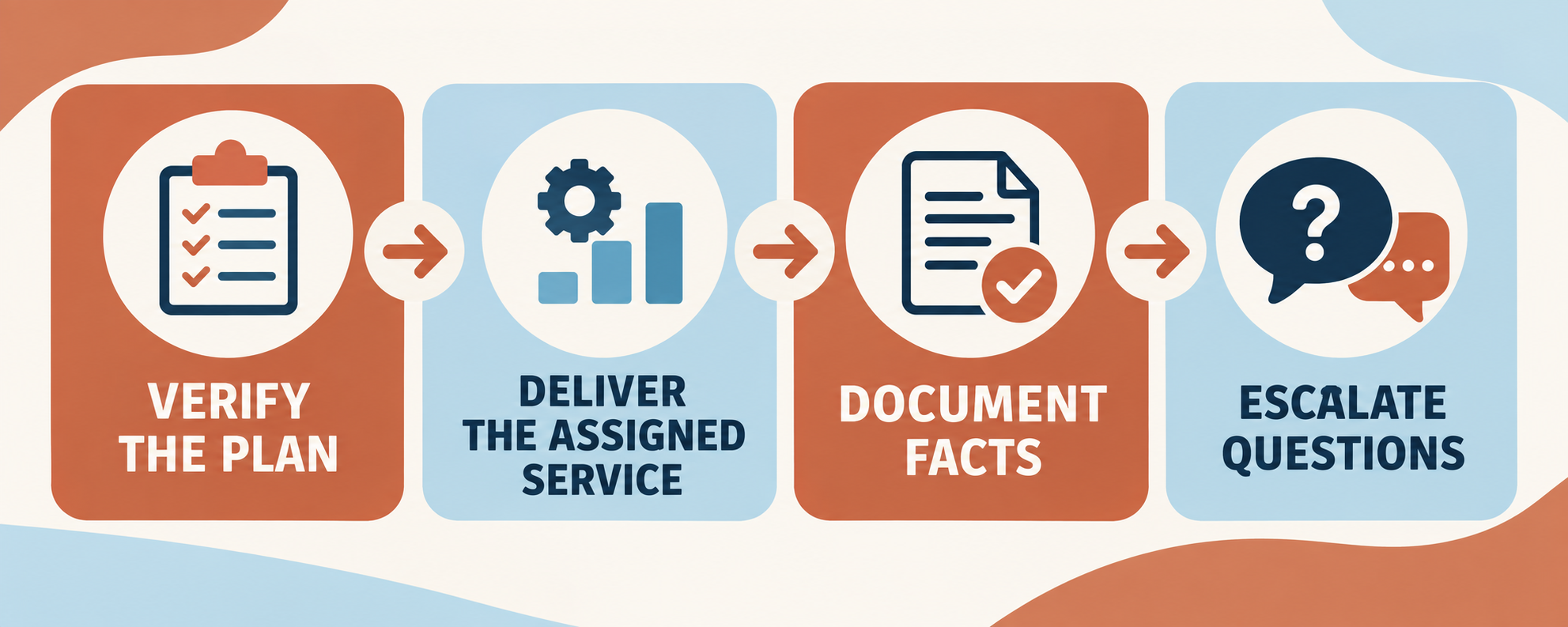
A simple workflow keeps an RBT from promising something that another person must verify:
- Verify the assigned plan: use the current client plan, schedule, and employer instructions.
- Deliver the assigned service: implement the procedures you are trained and authorized to implement.
- Document the facts: record date, time, duration, service context, data, cancellations, and barriers according to the approved form.
- Escalate questions: send coverage, authorization, billing, or discrepancy questions to the designated person.
The key boundary is simple: document what happened; do not rewrite what happened to make it fit a payer requirement. If the record is incomplete or the authorization is unclear, report the issue and wait for direction.
What belongs in an objective session note
The exact note format is employer-specific, but an RBT commonly contributes service facts such as:
- the client, service setting, date, and start and end times;
- the service or procedures implemented under the current plan;
- data recorded with the assigned definitions and measurement system;
- relevant observable events, schedule changes, illness reports, or interruptions;
- who was present when the procedure requires that information;
- cancellations, late starts, early endings, or barriers that affected service delivery;
- the supervisor or designated contact notified about a discrepancy and the time of notification.
Use observable wording. “Session was not billable” is usually a billing determination. “Session ended at 2:20 p.m. after the caregiver requested an early end; 40 minutes of service were delivered” records facts that the responsible team can review against its policy.
Do not add a code, diagnosis, medical-necessity statement, or payer conclusion unless the employer’s authorized process specifically instructs you to enter it and you are qualified and permitted to do so. Never backdate a note or change a duration to match an expected unit count.
How to handle authorization questions
An authorization may identify a service, provider, date range, units, setting, or other condition. The RBT may need to know enough of the current schedule and plan to perform assigned work, but the technician should not independently interpret a contract or decide that an authorization is valid.
If a caregiver asks, “Is this visit covered?” a safe response is: “I cannot verify benefits or promise coverage. I will direct your question to the office or authorized person who handles insurance.” If a supervisor gives you a specific approved script or workflow, follow it.
Report practical barriers promptly. Examples include a missing authorization notice, a schedule outside the approved plan, a request for a service you are not assigned to provide, or a system alert that conflicts with the current schedule. Include the facts and ask for direction; do not solve the discrepancy by changing the note.
What belongs to billing staff or providers
Coverage verification, payer enrollment, code selection, claim submission, reimbursement, appeals, and financial agreements are organization or provider responsibilities unless an authorized procedure assigns a specific administrative task to you. Even then, follow the exact training and limits provided.
The BACB Ethics Code for Behavior Analysts addresses financial agreements and billing practices for responsible behavior-analytic providers. That does not mean an RBT should negotiate a family’s financial agreement or answer questions outside the RBT’s role. It does mean accurate service records and prompt escalation matter to the larger team.
If someone asks you to record a service you did not provide, extend a time, omit a cancellation, or describe an unobserved event as if it occurred, stop and seek supervisor or compliance direction. Keep your record truthful and preserve any correction through the approved process.
Protect client and payer information
Insurance records can contain identifying, clinical, and financial information. Use the employer’s secure record and communication channel. Do not copy a member ID, authorization letter, claim screenshot, or client note into a personal app, public chat, or social media message.
Share only the minimum information needed with an authorized recipient. If a family member asks you to forward records to an outside person, use the organization’s release and referral procedure rather than sending them yourself. When a paper form is no longer needed, store or dispose of it according to policy.
When to report a discrepancy
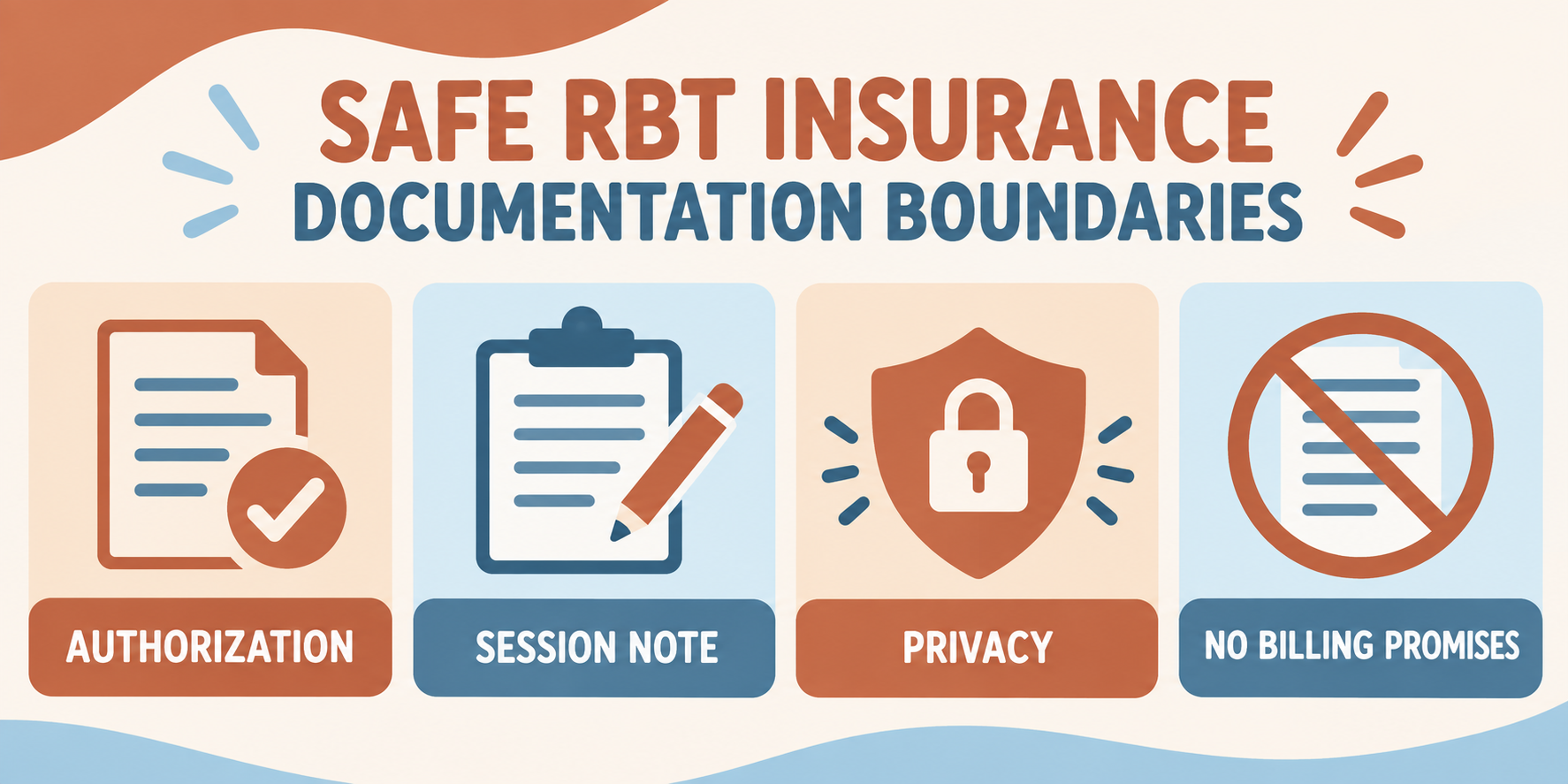
Report a concern when the schedule, authorization, service delivered, note, or system record does not line up. A discrepancy is a reason to communicate, not proof that someone committed fraud or that a claim will be denied.
Make the message concise:
- State the date, setting, and client record involved.
- Describe the difference between the scheduled or authorized information and what occurred.
- Identify the documentation already completed.
- State whether the issue affects safety, privacy, or the ability to continue the current plan.
- Ask who should review or correct it and record the direction received.
Use the organization’s compliance or incident process for urgent concerns. Do not accuse a family, coworker, payer, or provider in the session note. Record facts and route the concern through the designated chain of command.
Common RBT insurance mistakes
Promising coverage: An RBT should not guarantee that a service will be paid.
Confusing a note with a claim: A session note records service facts; an authorized person decides how those facts are used in billing.
Changing the record: Never alter times, data, or events to fit an authorization or unit expectation.
Collecting unnecessary financial details: Use the approved process and minimum necessary information.
Keeping silent about a mismatch: Report missing authorization information, schedule conflicts, and documentation barriers promptly.
Frequently asked questions
Can an RBT tell a family whether insurance covers ABA services?
No. Benefits and coverage depend on the plan and current authorization. Direct the question to the employer or authorized person who handles payer communication.
Does an RBT choose the billing code?
Not as an independent RBT task. Follow the employer’s authorized workflow and do not enter or change codes outside your training and permission.
What should an RBT do if a session was shorter than scheduled?
Record the actual time and relevant reason according to policy, then notify the designated person if the procedure requires it. Do not extend the recorded time or promise how the claim will be handled.
What if a supervisor asks for a note that is not accurate?
Do not falsify the record. State the facts, ask for clarification through the chain of command, and use the employer’s compliance or reporting procedure if the concern is not resolved.
Good RBT insurance practice is accurate, private, and role-appropriate. Document the service you actually delivered, report discrepancies promptly, and leave coverage, authorization, coding, and billing decisions to the authorized team.
Ready to practice the RBT concepts you just reviewed?
Try an independent, original RBT practice resource with exam-style questions, scoring, and answer explanations.
References
- Behavior Analyst Certification Board. RBT Test Content Outline, 3rd edition.
- Behavior Analyst Certification Board. RBT Handbook.
- Behavior Analyst Certification Board. RBT Ethics Code.