
RBT voluntary inactive status is a temporary BACB process for an RBT who needs to pause certification maintenance before the current certification expires, not a way to keep practicing while inactive.
Table of Contents
- What voluntary inactive status means
- Who may apply
- RBT voluntary inactive status: application steps
- What you cannot do while inactive
- How to return from voluntary inactive status
- How this differs from other inactive situations
- Build a safe timeline
- Common application mistakes
- Frequently asked questions
- References
RBT CERTIFICATION GUIDE · STATUS MAINTENANCE
RBT Voluntary Inactive Status: Eligibility, Application, and Return Steps
Learn when to apply, what changes after approval, and how to plan a return before the two-year window closes.
RBT voluntary inactive status is a temporary BACB process for an RBT who needs to pause certification maintenance before the current certification expires. It is not a way to keep practicing while inactive, and submitting an application does not by itself guarantee approval.
The current BACB application and RBT Handbook control. Forms, fees, processing instructions, and requirements can change, so read the current official materials before taking action. This guide explains the workflow and boundaries; it cannot determine an individual’s eligibility.
What voluntary inactive status means
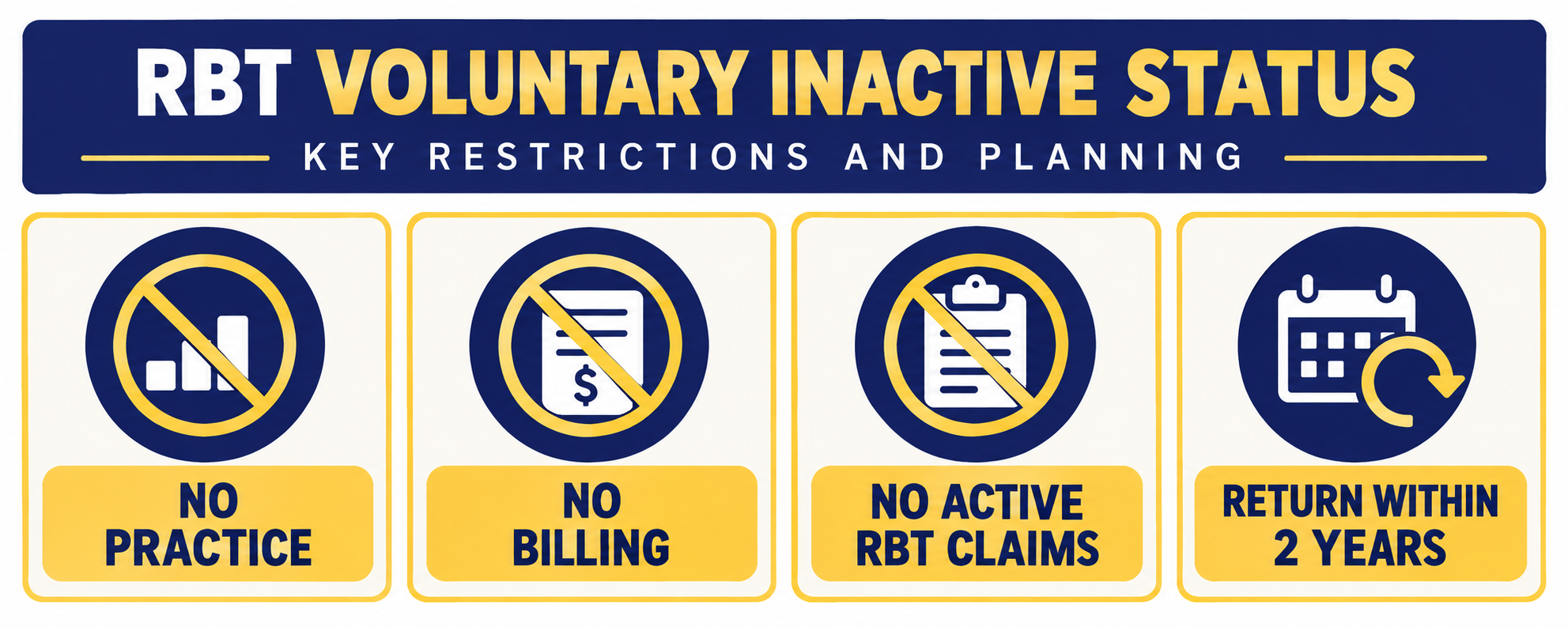
When voluntary inactive status is approved, the RBT’s certification is listed as inactive for a temporary period. The current application states that the status may last up to two years. During that period, the RBT is not permitted to practice as an RBT, bill for services as an RBT, or represent themselves as an RBT in the active sense.
The process can be useful when someone needs a planned break from maintaining the certification. It is different from simply letting a certification expire. A planned break requires attention to the application deadline, approval date, return window, and the requirements that will be due when the person requests reactivation.
Think of it as a status change with a return plan, not an administrative pause that leaves work permissions unchanged.
Who may apply
The current 2026 application says that only RBTs who are in their recertification cycle and have not missed the expiration date may request voluntary inactive status. An RBT may not apply while in a reinstatement period.
Before opening the form, check:
- the certification expiration date in the BACB account;
- whether the certification is still within the current recertification cycle;
- whether the expiration date has already passed;
- whether the account is inactive for another reason, such as no supervisor or coordinator on record;
- whether the current application lists additional information or attestations you must provide.
If the account does not fit the form’s eligibility description, do not guess. Read the relevant handbook section and contact the BACB through the official route for the question or status shown in the account.
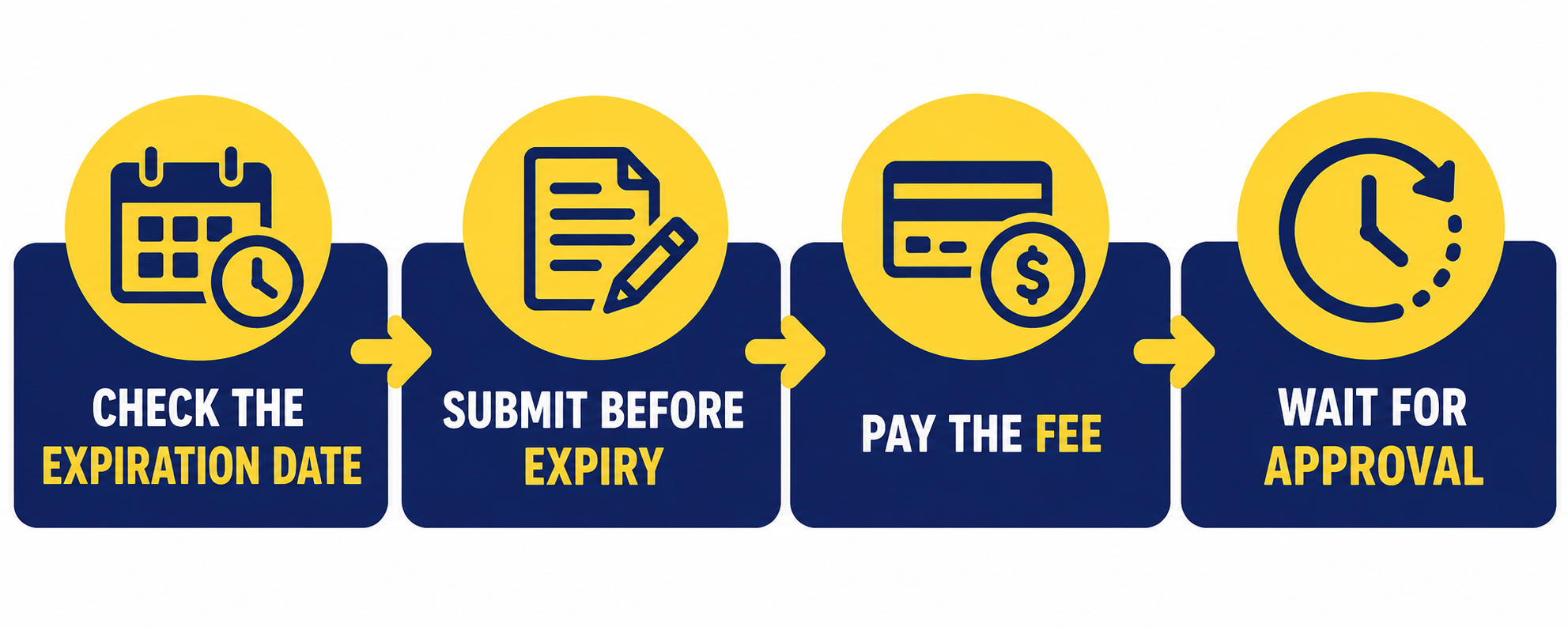
RBT voluntary inactive status: application steps
The current application gives a sequence that is easy to miss if someone waits until the final days of the cycle:
- Complete the application: provide the requested legal name, certification number, attestations, and supervision information accurately.
- Submit before expiration: send the application through the BACB Contact Us form as directed by the current instructions.
- Watch for payment instructions: the application says the BACB will notify you by email after receiving the submission.
- Pay the current processing fee: the 04/2026 application lists a $25 nonrefundable fee and a two-week window after the payment email.
- Wait for the determination: the application says to allow processing time after payment and to monitor the email address on file for approval or next steps.
Use the version of the application available when you apply. The fee and processing language above reflects the current 2026 document and should not be treated as permanent. Save the submitted materials, payment confirmation, and determination email in a secure personal certification record.
What you cannot do while inactive
Once voluntary inactive status is approved and begins, do not perform activities that the current BACB rules define as RBT practice. Do not bill for services as an RBT, and do not present yourself to a client, employer, payer, website, or public audience as an active RBT.
If you work for an organization, tell the appropriate administrator or supervisor about the status change before the inactive period begins. Ask how the organization will update scheduling, credentials, payer records, directories, and assignments. Keep the communication factual: the certification status has changed, and the organization must follow its own employment and billing procedures.
The BACB’s certification-status guidance distinguishes active and inactive representation. If you need to refer to your credential while inactive, use the wording and disclosure required by the current guidance rather than implying that the certification is active.
How to return from voluntary inactive status
Do not wait until the final week of the two-year period to begin planning. The current materials say that an RBT on voluntary inactive status who wants to return must request reactivation within the allowed period and complete the required current competency assessment and return application.
Under the current 2026 materials, the assessment must be completed no more than 45 days before requesting reactivation. The form name may use “reentry” or “return” language depending on the current version, so follow the form shown in the BACB account or official resource.
Review these items before submitting:
- the current return application and its fee or payment instructions;
- the current RBT Recertification or Reentry Competency Assessment packet;
- a qualified RBT Supervisor or RBT Requirements Coordinator on record if required;
- any remaining recertification requirements paused when the status began;
- the deadline for submitting the return request within two years of inactivation.
If the RBT does not return within the allowed period, the certification may expire and the person may need to reapply under the requirements in effect at that time. The exact consequence should be confirmed in the current handbook and determination instructions.
How this differs from other inactive situations
Expired certification: the certification has passed its expiration date. Voluntary inactive status is intended to be requested before that date.
Reinstatement period: a person who missed the expiration date may be in a different administrative process. The current VIS application says it is not available during a reinstatement period.
No supervisor or coordinator on record: the handbook describes this as another reason an RBT may be listed inactive. It is not the same as choosing a planned voluntary break.
Sanction or disciplinary status: restrictions connected to a sanction are not converted into voluntary inactive status by submitting the VIS form.
Build a safe timeline
Make three calendar reminders: one several weeks before expiration to read the current application, one before the submission deadline to verify the Contact Us route and payment instructions, and one near the end of the inactive period to begin the return process.
Also keep a short status record with the application date, payment date, approval or determination date, inactive start date, two-year return deadline, assessment date, and return submission date. Protect the record and compare it with the official BACB emails rather than relying on a generic calendar estimate.
Common application mistakes
Applying after expiration: the current form is for eligible RBTs before the expiration date, not a substitute for reinstatement.
Assuming submission equals approval: wait for the BACB determination and follow any further instructions.
Continuing to bill: once inactive, do not bill or represent yourself as an active RBT.
Ignoring email: payment and approval instructions are sent through the official communication route.
Forgetting the return window: a temporary status still has a deadline; place the return steps on your calendar early.
Frequently asked questions
Can an RBT request voluntary inactive status after the expiration date?
The current application says eligible RBTs must be in their recertification cycle and have not missed the expiration date. If the date has passed, review the reinstatement information instead.
Can an inactive RBT continue working under supervision?
No assumption is safe. The current application states that an inactive RBT may not practice as an RBT. Follow the official status and handbook instructions before accepting RBT tasks.
How long can voluntary inactive status last?
The current application says up to two years. Confirm the current form and determination notice because requirements can change.
What happens if the RBT does not return?
The current materials state that the certification can expire, after which the person may need to reapply under the requirements in effect at that time.
Voluntary inactive status works best as a planned certification decision: check eligibility before expiration, submit through the official route, stop active practice and billing after approval, and schedule the return steps well before the allowed period ends.
Ready to practice the RBT concepts you just reviewed?
Try an independent, original RBT practice resource with exam-style questions, scoring, and answer explanations.
References
- Behavior Analyst Certification Board. RBT Test Content Outline, 3rd edition.
- Behavior Analyst Certification Board. RBT Handbook.
- Behavior Analyst Certification Board. RBT Ethics Code.