
RBT self reporting requirements are a decision and escalation process: recognize an event that may affect safe or ethical practice, check the current BACB rule, report within the required timeframe, and keep a clear record.
Table of Contents
- RBT self reporting requirements: start with the rule
- What events may require self-reporting
- RBT self-reporting requirements: the 30-day clock
- Report to BACB and required workplace contacts
- What to include in a report
- Protect privacy and avoid public disclosure
- When an urgent safety issue is also present
- Common self-reporting mistakes
- Frequently asked questions
- References
RBT ETHICS GUIDE · REPORTING AND ESCALATION
RBT Self Reporting Requirements: What to Report and When to Act
A practical way to recognize a possible reportable event, check the current BACB rule, and escalate it without guessing.
RBT self reporting requirements are a decision and escalation process: recognize an event that may affect safe or ethical practice, check the current BACB rule, report within the required timeframe, and keep a clear record. The goal is not to turn every uncomfortable workplace moment into a BACB complaint. The goal is to respond responsibly when the RBT Ethics Code, the RBT Handbook, or another required reporting route applies.
This guide summarizes current BACB materials for education. It is not legal advice, medical advice, an ethics ruling, or a substitute for the live BACB Handbook and Ethics Code. If the situation involves immediate danger, contact the appropriate emergency or safety resource first. If the facts are uncertain, document what you know and ask the correct supervisor, employer contact, required entity, or BACB channel what applies.
RBT self reporting requirements: start with the rule
Self-reporting means taking responsibility for notifying the organization or entity that the rule identifies when a qualifying event occurs. For RBTs, the BACB RBT Ethics Code (2.0) describes events that must be reported to the BACB and required entities. The current RBT Handbook also points RBTs to self-reporting requirements and explains that BACB cannot provide legal advice or interpret every individual circumstance.
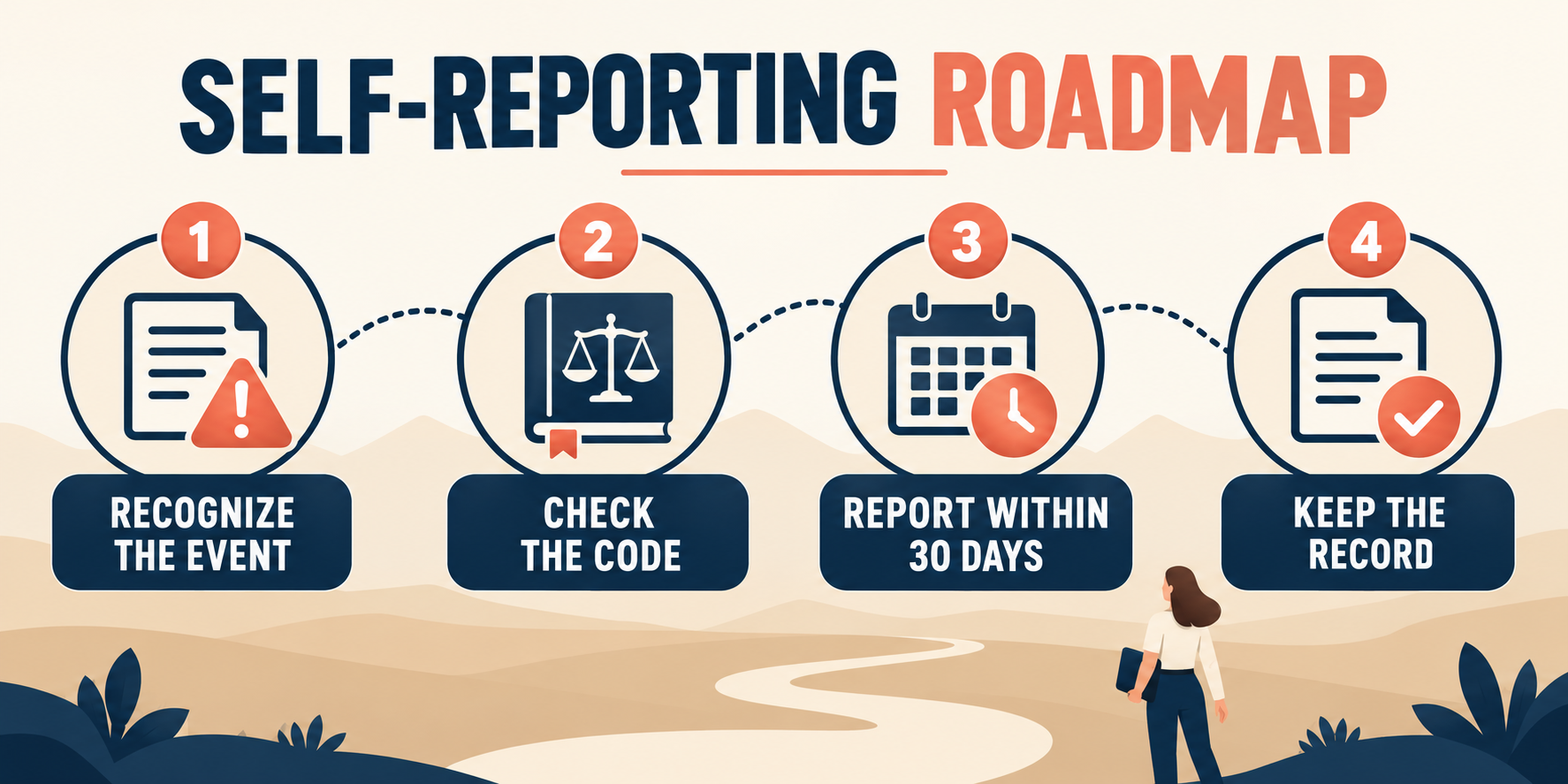
Use a four-part check before you decide how to act:
- Recognize the event: write down what happened, when you learned about it, and who was involved.
- Check the current rule: compare the facts with the Ethics Code, RBT Handbook, employer policy, and any applicable legal or licensing instruction.
- Report through the correct route: the route may involve the BACB, supervisor, employer, RBT Requirements Coordinator, or another required entity.
- Keep evidence: save the submission confirmation, dates, documents, and follow-up messages in a secure place.
What events may require self-reporting
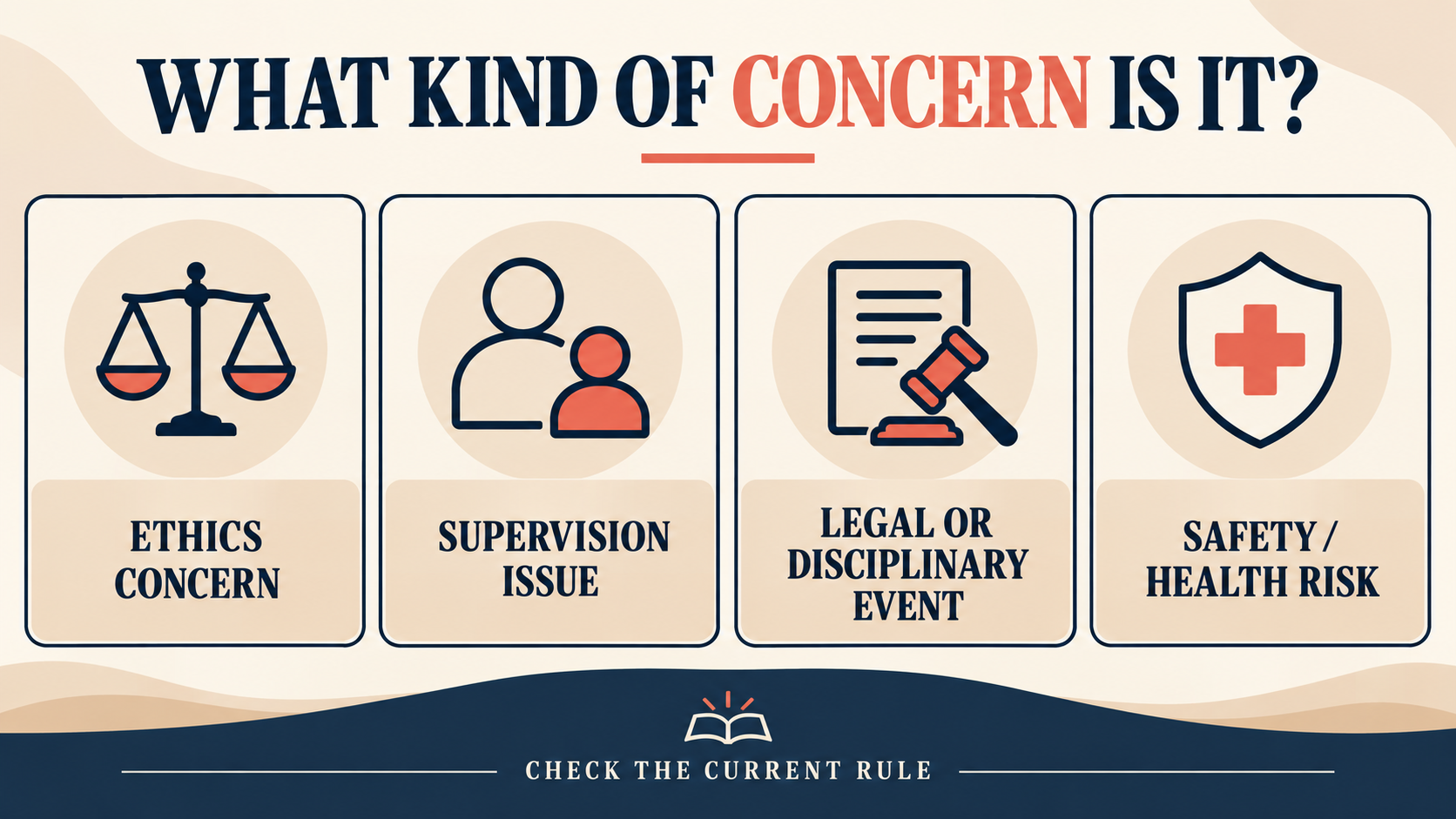
The Ethics Code gives categories rather than a shortcut that can be applied without reading the facts. Common examples include legal charges and related actions, investigations that name the RBT, and disciplinary actions by an employer, government agency, educational institution, or third-party payer. The relevant question is not whether an event feels embarrassing. It is whether the event falls within a current reporting requirement.
Health and substance-use issues also require careful attention. The code addresses physical or mental conditions and substance use that may impair an RBT’s ability to provide services safely and competently. A diagnosis by itself is not the same as an automatic ethics violation. The focus is the effect on safe, competent practice and the current rule’s reporting language. Seek qualified medical support for health questions and use the BACB materials for the certification reporting question.
Supervision is another important area. If required supervision is not occurring, documentation is inaccurate, or a supervisor relationship is not meeting the applicable standard, do not silently relabel the problem as a routine scheduling issue. Record the dates and facts, raise the issue through the required workplace or supervision channel, and check the current BACB instructions for timely reporting of supervision noncompliance.
RBT self-reporting requirements: the 30-day clock
The RBT Ethics Code (2.0) states that applicable self-reports to the BACB are made within 30 days of the event or of becoming aware of it. That means the date you first learned reliable information can matter. It is safer to record both the event date and the awareness date than to rely on memory later.
Do not confuse this rule with the separate expectation to update personal information, such as a legal name, address, or email, within 30 days of a change or of becoming aware that the information is outdated. Both may use a 30-day window, but they are different duties and may use different account or reporting routes.
If you are close to the deadline, submit the required report with the information you can verify and state what is still pending. Do not delay simply because you are waiting for a perfect narrative. Keep a copy, note the submission time, and respond to requests for additional information. If you are unsure which route applies, contact the relevant official channel promptly and keep a record of the question.
Report to BACB and required workplace contacts
Not every report belongs in the same inbox. Some events must be reported to the BACB; some must also be reported to an employer, supervisor, RBT Requirements Coordinator, payer, school, government entity, or another organization named by the rule. A workplace policy can add a reporting step, but an employer cannot erase a BACB duty.
Start with a simple routing table in your private notes:
- BACB route: use the current self-reporting or ethics instructions when the event is within BACB reporting scope.
- Supervisor or RBT Requirements Coordinator: use the designated route for supervision, competency, or role-specific concerns.
- Employer or required entity: follow workplace, payer, school, or governmental reporting instructions that apply to the event.
- Emergency or clinical route: address immediate safety, medical, or crisis needs through the appropriate service; a BACB report is not a substitute.
What to include in a report
A useful report is factual, dated, and limited to information the recipient needs. Begin with your identifying information as requested by the official form. Then explain what happened, when it happened, when you became aware of it, what action has already been taken, and what documents support the description.
Separate facts from conclusions. “The employer sent a notice dated May 4” is more useful than “the employer treated me unfairly.” If you do not know an answer, say that it is unknown and identify the step you are taking to verify it. Attach readable records through the official secure route, not a public post or an informal message containing unnecessary client information.
Before sending, confirm the recipient, deadline, attachments, and confirmation method. Keep the final submission and any case number. If the BACB or another entity asks for clarification, answer the question directly and preserve the exchange.
Protect privacy and avoid public disclosure
Self-reporting often involves sensitive employment, legal, health, or client information. Share the minimum necessary information through the channel designed for the report. Do not place client names, photographs, medical details, or case documents in a social-media thread to ask strangers what to do.
Use secure account access, check the destination before uploading, and keep copies in a protected location. When discussing the process with a supervisor or attorney, describe the issue without exposing unrelated client information. A clear report is not the same as a public explanation of every detail.
When an urgent safety issue is also present
If someone may be in immediate danger, stop and use the appropriate emergency, medical, safeguarding, or crisis procedure. Notify the responsible supervisor or emergency contact according to the setting. Then address the BACB or employer reporting requirement as a separate administrative step when appropriate.
This order matters because a self-report form does not provide emergency care, protect a person from immediate harm, or replace mandatory reporting duties created by law or workplace policy. When a situation is both urgent and potentially reportable, handle the immediate risk first and document the actions taken.
Common self-reporting mistakes
- Waiting for certainty: a deadline can pass while someone tries to write a perfect explanation. Submit verified facts and identify open questions.
- Using the wrong route: a message to a coworker is not necessarily a report to the BACB or the designated supervisor.
- Reporting only the conclusion: unsupported labels make review harder. Give dates, notices, actions, and documents.
- Mixing duties: personal-information updates, supervision concerns, ethics reports, and emergencies may have different instructions.
- Oversharing: sensitive client or health information should not be copied into public channels or sent to people who do not need it.
- Assuming a report guarantees an outcome: reporting is responsible process, not a promise of no discipline or a particular decision.
Frequently asked questions
Does every workplace mistake require an RBT self-report?
No. Compare the facts with the current Ethics Code, Handbook, workplace policy, and any required entity’s instructions. A minor mistake may need correction and supervisor discussion without meeting the BACB’s self-reporting threshold, while another event may create a reporting duty even if no service was harmed.
When does the 30-day period begin?
For applicable BACB self-reports, the Ethics Code describes the period as beginning with the event or when the RBT becomes aware of it. Record both dates and check the current code if the timing is disputed or unclear.
Can my employer make the BACB report for me?
An employer may have its own reporting duty or may help you understand the workplace route, but do not assume that this removes your personal responsibility. Follow the current BACB instructions and keep evidence of your own submission when one is required.
Where can I get legal advice?
The BACB states that it cannot provide legal advice. For legal interpretation, contact a qualified lawyer or the appropriate government or licensing resource. Use BACB materials for BACB certification and ethics requirements, and use emergency or medical professionals for urgent safety or health concerns.
The safest habit is simple: notice the event, check the current rule, route the report to the correct entity, meet the deadline, and keep a private record. Recheck the live BACB RBT Handbook and Ethics Code whenever the facts change or before acting on an older checklist.
Ready to practice the RBT concepts you just reviewed?
Try an independent, original RBT practice resource with exam-style questions, scoring, and answer explanations.
References
- Behavior Analyst Certification Board. RBT Test Content Outline, 3rd edition.
- Behavior Analyst Certification Board. RBT Handbook.
- Behavior Analyst Certification Board. RBT Ethics Code.