
RBT disciplinary actions are official certification-enforcement information, not a shortcut for judging a person or an employer. To read a record responsibly, separate the public sanction, the current certification status, the date, and the source that published the information. This guide explains how to verify the official BACB record, what a public action may show, and what it does not prove about employment, clinical quality, or legal liability.
Table of Contents
- What RBT disciplinary actions mean
- Where to verify the official record
- How to read the record field by field
- What a published action does and does not prove
- What to do when you are the subject or reviewer
- Frequently asked questions
- Official sources and scope
RBT ethics and certification-record guide
RBT Disciplinary Actions: How to Read the Record
Learn how to verify a public BACB record and separate a published certification sanction from status, employment, and legal conclusions.
RBT disciplinary actions are official certification-enforcement information, not a shortcut for judging a person or an employer. To read a record responsibly, separate the public sanction, the current certification status, the date, and the source that published the information. This guide explains how to verify the official BACB record, what a public action may show, and what it does not prove about employment, clinical quality, or legal liability.
The most important habit is to use the current official page instead of a screenshot, an old directory entry, or a social-media summary. A record can change when a sanction is fulfilled, a status changes, or an official page is updated. If the decision affects hiring, supervision, reporting, or a legal matter, preserve the source and obtain advice from the appropriate qualified professional.
What RBT disciplinary actions mean
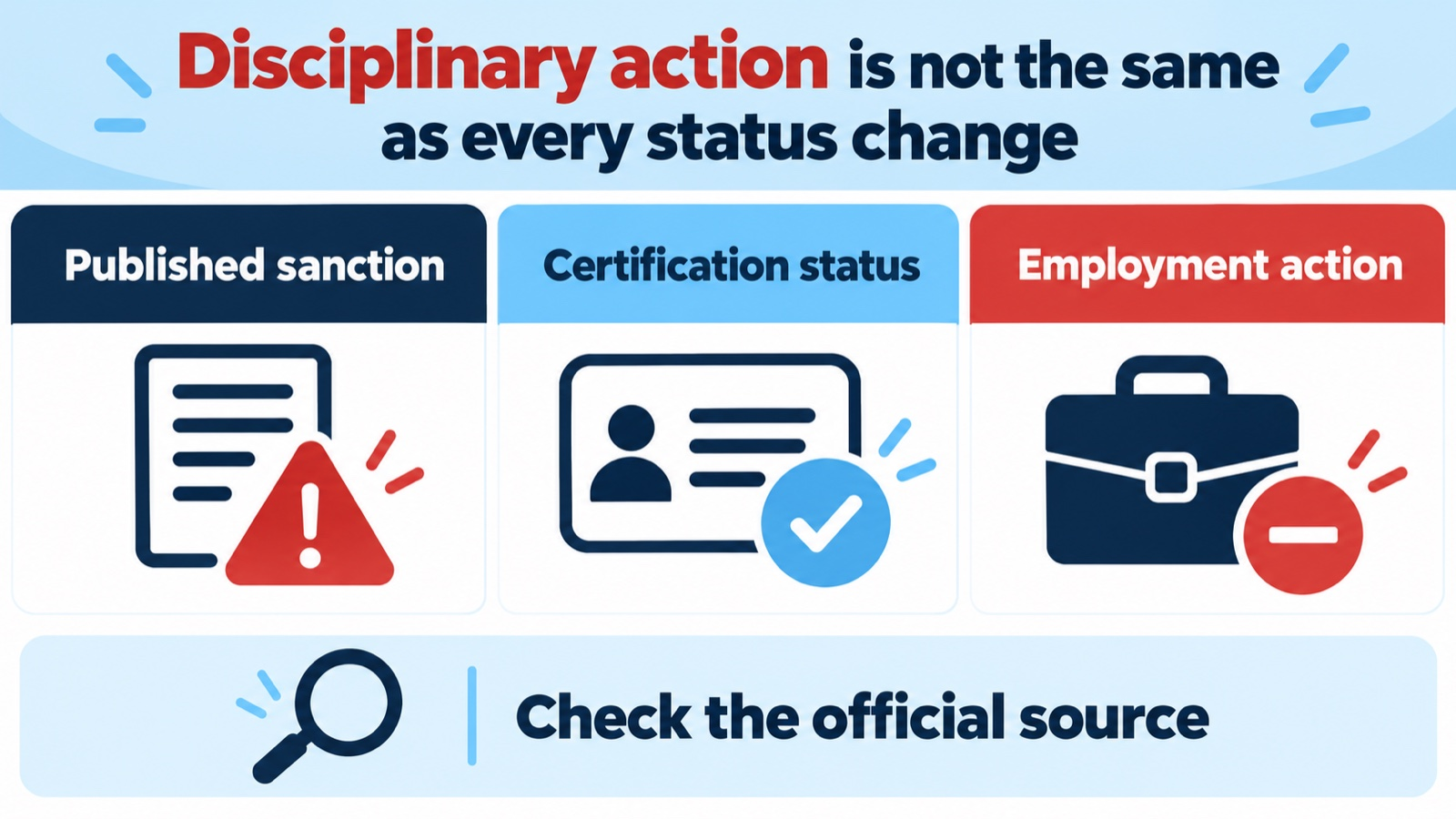
An RBT disciplinary action is a published certification-related action associated with BACB enforcement. The public record is meant to communicate information about a sanction or certification matter. It is not the same as every complaint received by the BACB, every coaching conversation, every employer warning, or every performance concern.
That distinction matters in everyday language. A technician can receive workplace feedback without having a BACB disciplinary action. An organization can end a contract for reasons that never appear in a BACB record. A public sanction, meanwhile, may affect how a person represents their certification or what certification status is visible to the public. The exact effect depends on the action, its status, the governing rules, and the current official record.
BACB’s ethics-information resources direct readers to its public Disciplinary Actions page for published disciplinary sanctions. BACB also explains that published sanctions remain listed until the sanction is fulfilled, subject to revocation or invalidation as permitted by law. Therefore, “published” and “currently active” are not interchangeable labels: read the action and status fields together.
Where to verify the official record
Begin with the BACB Certificant Registry and certification-verification resources. BACB identifies the registry as a primary place to check certification status and reportable disciplinary actions and notes that it is updated daily. Use the exact name, credential, and other identifying information available through the official search rather than assuming that two people with similar names are the same person.
For published sanctions, use the official BACB Disciplinary Actions page. If you arrive through the BACB ethics-information page or the RBT ethics resource page, confirm that the destination is still the official BACB page. Record the access date, page title, and the relevant status or action shown. That creates a reproducible verification trail without copying unnecessary personal information.
Search engines, third-party directories, and cached pages can be useful for finding a starting point, but they are not the controlling source. A result snippet may be old, incomplete, or detached from the current status. When a decision is consequential, go back to the official page and check again on the date the decision is made.
How to read the record field by field
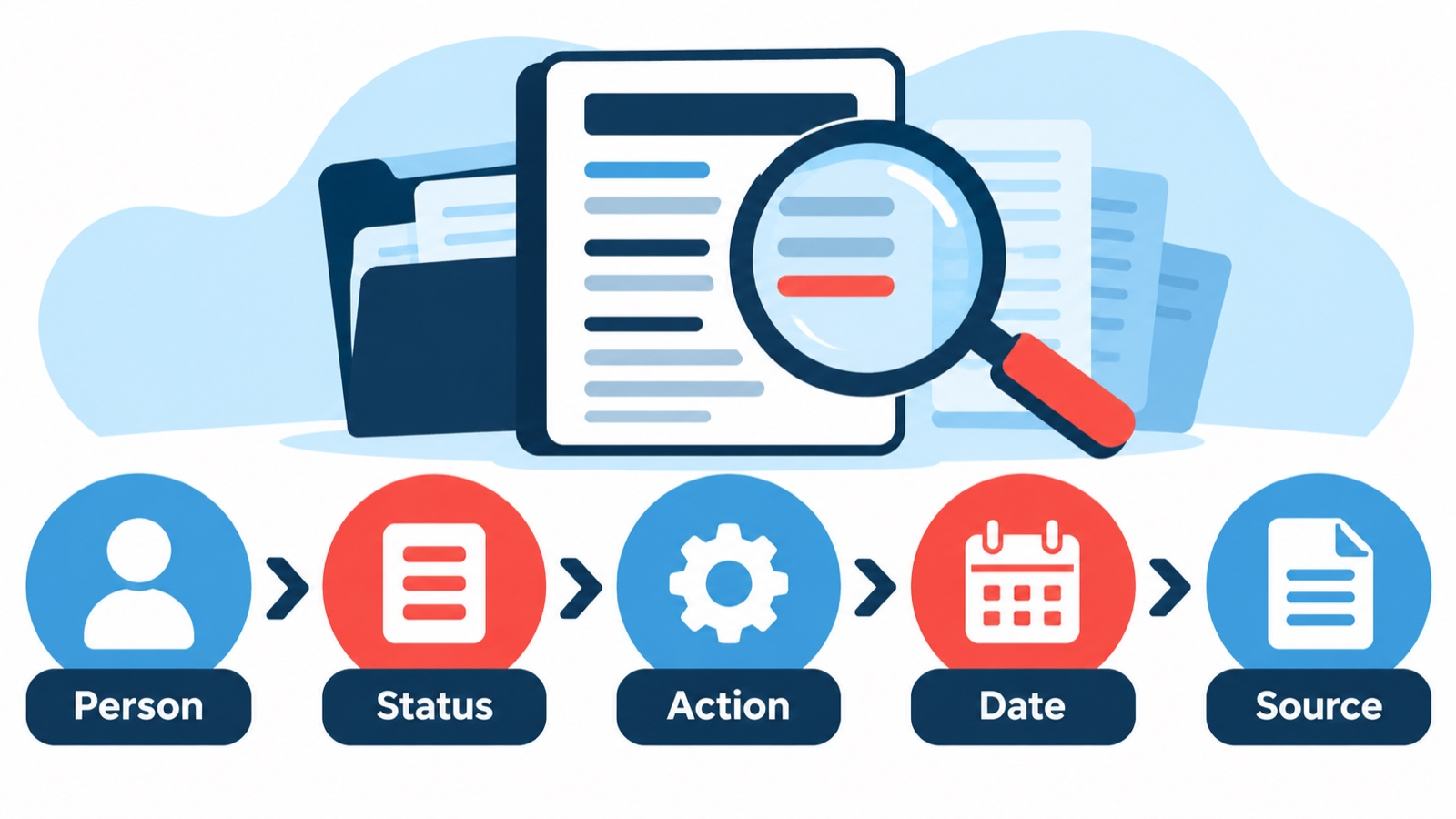
A practical review starts with five questions. They keep a reader close to what the record actually says and reduce the risk of turning a narrow certification entry into a broad accusation.
- Who is identified? Confirm the name and credential carefully. Do not infer identity from a name match alone, and do not publish someone’s personal details just because they appear on a public page.
- What is the certification status? Look for the current status shown by the official registry. A status is a snapshot of certification information; it is not a narrative of every event in the person’s career.
- What action or sanction is listed? Read the action label and any available fulfillment or status language. Do not replace the official term with a stronger or more dramatic word.
- What date is attached to the information? Separate the date of the sanction, the date it was posted or accessed, and the date the page was last checked. Those dates answer different questions.
- What is the source? Save the official URL and access date. If the page links to a decision or procedure, read that document rather than relying on a paraphrase.
Keep “action,” “status,” and “fulfillment” separate in your notes. An action describes what the enforcement record says happened in the certification process. Status describes what the registry currently shows. Fulfillment describes whether a published sanction has been completed or remains subject to the applicable terms. These are related, but they are not synonyms.
What a published action does and does not prove
A published action can be relevant to certification verification, compliance review, supervision conversations, and an organization’s screening process. It may justify checking the underlying official information, confirming current status, or asking a narrow process question through the proper channel.
It does not automatically prove that every service delivered by the person was unsafe, that a client was harmed, that an employer must terminate the person, or that a court has found legal liability. Those conclusions require facts and decision-makers outside the short public record. Employment decisions may be governed by an employer’s policy and applicable law; clinical concerns may require a separate quality or safeguarding process.
Do not confuse a BACB certification action with an employer action. An employer may investigate, coach, suspend, or terminate someone under its own rules. None of those events should be labeled a BACB disciplinary action unless the official BACB record supports that statement. Conversely, the absence of a public entry is not a universal guarantee about a person’s performance or every possible professional issue.
What to do when you are the subject or reviewer
If you are checking a credential
Write down the exact question you need to answer. For example: “Is this person currently listed as an RBT?” is narrower than “Is this person safe to hire?” Use the registry for the first question and the organization’s approved screening and supervision process for the second. Avoid crowdsourcing an interpretation of a record or circulating a screenshot with more personal information than necessary.
If you need clarification about a certification or enforcement process, use the official BACB contact or instructions associated with the record. BACB states that it cannot provide legal or ethics advice, so a consequential legal or employment question may need a lawyer, HR professional, compliance officer, or other appropriate adviser.
If you are the person named in a record
Read the official action, status, and fulfillment information together. Keep copies of the decision, correspondence, and completion records that you are permitted to retain. Follow the current instructions for responding to requests or fulfilling a sanction rather than relying on a third-party summary.
The BACB resource on responding to ethics-related requests is a better starting point than a general web search. If you need legal advice, obtain it from a qualified attorney. This article cannot decide whether a specific record is accurate, whether an action was justified, or what a person should submit in an individual matter.
If you are a supervisor or organization
Use a consistent, documented process. Verify the credential through the same official source for every comparable case, limit access to people who need the information, and separate certification verification from clinical supervision, employee discipline, and client-safety response. Ask only the questions your policy and applicable law allow.
Do not ask an RBT to explain confidential details in a public forum. If there is an immediate client-safety concern, follow the organization’s safeguarding and escalation procedures. A public disciplinary page is one information source; it is not a replacement for responding to a current risk.
Frequently asked questions
Are all complaints against an RBT public disciplinary actions?
No. A complaint, an internal employer concern, and a published BACB sanction are different categories. Use the official BACB public record for the narrow question of what BACB has published.
Does a public disciplinary action mean the person cannot work?
Not automatically. The effect depends on the action, current certification status, employer requirements, applicable law, and any fulfillment terms. Do not turn a record entry into a universal employment conclusion.
How often should I verify an RBT’s status?
BACB says the Certificant Registry is updated daily. For a hiring, supervision, or compliance decision, verify close to the decision date and keep the access date in your records.
Can this article interpret a specific person’s disciplinary record?
No. It explains how to read public information and where to verify it. It is not legal advice, ethics advice, an employment decision, or a finding about an individual.
Official sources and scope
This article was checked against BACB’s certification-verification resources, ethics-information page, RBT ethics resources, and the public Disciplinary Actions page. Public pages, statuses, and procedures can change. Use the current official record and appropriate professional advice for a live matter.
Ready to practice the RBT concepts you just reviewed?
Try an independent, original RBT practice resource with exam-style questions, scoring, and answer explanations.
References
- Behavior Analyst Certification Board. RBT Test Content Outline, 3rd edition.
- Behavior Analyst Certification Board. RBT Handbook.
- Behavior Analyst Certification Board. RBT Ethics Code.