

RBT gift giving receiving questions are rarely solved by a universal yes-or-no rule. The safe starting point is to pause, identify what is being offered or requested, check the current BACB Ethics Code and employer policy, and ask the appropriate supervisor before accepting, giving, promising, or arranging anything that could affect the professional relationship.
Table of Contents
- RBT gift giving receiving: the short answer
- Why gifts create an ethics question
- When an RBT is offered a gift
- When an RBT is considering giving a gift
- A simple gift-decision process
- How to communicate and document the direction
- Common mistakes to avoid
- Frequently asked questions
RBT ethics, gifts, professional boundaries, supervision, and respectful next steps
RBT Gift Giving Receiving: Pause, Check Policy, Protect the Role
A practical way to handle gifts and thank-you gestures without guessing, shaming a family, or weakening professional boundaries.
RBT gift giving receiving questions are rarely solved by a universal yes-or-no rule. The safe starting point is to pause, identify what is being offered or requested, check the current BACB Ethics Code and employer policy, and ask the appropriate supervisor before accepting, giving, promising, or arranging anything that could affect the professional relationship.
A family may offer a holiday card, homemade food, a small present, a discount, money, or an invitation because they want to show appreciation. That intention can be kind and sincere. The RBT still has to protect the client’s interests, follow the current rules, and avoid allowing gratitude to become pressure, favoritism, secrecy, or a new personal relationship.
RBT gift giving receiving: the short answer
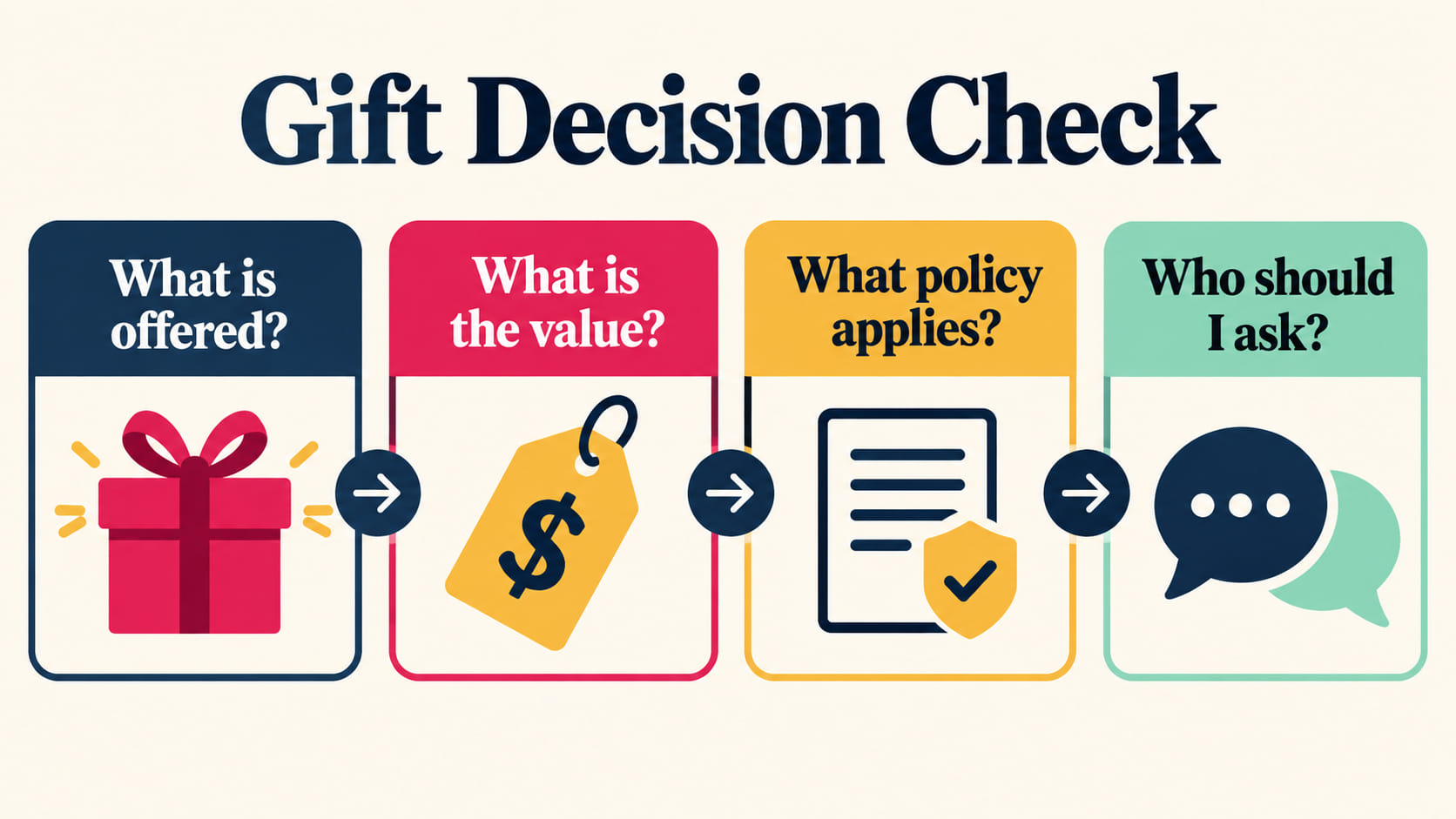
Do not accept or give a gift on autopilot. Pause and ask four questions:
- What is being offered or requested? Name the item, money, service, discount, invitation, or favor precisely.
- What could it change? Consider access, expectations, privacy, treatment, scheduling, communication, or the appearance of favoritism.
- Which current policy applies? Check the current BACB Ethics Code, employer or agency policy, and any supervisor instructions.
- Who should decide? Bring the specific facts to the supervisor or responsible organization contact before making a commitment.
This approach does not label every gift as misconduct. It also does not turn a friendly gesture into an automatic exception. It creates a reviewable decision that respects the family and protects the role.
Why gifts create an ethics question
A gift can change the meaning of a professional interaction. The issue is not only the item’s price. Context matters: who offers it, why it is offered, whether it is private or public, whether it is repeated, whether it is tied to a decision, and whether the family believes it will improve service.
Gifts can also blur the line between the RBT’s professional role and a personal relationship. An RBT who accepts money may be seen as owing a favor. An RBT who gives a personal gift may create expectations of closeness. An invitation to a private event can introduce contact outside the approved service arrangement. A discount or free service may create a financial relationship that the RBT did not intend.
Even when no harm is intended, the appearance of unequal treatment can matter. Other families, coworkers, or supervisors may reasonably ask whether one client received different attention. A good decision therefore considers both actual impact and foreseeable perception.
When an RBT is offered a gift
Keep the first response calm and nonjudgmental. A useful sentence is: “Thank you for thinking of me. I need to check our policy and ask my supervisor before I can answer.” That response acknowledges the person without promising acceptance.
Do not unwrap, use, deposit, post, or privately exchange a questionable gift while waiting for guidance. If the offer is money, a valuable item, a repeated benefit, a personal service, or anything connected to a complaint, schedule, treatment preference, or request for secrecy, identify those facts clearly when you ask for direction.
If the supervisor or organization says the gift cannot be accepted, the RBT can preserve the relationship with a respectful explanation: “I appreciate the gesture, but our professional rules do not allow me to accept this. Your thanks are meaningful, and I need to keep the relationship focused on the client’s services.” The wording can be adapted to the setting and the family’s communication needs.
If a policy allows a narrow category of gift, follow the actual conditions exactly. Do not expand “small” into a personal definition or use one prior approval as permission for every future offer. Ask again when the facts change.
When an RBT is considering giving a gift
Giving can create the same boundary questions as receiving. Before buying or bringing something for a client, family member, coworker, or supervisor, check whether the gesture is permitted, who it is for, whether it could be interpreted as a promise or reward, and whether it would be visible and fair within the service structure.
Be especially careful with gifts that are personal, expensive, secret, recurring, or tied to a client’s performance. A reward used in a behavior plan is not automatically the same thing as a personal present. Behavior-change procedures should be assigned and implemented according to the plan and supervision, not improvised as a private exchange.
RBTs should not give a gift to obtain cooperation, soften documentation, influence a complaint, secure continued employment, or create a relationship outside the approved role. If the intention is to celebrate a milestone or show appreciation, ask the supervisor for an approved, role-consistent option.
A simple gift-decision process
Use the following sequence whenever the answer is unclear:
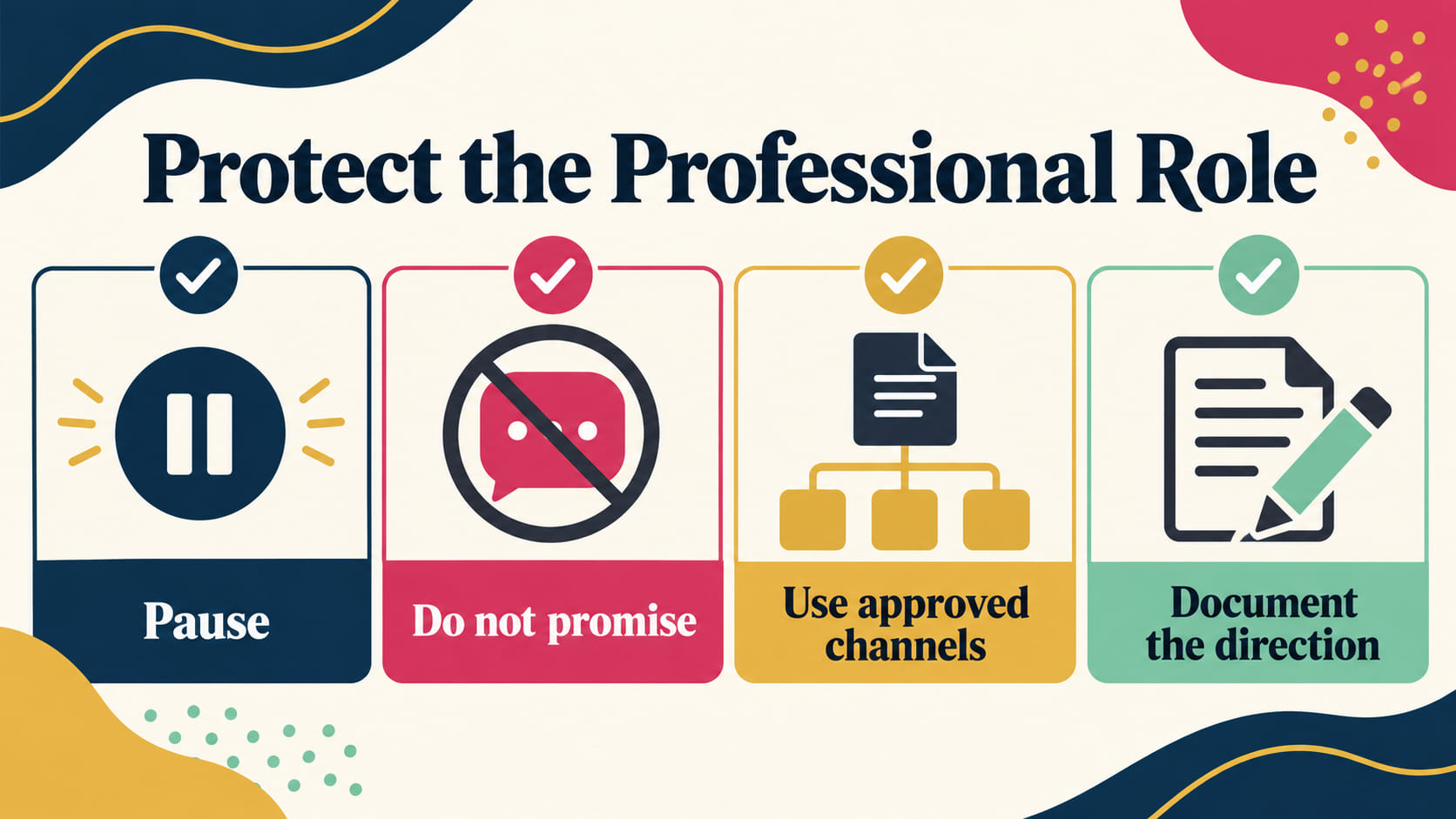
- Pause. Avoid an immediate yes, no, promise, joke, or private workaround.
- Describe the facts. Record what was offered or considered, by whom, when, where, and whether anything was expected in return.
- Consider the relationship. Look for power differences, dependence, access, privacy, favoritism, repeated contact, and financial or personal ties.
- Check the current sources. Read the applicable BACB ethics guidance and the policy used by the employer or agency.
- Ask for direction. Give the supervisor enough context to make a real decision, not just the question “Can I take it?”
- Follow the decision consistently. Use the approved response, return or decline the item as directed, and seek help if the person reacts negatively.
How to communicate and document the direction
Ask through the normal supervision or workplace channel. Keep the message factual and concise: “A parent offered me a gift card after today’s session. It was offered in front of the caregiver, and they did not ask for anything in return. What does our policy require, and how should I respond?” This gives the supervisor the context needed to guide the next step.
Document only through approved systems and only what is necessary. Do not place personal details, financial information, or a family’s private message in an informal chat if the organization requires a different record. Follow the supervisor’s direction about whether the event belongs in a supervision note, incident process, or another workplace record.
Documentation is not a way to expose or embarrass a family. It is a way to show what question arose, who provided direction, and what action was taken. If a situation becomes a complaint or conflict, accurate contemporaneous facts are more useful than a memory reconstructed later.
Common mistakes to avoid
- Using a made-up dollar rule: the correct answer depends on current guidance, policy, and context; do not invent a universal threshold.
- Answering before checking: “I’m sure it is fine” can become a promise that the organization never authorized.
- Shaming the family: appreciation can be genuine. Decline or redirect the gesture without accusing the person of bad motives.
- Creating a private exception: exchanging a gift later, accepting it at home, or asking someone else to hold it does not resolve the underlying boundary question.
- Trading access for appreciation: a gift must never buy special scheduling, extra communication, different treatment, or confidentiality.
- Failing to ask again: a repeated gift, changed value, new setting, or new relationship can change the analysis.
Frequently asked questions
Can an RBT accept a small gift from a family?
There is no universal answer that replaces the current BACB Ethics Code and the employer or agency policy. Ask a supervisor before accepting it, even when the giver describes it as small or harmless.
What if a family gives a gift unexpectedly?
Thank them for the thought without promising acceptance, keep the item secure as directed, and ask the supervisor what to do. Do not quietly keep, use, return, or exchange it if policy requires a specific process.
Can an RBT give a client a birthday or holiday gift?
Check the policy and supervision structure first. A personal gift can create expectations or a dual relationship, and any reinforcement used in services should be part of the assigned plan rather than a private present.
What should an RBT say when declining?
Use a respectful, brief explanation: “Thank you for thinking of me. I need to follow our professional policy, so I cannot accept this. I appreciate your kindness.” Ask the supervisor for wording that fits the setting.
Role reminder: This is educational information, not credentialing, employment, legal, tax, or clinical advice. Verify the current BACB Ethics Code and your employer or agency policy, and ask your supervisor about a specific situation.
Official starting points: the BACB RBT Ethics Code, ethics codes page, RBT Handbook, and supervision and training resources.
Ready to practice the RBT concepts you just reviewed?
Try an independent, original RBT practice resource with exam-style questions, scoring, and answer explanations.
References
- Behavior Analyst Certification Board. RBT Test Content Outline, 3rd edition.
- Behavior Analyst Certification Board. RBT Handbook.
- Behavior Analyst Certification Board. RBT Ethics Code.