

The search phrase gift giving vs gift receiving RBT points to two related but different boundary questions. Giving can create expectations, favoritism, or a private exchange; receiving can create obligation, reciprocity, or pressure. In both directions, check the current ethics guidance and employer policy, consider the relationship and context, ask the supervisor when uncertain, and use the approved documentation route.
Table of Contents
- Gift giving vs gift receiving RBT: the short answer
- When the RBT gives a gift
- When the RBT receives a gift
- How the boundary questions compare
- How to respond in the moment
- When to document and escalate
- Frequently asked questions
Gift giving vs gift receiving for RBTs, boundaries, expectations, policy, supervision, and documentation
Gift Giving vs Gift Receiving RBT: Compare the Boundary Questions
The direction of the gift changes the immediate risk, but both situations deserve a context-first professional response.
The search phrase gift giving vs gift receiving RBT points to two related but different boundary questions. Giving can create expectations, favoritism, or a private exchange; receiving can create obligation, reciprocity, or pressure. In both directions, check the current ethics guidance and employer policy, consider the relationship and context, ask the supervisor when uncertain, and use the approved documentation route.
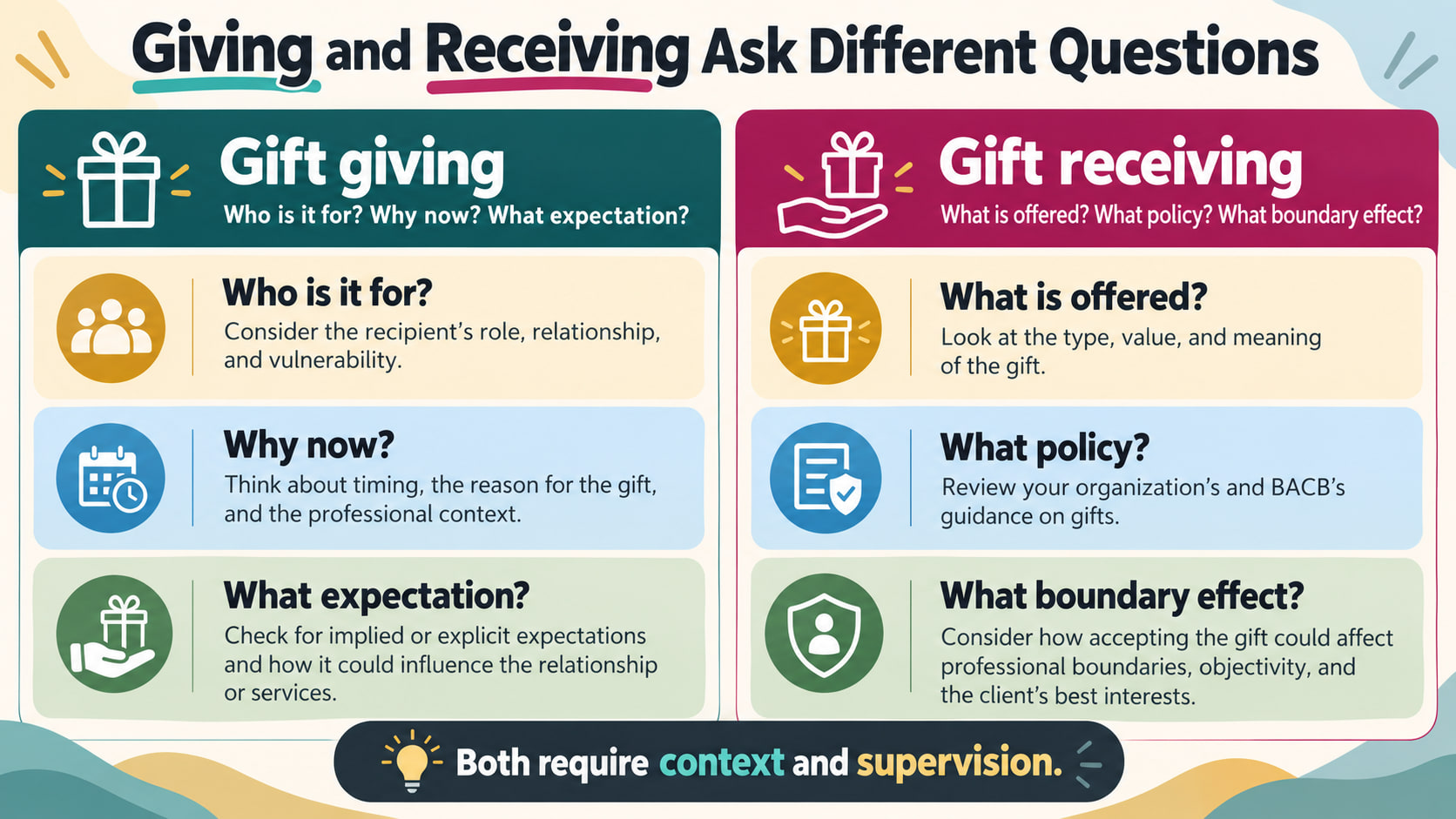
The comparison is not a contest about which direction is “more ethical.” A gift given by a professional and a gift offered by a family can affect the relationship in different ways. The relevant facts include the item, value, timing, purpose, repetition, privacy, power, and any expectation attached to it.
Gift giving vs gift receiving RBT: the short answer
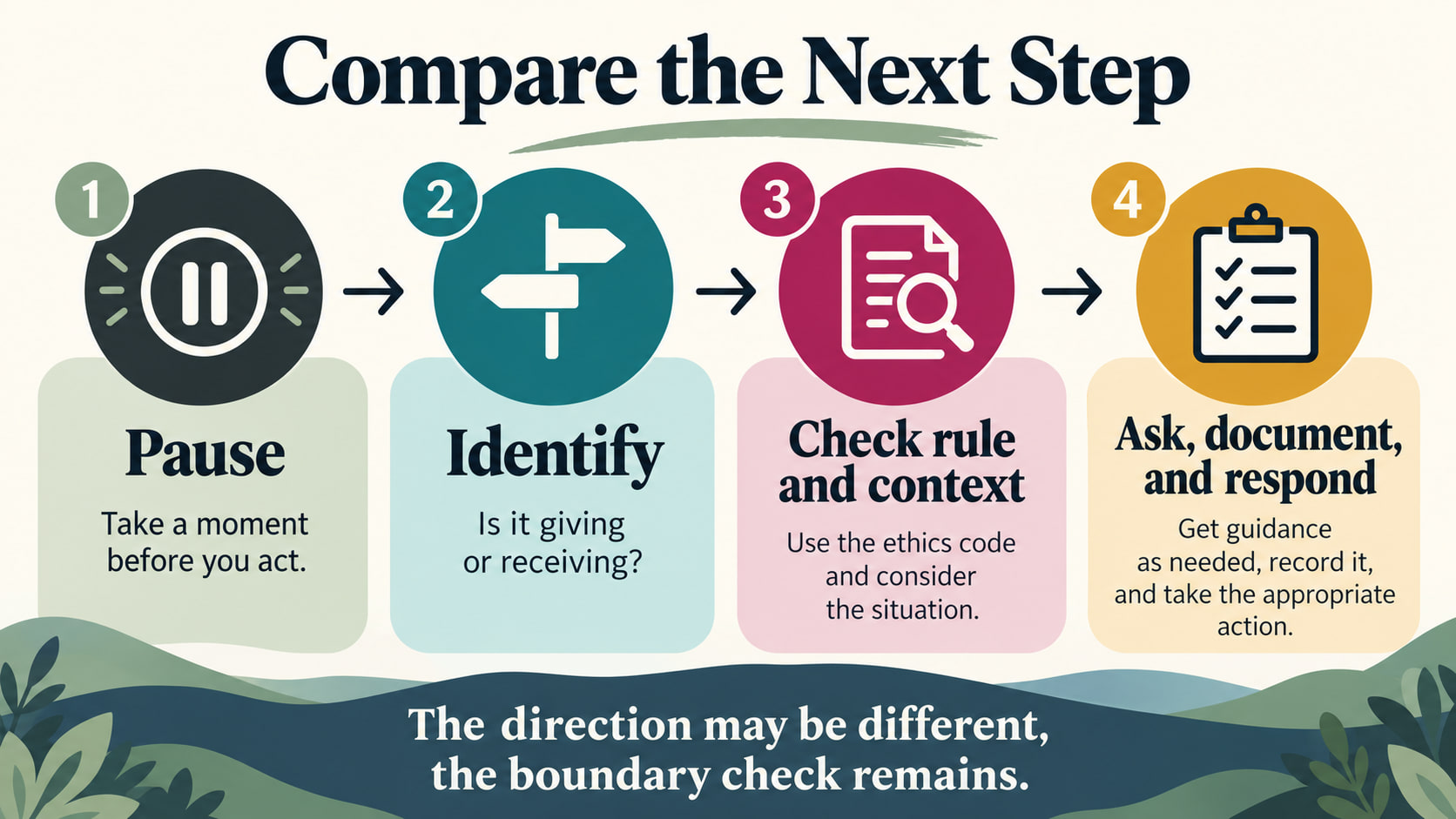
Use the same first step in either direction: pause before acting. Then identify what is happening, check the current rule and employer policy, ask the responsible supervisor, and follow the approved response. The next action may differ, but the boundary check remains.
- Direction: Is the RBT giving, receiving, or helping route an item for the learner or team?
- Relationship: Who is involved, and what professional or power relationship exists?
- Expectation: Could the gift imply special access, treatment, gratitude, loyalty, or future service?
- Policy: What do the current ethics materials and workplace rules require?
- Support: Who must review the situation, and where should it be documented?
When the RBT gives a gift
When an RBT gives something to a learner or family, ask why the item is being offered and what expectation it could create. A personal birthday present, holiday item, reward outside the written plan, or private thank-you may look kind while still changing the professional relationship.
Giving can create favoritism concerns if one learner receives something that others do not. It can also make a family feel obligated to respond, suggest that service quality depends on personal closeness, or blur the line between assigned reinforcement and a personal gift. Do not use a personal item as a replacement for an approved teaching or reinforcement procedure.
Other questions include ownership, safety, cultural meaning, privacy, and whether the organization has an approved team or program process. If a supervisor has authorized a specific item or activity, follow the written direction and record it through the required channel. Do not create a private exception because the gift seems inexpensive or well intentioned.
When the RBT receives a gift
When a learner, caregiver, or family offers something to the RBT, ask what the offer might communicate and how acceptance could affect the relationship. The item may be a card, food, small token, gift card, cash, invitation, or digital transfer. The form does not answer the question by itself.
Receiving can create a feeling of debt, a request for special treatment, or an expectation that the RBT will provide extra contact or flexibility. Money-like gifts and private invitations deserve prompt supervisor review. Do not accept first and plan to ask later, and do not arrange a hidden alternative through personal messaging.
A respectful response can acknowledge the thought without making a decision on the spot: “Thank you for thinking of me. I need to check our professional and workplace policy before I respond.” If the policy directs a decline, return, redirection, or documented acceptance, follow that direction without shaming the person.
How the boundary questions compare
- Giving: Who selected the item, why is the professional offering it, and could it create favoritism or an expectation of closeness?
- Receiving: Who offered it, what does acceptance communicate, and could it create obligation or a request for special treatment?
- Both: Is the exchange allowed by the current policy, and who should review the decision?
- Both: Does the exchange involve private contact, confidential information, money, repeated offers, or pressure?
- Both: Can the RBT explain the response objectively and document only what is necessary?
Keep the learner’s best interests and professional role visible. A response that feels warm in the moment may still create a long-term boundary problem. A response that sets a limit can be respectful when it explains that the limit protects the relationship and consistent service.
How to respond in the moment
For giving, pause before bringing a personal item and ask the supervisor whether the planned action is appropriate. For receiving, thank the person for the thought and pause acceptance until the policy is checked. In either direction, avoid promises, private negotiation, and explanations that disclose another person’s information.
If the item is connected to a request, pressure, threat, special access, or a promise of better service, stop the exchange and use the escalation route. Do not solve a boundary concern by moving the conversation to a personal account or by asking the family to keep it secret.
When to document and escalate
Follow the organization’s process when the gift is repeated, valuable, money-like, conditional, personal, private, or likely to affect expectations. A useful record can state the direction of the exchange, what was offered or planned, the policy question, who was consulted, and the direction received. Keep the language factual and the details necessary.
Do not treat documentation as proof that the action was acceptable. It is a record of the question and response. If the policy or supervisor direction is unclear, keep the item or plan on hold and ask again through the approved channel.
Frequently asked questions
Is giving or receiving a gift more risky for an RBT?
Neither direction is automatically more risky in every situation. Giving can create favoritism or expectations; receiving can create obligation or pressure. The current rule, policy, relationship, value, timing, and effect matter.
Can an RBT give a birthday gift to a learner?
Do not decide from kindness or price alone. Check the written plan, workplace policy, current ethics guidance, and supervisor direction before giving a personal item or changing an assigned procedure.
What should an RBT do when offered a gift?
Thank the person for the thought, avoid accepting or refusing a sensitive item impulsively, check policy, and ask the supervisor. Follow the approved response and documentation route.
Why compare giving and receiving?
The direction changes the immediate question. Comparing them helps an RBT notice both the effect of giving something and the effect of accepting something, instead of applying one oversimplified rule to every exchange.
Role reminder: This is educational ethics information, not individualized clinical, employment, legal, or credentialing advice. Check the current applicable code and employer policy and ask the responsible supervisor about a specific situation.
Official starting points: the BACB ethics code, RBT page, RBT Handbook, and supervision and training resources.
Ready to practice the RBT concepts you just reviewed?
Try an independent, original RBT practice resource with exam-style questions, scoring, and answer explanations.
References
- Behavior Analyst Certification Board. RBT Test Content Outline, 3rd edition.
- Behavior Analyst Certification Board. RBT Handbook.
- Behavior Analyst Certification Board. RBT Ethics Code.