

An RBT textbook can explain concepts and organize study, but it should be compared with current official materials, policy, and supervision.
Table of Contents
- What an RBT textbook can do
- Check the current source
- Look for clear explanations
- Test the practice fit
- Create an update plan
- Use a textbook with other sources
- Common textbook mistakes
- Frequently asked questions
- References
RBT STUDY · RESOURCE SELECTION
RBT Textbook: How to Choose and Use a Study Resource
Evaluate a textbook for current sources, clear explanations, practice fit, and an update plan.
An RBT textbook can explain concepts, organize study, provide examples, and give a learner language for asking better questions. It should be treated as a supporting resource, not as the official source for every current requirement or as permission to make independent clinical decisions.
Textbooks differ in edition, author, evidence base, terminology, examples, and publication date. Before relying on one, check what it is designed to teach, when it was updated, which official source it reflects, and whether its examples fit the RBT role. A book may be useful and still require careful comparison with current materials.
The current BACB content outline and handbook, employer policy, assigned procedures, written service plan, and supervision control decisions in your setting. Reading can prepare you to use those sources; it does not replace them.
What an RBT textbook can do
A good textbook can turn broad terms into understandable ideas. It may explain measurement, prompting, reinforcement, skill acquisition, behavior reduction, documentation, ethics, supervision, and communication. It can also offer study questions that help you distinguish an observable fact from an assumption.
Use the book to build a map: which chapter explains a concept, which official source supports it, and which question remains unanswered. Do not treat a chapter summary as a current policy or copy a generic example into client work.
Check the current source
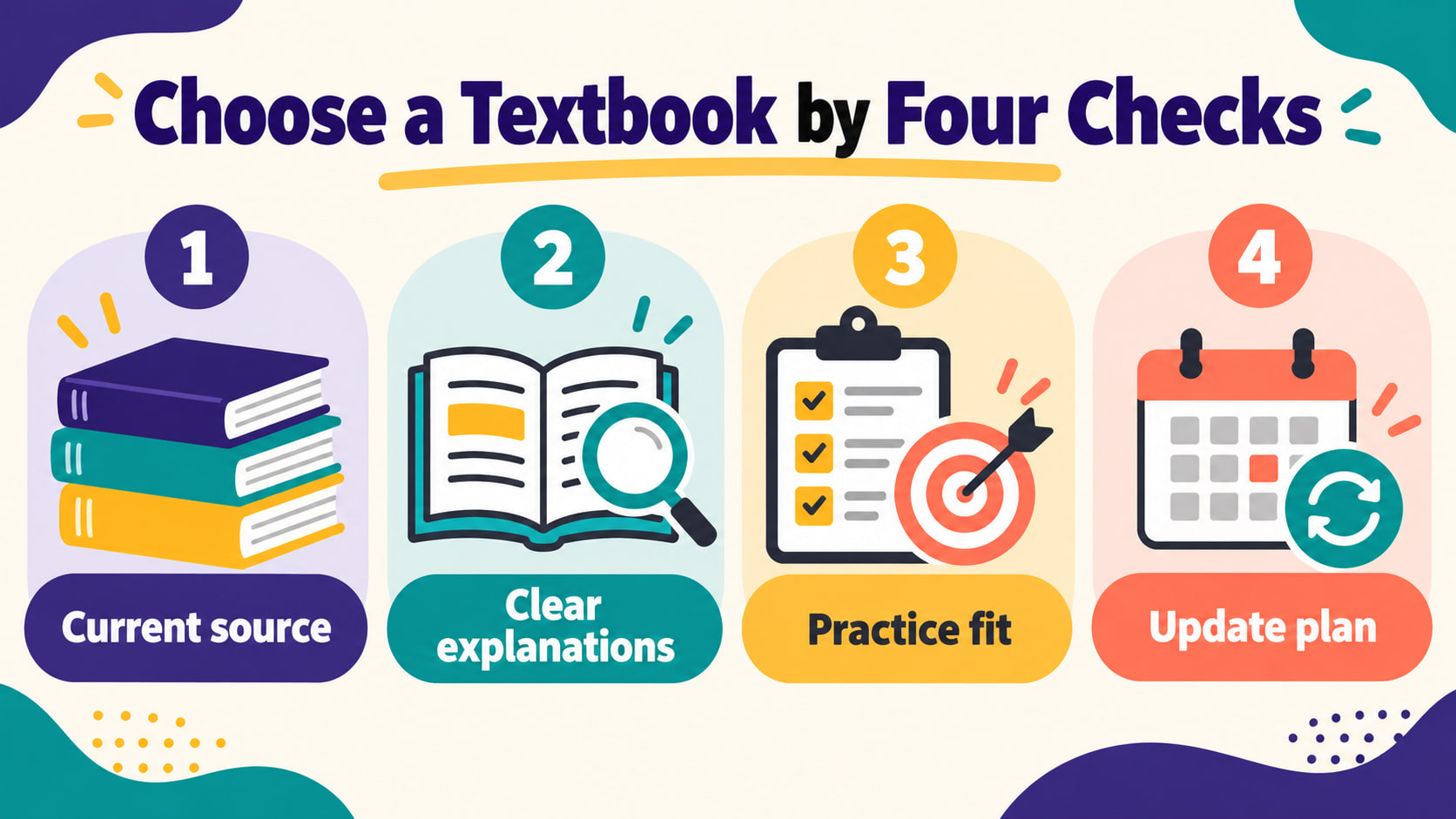
Record the book’s title, edition, author, publication date, and source notes. Compare its terminology with the current official content outline and handbook. If a chapter uses an older term, outdated requirement, or broad claim, mark it for verification before memorizing it.
Prefer books that identify sources clearly and distinguish evidence, explanation, example, and opinion. Be cautious when a book makes guarantees, presents unofficial questions as real examination content, or implies that completing the book is enough to meet every requirement.
Look for clear explanations
Clarity is more than simple language. A useful explanation defines terms, identifies what can be observed, connects the idea to a role-appropriate action, and states important limits. For example, a section on assessment should help an RBT understand the concept while making clear that studying assessment does not authorize independent assessment.
Look for examples that show the difference between a data value and an interpretation, a prompt and a plan change, a general education statement and individualized advice, or a supervision question and an independent decision. Those distinctions make a book more useful in real study and work conversations.
Test the practice fit
Choose a study resource that matches how you learn and what you need to review. Some learners need definitions, others need worked examples, visual summaries, practice questions, or a structured schedule. The best fit is not automatically the longest or most colorful book; it is the resource that helps you find, explain, and apply information responsibly.
Test one chapter before committing to the whole resource. Can you identify the source? Can you explain the concept in your own words? Can you identify the RBT action and the boundary? Can you write a focused question? If not, add a primary source or supervision conversation rather than simply reading more pages.
Create an update plan
Books can remain in circulation after requirements change. Write down the date you checked the official sources and schedule a review after a relevant update. Keep a list of chapters or terms that may need comparison, and do not assume that a new printing has corrected every issue.
If the textbook conflicts with current policy or an assigned procedure, pause and ask which source controls. Do not solve the conflict by selecting the explanation you prefer. Record the question without unnecessary client details and use the approved route for clarification.
Use a textbook with other sources
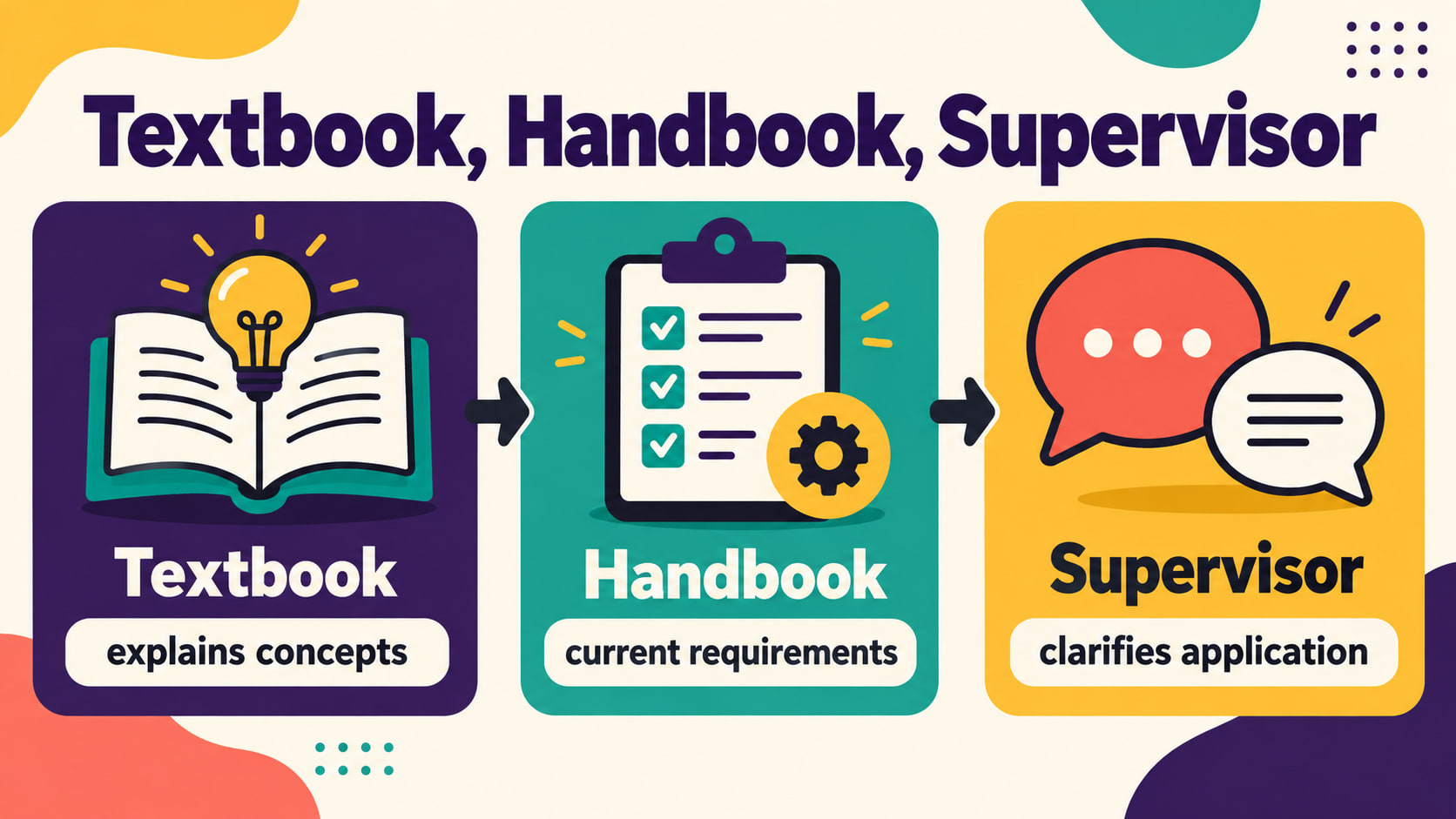
Think of three resources with different jobs: the textbook explains concepts, the current handbook and official documents describe requirements, and the supervisor clarifies application in the service setting. A course or employer policy may add another layer of approved process.
- Textbook: learn vocabulary, compare examples, and prepare questions.
- Official source: check current requirements, definitions, and status information.
- Supervisor or trainer: clarify implementation, feedback, competence, and escalation.
Keep study notes separate from protected service records. Do not place client names, photographs, schedules, or identifying stories in a personal textbook annotation or public review. Use approved systems when a real service question must be discussed.
Common textbook mistakes
- Assuming the newest-looking book is current: publication design is mistaken for verified status.
- Memorizing without checking sources: a summary replaces the official document.
- Using generic examples as instructions: a study scenario is copied into a client program.
- Confusing reading with competence: familiarity is treated as demonstrated performance.
- Trusting unofficial exam claims: practice questions are presented as real or recalled content.
- Ignoring conflict: a textbook and current policy disagree but no one asks for direction.
A strong textbook is a bridge to better questions and practice. It is not a shortcut around current sources, supervision, or the limits of the RBT role.
For a weekly study routine, choose one small section, locate the related official source, and write one original example in neutral language. Then explain which part is general education and which part would require supervisor direction. This cycle is more useful than highlighting an entire chapter without checking whether the ideas transfer to the current role.
Use a reading log with four fields: topic, source checked, confidence, and next action. “Confidence” should describe your current understanding, not claim competence. “Next action” might be another example, a practice question, a correction to a note, or a supervision question. Revisit the log when the source or procedure changes.
If the textbook uses a term differently from your workplace materials, preserve both references in your notes and ask which language should be used in the approved record. Do not silently rewrite an official form to match a book. Accurate study includes knowing when a resource is helpful and when it is not the controlling source.
Frequently asked questions
Is an RBT textbook an official BACB requirement?
Not necessarily. Check the current official materials for controlling requirements and use textbooks as supporting study resources.
How do I know whether a textbook is current?
Check the edition, publication date, source notes, and alignment with current official documents. Recheck important information before relying on it.
Can a textbook replace supervision?
No. It can prepare questions and explain concepts, but supervision and approved procedures guide implementation and competence review.
Should I buy the longest RBT textbook?
Choose based on current sources, clarity, practice fit, accessibility, and updateability rather than length alone.
Source note: Review current BACB materials, organizational policy, assigned procedures, the written service plan, and supervisor direction for your setting. This article is educational and does not provide individualized legal, clinical, employment, or credentialing advice.
Ready to practice the RBT concepts you just reviewed?
Try an independent, original RBT practice resource with exam-style questions, scoring, and answer explanations.
References
- Behavior Analyst Certification Board. RBT Test Content Outline, 3rd edition.
- Behavior Analyst Certification Board. RBT Handbook.
- Behavior Analyst Certification Board. RBT Ethics Code.