

RBT supervision structure connects goals, observation, feedback, documentation, and next steps so an RBT can work within assigned procedures and keep improving.
Table of Contents
- What the RBT supervision structure is for
- Plan the supervision cycle
- Use observation and evidence
- Turn feedback into action
- Document the follow-up
- Bring a useful question
- Common structure mistakes
- Frequently asked questions
- References
RBT PROFESSIONAL DEVELOPMENT · SUPERVISION
RBT Supervision Structure: What to Expect
How goals, observation, feedback, documentation, and next steps fit together.
RBT supervision structure connects goals, observation, feedback, documentation, and next steps so an RBT can work within assigned procedures and keep improving. A useful structure is more than a calendar appointment or a general check-in. It gives the supervisor and RBT a shared way to review evidence, identify a skill or concern, and decide what should happen next.
Exact requirements depend on current official materials, the service setting, the responsible supervisor, employer policy, and the assigned plan. This guide describes a practical learning framework. It does not replace required supervision, authorize independent clinical changes, or decide a client-specific question.
What the RBT supervision structure is for
Supervision supports competent, ethical implementation of assigned work. It can connect training concepts with actual observation, review documentation, discuss professional conduct, and identify a skill that needs practice. It also gives an RBT a route for asking about ambiguity, safety, privacy, or a procedure that is difficult to follow.
A strong conversation is two-way. The supervisor brings direction and responsibility for the supervision process. The RBT brings observations, questions, records, and an honest description of what happened. The goal is not to perform certainty; it is to create enough information for useful feedback.
Plan the supervision cycle
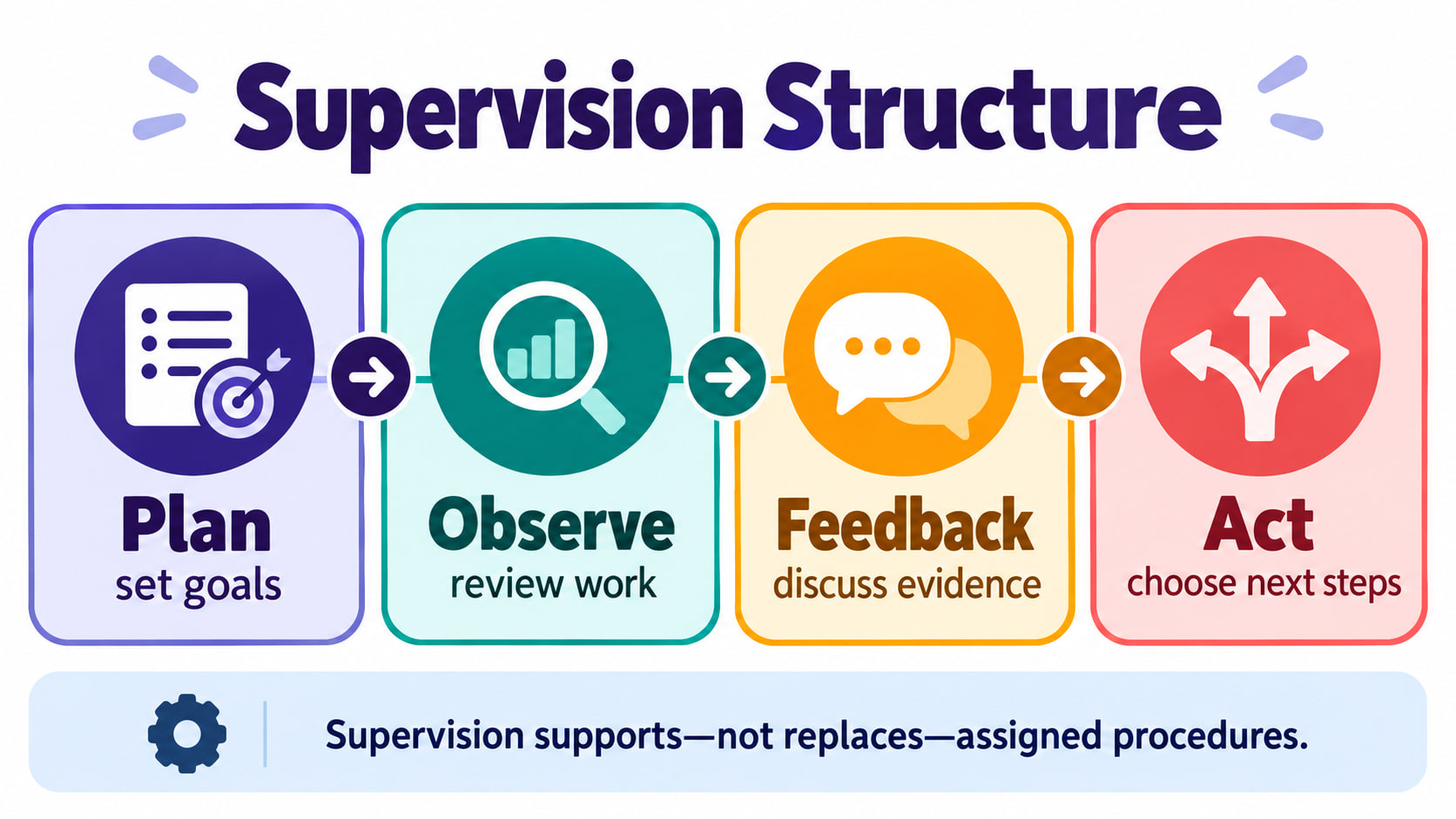
Start with a small agenda. It might include a current goal, a procedure to observe, a documentation question, a professional-development item, and one follow-up action. A focused agenda makes it easier to notice whether the meeting produced a clear next step rather than a list of topics that never returns.
Clarify what will be reviewed and what information is needed. If the topic is data collection, bring the assigned definition and a representative record. If the topic is communication, bring the situation and the approved channel you used. If the topic is a skill, identify which part feels difficult: preparation, prompting, timing, recording, or communication.
Protect privacy while preparing. Use approved systems and minimize unnecessary identifiers. Do not paste a full client record into a personal document just to make a meeting agenda. The supervisor should receive the information through the designated route.
Use observation and evidence
Observation makes feedback concrete. Depending on the setting, the supervisor may review a live session, a recording approved for that purpose, a data record, a written note, or a description of an event. The method should follow the setting’s policy and protect the person’s dignity and privacy.
Evidence does not need to be perfect to be useful. A missed timer, unclear response definition, or unusual interruption can become a supervision question. Describe what occurred, when it happened, what you did, and what you are unsure about. Avoid changing the record to make the session look smoother.
Turn feedback into action
Useful feedback identifies the behavior or skill, explains the expected standard, and gives a chance to practice. If the feedback is “be more consistent,” ask what consistency should look like: the same prompt wording, the same recording rule, the same timing, or another observable feature.
Write one or two action steps in plain language. For example, review the operational definition before the next session, use the designated timer, or bring two examples of ambiguous responses. A next step should have an owner and a time to revisit it. If the instruction is unclear, ask for a demonstration or a sample.
Document the follow-up
Use the approved supervision record and include the required details. The note may summarize the topic, feedback, practice, follow-up, and questions that remain open. Record objective facts rather than personal judgments. Store the record in the designated system and check that it is linked to the correct case or activity.
Follow-up is where structure becomes improvement. At the next review, ask whether the action was completed, what changed, and what evidence supports the next decision. If the action could not be completed, state the barrier rather than silently dropping it. The supervisor can then adjust the support or route the issue.
Bring a useful question
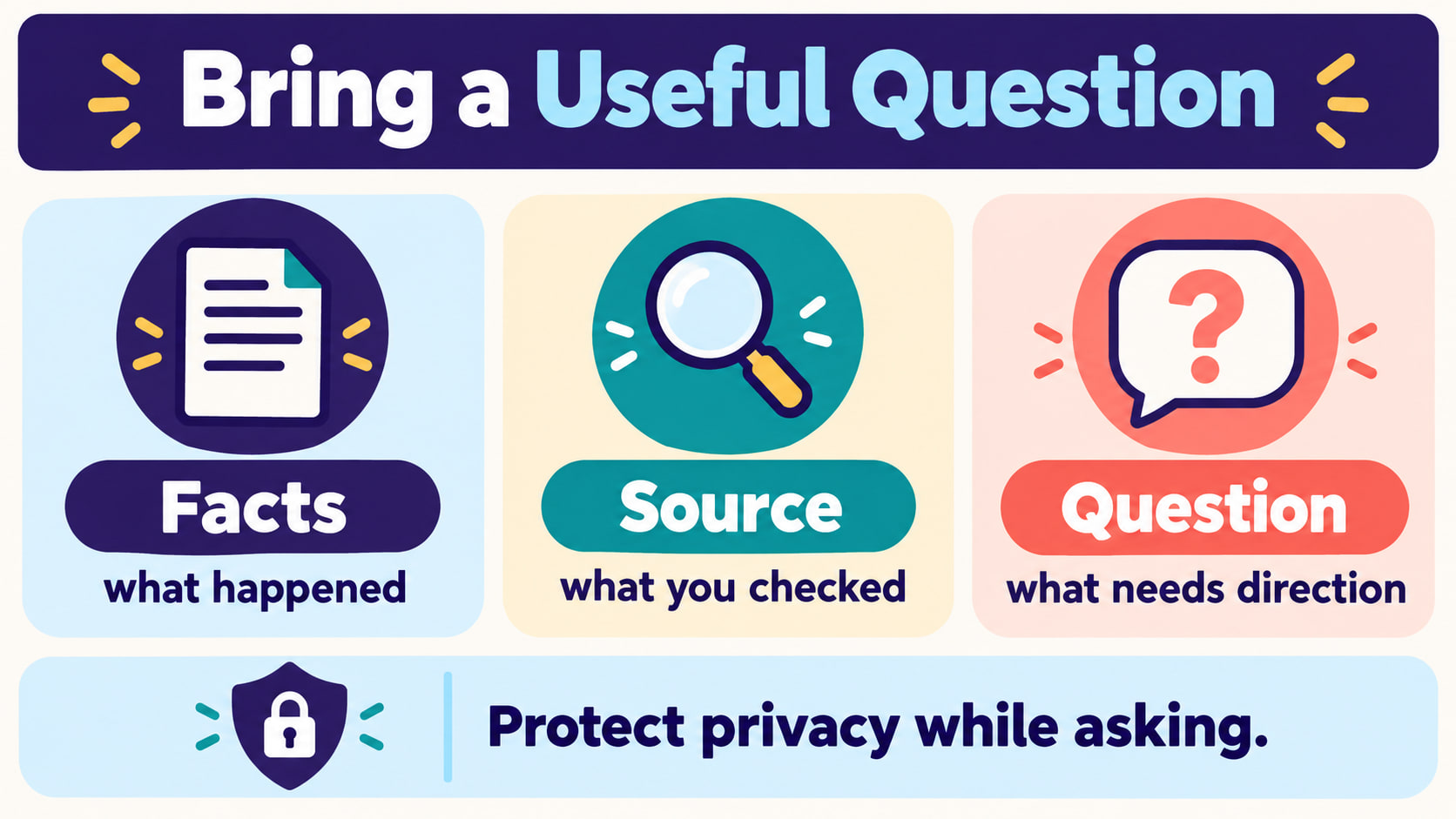
A useful question has three parts: facts, source, and question. State what happened in observable terms. Say what plan, policy, or source you checked. Then identify the decision or next step that needs direction. This format helps the supervisor respond without asking you to repeat the entire story.
Examples include: “The timer ended before I finished the interval; what is the approved missing-data procedure?” “The family asked for a record through a personal channel; which authorized route should I use?” “Two responses do not clearly meet the definition; should I record them as unclear and how should I report that?” These questions preserve role boundaries and protect privacy.
Common structure mistakes
- No agenda: important questions are remembered only after the meeting ends.
- Vague feedback: the RBT leaves without an observable action step.
- Evidence-free discussion: conclusions are based on impressions instead of records or observation.
- Missing follow-up: the next meeting never checks whether the action occurred.
- Over-sharing: unnecessary client information is included in a note or message.
- Role confusion: supervision is treated as permission for the RBT to independently change a plan.
A practical supervision structure is a cycle: plan, observe, discuss evidence, act, and revisit. The cycle should be flexible enough for the setting but clear enough that both people know what was decided. When the answer is outside the RBT role, the best next step is a precise question and an appropriate escalation route.
Frequently asked questions
What should an RBT bring to supervision?
Bring the assigned plan or definition when appropriate, objective records, a short list of questions, and any follow-up item from the last meeting. Use approved systems and protect privacy.
Does supervision mean the supervisor watches every session?
Not necessarily. The setting and current requirements determine the supervision activities. Ask how observation, feedback, documentation, and follow-up are arranged.
What if feedback is too vague?
Ask for an observable example, a practice opportunity, or a specific next action. Clear feedback should help you know what to do differently.
Can supervision authorize an RBT to change a behavior plan?
Follow the supervisor’s assigned direction and the setting’s process. Do not independently redesign a client-specific plan or procedure.
Source note: Review current BACB materials, the assigned plan, organizational policy, approved systems, and supervisor direction for your setting. This article is educational and does not provide individualized legal, clinical, employment, or credentialing advice.
Ready to practice the RBT concepts you just reviewed?
Try an independent, original RBT practice resource with exam-style questions, scoring, and answer explanations.
References
- Behavior Analyst Certification Board. RBT Test Content Outline, 3rd edition.
- Behavior Analyst Certification Board. RBT Handbook.
- Behavior Analyst Certification Board. RBT Ethics Code.