

ABA reinforcement is best understood as a functional relation: a consequence follows a defined behavior and the behavior becomes more likely in relevant future conditions.
Table of Contents
- What ABA reinforcement is for
- Positive and negative reinforcement
- Function and future behavior
- Timing and schedules
- Data and decision questions
- RBT implementation boundaries
- A study map for reinforcement
- Frequently asked questions
- References
RBT KNOWLEDGE · REINFORCEMENT
ABA Reinforcement: A Practical RBT Study Guide
Map behavior, consequence, function, and data while keeping reinforcement procedures connected to the current plan and supervision.
ABA reinforcement is best understood as a functional relation: a consequence follows a defined behavior and the behavior becomes more likely in relevant future conditions. The label is not determined by whether an item looks pleasant, whether an adult intended to reward someone, or whether the learner smiled once.
For RBT study and practice, connect the term to the observable response, the consequence, the conditions, and the data. Use the current client plan and supervisor direction for implementation. This guide explains concepts; it does not authorize an RBT to design or change treatment independently.
What ABA reinforcement is for
Reinforcement helps a team understand why a response may become more likely after a consequence. The relevant question is what happens to future responding, not whether the consequence is generally considered a reward. A preferred item can be available without contingency, and a consequence can be delivered after a response without increasing it.
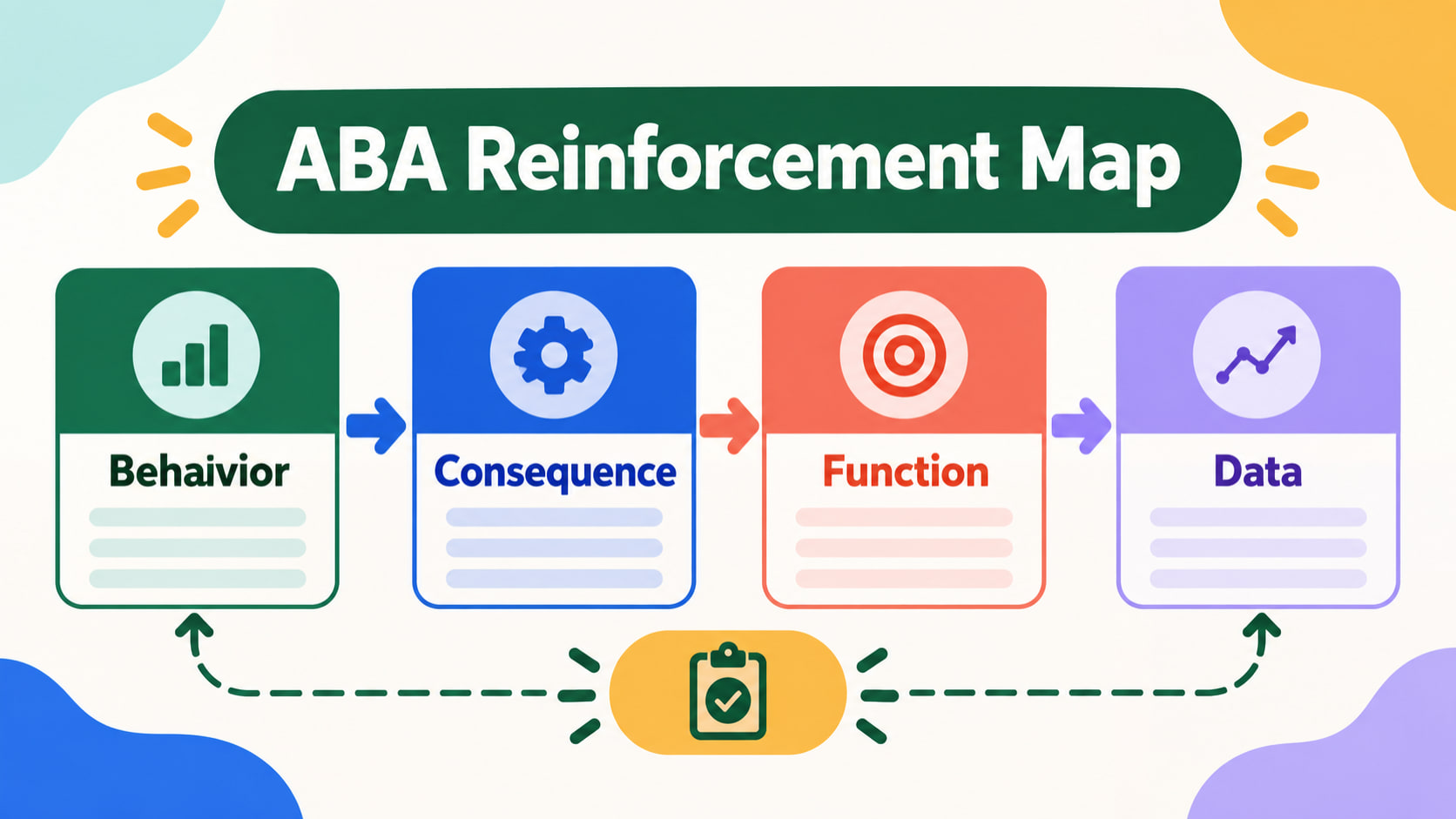
Build every study example with four parts: the target behavior, the consequence, the context or contingency, and the future data pattern. If one part is missing, the example may be too vague to support a functional claim.
Positive and negative reinforcement
Positive reinforcement involves presenting or adding a consequence after behavior, followed by an increase in future behavior. Negative reinforcement involves removing or ending a consequence after behavior, followed by an increase in future behavior. In both cases, reinforcement means an increase; “positive” and “negative” describe the direction of the consequence, not good and bad.
For example, if a defined communication response is followed by access to a planned activity and that response later increases, the example may illustrate positive reinforcement. If a defined response is followed by the removal of an aversive condition and the response later increases, the example may illustrate negative reinforcement. The exact procedure, safety conditions, and evidence must come from authorized training and data.
Do not confuse negative reinforcement with punishment. Punishment is defined by a decrease in future behavior. Everyday language often uses these terms loosely, so use the functional definitions when studying or communicating with the team.
Function and future behavior
Function asks what consequence or condition is related to the future pattern of behavior. It is not a guess about a person’s personality or private intention. A single event may suggest a question, but it does not establish a stable function without appropriate assessment and data.
An RBT can record objective events and implement an assigned procedure. An RBT should not diagnose, conduct an independent functional assessment, or decide that a new consequence should be introduced. If the observed pattern differs from the plan, report the observation and seek direction.
Function is also different from a label attached to a person. The same topography can occur in different contexts and produce different future patterns. That is why objective description, consistent recording, and team review matter. Use the smallest claim supported by the observation and leave broader interpretation to the authorized clinical process.
Timing and schedules
Timing matters. A consequence may be programmed after every response, after a specified number of responses, after an interval, or according to another schedule. The schedule affects learning and maintenance, but the correct schedule is not something an RBT should invent from a textbook definition.
Study the start and stop points, the response requirement, the prompt rule, the exchange or access rule, and what to do if the opportunity is missed. If a consequence is late, delivered for another response, or unavailable, record what occurred through the approved process and ask the supervisor how to proceed.
Data and decision questions
Data help distinguish a preference from reinforcement. Depending on the plan, the team may review frequency, rate, duration, latency, percentage of opportunities, or another measure. Use the operational definition and recording method that the current plan specifies.
- What exact behavior was measured?
- What consequence was delivered, and when?
- Was the consequence contingent on the defined response?
- What comparison shows whether future responding changed?
- Were there other changes in setting, motivation, instruction, or prompting?
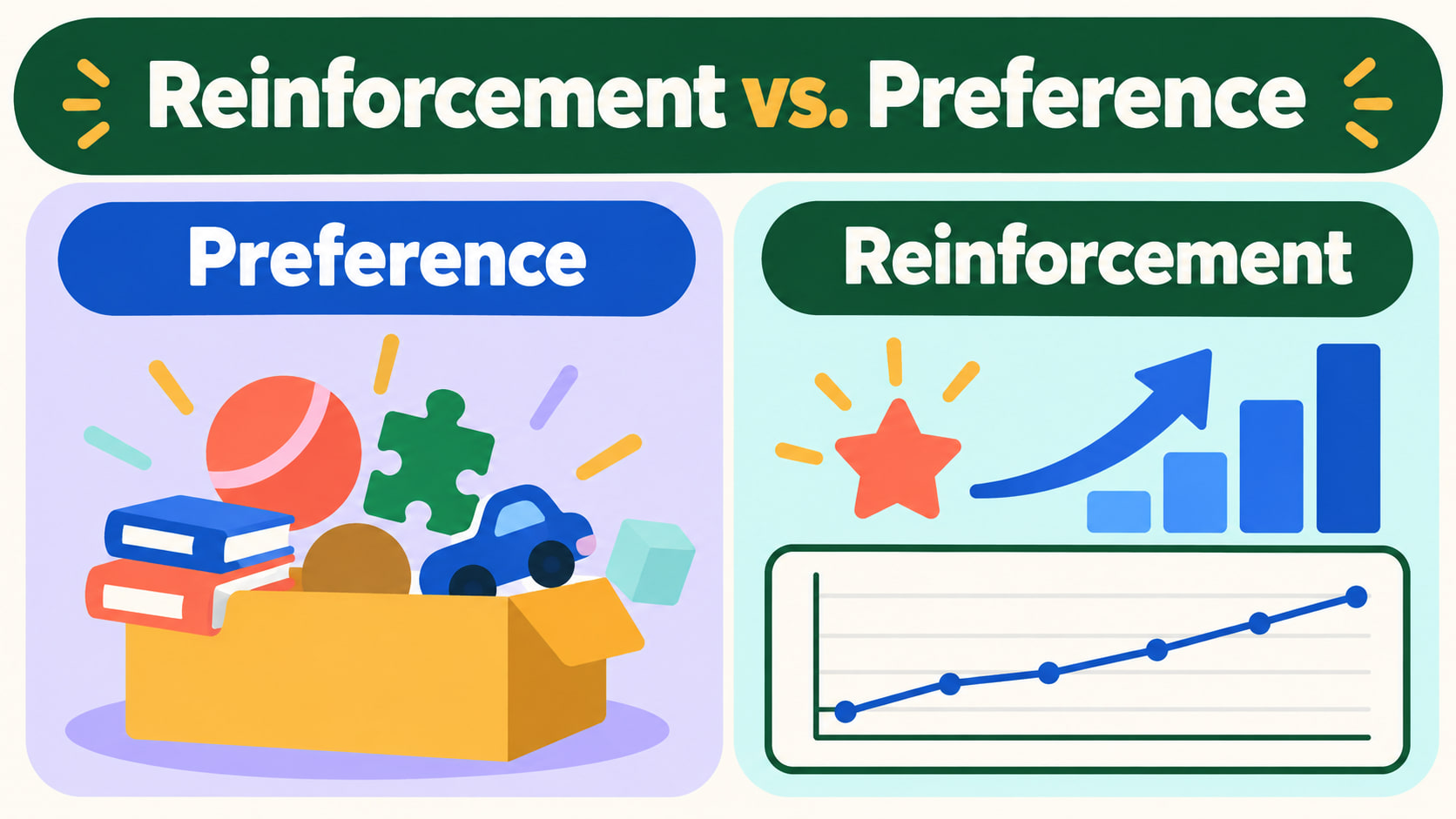
Do not claim that a consequence is a reinforcer because it is popular, expensive, or listed on a preference assessment. Preference information can guide a plan, but the functional effect is shown by behavior and data in context.
When results are mixed, consider whether opportunities were comparable, whether the response definition was applied consistently, and whether the consequence was available as planned. These are questions for review, not invitations to alter the procedure during a session. A clear record allows the supervisor to decide what information is needed next, before the next supervision review.
RBT implementation boundaries
An RBT implements assigned procedures after training and under ongoing supervision. Follow the current plan for target definitions, prompts, consequence delivery, timing, schedules, data, and safety. Protect dignity, privacy, and the learner’s access to communication.
Do not add a reward, remove a programmed consequence, change a schedule, or withhold access because the procedure seems ineffective. Bring changes in motivation, safety, availability, or response patterns to the supervisor. If the plan and a verbal instruction conflict, use the designated clarification route and document objectively.
A study map for reinforcement
Make one card with these fields: definition, behavior, consequence, direction of change, data measure, and role boundary. Then write one example and one nonexample. A nonexample might include an item that was preferred but did not produce an increase, or a consequence that occurred before the response.
Explain the card aloud without saying more than the evidence supports. “The learner received the activity” is an observation. “The activity reinforced the response” is a functional claim that requires the relevant future data. This distinction makes study answers and workplace communication more accurate.
For a quick review, compare two cards side by side. One can describe a preferred item or event; the other can describe a consequence followed by an increase in responding. Mark the exact evidence that separates them. If you cannot identify the measure or comparison, write a supervisor question instead of guessing.
Frequently asked questions
Is ABA reinforcement the same as a reward?
Not exactly. A reward is an everyday term; reinforcement is defined by an increase in future behavior after a consequence.
Does positive reinforcement mean something good happened?
No. Positive describes presenting or adding a consequence. Reinforcement describes an increase in future behavior.
Can an RBT choose what reinforces a learner?
Follow the current plan and supervisor direction. An RBT should not independently select or redesign treatment consequences.
How can I remember the definition?
Use the sequence: defined behavior, consequence after behavior, measurable increase in future responding, and current plan or supervisor context.
Source note: Review the current BACB RBT content outline, RBT Handbook, ethics materials, client plan, and supervisor direction for your situation. This article is educational and does not provide individualized legal, clinical, employment, or credentialing advice.
Ready to practice the RBT concepts you just reviewed?
Try an independent, original RBT practice resource with exam-style questions, scoring, and answer explanations.
References
- Behavior Analyst Certification Board. RBT Test Content Outline, 3rd edition.
- Behavior Analyst Certification Board. RBT Handbook.
- Behavior Analyst Certification Board. RBT Ethics Code.