
The phrase accepting feedback vs defensiveness RBT describes a useful comparison: how an RBT responds when coaching is offered, a correction is needed, or a question challenges the current approach.
Table of Contents
- What is accepting feedback vs defensiveness RBT?
- What accepting feedback can look like
- What defensive reactions can look like
- Keep feedback within safety and role boundaries
- Practice a useful feedback response
- Quick comparison
- Frequently Asked Questions
- Sources and further reading
RBT feedback and supervision comparison guide
Accepting Feedback vs Defensiveness RBT: Choose the Next Skill
Compare observable responses to coaching while keeping room for clarification, safety boundaries, and respectful disagreement.
The phrase accepting feedback vs defensiveness RBT describes a useful comparison: how an RBT responds when coaching is offered, a correction is needed, or a question challenges the current approach. The goal is not to label a person. It is to identify the next observable skill that supports supervision, learning, safety, and accurate implementation.
Accepting feedback does not mean agreeing with every statement or following an unsafe, unethical, discriminatory, or out-of-scope instruction. Asking for evidence, clarifying the procedure, or reporting a concern can be professional. Defensiveness is better understood as a pattern that blocks useful review, such as arguing about observable facts, assuming intent, avoiding the issue, or refusing to examine a correction.
What is accepting feedback vs defensiveness RBT?
For an RBT, the comparison can be made through four questions:
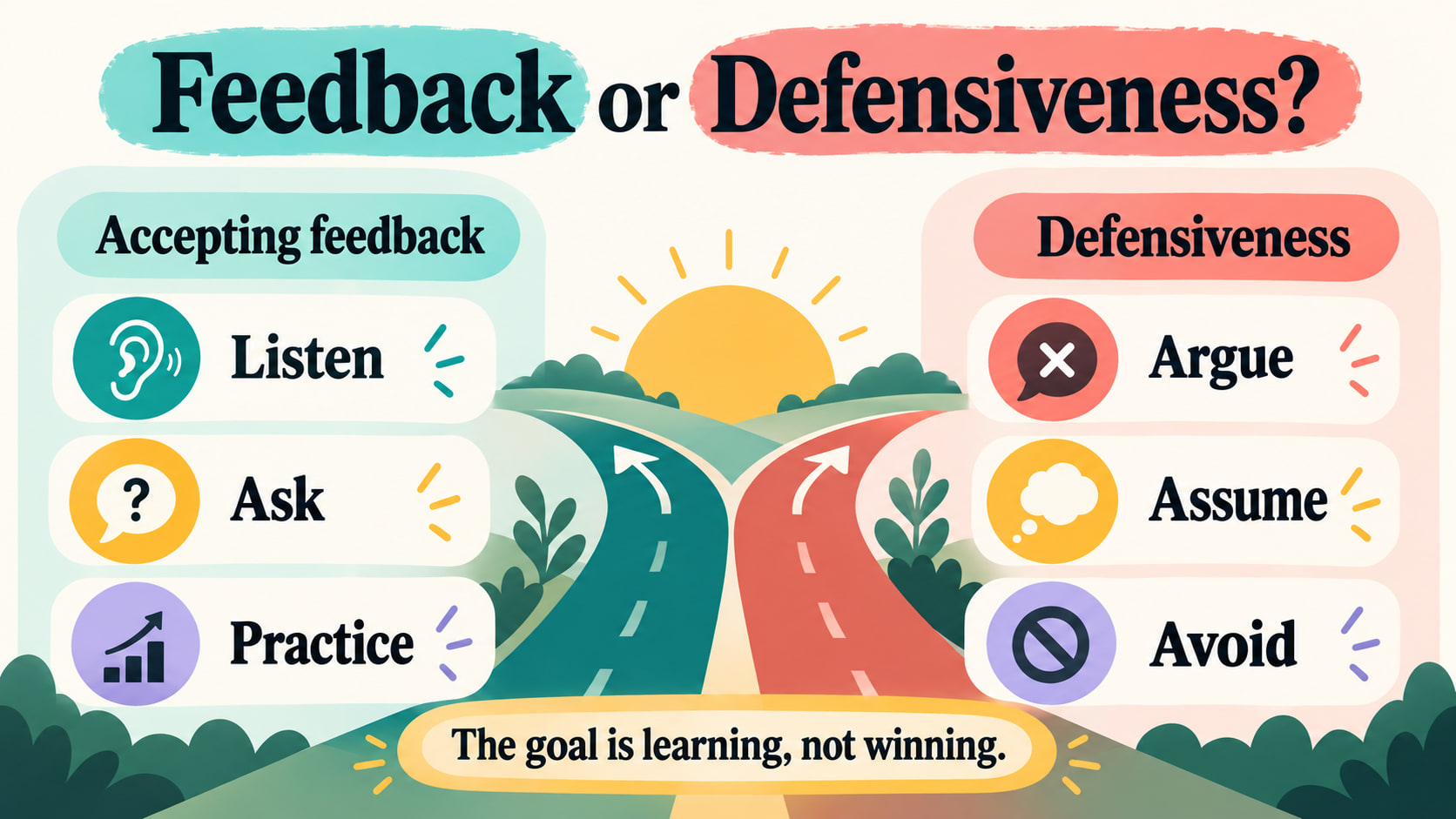
- Did the person listen long enough to understand the feedback?
- Did they separate the observable point from their emotional reaction or an assumption about intent?
- Did they ask a focused question when the instruction was unclear?
- Did they practice or document the next authorized action?
A response can be calm and still miss the point, just as a response can sound uncomfortable while moving toward a useful correction. Look at the next behavior, not only the tone.
What accepting feedback can look like
Accepting useful feedback often begins with a pause. The RBT allows the supervisor or trainer to finish, reflects the point, and asks what to try next. A response might be: “You are saying I delivered the prompt before the defined wait interval. I want to check the timing rule. Can we review one example, and should I practice the corrected sequence on the next opportunity?”
This response does not require shame or instant agreement. It makes the feedback concrete and turns it into an observable practice target. The RBT can also ask what evidence will show that the correction has been implemented consistently.
Other useful responses include:
- “Thank you. I did not notice that timing difference. I will check the written procedure before the next trial.”
- “Can you show me which part of the note should be more objective?”
- “I understand the correction. I would like to confirm who documents the change and when it becomes active.”
What defensive reactions can look like
Defensiveness is not simply having an emotion or needing a moment. A person may feel embarrassed and still accept the coaching. A more concerning pattern is when the reaction prevents the team from examining the issue.
- Argue: shift immediately to proving that the feedback is unfair instead of checking the observable point.
- Assume: treat the coach’s intent as known, such as deciding that a correction means the person is disliked or being targeted.
- Avoid: change the subject, refuse to review the record, or repeatedly postpone the practice step.
These are patterns to review, not permanent character labels. A supervisor can describe the observable behavior, explain why it matters, and identify one next practice step. If the interaction itself is unsafe, abusive, discriminatory, retaliatory, or unethical, the RBT should use the appropriate reporting or escalation process rather than treating compliance as the goal.
Keep feedback within safety and role boundaries
Feedback must still be checked against the current plan, training, policy, safety requirements, and role. An RBT should not accept an instruction to diagnose, redesign treatment, change a plan without authorization, or disclose private client information simply because it was delivered confidently.
A role-safe response can sound like: “I want to follow the correct direction. This request appears different from the current written procedure. Can we confirm with the responsible supervisor and document which instruction controls?” That is clarification, not automatic defensiveness.
When feedback concerns a factual error, correct the record through the approved process. When it concerns a plan-level decision, route it to the authorized professional. When it concerns immediate safety or privacy, use the required escalation route promptly.
Practice a useful feedback response
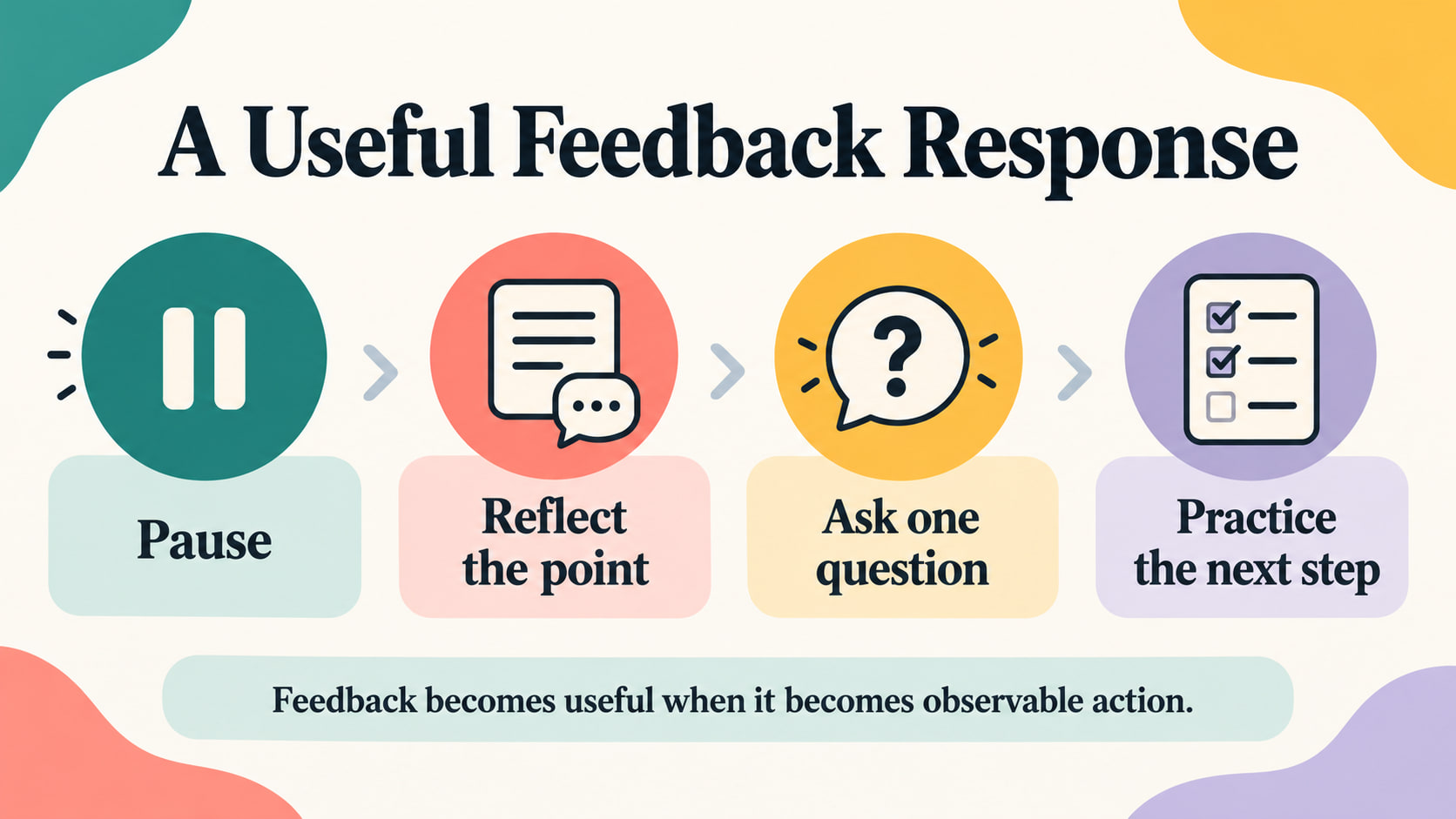
Use a four-step response:
- Pause: create enough space to hear the entire point.
- Reflect: summarize the observable correction in your own words.
- Ask one question: clarify the procedure, evidence, timing, or next practice opportunity.
- Practice: complete the authorized next step and review what happened.
Afterward, write down what you learned without including unnecessary client details. Ask the supervisor how progress will be reviewed. A feedback conversation becomes more useful when the team can see what was practiced and what question remains.
When feedback feels personal, separate the message into three parts: the observable event, the impact on implementation, and the next action. For example, “The prompt was delivered before the wait interval, which may have changed the learner’s opportunity to respond; I will review the timing and practice it again.” This wording does not deny the emotional experience, but it keeps the conversation anchored to work that can be checked. If you need a short pause, name it and return to the topic: “I want to respond thoughtfully. May I take a minute, then summarize what I heard?” The follow-through matters. Coming back with a focused question or a documented practice step shows that the pause supported learning rather than ending the review.
Quick comparison
| Moment | Learning-oriented response | Blocked response |
|---|---|---|
| A correction is offered | Reflect the observable point | Argue before hearing the full point |
| The instruction is unclear | Ask one focused question | Assume intent or guess silently |
| The plan appears different | Check the current source and decision owner | Change the procedure without authorization |
| A next step is agreed | Practice and review the result | Avoid follow-through or hide the error |
Frequently Asked Questions
Is asking questions a defensive response?
No. A focused question can be part of accepting feedback, especially when it checks the written procedure, evidence, timing, safety, or decision ownership. The difference is whether the question helps clarify the work or blocks any review.
Does accepting feedback mean agreeing with the supervisor?
No. It means listening to the observable point, checking the applicable source, and responding professionally. An RBT can raise a safety, ethics, privacy, or scope concern through the correct process.
How can a supervisor discuss defensiveness fairly?
Describe the observable response, its effect on learning or implementation, and one next practice step. Avoid broad character labels and invite the RBT to summarize the feedback.
Can feedback authorize an RBT to change a behavior plan?
No. Feedback may identify a question or correction, but plan changes and clinical decisions must follow the responsible professional’s authorized process.
Sources and further reading
- BACB RBT Test Content Outline, 3rd edition
- BACB Supervision and Training resources
- BACB RBT Handbook
- BACB Ethics Codes and RBT Ethics Code resources
Explore RBT supervision learning, feedback practice, and role-safe training resources for your next coaching conversation.
Ready to practice the RBT concepts you just reviewed?
Try an independent, original RBT practice resource with exam-style questions, scoring, and answer explanations.
References
- Behavior Analyst Certification Board. RBT Test Content Outline, 3rd edition.
- Behavior Analyst Certification Board. RBT Handbook.
- Behavior Analyst Certification Board. RBT Ethics Code.