
The phrase active listening RBT points to a practical communication skill: hear what the person is saying, reflect the relevant facts, clarify the question, and follow through through the approved channel. Active listening is not agreeing with every claim or making a clinical decision. It helps an RBT support accurate handoffs, respectful relationships, documentation, and supervision.
Table of Contents
- What does active listening RBT mean for an RBT?
- Hear the concern before solving it
- Reflect facts and clarify the question
- Turn listening into a useful handoff
- Keep listening within scope, privacy, and safety
- Follow through and close the loop
- Frequently asked questions
- Sources and further reading
RBT communication and supervision guide
Active Listening RBT: Hear, Clarify, and Follow Through
Active listening helps an RBT turn conversations into accurate, respectful, and role-appropriate next steps.
The phrase active listening RBT points to a practical communication skill: hear what the person is saying, reflect the relevant facts, clarify the question, and follow through through the approved channel. Active listening is not agreeing with every claim, promising a result, or making a clinical decision. It helps an RBT support accurate handoffs, respectful relationships, documentation, and supervision.
What does active listening RBT mean for an RBT?
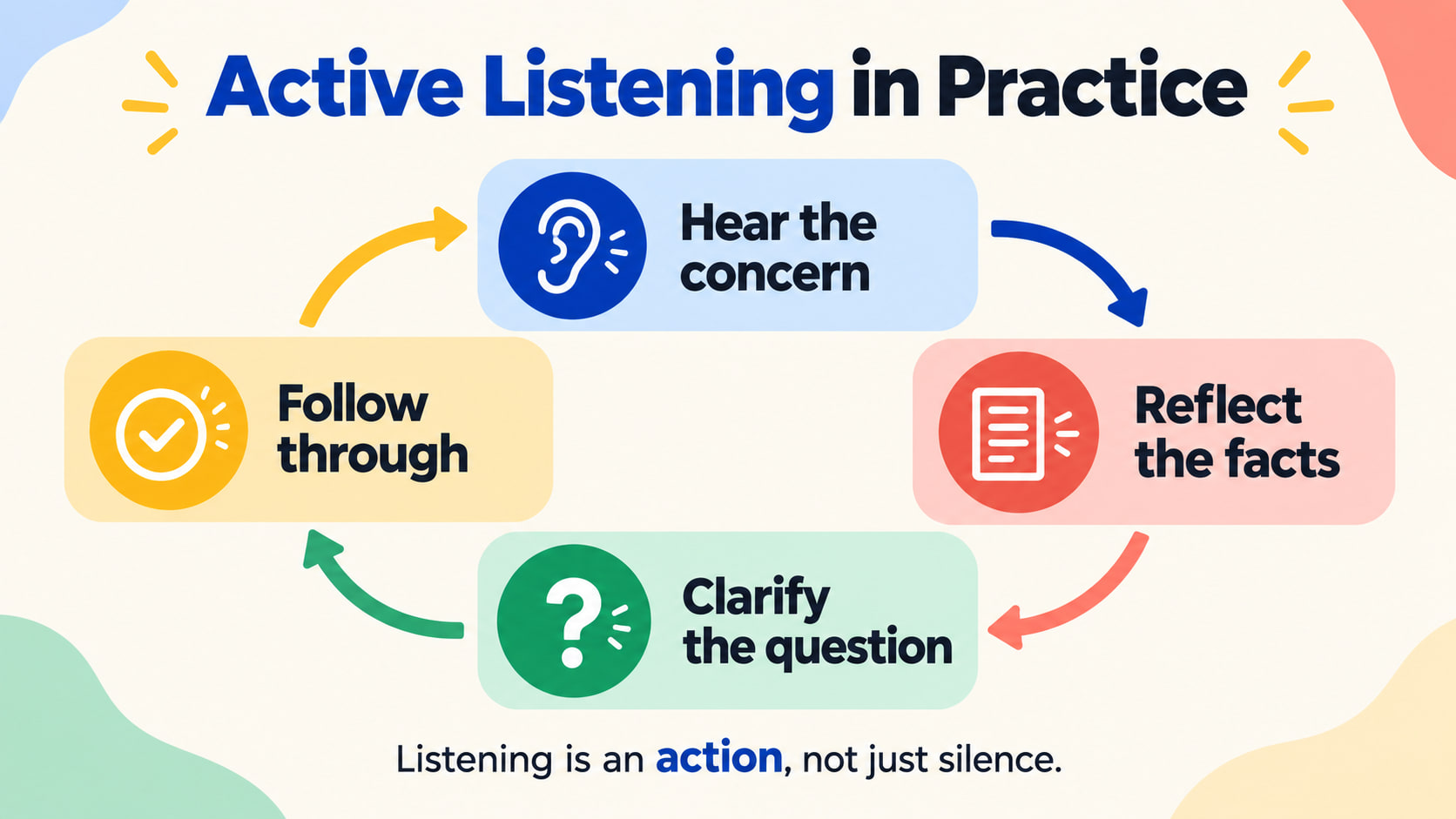
For an RBT, active listening is a repeatable way to pay attention and make sure the message is understood before responding. A simple pattern is:
- Hear: give the speaker your attention and notice the main concern.
- Reflect: summarize the observable facts or request without adding an assumption.
- Clarify: ask a focused question when a detail, priority, or next step is unclear.
- Follow through: document or relay the information through the approved process and confirm what happens next.
This pattern can help during a caregiver conversation, a supervisor check-in, a team handoff, or a discussion about a session note. It keeps communication useful without turning the RBT into the person who independently diagnoses, changes a plan, or gives treatment advice.
Hear the concern before solving it
People often speak in a mixture of observations, feelings, interpretations, and requests. An RBT can listen for all four without treating them as the same type of information. For example, “The transition was difficult today” may include an observation, but “the new routine is not working” is an interpretation that may need more detail.
Start by reducing distractions and allowing the person to finish the main thought. Use a calm tone and short acknowledgments such as “I hear that the transition was difficult” or “I want to make sure I understand the concern.” These statements show attention without agreeing with an unverified conclusion.
Then identify the part that needs action. Is the person asking for a factual update, reporting a safety concern, asking what was documented, or requesting a decision that belongs to the supervisor? Naming the type of request prevents an RBT from answering a different question than the one being asked.
Reflect facts and clarify the question
A useful reflection is brief and specific. It may sound like, “You are saying that the first transition took longer than usual, and you want to know what was recorded.” That sentence separates what happened from what the person wants to understand. It also gives the speaker a chance to correct the summary.
Prefer observable details over labels. Ask questions such as:
- “Which part of the routine are you referring to?”
- “What did you observe immediately before and after that moment?”
- “Are you asking for the session data, a description of the event, or guidance from the supervisor?”
- “What would be the most helpful next step for the team to review?”
Clarifying is not an interrogation. One focused question is often better than several questions at once. If the topic is emotionally charged, first acknowledge the concern, then ask only for the detail needed to route it safely and accurately.
Turn listening into a useful handoff
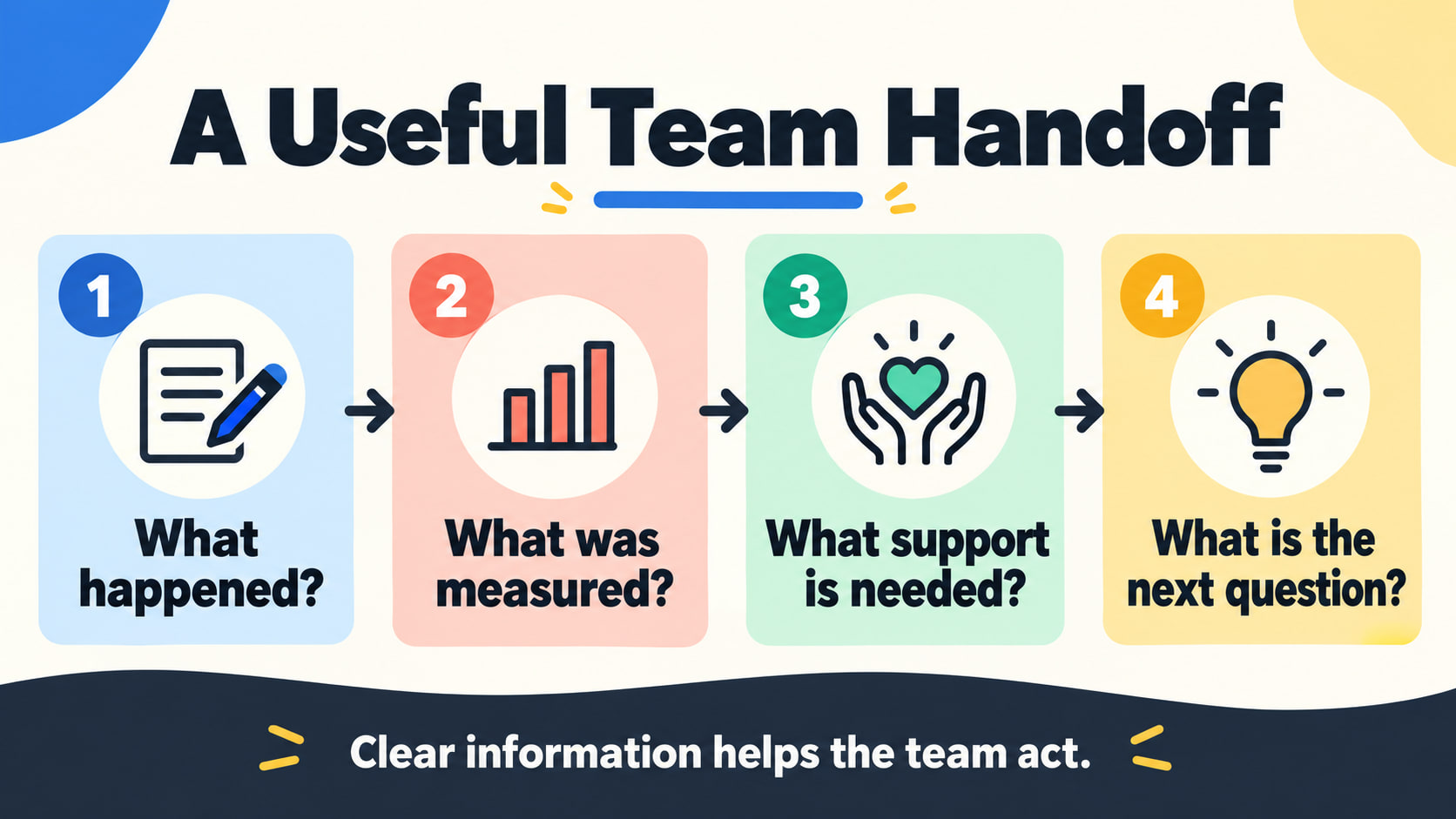
Active listening becomes valuable to a team when the information can be used after the conversation ends. A concise handoff can include what happened, what was measured or observed, what support is needed, and what question remains for the responsible supervisor or team member.
For example: “During the final transition, the learner moved away from the table twice after the instruction. I recorded the event according to the current procedure. The caregiver is asking whether the team should review the transition routine. I have not changed the procedure; can you advise on the next review step?” This format makes the boundary visible while still moving the concern forward.
Use the channel and documentation format required by the organization. Do not put identifying client information in a public group, personal account, or unapproved message. If the handoff is verbal, write down the relevant approved follow-up while the details are fresh, according to policy.
Keep listening within scope, privacy, and safety
Good listening does not expand an RBT’s scope of practice. An RBT can listen, report, document, and ask for supervision while still leaving diagnosis, treatment design, plan changes, and clinical interpretation to the qualified professional responsible for those decisions.
There are also conversations that should be routed promptly. A possible safety issue, privacy concern, allegation of harm, unexpected medical concern, or request to deviate from the current plan should follow the organization’s escalation process. Do not wait for a perfect summary before reporting an urgent concern. Share the essential facts and identify what you do not know.
Privacy is part of active listening. Repeat only what is necessary, confirm who is authorized to receive the information, and avoid discussing a client in a public space. If you are unsure whether a channel is approved, pause and ask the supervisor or organization rather than guessing.
Follow through and close the loop
Listening loses value when the person never knows what happened next. Before ending a conversation, summarize the agreed next step: “I will pass this concern to the supervisor through the approved channel, and I will record the question in the place our team uses for follow-up.” If no action is assigned to you, say so clearly: “I can document what I observed, but the plan decision belongs to the supervisor.”
Follow-through also means checking whether the message was received when the procedure requires it. It does not mean repeatedly contacting a family or promising that a concern will produce a particular result. Keep the commitment narrow, observable, and within your role.
After the conversation, review your note for accuracy. Did you separate direct observation from interpretation? Did you preserve the speaker’s question? Did you identify the route for supervision? A short, accurate record is usually more useful than a long narrative filled with assumptions.
Frequently asked questions
Does active listening mean an RBT must agree with a caregiver?
No. Listening means making a genuine effort to understand the concern and reflect it accurately. An RBT can acknowledge a person’s experience without confirming an interpretation or promising a solution.
What should an RBT say when they do not know the answer?
Say what you do know, identify what you do not know, and route the question to the responsible supervisor. “I do not want to guess about a plan decision; I will document the question and ask the supervisor through the approved channel” is clearer than giving an unsupported answer.
Can active listening change a behavior plan?
Active listening can help the team notice and communicate a concern, but the communication skill itself does not authorize an RBT to change a behavior plan or treatment procedure. Follow the current plan until the responsible professional provides an approved direction.
How can an RBT practice active listening?
Practice the four-part loop in low-pressure conversations: hear the concern, reflect the observable facts, ask one clarifying question, and state the approved follow-up. A supervisor can provide feedback on whether your summaries stay accurate, respectful, and within scope.
Sources and further reading
- Behavior Analyst Certification Board: Supervision and Training
- Behavior Analyst Certification Board: RBT
- Behavior Analyst Certification Board: RBT Handbook
- Behavior Analyst Certification Board: RBT Test Content Outline
Explore RBT communication training, supervision learning, and role-safe practice resources for your next professional conversation.
Ready to practice the RBT concepts you just reviewed?
Try an independent, original RBT practice resource with exam-style questions, scoring, and answer explanations.
References
- Behavior Analyst Certification Board. RBT Test Content Outline, 3rd edition.
- Behavior Analyst Certification Board. RBT Handbook.
- Behavior Analyst Certification Board. RBT Ethics Code.