
The phrase bacb code enforcement procedures refers to the formal process the Behavior Analyst Certification Board may use when an applicant or certificant is alleged to have violated an ethics requirement. For an RBT, the most useful question is not how to predict an outcome. It is how to recognize an official notice, protect confidential information, meet the stated deadline, provide an accurate response, and use the right supervision or professional-support route.
Table of Contents
- What the phrase means
- How bacb code enforcement procedures work for an RBT
- What an RBT should do after a notice
- What a notifier should prepare
- What the process does not decide
- Frequently asked questions
- Official sources and scope
RBT ethics and administrative process guide
BACB Code Enforcement Procedures: What RBTs Should Know
A clear explanation of what happens when the BACB receives an alleged ethics violation, what an RBT should do with an official notice, and which decisions remain outside an RBT article.
The phrase bacb code enforcement procedures refers to the formal process the Behavior Analyst Certification Board may use when an applicant or certificant is alleged to have violated an ethics requirement. For an RBT, the most useful question is not how to predict an outcome. It is how to recognize an official notice, protect confidential information, meet the stated deadline, provide an accurate response, and use the right supervision or professional-support route.
This guide is an orientation to the public process. It is not a finding about any person, and it does not replace the current procedure document, the RBT Ethics Code (2.0), employer policy, licensing requirements, emergency procedures, or qualified legal advice.
What the phrase means
The BACB Ethics Department uses code-enforcement procedures to address alleged violations of its ethics requirements. Those requirements include the RBT Ethics Code (2.0), which applies to RBT applicants and certificants. The procedure is designed to give the subject notice of the allegation, an opportunity to respond, and notice of the outcome. It also provides a route for appeal in situations where the stated rules allow one.
A notice is not the same thing as a final finding. It starts a formal administrative process. The subject may be an RBT applicant or certificant, while the person who submits the notice is commonly called the notifier. The BACB can also generate a notice in some circumstances. The labels matter because each person has different responsibilities, and a reader should not assume that a general complaint, a workplace disagreement, and a BACB notice are interchangeable.
How bacb code enforcement procedures work for an RBT
The exact path depends on the facts, the documents submitted, the subject’s status, and the current BACB procedure. The broad sequence is easier to understand when each stage has a separate purpose.
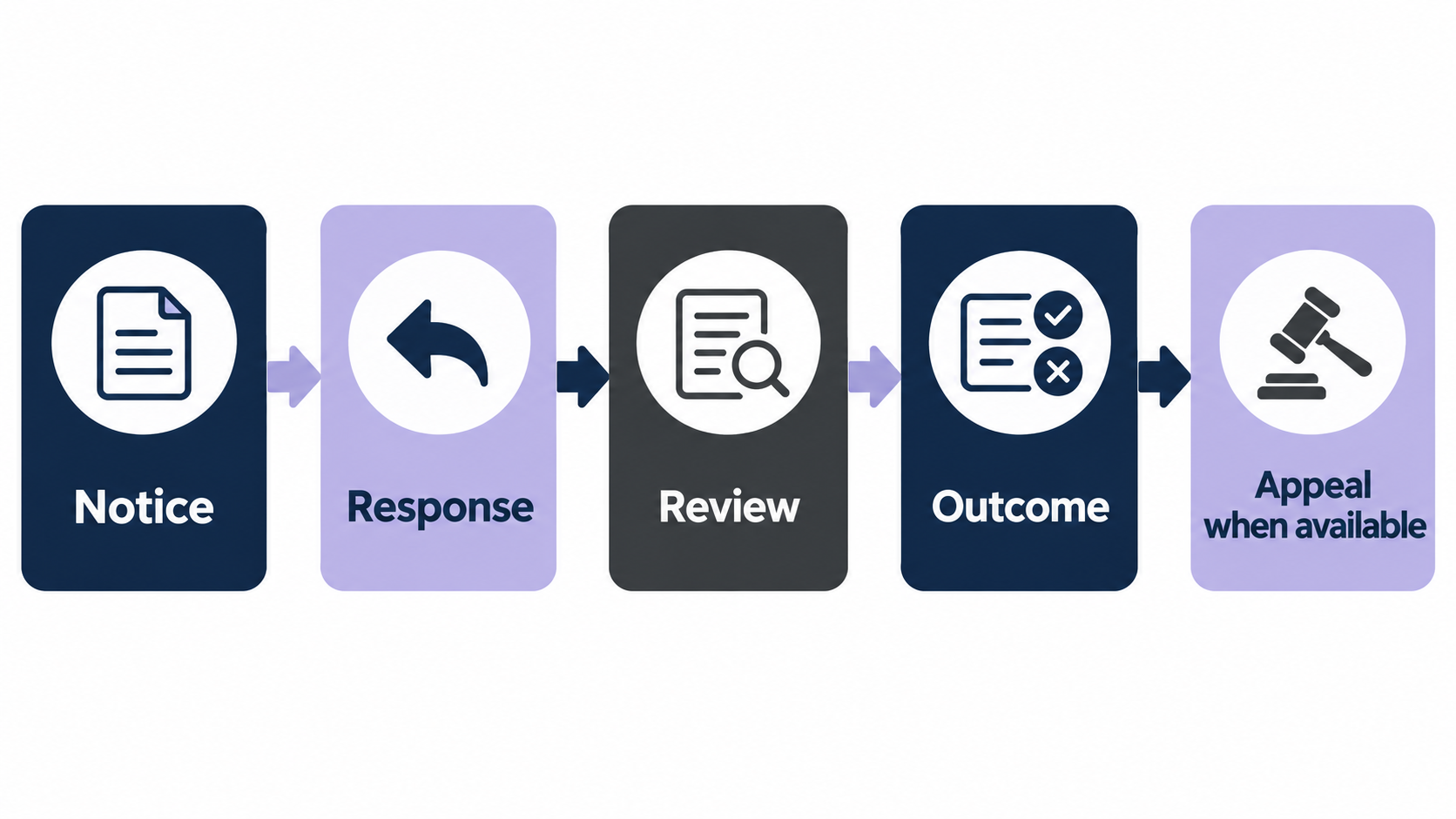
- Notice. The BACB receives or generates a Notice of Alleged Violation and supporting information. The notice identifies the alleged ethics requirements and gives the subject instructions for the next response.
- Response opportunity. The subject receives an opportunity to review the notice and provide a response by the deadline stated in the materials. An RBT should treat the deadline as an official action item, not as an invitation to wait for an informal conversation.
- Processing decision. After the response period, the matter may be declined, deferred, or processed through an educational memorandum, consent agreement, or disciplinary review. These paths are not interchangeable: an educational memorandum is guidance-focused, while a disciplinary review evaluates whether the documentation supports alleged violations and what consequences may follow.
- Outcome. Depending on the path, the result may involve no further action, educational direction, a consent agreement, corrective actions, or published sanctions. The current procedure controls the available options and notices.
- Appeal when available. Some outcomes can be appealed, while others cannot. The procedure document gives the applicable deadline and documentation requirements. An RBT should read the actual notice rather than assume that every outcome has the same appeal route.
What an RBT should do after a notice
An RBT who receives official materials should slow down and make the process traceable. The first goal is not to write the most persuasive story. It is to avoid missed instructions, unsupported claims, altered records, and unnecessary disclosure of client information.
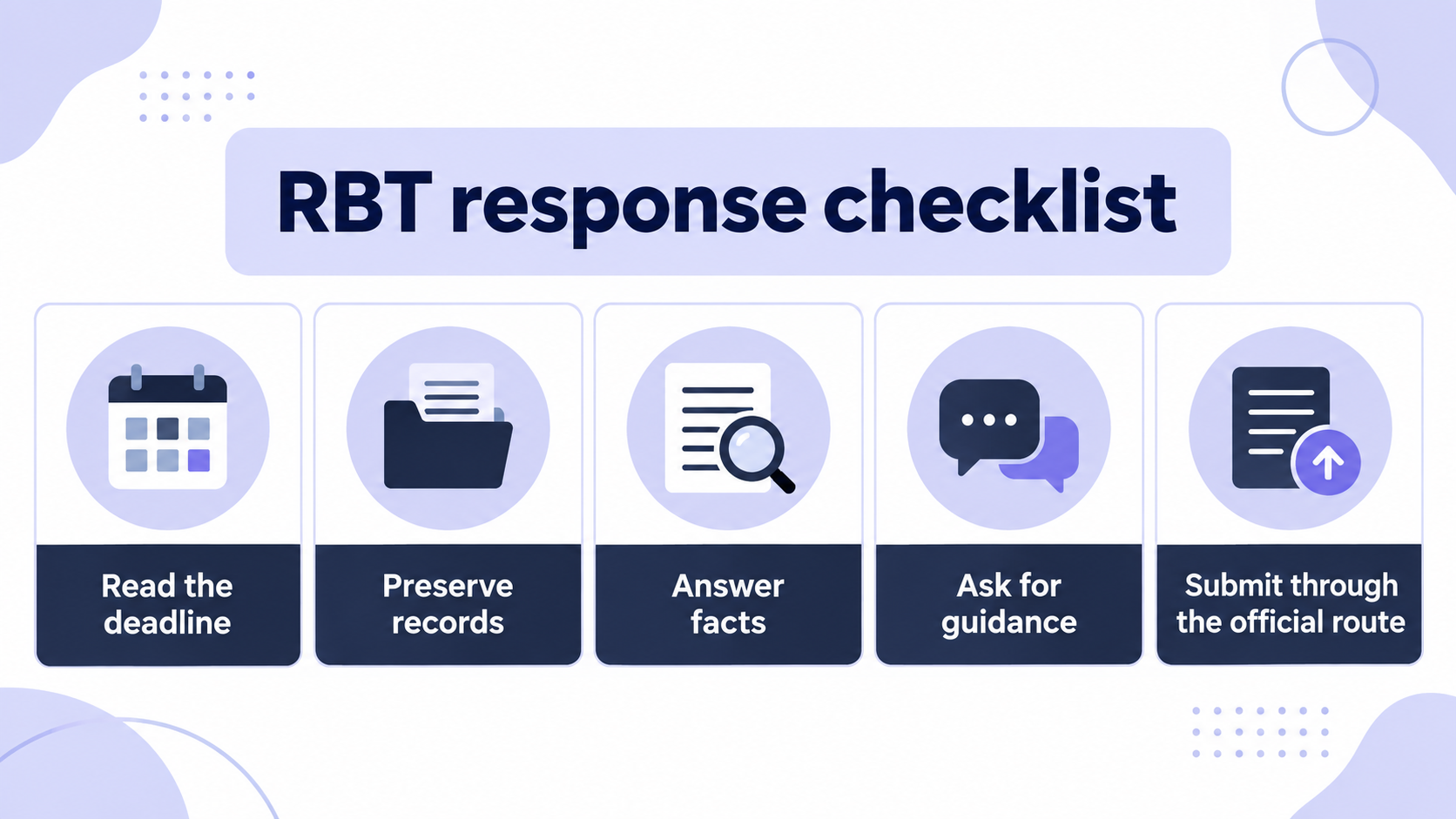
1. Verify the source and deadline
Read the message through the official BACB account or contact route identified in the notice. Confirm the response date, required format, delivery route, and documents requested. Save the original materials in an approved secure location. If the message appears suspicious, use the BACB’s verified contact route instead of forwarding client details through an unapproved channel.
2. Preserve the underlying facts
Keep the relevant session notes, training records, messages, policy excerpts, supervision records, and other materials in their original form. Do not backdate, silently overwrite, delete, or “clean up” a record to make the situation look better. If a correction is required, follow the approved record-correction process and document what was changed and why.
3. Separate observation from interpretation
A useful response distinguishes what happened, what was directly observed, what was documented at the time, what someone later inferred, and what remains uncertain. Use dates, settings, people’s roles, instructions received, and actions taken. Avoid diagnosing a client, assigning motives, or presenting a rumor as evidence.
4. Ask for appropriate support
An RBT works under direction and close supervision. Contact the supervisor or other authorized professional support route promptly, while remembering that a supervisor’s availability does not automatically extend the BACB deadline. Ask for help understanding the process and assembling accurate information; do not ask anyone to alter records, coordinate stories, or hide a concern.
5. Protect confidentiality
Only share the client information needed for the official purpose, through an approved secure channel. Redact or omit identifying information when the procedure permits it. Do not post the allegation, screenshots, names, or session details on social media. An RBT should also check whether a workplace incident route, mandated-reporting requirement, licensing rule, or emergency process applies separately.
What a notifier should prepare
If an RBT or another person is considering a report, the strongest preparation is factual and organized. Start with the specific ethics requirement that may be involved, then list the dates, setting, people’s professional roles, direct observations, documents, and steps already taken. The BACB explains that it relies substantially on the documentation submitted and is not a general investigatory body.
Do not send more personal information than necessary. Redact personally identifiable information where the official instructions allow it, and use the current BACB form or reporting route. A workplace conversation, supervisor report, licensing complaint, emergency report, and BACB notice can have different purposes. A notifier should not assume that one submission automatically replaces the others.
What the process does not decide
BACB code-enforcement procedures are not a substitute for a criminal investigation, civil lawsuit, state licensure process, employer investigation, school safeguarding process, medical response, or emergency service. The BACB may coordinate with or defer to another process in some circumstances, but the current rules and the facts control what happens.
The procedure also does not give an RBT authority to independently decide that a client’s plan, safety procedure, consent arrangement, or supervision structure is acceptable. If a concern affects immediate safety, use the applicable emergency route first. If it is a routine practice concern, document it and seek timely direction through the approved chain of command.
Frequently asked questions
Does receiving a BACB notice mean an RBT has already violated the Code?
No. A notice identifies an allegation and starts a response process. The subject should respond accurately and on time rather than treating the notice as a final finding.
Can an RBT ignore the notice while waiting for a supervisor?
No. An RBT can seek supervision or other authorized support, but the response instructions and deadline in the official materials still need to be followed.
Are all BACB outcomes appealable?
No. Appeal rights depend on the type of outcome and the current procedure. Read the actual notice and procedure document for the deadline, format, and documentation requirements.
Should an RBT post the allegation online to ask for advice?
No. Public discussion can expose confidential information and create additional professional problems. Use the official BACB route and approved supervision or legal-support channels instead.
Official sources and scope
This article was checked against the BACB Code-Enforcement Procedures, the BACB ethics-code page, and its consumer resources. BACB procedures, forms, deadlines, and links can change. Use the current official document and the instructions in any notice you receive. This educational guide does not decide whether a person violated an ethics code and is not individualized legal advice.
Ready to practice the RBT concepts you just reviewed?
Try an independent, original RBT practice resource with exam-style questions, scoring, and answer explanations.
References
- Behavior Analyst Certification Board. RBT Test Content Outline, 3rd edition.
- Behavior Analyst Certification Board. RBT Handbook.
- Behavior Analyst Certification Board. RBT Ethics Code.