
The search phrase “BACB gift guidelines RBT” usually means a reader wants a clear answer about gifts, boundaries, and professional conduct. The responsible way to answer is to start with the current BACB ethics materials, then read them alongside employer policy and supervisor direction. A general article can explain how to verify and apply guidance, but it should not invent a universal dollar limit or claim that one response fits every setting.
Table of Contents
- BACB gift guidelines RBT: the short answer
- Start with the current source
- Why context still matters
- How employer policy fits
- A safe response process
- Questions to bring to supervision
- Frequently asked questions
BACB gift guidelines for RBTs, current ethics sources, policy, context, supervision, and documentation
BACB Gift Guidelines RBT: Rules, Context, and Questions
Learn how to verify gift guidance from the right sources without turning a general summary into an invented universal rule.
The search phrase “BACB gift guidelines RBT” usually means a reader wants a clear answer about gifts, boundaries, and professional conduct. The responsible way to answer is to start with the current BACB ethics materials, then read them alongside employer policy and supervisor direction. A general article can explain how to verify and apply guidance, but it should not invent a universal dollar limit or claim that one response fits every setting.
That distinction is important because a rule, a workplace procedure, a cultural expectation, and a supervisor’s case-specific direction can all affect what happens next. They should not be collapsed into one sentence such as “small gifts are fine” or “all gifts are prohibited.”
BACB gift guidelines RBT: the short answer
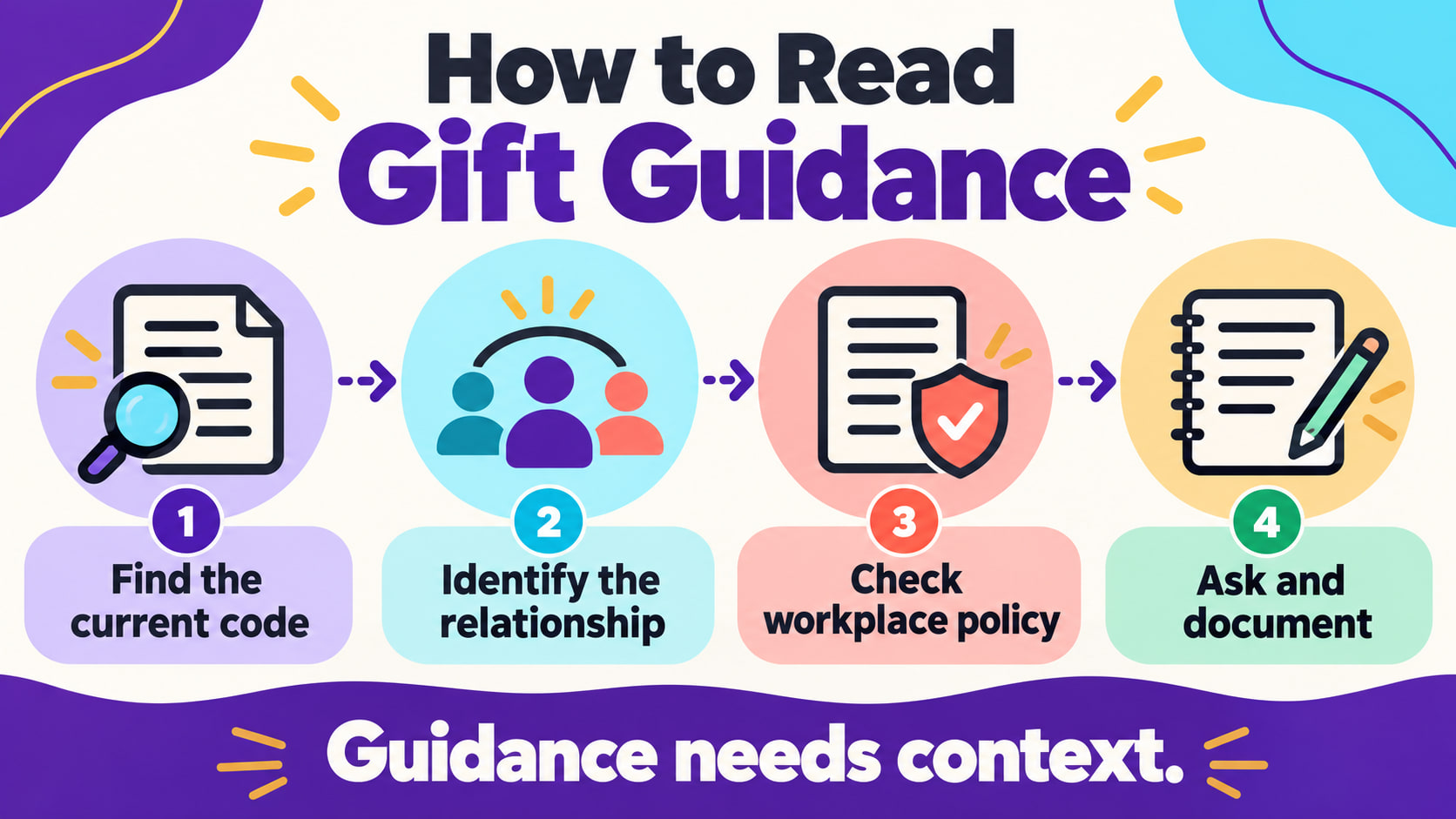
Use a four-part check:
- Find the current source: verify the ethics material and version from BACB or the applicable authority.
- Identify the relationship: consider who offered the item, the professional role, timing, and any power or dependency concerns.
- Check workplace policy: the employer or setting may add procedures or stricter limits.
- Ask and document: bring uncertainty to the responsible supervisor and use the approved record or reporting route.
Start with the current source
Open the current official ethics material rather than relying on a search snippet, old course slide, or social-media summary. Check the publication date, version, and whether the document applies to the role and setting. If you are reading an archived PDF, confirm that the official site has not published a newer replacement.
Read the relevant provision in context. Look for the principle behind the rule, related language about multiple relationships or conflicts, and any instructions about consultation, documentation, or reporting. Avoid copying one sentence into a new rule that the source does not actually state.
Keep official requirements separate from explanations. An educator may give a helpful example, but the example is not automatically a BACB rule. When the two appear to conflict, return to the current official source and ask the responsible supervisor or organization contact for clarification.
Why context still matters
Even when a source gives a clear professional principle, the facts of the offer matter. Consider the item or benefit, its approximate value, the timing, the reason it was offered, whether it is repeated, who else receives it, and whether the person expects a special response.
Context also includes privacy and power. A gift may contain a personal message, a private invitation, money, access to a personal account, or information about another family. Do not accept, photograph, transport, or discuss an item in a way that exposes confidential information or moves the relationship outside approved channels.
Cultural respect is part of professional communication, but it does not require an RBT to ignore policy or hide a boundary concern. A respectful response can acknowledge the meaning of the offer while still asking for direction.
How employer policy fits
Employer policy may describe what to do with gifts, donations, food, money, invitations, or repeated offers. It may tell staff when to notify a supervisor, where to record the event, whether an item can be shared with the team, and who handles a return or redirection.
Ask for the policy before a situation occurs. Find out whether it applies only to client gifts or also to caregivers, schools, vendors, coworkers, and community partners. Ask how the organization handles a conflict between a family tradition and the workplace rule.
Do not assume that a policy from another employer or state applies to your setting. A colleague’s experience can raise a useful question, but it cannot replace the policy that governs your work.
A safe response process
When an item is offered, keep the first response simple: “Thank you for thinking of me. I want to make sure I follow our professional and workplace policy, so I’ll check with my supervisor.” This recognizes the person without accepting, refusing, or promising a private solution on the spot.
Then pause the decision, review the source and policy, ask the supervisor, and follow the direction you receive. The result might be a respectful decline, a return, a team or organization process, or an acceptance permitted by policy with documentation. The correct result depends on facts that a general article cannot see.
If the offer includes money, special treatment, private contact, pressure, a threat, confidential access, or a repeated attempt after a boundary was stated, escalate promptly through the organization’s route. Escalation is a request for consistent guidance, not an accusation.
Questions to bring to supervision
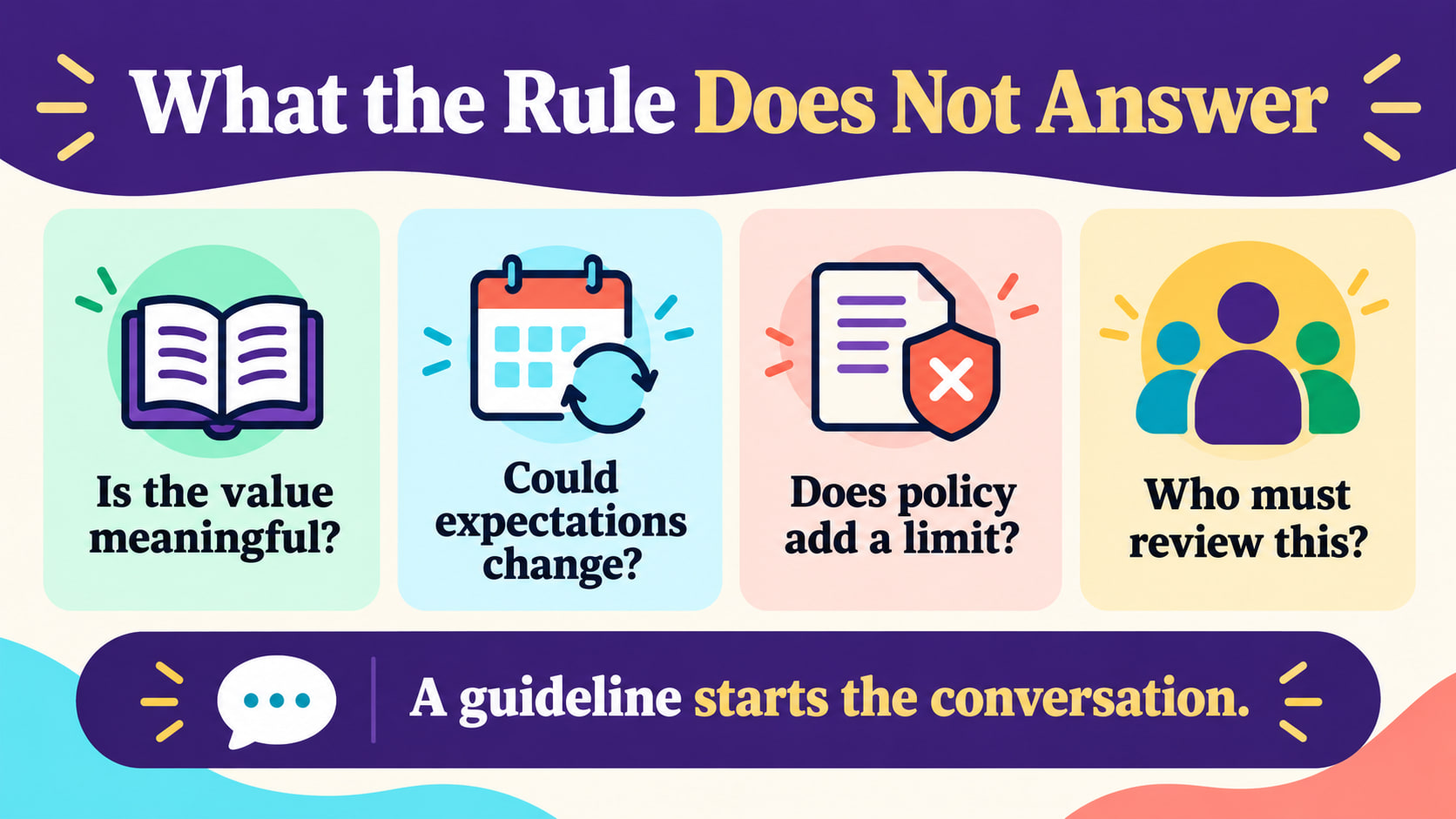
- Which current ethics source and workplace policy apply to this offer?
- Does the timing, value, repetition, or relationship create a boundary concern?
- Should the item be declined, returned, redirected, shared, or handled through an administrator?
- What information needs to be recorded, and where should it be recorded?
- Who should be included if the offer involves money, private contact, or a request for special treatment?
- How can I respond respectfully without disclosing private information or shaming the person?
Document only the necessary facts through the approved channel: what was offered, the relevant policy question, who was consulted, and the direction received. Do not create an informal record full of unnecessary client or family details.
Keep the tone neutral in the record. “Caregiver offered a gift card at pickup; I paused acceptance and asked the supervisor; supervisor directed me to follow the agency return process” is more useful than a judgment about the family’s intention. Clear facts help the next person respond consistently and protect the dignity of everyone involved.
Frequently asked questions
Does BACB publish one universal gift rule for every RBT?
Do not assume that a single dollar rule answers every situation. Start with the current applicable ethics material, then consider the relationship, context, employer policy, and supervisor direction.
Can an RBT rely on a blog’s BACB gift summary?
A summary can help you form questions, but it is not the controlling source. Verify the current official document and ask the responsible supervisor when the facts are unclear.
What if the employer policy is stricter than the general guidance?
Follow the applicable workplace policy while seeking clarification through the organization’s process. Do not use a general online explanation to bypass a more specific rule.
Should an uncertain gift be reported?
Follow the employer’s reporting and documentation process. Money-like gifts, repeated offers, conditional gifts, private invitations, pressure, or special-treatment requests should be raised promptly.
Role reminder: This is educational ethics information, not individualized clinical, employment, legal, or credentialing advice. Check the current official materials and employer policy and ask the responsible supervisor about a specific gift situation.
Official starting points: the BACB ethics code, RBT page, RBT Handbook, and supervision and training resources.
Ready to practice the RBT concepts you just reviewed?
Try an independent, original RBT practice resource with exam-style questions, scoring, and answer explanations.
References
- Behavior Analyst Certification Board. RBT Test Content Outline, 3rd edition.
- Behavior Analyst Certification Board. RBT Handbook.
- Behavior Analyst Certification Board. RBT Ethics Code.