
A BACB RBT checklist is most useful when it organizes current information without pretending to make a certification decision. Build it from the official RBT page, current Handbook, test content outline, and applicable supervision resources. For each item, record the exact requirement, source, version or date, completion evidence, and who can resolve a question. A static third-party checklist can become outdated, so source control matters.
Table of Contents
- BACB RBT checklist: the short answer
- Start with source control
- How to build the checklist
- Categories to organize
- What the checklist cannot decide
- Questions to verify before checking a box
- Frequently asked questions
BACB RBT checklist, official sources, version control, training, assessment, supervision, and maintenance
BACB RBT Checklist: Source-Backed Steps
Organize your study and application work around current sources without treating a static checklist as an official decision.
A BACB RBT checklist is most useful when it organizes current information without pretending to make a certification decision. Build it from the official RBT page, current Handbook, test content outline, and applicable supervision resources. For each item, record the exact requirement, source, version or date, completion evidence, and who can resolve a question. A static third-party checklist can become outdated, so source control matters.
This page is a planning method, not an official BACB form. Requirements and forms can change. When an item concerns eligibility, assessment, examination authorization, application status, supervision, or maintenance, return to the current official source rather than relying on a saved screenshot.
BACB RBT checklist: the short answer
A strong checklist has more than a row of boxes. Each row should answer:
- What is the item? Write one requirement or action in plain language.
- Which source controls it? Link the current official page, Handbook section, outline, or responsible person.
- What evidence is needed? Note the record, training proof, assessment result, portal notice, or supervision document that applies.
- When was it checked? Record a date or version so you know when the information may need review.
- What is next? Mark complete, waiting, needs correction, or needs a question rather than guessing.
Start with source control
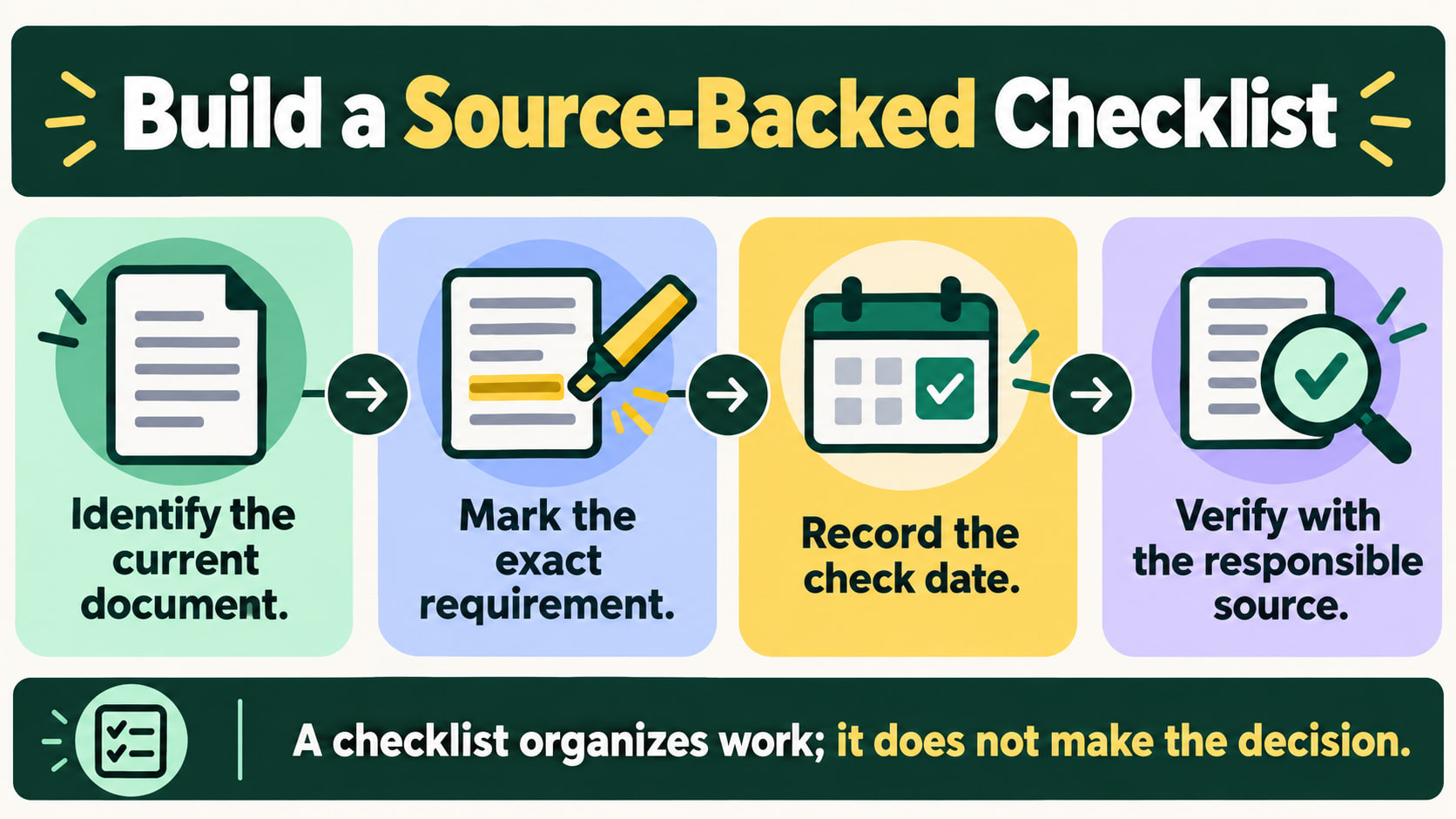
Open the official RBT page and current Handbook first. Add the test content outline when the task involves examination domains, and add supervision resources when it involves ongoing oversight or records. Write the document title, URL, update date if shown, and the date you checked it.
Do not copy an old checklist and assume it is current because the design looks professional. Compare every important line with the source that controls the requirement. If a third-party course or employer page uses different wording, label that as a provider or workplace expectation and ask which source governs the decision.
Use one row for one idea. A row that combines training, assessment, application, and examination can look complete even when only one part is finished. Separate them so that a change in one status does not hide the others.
How to build the checklist
Begin with a blank table or document and use these columns:
- Item: the requirement or task in a short sentence.
- Authority: official source, employer, training provider, assessor, supervisor, or another responsible party.
- Evidence: what record proves completion or shows the current status.
- Checked: source version, date, or portal status.
- Action: complete, review, correct, submit, ask, or wait.
Keep credential work separate from employer onboarding. An employer may request paperwork, background information, availability, transportation, or local training. Those may be important for the job, but they are not automatically BACB requirements. A separate column prevents accidental mixing.
For study planning, add a “why” note beside difficult items. Write the action the requirement is trying to protect, the mistake that would create risk, and the source that controls the answer. This turns the checklist into active review instead of a passive stack of boxes. It also makes it easier to notice when a line is too broad and should be divided into two separate questions.
Categories to organize
Eligibility and records
Record which current source explains eligibility and what evidence or forms apply. Do not fill a gap with a remembered age, education, background, or identity rule. If the official instructions are unclear, record the question and the responsible contact rather than marking the row complete.
Training and competency
Track the accepted training route, completion evidence, and competency or assessment step that applies. Keep the provider’s certificate separate from the official status decision. Completing a course does not by itself prove that every later requirement has been completed.
Application and examination
Separate preparing records, submitting an application, receiving a determination, receiving examination authorization, scheduling, and taking the examination. These are different statuses. Use the current Handbook and portal instructions for exact steps, validity windows, fees, identification rules, and deadlines.
Supervision and maintenance
Do not stop the checklist at examination day. Add rows for current supervision, documentation, ethical conduct, renewal or maintenance requirements, and any transition instruction that applies. The official source and supervisor control the details.
What the checklist cannot decide
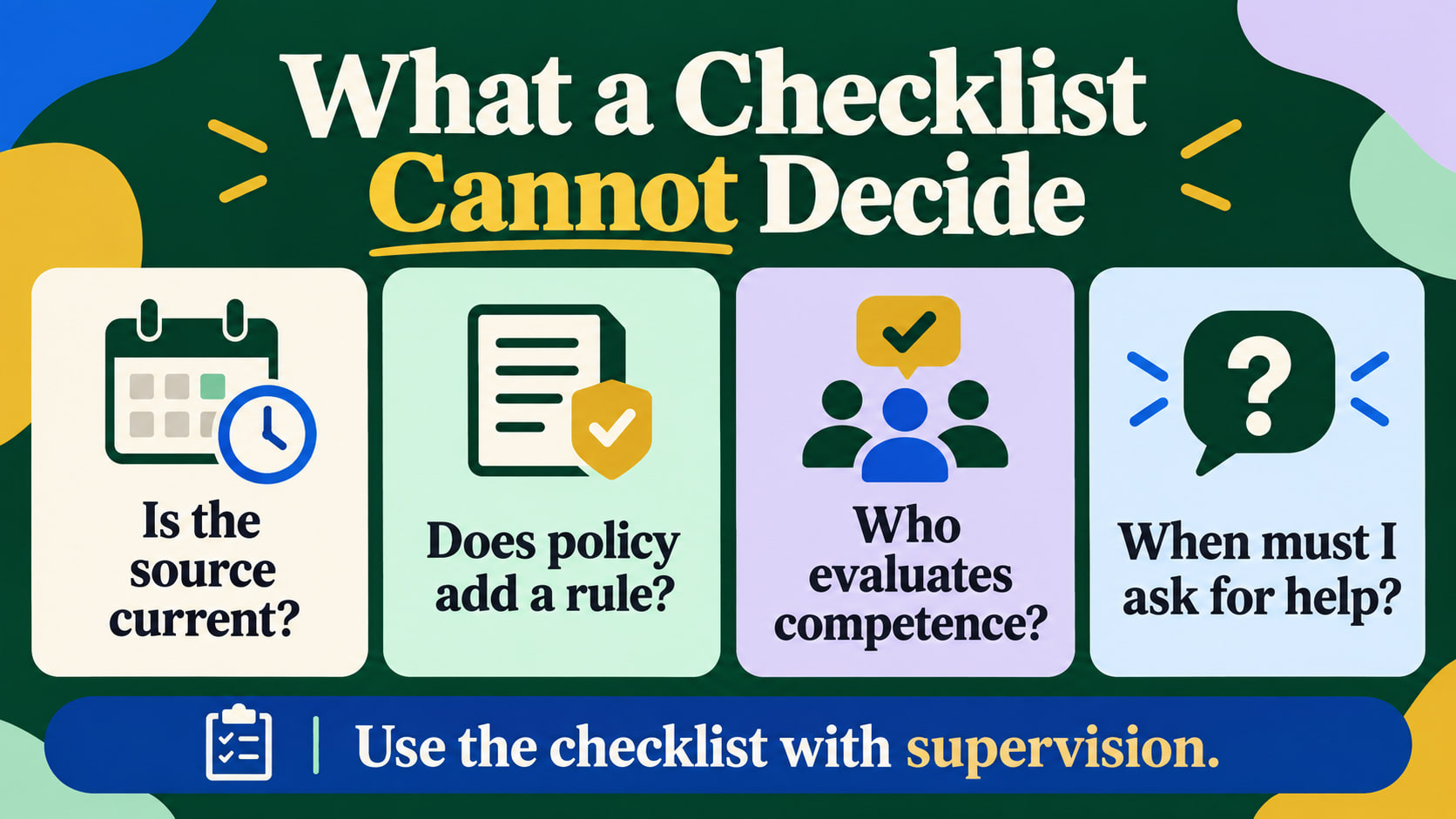
A checklist can remind you to ask, but it cannot decide whether an individual record is sufficient, whether a competency demonstration is valid, whether a portal notice changes your status, or whether a workplace task is within your competence. Those decisions belong to the responsible official, assessor, supervisor, employer, or credentialing body.
It also cannot guarantee a passing examination, certification, employment, or client outcome. Do not add recalled or protected examination questions to make the checklist appear more complete. Use original study prompts tied to current public sources and focus on explaining the action, evidence, and role boundary.
Questions to verify before checking a box
- Is this the current official source for the question?
- Does the wording describe a credential requirement, employer preference, provider process, or personal study goal?
- What evidence is required, and who is authorized to review it?
- Could a transition, expiration, portal notice, or policy update change the answer?
- What should I do if my record is incomplete or inconsistent?
- Which question belongs to BACB, the provider, the assessor, the supervisor, or the employer?
Review the checklist at a planned interval and whenever the official source changes. Keep private records in an appropriate secure system, not in a public study file. If you discover an error, correct it honestly and preserve the follow-up instead of silently changing the history.
Frequently asked questions
Is there one official BACB RBT checklist?
Do not assume that a third-party checklist is an official BACB form. Use current BACB materials to build a personal planning tool and verify which document controls each requirement.
What should a BACB RBT checklist include?
Useful categories include source control, eligibility, training, competency or assessment, application, examination, supervision, maintenance, evidence, check dates, and questions that need an authorized answer.
Can a checklist guarantee RBT certification?
No. It can organize preparation and reveal missing questions, but the current credentialing process and responsible reviewers determine status. No checklist guarantees certification, employment, or examination success.
How often should I update it?
Review it whenever the official Handbook, outline, forms, portal instructions, or supervision guidance changes, and before relying on an old saved copy for a current decision.
Role reminder: This is educational study and planning information, not individualized credentialing, employment, legal, clinical, or treatment advice. Check the current BACB materials and ask the responsible source or supervisor about a specific requirement.
Official starting points: the BACB RBT page, RBT Handbook, RBT Test Content Outline, and supervision and training resources.
Ready to practice the RBT concepts you just reviewed?
Try an independent, original RBT practice resource with exam-style questions, scoring, and answer explanations.
References
- Behavior Analyst Certification Board. RBT Test Content Outline, 3rd edition.
- Behavior Analyst Certification Board. RBT Handbook.
- Behavior Analyst Certification Board. RBT Ethics Code.