
Competence vs scope of practice RBT decisions require two different questions: can the RBT perform the task safely and accurately, and is the RBT authorized to perform it in this program, setting, and role? The answers must both be yes before action, with supervision and written direction still controlling.
Table of Contents
- Competence vs scope of practice RBT: the short answer
- What competence means in context
- What scope and authorization add
- Common examples of the difference
- What to do when the answer is unclear
- Before-action checklist
- Frequently asked questions
RBT competence, authorization, supervision, and scope boundaries
Competence vs Scope of Practice RBT: Know the Difference
A task can feel familiar and still require specific authorization, training, or direction before you perform it.
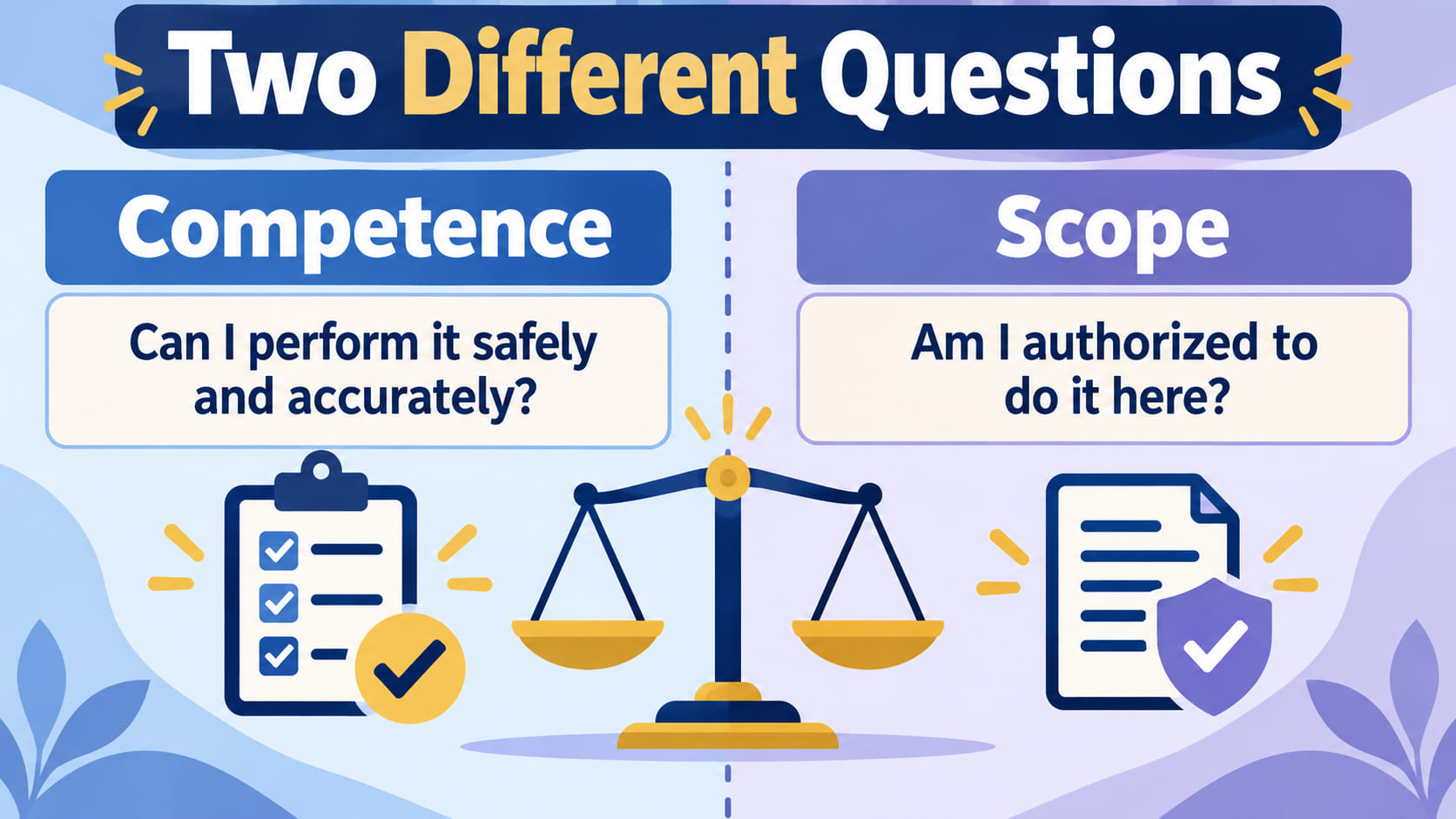
Competence vs scope of practice RBT decisions require two different questions: can you perform the task safely and accurately, and are you authorized to perform it in this program, setting, and role? A “yes” to only one question is not enough. Training, demonstrated performance, supervision, the written program, employer policy, payer requirements, and applicable law can all affect the answer.
This article explains the distinction for educational purposes. It does not provide a jurisdiction-specific legal opinion or permission to perform a task. When the situation is unclear, pause and use the supervisor or organization’s approved route.
Competence vs scope of practice RBT: the short answer
Think of competence as “can I perform it?” and scope or authorization as “may I perform it here, for this program, under this direction?” A person may know how to use a tool but not be authorized to select it. An RBT may have seen a procedure before but not be trained or supervised to implement it with a new client population. A completed course may provide background knowledge but not replace employer onboarding or supervisor direction.
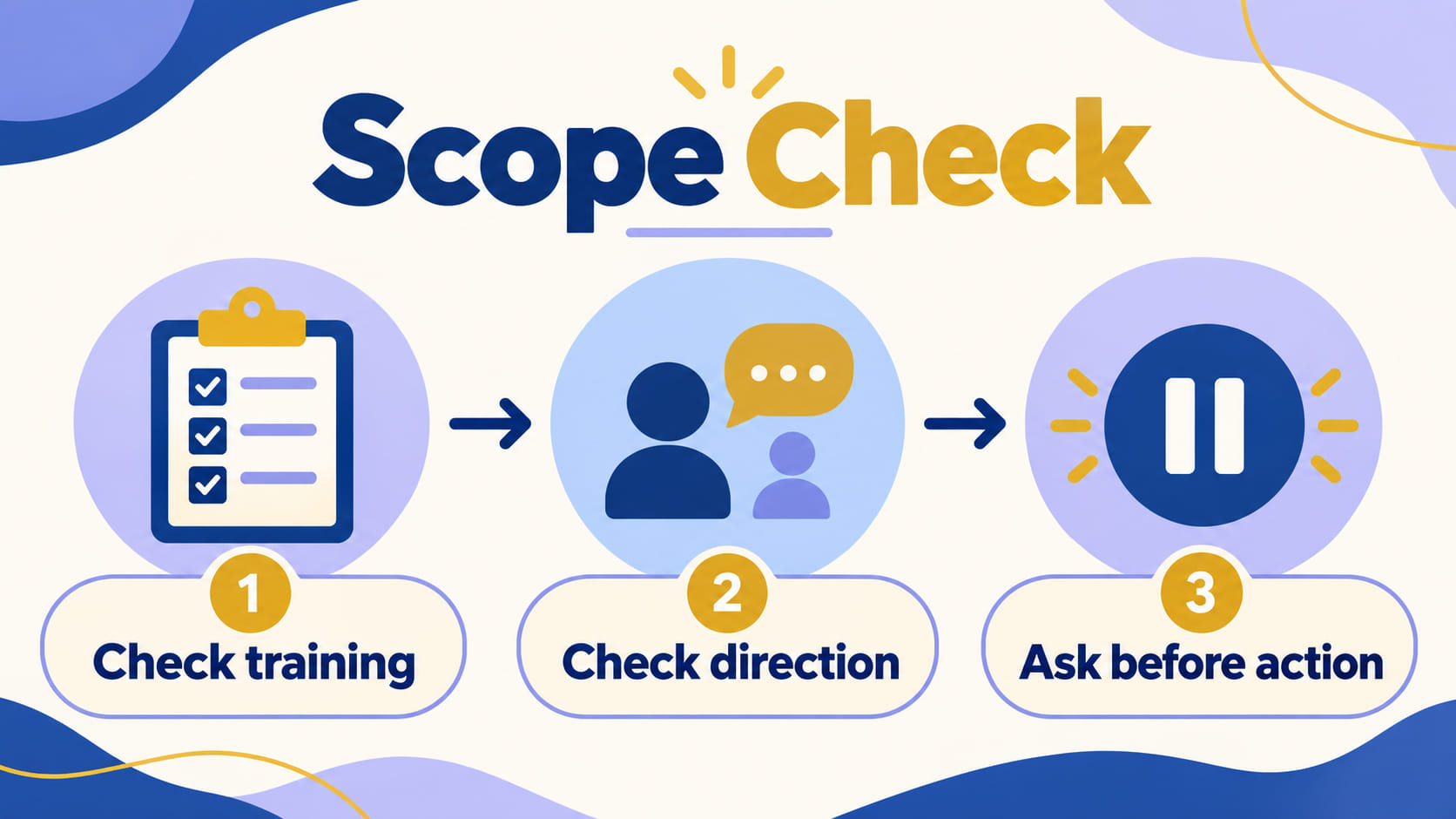
Before acting, check:
- Training: Have I received the required instruction and practiced the specific task?
- Performance: Have I demonstrated accurate performance under the required assessment or supervision?
- Program: Is this task part of the current written program and data system?
- Direction: Has the qualified supervisor or authorized organization contact directed it?
- Setting: Are the client, location, equipment, and conditions within the approved arrangement?
What competence means in context
Competence is more specific than “I have worked in ABA before.” It can involve understanding the definition, performing the steps in order, using materials correctly, recognizing when a safety instruction applies, recording the required data, and responding appropriately when the procedure does not fit the situation.
Competence is also context-dependent. A technician who can implement one prompting procedure with one program may need additional training for a different procedure, age group, communication system, risk profile, or setting. The same label can hide different steps. Ask what training and observation are required for the exact task.
When competence is missing, do not hide the gap. Tell the supervisor what part you can perform, what part you have not been trained to do, and what support is needed. Honest reporting protects the learner and creates a path for training.
What scope and authorization add
Scope is not only a list of techniques. It includes role boundaries, supervision, the current written program, organizational policies, client-specific authorization, and any applicable legal or payer requirements. An RBT works within the responsibilities assigned to the role and should not independently take on diagnosis, treatment design, clinical interpretation, or other decisions reserved for an authorized professional.
Authorization can be narrower than general training. An employer may approve a procedure only after onboarding. A supervisor may direct a trained technician to implement a procedure for one program but not another. A setting may have safety or privacy rules that limit how a task is performed. “Someone asked me to do it” is not enough if the request conflicts with the written plan or policy.
When the request is outside the current plan, ask the supervisor to clarify the expected action, training, documentation, and escalation route. Keep the question factual and do not independently fill in the missing clinical decision.
Common examples of the difference
Changing a mastery criterion
An RBT may be able to calculate percentages and notice a trend. That does not mean the RBT can independently change the mastery criterion or decide that a target is complete. Report the data and request supervisor review.
Selecting a new assessment
An RBT may know how a preference assessment looks from training. The RBT should use the assessment assigned by the supervisor and written program, not select a new assessment because it seems convenient or interesting.
Implementing a familiar procedure with a new population
Past experience may help, but it does not automatically demonstrate competence with a new client population or risk profile. Ask what additional training and oversight are required before implementation.
Answering a family’s clinical question
An RBT can report what was observed and explain the assigned routine at the level the organization permits. A question about diagnosis, prognosis, treatment changes, or a clinical recommendation should go to the supervisor or authorized clinician.
Using a personal workaround
Knowing how to create a spreadsheet or send a screenshot does not authorize moving client data into a personal tool. Privacy, security, retention, and organizational approval still control the route.
What to do when the answer is unclear
Pause before the action if the direction is unclear, the task may be outside scope, the required training is missing, or the privacy and safety conditions are uncertain. Write down the minimum relevant facts and ask through the approved channel.
A useful question might be: “I have practiced the data-entry steps, but this program uses a new response definition and I have not been observed with it. Should I collect under supervision first, and how should I mark today’s incomplete opportunity?” That question separates the known skill from the missing authorization and invites a safe next step.
If the concern involves immediate safety, follow the urgent procedure first. If it involves a privacy issue, do not send more information while seeking help. If a supervisor’s request remains unclear or appears outside the role, use the organization’s escalation route and document the relevant communication.
Before-action checklist
- I know the exact behavior, skill, procedure, or record field involved.
- I have the required training and can describe the steps and safety conditions.
- I have demonstrated the task at the required level for this context.
- The task appears in the current written program or has clear authorized direction.
- The client, setting, equipment, privacy, and supervision conditions are approved.
- I know what data, note, or communication must be completed.
- If any answer is unclear, I will pause and ask rather than improvise.
Frequently asked questions
Are competence and scope the same?
No. Competence concerns the ability to perform a task accurately and safely. Scope and authorization concern whether the task belongs within the role and approved context.
Does a 40-hour training course authorize every RBT task?
No. General training does not replace task-specific supervision, competency demonstration, the written program, employer policy, or applicable requirements.
What if I am competent but the supervisor has not assigned the task?
Do not start it independently. Ask whether it is needed, whether you are authorized to perform it, and what documentation or supervision is required.
What if someone asks me to do something outside my scope?
Pause, explain that you need clarification or direction, and follow the organization’s escalation process if the concern is not resolved. Do not conceal the request or perform a new clinical task without authorization.
Role reminder: This article is educational information, not legal advice, a jurisdiction-specific scope opinion, or individualized supervision direction. Follow the current code, written program, supervisor, employer, payer, and applicable law.
Official starting points: RBT Ethics Code (2.0), the RBT Handbook, and BACB supervision and training resources.
Ready to practice the RBT concepts you just reviewed?
Try an independent, original RBT practice resource with exam-style questions, scoring, and answer explanations.
References
- Behavior Analyst Certification Board. RBT Test Content Outline, 3rd edition.
- Behavior Analyst Certification Board. RBT Handbook.
- Behavior Analyst Certification Board. RBT Ethics Code.