

Confidentiality requirements RBT teams follow involve collecting, using, sharing, storing, and escalating private information through approved processes.
Table of Contents
- Confidentiality requirements RBT: what they mean in practice
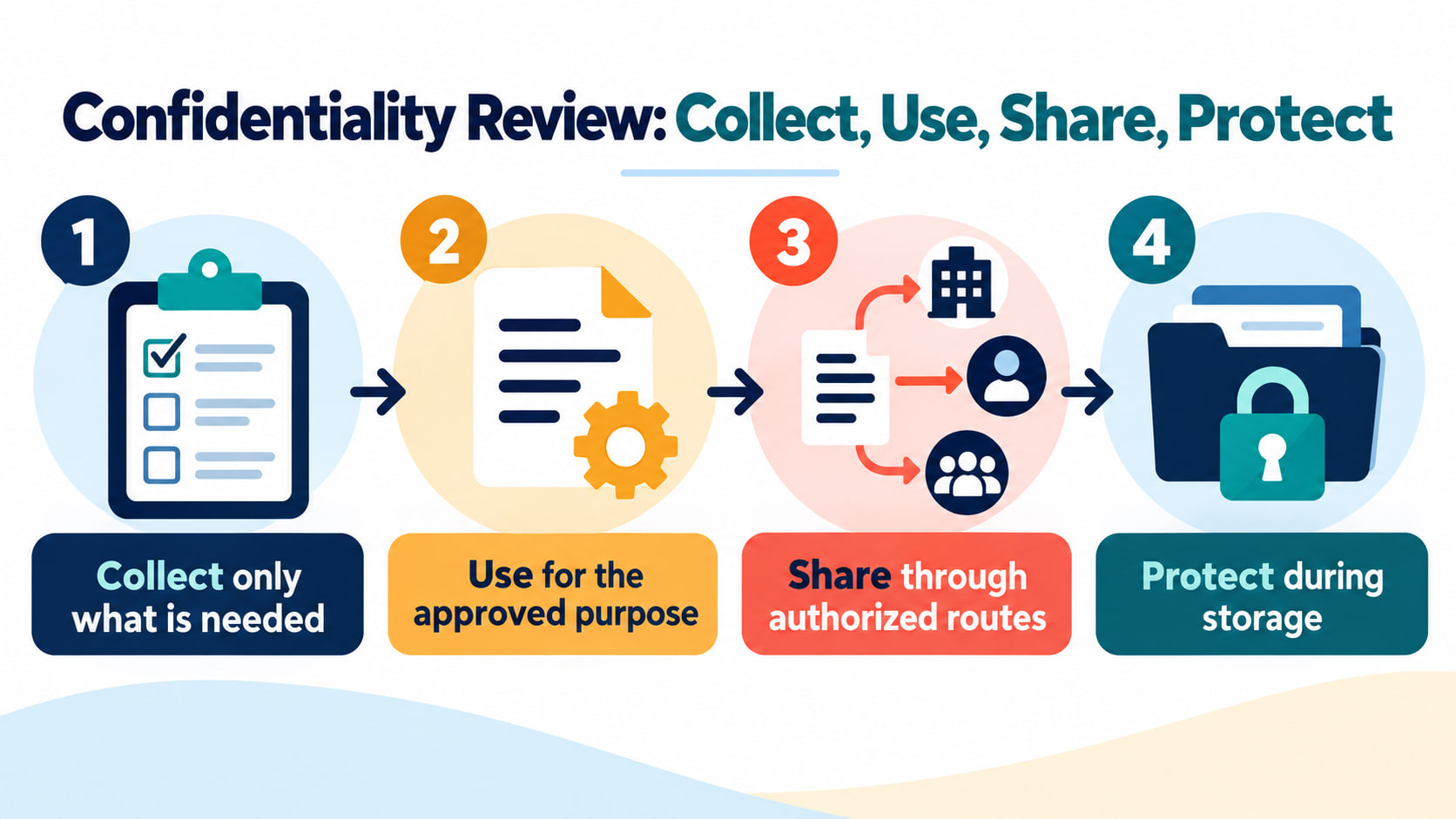
- Collect only what is needed
- Use information for the approved purpose
- Share through authorized routes
- Protect information during storage
- Ask when the situation is unclear
- Common confidentiality mistakes
- Frequently asked questions
- References
RBT ETHICS · PRIVACY PRACTICE
Confidentiality Requirements RBT: A Practical Privacy Review
A practical framework for collecting, using, sharing, storing, and escalating private service information.
Confidentiality requirements RBT questions arise whenever an RBT collects, records, discusses, transmits, stores, or disposes of private service information. In short, confidentiality requirements RBT teams follow should limit information to what is needed, for an approved purpose, through an authorized route, with appropriate protection.
The exact requirements depend on applicable law, authorization, organizational policy, service setting, approved systems, and supervisor direction. A general article cannot decide every consent, disclosure, retention, or exception question. Use this framework to notice the decision and route it correctly.
Privacy is not solved simply because a conversation feels helpful or a name is removed. A combination of dates, routines, photographs, descriptions, locations, or unusual facts may still identify a person. If you are unsure, pause and ask before sharing.
Confidentiality requirements RBT: what they mean in practice
Confidentiality means protecting information entrusted to the service team and limiting access or disclosure to an approved purpose and authorized people. It includes spoken conversations, paper notes, electronic records, screenshots, texts, email, social media, video calls, and informal discussions in public spaces.
RBT work often involves information that is necessary for service delivery, documentation, supervision, safety, and coordination. Necessity does not mean unlimited access. Use the approved role, system, and purpose for each piece of information, and do not collect or repeat details simply because they are available.
Collect only what is needed
Before recording information, identify why it is needed and where the approved record belongs. Use the current form, data system, service plan, and policy. Avoid adding unnecessary diagnoses, family details, photographs, personal opinions, or identifying information to a study note or communication channel.
Objective documentation supports confidentiality because it limits speculation and irrelevant detail. Record what was observed, measured, reported, or required by the form. If a field is unclear, ask the supervisor or designated contact rather than filling it with a guess.
Use information for the approved purpose
Information collected for service delivery should be used according to the approved purpose and role. A session record may support documentation and supervision; it is not automatically material for a public story, personal portfolio, or casual conversation.
Keep educational examples separate from real client information. If you are studying data collection, write an original neutral scenario. Do not paste a real note into a workbook, use a distinctive case story in a presentation, or share a screenshot to ask a personal contact for advice.
Share through authorized routes
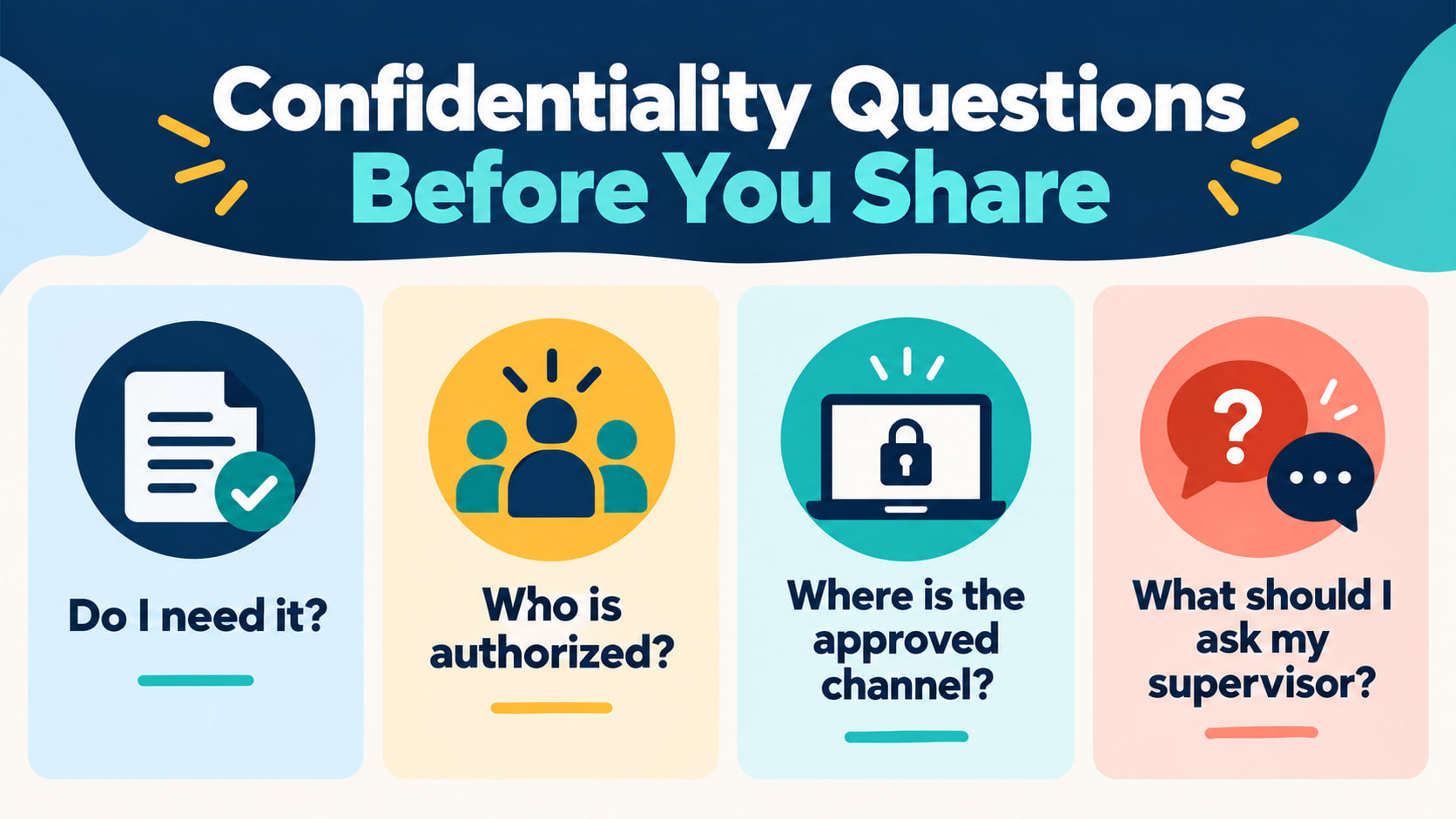
Before sharing, ask four questions: Do I need this information? Who is authorized to receive it? What is the approved channel? What should I ask my supervisor? Use the organization’s designated system and follow its access, forwarding, and escalation rules.
Do not assume that a coworker, family member, provider, or online group is authorized simply because they are interested or involved in some part of the situation. Confirm the route when the recipient, purpose, or scope is unclear. Share the minimum information needed for the approved task.
Protect information during storage
Use approved accounts, devices, folders, passwords, and record systems. Keep paper records out of public view and dispose of them through the designated process. Lock screens, check recipients before sending, and avoid downloading private files to personal storage unless the policy expressly permits it.
If a device, email, record, or message is sent to the wrong place, do not conceal the error. Follow the organization’s incident and escalation process promptly. Preserve the relevant facts without forwarding the information more widely.
Ask when the situation is unclear
Bring a focused question when you are unsure about consent, access, disclosure, storage, correction, retention, a family request, a public statement, or a possible breach. State what happened, what source or policy you checked, what information is involved, and what decision needs direction.
An RBT should not independently decide a complex legal exception, change an authorization, or create a new disclosure rule. Use the responsible supervisor, privacy contact, compliance route, or other designated process. Urgent safety concerns should follow the setting’s urgent escalation procedure.
Common confidentiality mistakes
- Collecting extra detail: information is recorded even though it is not needed for the approved task.
- Using personal channels: a text or social platform replaces the approved system.
- Assuming de-identification: a name is removed but distinctive details remain.
- Discussing in public: a hallway, elevator, car, or café is treated as private.
- Forwarding without checking: a message or attachment goes to the wrong recipient.
- Hiding an error: a possible disclosure or lost record is not escalated.
Good confidentiality practice is a repeated decision process, not a one-time promise. Notice the information, purpose, recipient, channel, storage location, and next question before acting.
A useful review can happen before, during, and after a task. Before a session, confirm which system and form are approved. During documentation, enter only relevant facts and check the recipient or case identifier. After sending or storing information, confirm that the record went to the correct place and that any follow-up question has an owner.
Keep confidentiality questions separate from assumptions about intent. A person may have a good reason for asking for information and still not be authorized to receive it. Likewise, an RBT may want to help a family quickly and still need to use the designated route. The safe response is respectful and specific: explain that you need to verify the approved process, then ask the responsible person.
When creating training materials, use fictional or fully generic examples and label them as educational. Do not combine details from several real cases if the combination could make someone recognizable. Store drafts, screenshots, and notes with the same care as final records, and delete temporary copies according to the approved process.
Frequently asked questions
Does removing a name make information confidential?
Not automatically. Other details may identify a person. Follow policy and ask before sharing a story, image, or unusual case description.
Can an RBT discuss a case with a friend who works in the field?
Do not assume professional interest creates authorization. Use the approved route and share only what is permitted for the purpose.
What if I send information to the wrong person?
Follow the organization’s incident and escalation procedure promptly. Do not hide, delete, or broadly forward the error.
What should I do when a policy is unclear?
Pause, preserve privacy, identify the exact question, and ask the designated supervisor or privacy contact which current process applies.
Source note: Review current BACB materials, organizational policy, authorization, applicable requirements, approved systems, and supervisor direction for your setting. This article is educational and does not provide individualized legal, clinical, employment, or credentialing advice.
Ready to practice the RBT concepts you just reviewed?
Try an independent, original RBT practice resource with exam-style questions, scoring, and answer explanations.
References
- Behavior Analyst Certification Board. RBT Test Content Outline, 3rd edition.
- Behavior Analyst Certification Board. RBT Handbook.
- Behavior Analyst Certification Board. RBT Ethics Code.