

Data irregularities RBT supervisor questions arise when a tally is missing, two records disagree, a trend changes suddenly, or the measurement conditions changed.
Table of Contents
- Data irregularities RBT supervisor: quick answer
- What counts as a data irregularity?
- Common types of RBT data irregularities
- Preserve the original record
- Describe the irregularity objectively
- Tell the supervisor promptly
- How to handle missing data
- How to handle mismatched records
- Sudden changes and variables
- Correct the record and close the loop
- Common data-irregularity mistakes
- Frequently asked questions
RBT data quality, documentation, and supervisor reporting
Data Irregularities RBT Supervisor: What to Report
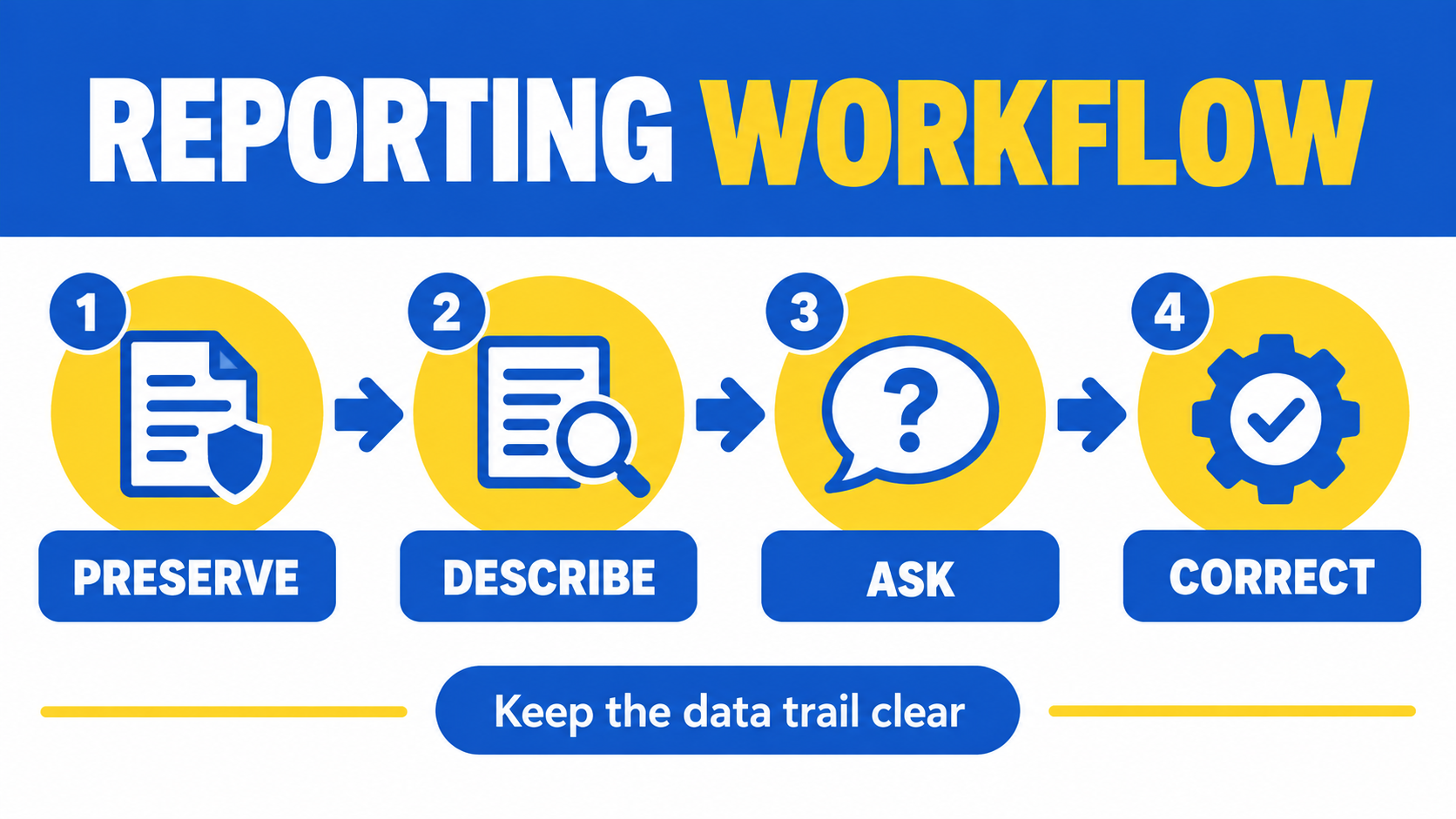
Data irregularities RBT supervisor questions arise when a tally is missing, two records disagree, a trend changes suddenly, or the measurement conditions changed. An RBT should preserve the original record, describe the observable issue, tell the supervisor promptly, and follow the authorized correction process.
Data irregularities RBT supervisor: quick answer
When data look unusual, do four things: preserve the original, describe exactly what is different, notify the supervisor through the approved route, and document the direction received. Do not decide alone whether an error is harmless or whether a new number should replace the original.
The current RBT Test Content Outline includes seeking and prioritizing clinical direction for data irregularities and communicating objectively what occurred during a session. The purpose of a report is to protect the integrity of the record so the supervisor can decide whether to review measurement, retrain the RBT, collect more data, or take another authorized step.
What counts as a data irregularity?
A data irregularity is an unexpected gap, mismatch, change, or condition that may affect how a record is interpreted. It is not automatically proof that someone made a serious error. It is a signal to pause and communicate.
Examples include a value that cannot be reconciled with the raw record, a session where part of the measurement system was unavailable, a sudden trend change after the setting changed, or a note that uses a different definition from the current protocol. A caregiver’s report of illness or a medication change may also be a variable that should be documented, even when you cannot determine its effect.
Use neutral language. “The count differs between the raw tally and the summary” is a reportable fact. “The client was manipulating the data” is a conclusion that the RBT should not make without evidence and authorization.
Common types of RBT data irregularities
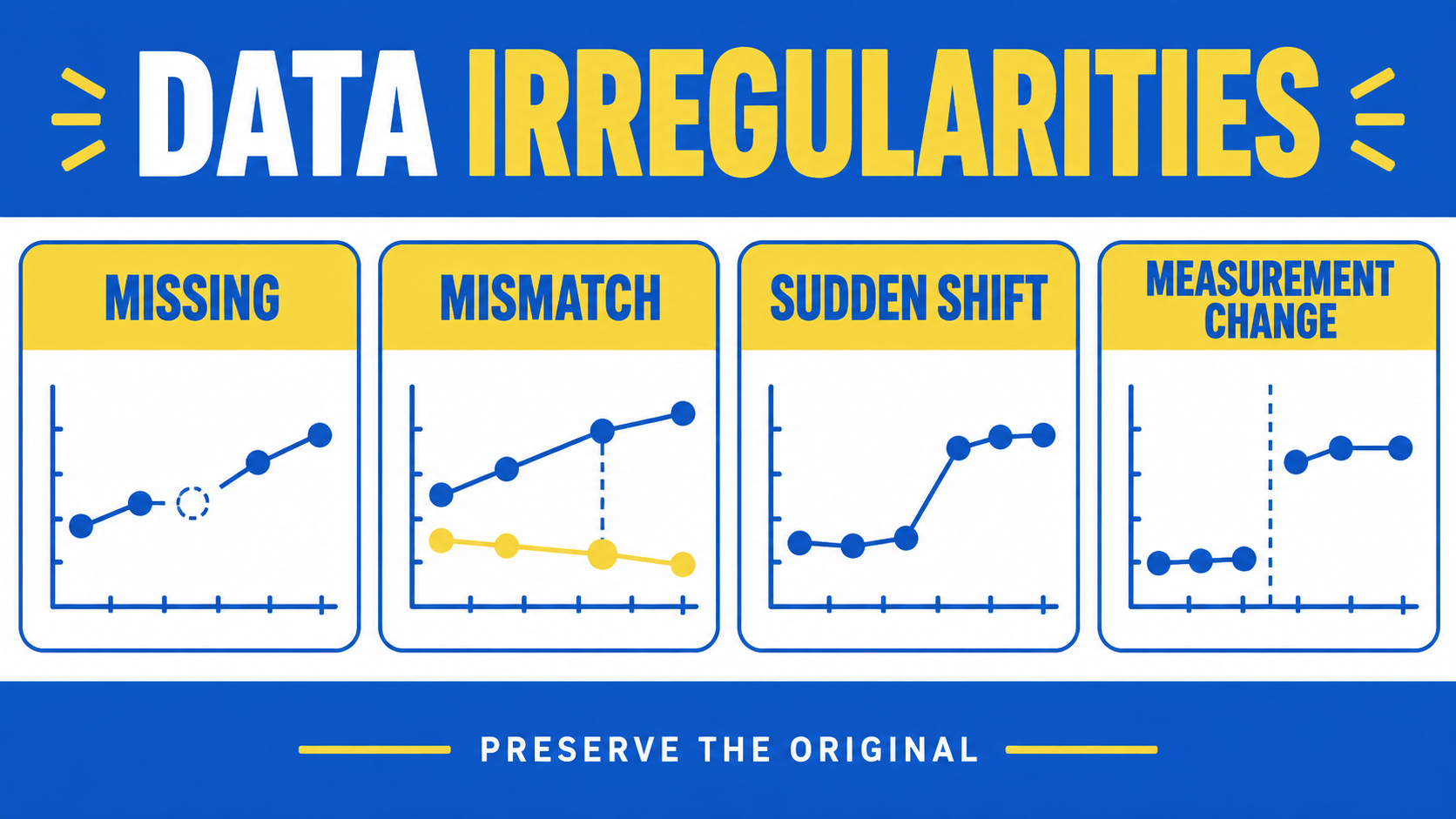
- Missing: A time interval, trial, session, or required field has no entry.
- Mismatch: The raw tally, session note, graph, and summary show different values.
- Sudden shift: The pattern changes sharply without an immediately documented reason.
- Measurement change: The definition, observer, setting, materials, or recording method changed.
- Impossible value: The number exceeds what the session length or measurement definition could produce.
- Duplicate or late entry: A record appears twice or was entered after the normal window.
- Procedure deviation: The measurement was collected under conditions different from the written plan.
These categories help you describe the problem; they do not determine its cause. A supervisor may need to compare records, review the protocol, observe a session, or arrange additional training.
Preserve the original record
Before editing anything, save or retain the original record according to the approved system. If the platform has a correction or audit trail, use it. If the record is paper, follow the workplace correction rule rather than erasing or rewriting it.
Preserving the original does not mean leaving an obvious typo unexplained forever. It means the record shows what was first entered, who corrected it, when, why, and under whose direction. The exact method depends on the organization and system.
Do not take screenshots of client information and send them through an unapproved personal app. Use the secure channel and minimum necessary information. A data-quality problem does not suspend confidentiality obligations.
Describe the irregularity objectively
Build the report around five facts:
- When: Identify the date, session, or interval.
- What record: Name the raw tally, note, graph, form, or system field involved.
- What differs: State the values or missing field without guessing the cause.
- What conditions changed: Note setting, materials, observer, schedule, illness, medication report, or other relevant variable.
- What you need: Ask for correction direction, retraining, review, or additional data.
Example: “In the 2:00–2:30 session on May 6, the raw frequency tally has four responses but the summary field shows six. The last 10 minutes were recorded by a different staff member. I preserved both entries. Please advise which records to review and how to document the correction.”
Tell the supervisor promptly
Use the approved supervisor, Requirements Coordinator, or chain-of-command route. A short report is enough when it contains the decision point. Put urgent concerns in the urgent channel instead of waiting for routine supervision.
Useful wording includes:
- “I found a mismatch between the raw tally and the session summary. I have not overwritten either record. Can you review the correction process?”
- “The measurement conditions changed because the usual materials were unavailable. Should the interval be marked missing, and do you want additional data?”
- “The graph shifted sharply after the schedule changed. I am reporting the schedule variable without assuming causation. What should I track next?”
- “I am not confident that I applied the new definition consistently. Can we review examples and arrange observation or practice?”
Do not wait until a renewal, audit, or performance review to mention a discrepancy. Early reporting gives the supervisor more options and protects the credibility of the record.
How to handle missing data
Mark the missing interval or field according to the approved system and explain why it is missing. Do not estimate a number from the rest of the session. A missing value is information about the record; an invented value is a different and more serious problem.
Ask whether the session should be excluded from a particular analysis, whether another measure can be used, whether a make-up observation is needed, or whether the data should remain in the record with a limitation note. The supervisor decides the clinical and analytic response.
How to handle mismatched records
Compare the source records without selecting the number that seems most plausible. Check the date, time, definition, observer, setting, and entry history. If you can identify a simple transcription error, still follow the authorized correction process rather than silently changing it.
For example, if the raw tally says eight and the note says five, do not assume the note is right because five matches the graph. Report both values, preserve the source, and ask which person should verify the entry.
Sudden changes and variables
A sudden change may be a real change, a measurement issue, or a context change. The RBT should not diagnose the reason from the graph alone. Describe the trend and list known variables such as illness, medication changes, sleep concerns reported by a caregiver, schedule changes, a new observer, or a new setting.
Use language such as, “The rate increased from the previous three sessions; today’s session was in a new room and began 30 minutes later. I am not concluding that the setting caused the change. Would you like additional data or a review of the measurement conditions?”
Correct the record and close the loop
After the supervisor responds, confirm exactly what should change, who should make the correction, and where the rationale belongs. Some corrections require the original author; some require a supervisor or data coordinator. Do not assume the person who noticed the problem is authorized to change every system.
Record the date of the report, the direction received, the action taken, and any remaining limitation. If a training need was identified, schedule modeling, rehearsal, feedback, or observation. If additional data were requested, use the current definition and note when the new collection began.
Close the loop by checking that the approved record, graph, and note now align. If they still do not, reopen the question instead of forcing the numbers to match.
Common data-irregularity mistakes
- Deleting the original: Preserve the audit trail.
- Estimating missing values: Mark the gap and ask for direction.
- Choosing the most convenient number: Report the mismatch without guessing.
- Blaming a person or client: Describe the record and conditions objectively.
- Ignoring a changed measurement definition: Tell the supervisor when the recording method changed.
- Assuming a trend proves a cause: List variables and let the supervisor decide the review.
- Waiting until the end of the month: Report promptly while the context is available.
- Sending private screenshots: Use the authorized secure system.
Frequently asked questions
What are data irregularities for an RBT?
They are unexpected gaps, mismatches, sudden shifts, impossible values, changed measurement conditions, duplicate entries, or deviations from the recording procedure that should be reviewed.
Should an RBT fix a data error immediately?
Preserve the original first and follow the approved correction process. Ask the supervisor or authorized data owner before overwriting, deleting, or changing a record.
What if a value is missing?
Mark the missing value according to policy, document why it is missing, and ask whether the record should be excluded, supplemented, or reviewed. Do not estimate.
Can a sudden trend change prove that an intervention failed?
No. A trend change may reflect a real behavior change, measurement conditions, setting, schedule, observer, or another variable. Report the pattern and context without claiming causation.
How quickly should I tell my supervisor?
Tell the supervisor in a timely manner, using the urgent route when safety or a time-sensitive decision is involved. Do not wait for a routine meeting if the record or service may be affected now.
What if I caused the data irregularity?
Report it honestly, preserve the record, describe what occurred, and ask for correction and training. Transparent reporting supports better supervision than hiding or silently editing the issue.
Official sources: BACB RBT Test Content Outline (3rd ed.); BACB RBT 2026 40-Hour Training Requirements and Curriculum Outline; BACB RBT supervision resources; BACB Supervision, Assessment, Training, and Oversight. Retrieved September 28, 2026. Follow the current documentation and privacy requirements at your workplace.
Ready to practice the RBT concepts you just reviewed?
Try an independent, original RBT practice resource with exam-style questions, scoring, and answer explanations.
References
- Behavior Analyst Certification Board. RBT Test Content Outline, 3rd edition.
- Behavior Analyst Certification Board. RBT Handbook.
- Behavior Analyst Certification Board. RBT Ethics Code.