
Effective supervision RBT teams can use is more than a completed meeting or a monthly number. It connects clear expectations, direct observation, specific feedback, active practice, psychological safety, and documented follow-up.
Table of Contents
- Effective supervision RBT: what it means
- Start with clear expectations
- Observe the work that matters
- Give feedback that can be used
- Turn feedback into practice
- Protect honesty, dignity, and safety
- Document and follow up
- Frequently asked questions
- Sources and scope note
RBT SUPERVISION GUIDE · QUALITY FEEDBACK
Effective Supervision RBT: Build Better Feedback and Follow-Up
What turns a supervision contact into clear expectations, observable practice, honest feedback, and useful next steps.
Effective supervision RBT teams can use is more than a completed meeting or a monthly number. It connects clear expectations, direct observation, specific feedback, active practice, psychological safety, and documented follow-up.
Current BACB requirements describe RBT work under the direction and close ongoing supervision of an RBT Supervisor and/or RBT Requirements Coordinator. The exact rules belong in the current Handbook. This article focuses on the quality behaviors that make a required supervision process useful for daily implementation.
No single article can grade a supervisor or decide that an employer is compliant. Use the prompts below to prepare a specific conversation about the client, procedure, observation, feedback, and next step.
Effective supervision RBT: what it means
Effective supervision creates a reliable path from “Here is what the plan says” to “Here is what happened, here is what we learned, and here is what we will practice next.” The supervisor has meaningful evidence of performance, and the RBT understands what to repeat, what to change, and when to ask for help.
That process is client-specific. A useful discussion refers to the current procedure, data definition, communication method, setting, safety needs, and observed response. A generic reminder to “be more consistent” may be well intended, but it is difficult to practice or verify.
Effective supervision also makes it safe to report an error or uncertainty. The RBT Ethics Code requires services only after demonstrated competence and directs the RBT to report when asked to work beyond certification or competence. Honest reporting is part of responsible service, not an interruption of supervision.
Start with clear expectations
Before an observation, identify the skill and the standard. For example, the supervisor might specify the current measurement system, the prompt sequence, the timing rule, the documentation field, and the condition that requires a pause or question.
Clarity prevents a common failure mode: evaluating an RBT against a rule that was never explained. It also helps the RBT prepare the right materials and ask about a change before the session begins.
Useful expectation questions include:
- What exact step should I demonstrate?
- What counts as an accurate response or data entry?
- What errors are most important to catch?
- What should I do if the plan, materials, or context is different?
Observe the work that matters
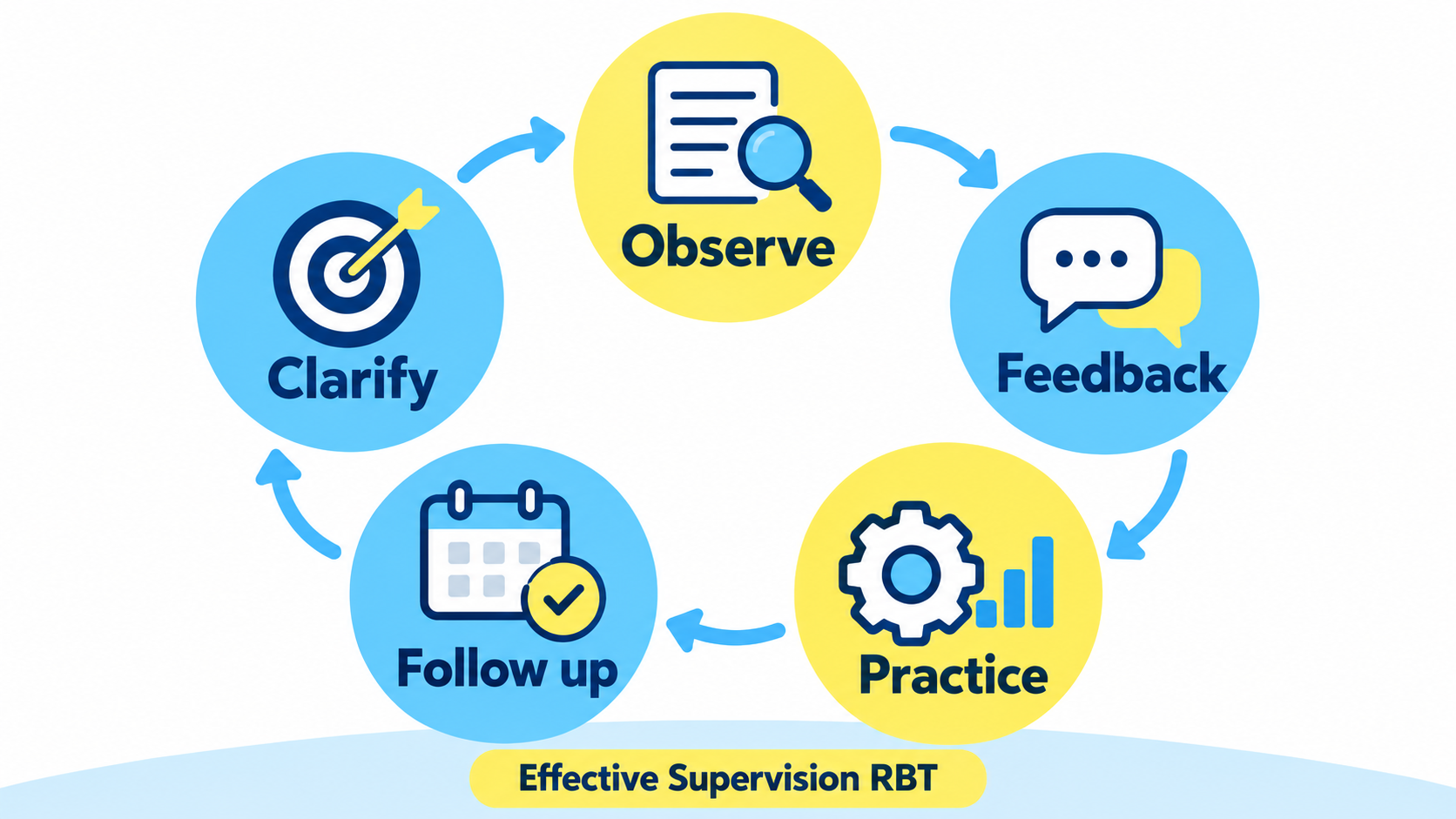
Observation should produce evidence about the skill under review. Watching the RBT complete a real task can reveal timing, prompt delivery, data recording, communication, and response to unexpected events that a meeting conversation may not show.
The observation should fit the risk and complexity of the task. A short record review may answer one documentation question; it may not be enough to evaluate a procedure that depends on live timing or learner communication. The supervisor chooses an appropriate method and should explain what evidence is being gathered.
The RBT can help by bringing the current plan, naming the step that feels uncertain, and avoiding an improvised workaround that hides the real context. If the client, setting, equipment, or communication system has changed, say so before the observation is interpreted.
Give feedback that can be used
Useful feedback is specific, observable, timely, and connected to the expected procedure. It can name the step, describe what occurred, explain why it matters, and state what to try next.
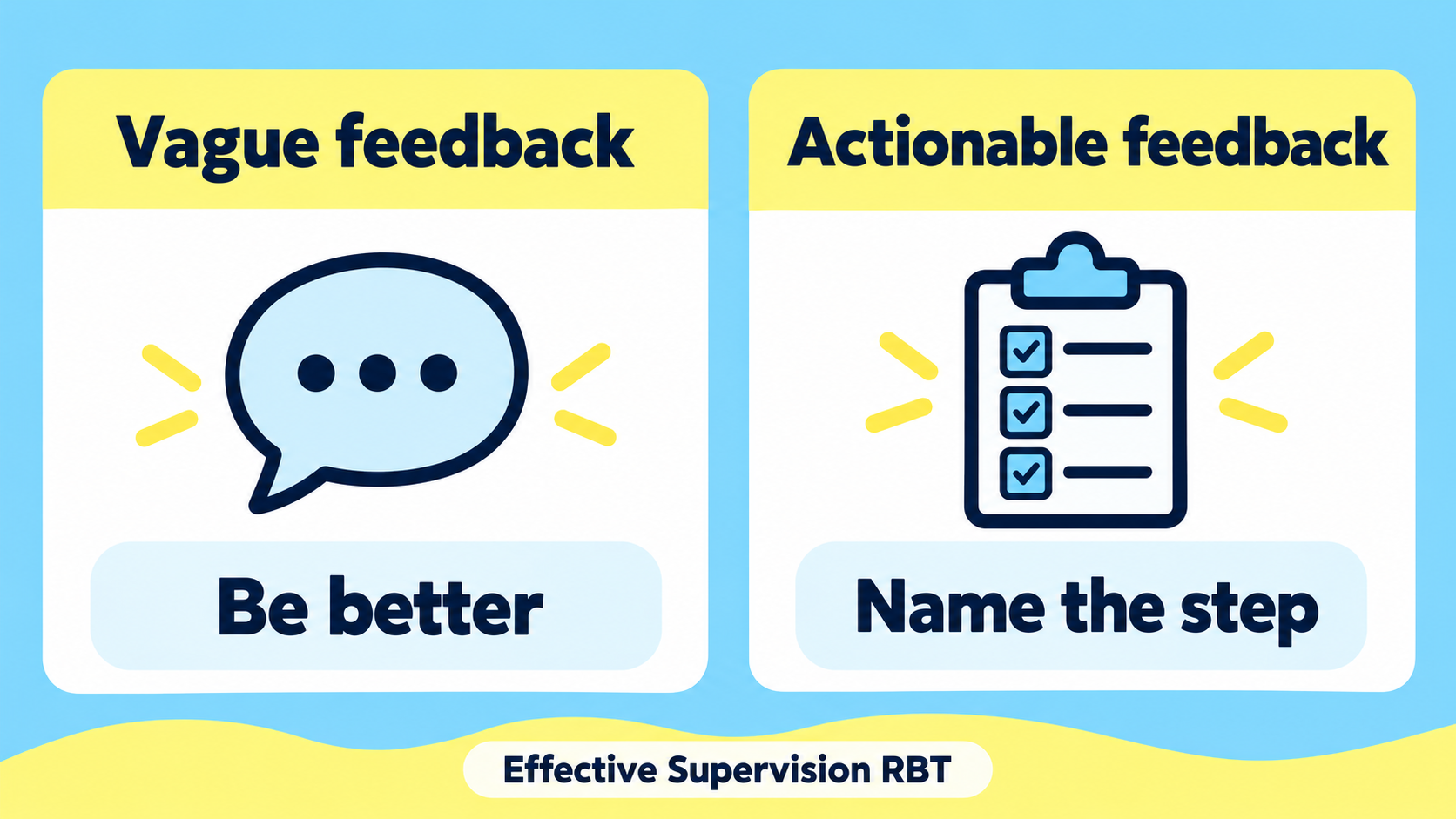
Compare two styles:
- Vague: “Be better with your prompting.”
- Actionable: “After the instruction, wait the planned interval before adding the next prompt. Record the response using the current data field. Let’s rehearse that sequence once before the next opportunity.”
Feedback should include strengths when they are real and relevant. “You recorded the start and stop times consistently” tells the RBT what to preserve. It should also name a priority rather than burying every correction in a long list.
Turn feedback into practice
Listening to feedback is not the same as demonstrating a changed skill. Effective supervision creates a chance to practice through modeling, rehearsal, role-play, guided implementation, or another method appropriate to the task.
The supervisor can model the step, ask the RBT to explain it, observe a rehearsal, and then provide a second round of feedback. The RBT can repeat the instruction in their own words, identify the error cue, and ask for another observation if the change is not yet stable.
Practice should not quietly become authorization for a new intervention. The RBT practices the current authorized procedure and reports when the procedure itself appears unclear or ineffective. Plan changes belong to the authorized supervisor or treatment team.
Protect honesty, dignity, and safety
Effective supervision protects the learner’s dignity and confidentiality while still examining real performance. Use the minimum necessary identifying information, follow approved records procedures, and discuss sensitive concerns through the correct channel.
The RBT should be able to say, “I do not know,” “I missed that data opportunity,” or “This is different from the procedure I was trained on.” The supervisor’s response should clarify the next safe step, not encourage the RBT to hide uncertainty.
Immediate safety concerns take priority. Follow the organization’s safety and escalation procedures, then document the relevant facts and seek supervision. A respectful feedback process does not mean ignoring risk or delaying necessary action.
Document and follow up
A supervision note should allow the team to see what was reviewed and what happens next. Depending on the approved system, record the date, participants, client-focused topic, observation or activity, feedback, practice, and follow-up plan.
Follow-up is where supervision shows whether feedback became a changed behavior. The next contact might check one target step, compare a new record, observe the same procedure in a changed setting, or close a question that was previously unclear.
Do not backdate an observation, sign for a contact that did not happen, or use a generic note that hides the actual activity. If the supervision arrangement is missed or the record is wrong, report it promptly through the designated route.
Frequently asked questions
Does effective supervision require a special score?
No. Quality can be discussed through observable features such as clear expectations, meaningful observation, specific feedback, active practice, safety, and follow-up. It is not a universal score supplied by this article.
Is a completed monthly percentage enough?
No. A percentage or meeting count may be one requirement, but it does not by itself show that the supervision was client-focused, participatory, observable, useful, and documented.
What should an RBT do with feedback that seems unclear?
Ask for a concrete example, restate the expected step, and request clarification before implementing a change. Do not independently change the plan because the feedback is vague.
Can an RBT evaluate the supervisor?
An RBT can report what support was provided, what remains unclear, and what safety or competence concern needs attention. The organization and BACB requirements determine formal evaluation and compliance processes.
Sources and scope note
This guide is based on the BACB Registered Behavior Technician Handbook, the BACB RBT Ethics Code (2.0), and the BACB Supervision, Assessment, Training, and Oversight page. Requirements can change, and employer, payer, school, state, and legal rules may add obligations. Check current official sources and ask the appropriate supervisor about your situation.
Ready to practice the RBT concepts you just reviewed?
Try an independent, original RBT practice resource with exam-style questions, scoring, and answer explanations.
References
- Behavior Analyst Certification Board. RBT Test Content Outline, 3rd edition.
- Behavior Analyst Certification Board. RBT Handbook.
- Behavior Analyst Certification Board. RBT Ethics Code.