
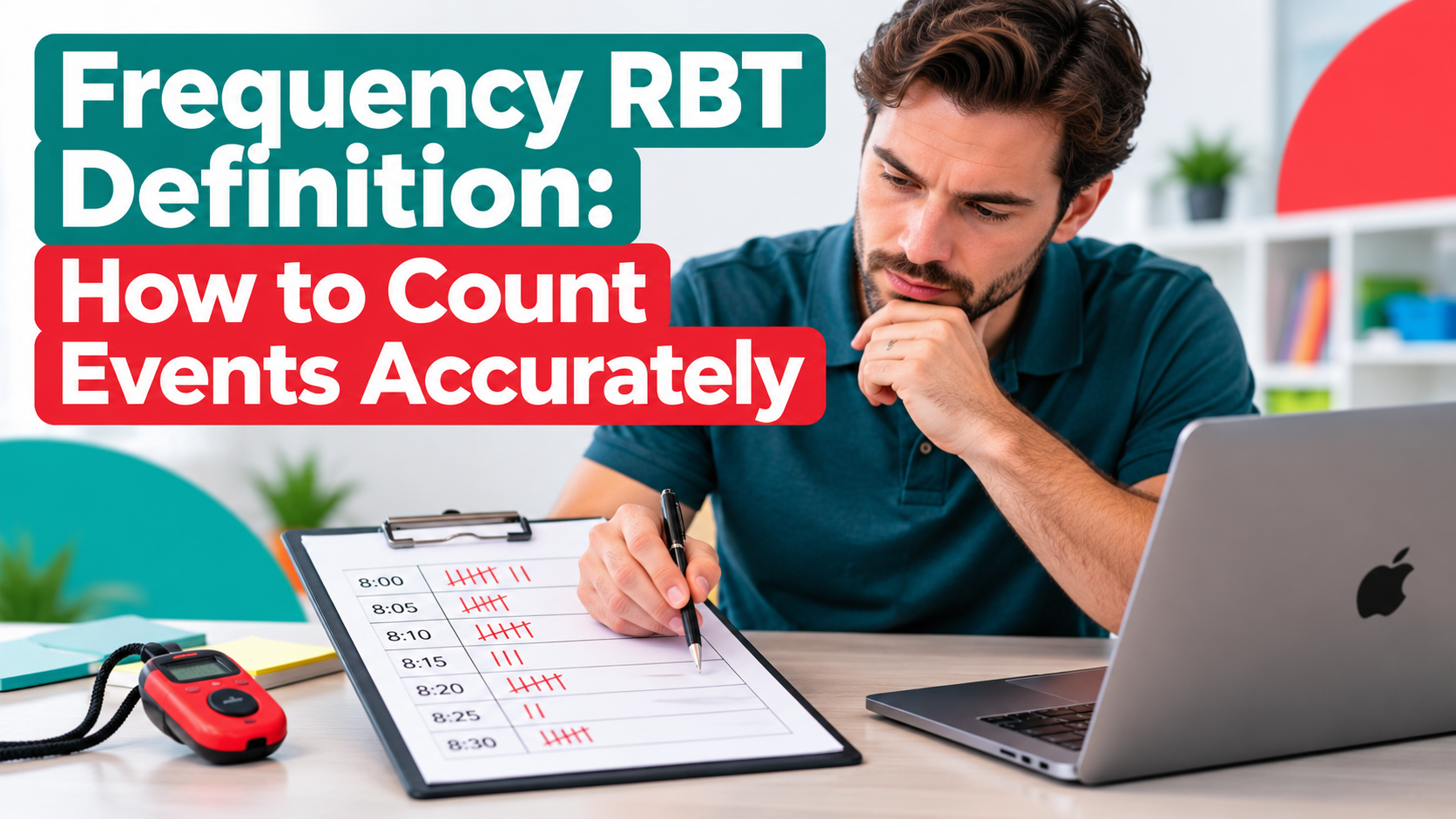
The frequency RBT definition is a count of how many times a defined event occurs during a specified observation period. Accurate frequency data depend on a clear event boundary, consistent counting, and the current program’s instructions.
Table of Contents
- Frequency RBT definition in plain language
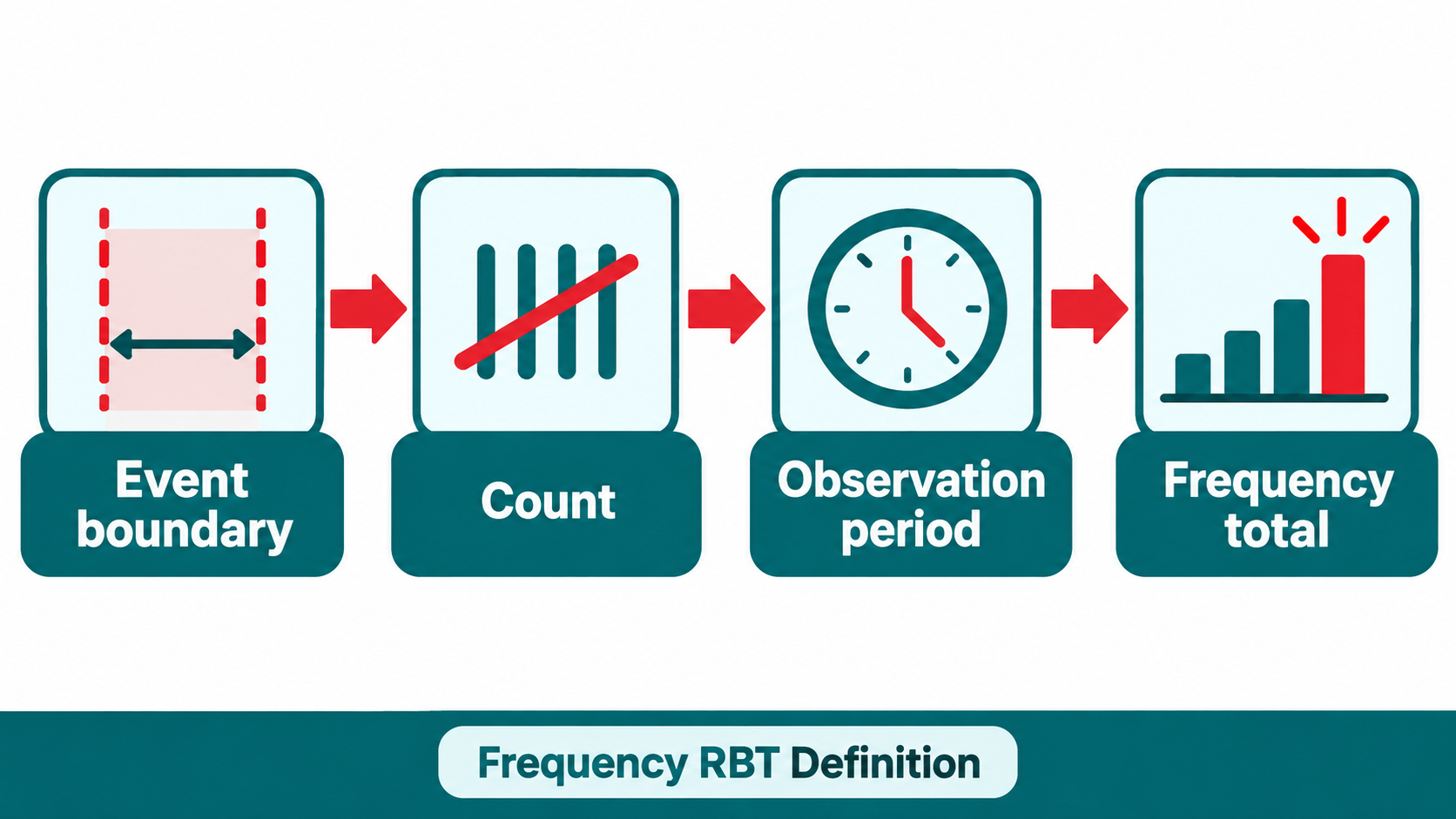
- Set the event boundary before counting
- Connect the count to the observation period
- Record frequency consistently
- Frequency, rate, duration, and latency
- Common frequency-data errors
- Questions to ask a supervisor
- Frequently asked questions
- Sources and scope note
RBT MEASUREMENT GUIDE · EVENT COUNTING
Frequency RBT Definition: How to Count Events Accurately
How event boundaries, observation periods, and consistent recording turn a simple count into useful data.
The frequency RBT definition is a count of how many times a defined event occurs during a specified observation period. Accurate frequency data depend on a clear event boundary, consistent counting, and the current program’s instructions.
Frequency is useful when the event can be identified as separate occurrences. The count is not a judgment about the learner, a diagnosis, or proof that an intervention worked. It is one measurement that the authorized team interprets with context and other information.
Always follow the current operational definition and data form. The examples here explain the measurement idea without creating a learner-specific definition.
Frequency RBT definition in plain language
Imagine an observation period in which a target event occurs three separate times. The frequency is 3 for that observation period. If the event occurs seven times in another period, the frequency is 7 for that period.
The important phrase is “defined event.” A count is only as reliable as the rule that tells the observer what counts as one occurrence. The RBT should know the event’s start or onset, what makes one occurrence end, and when a later event is separate rather than part of the same episode.
If the current plan does not make the boundary clear, pause when appropriate and ask the supervisor. Do not create a personal rule just to make the form easier to complete.
Set the event boundary before counting
Before collecting frequency data, review:
- the observable action or event that qualifies;
- the onset condition that starts one occurrence;
- the offset or separation rule that ends it;
- the minimum time or condition that makes a new event separate, if stated;
- what to do when the event is partially obscured or ambiguous.
For example, a plan might define a vocal event by a sound pattern and a pause between occurrences. That does not mean every sound or every pause counts. The written definition controls. The RBT records what meets the rule and communicates when a real event cannot be classified confidently.
Connect the count to the observation period
A frequency number needs its observation period. A count of 6 during 60 minutes is not automatically comparable with a count of 6 during 20 minutes. The event count is the same, but the opportunity to observe it is different.
Check when the observation starts and ends, whether the full period was completed, and whether an interruption affected the data. If the observation is shorter than planned, record that fact through the approved method and ask whether the data should be labeled, corrected, or excluded by the supervisor.
Do not fill an interrupted period with an estimate unless the authorized procedure specifically tells you how to do so. An honest missing-data note is more useful than a precise-looking number that was never observed.
Record frequency consistently
Use the assigned data form or electronic field. Record each qualifying event as it occurs when the procedure requires live counting, or follow the trained method if the system uses tally marks, counters, or later entry. Keep the count aligned with the event definition and the correct observation period.
Before submitting the record, check the date, client or program identifier required by the approved system, observation period, total count, and any variables the plan asks you to report. Protect confidentiality and use only authorized channels.
If you discover a mistake, do not erase the history or quietly replace the number. Follow the correction process, state what was observed, and tell the supervisor if the error may affect interpretation.
A useful routine is to check the count at three points: while observing, immediately after the period ends, and when entering or submitting the record. During observation, keep the event rule visible and use the assigned tally method. At the end, compare the total with your marks and note any interruption. During entry, match the date, program, period, and measure before saving. These checks do not replace the plan, but they reduce avoidable transcription errors and make it easier to explain what happened when the count is questioned.
If two observers disagree, compare the definition and the exact event examples before comparing totals. The disagreement may involve onset, offset, a pause rule, or a missed opportunity rather than simple arithmetic. Record the question and ask the supervisor which interpretation applies. Agreement improves when both people use the same rule and observation window.
Frequency, rate, duration, and latency
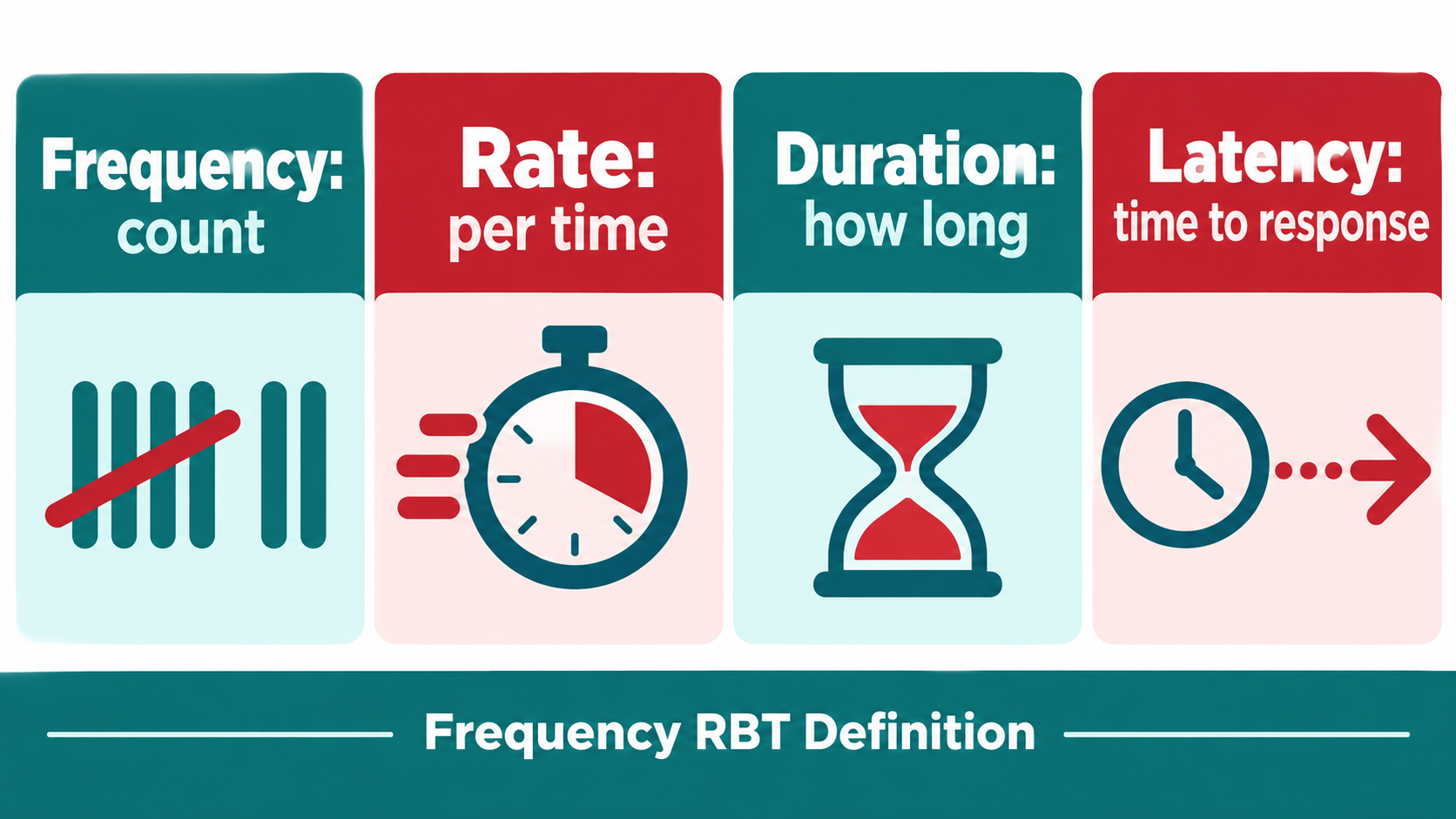
These measures answer different questions:
- Frequency: How many defined events occurred during the observation period?
- Rate: How many events occurred per unit of time, such as per hour?
- Duration: How long did the event or episode last?
- Latency: How long between a stated opportunity or instruction and the response?
The authorized plan determines which measure to collect. An RBT should not switch from frequency to duration because it seems easier or because the number looks confusing. Ask for direction when the assigned measure does not fit the event as observed.
Common frequency-data errors
Watch for these problems:
- Counting an event that does not meet the current definition.
- Counting one continuous episode as several events without a separation rule.
- Missing events because attention shifted, then guessing the total later.
- Comparing counts from different observation lengths without checking time.
- Entering a count in the wrong program, date, or client record.
- Changing the definition or measurement system without authorization.
When an error occurs, protect immediate safety, preserve accurate records, use the approved correction route, and communicate the facts. A frequency number should be trustworthy even when the observation was imperfect.
Questions to ask a supervisor
Ask for clear answers to:
- What exactly counts as one event?
- What separates one occurrence from the next?
- What is the planned observation period?
- What should I record if the period is interrupted?
- Which form, field, and correction process should I use?
Frequently asked questions
Is frequency the same as rate?
No. Frequency is a count for an observation period. Rate expresses a count in relation to a unit of time, which can make periods easier to compare.
Can an RBT change the frequency definition?
No. Follow the current plan and ask the supervisor when the definition is unclear or no longer matches the observed context.
Does a higher frequency always mean worse behavior?
No. The meaning depends on the defined event, context, measurement plan, and authorized team’s interpretation. A number alone does not establish severity, cause, or treatment effectiveness.
What if I missed part of the observation?
Record the interruption or missing information through the approved process and tell the supervisor. Do not invent or backfill an unobserved count.
Sources and scope note
This guide is based on the BACB RBT Test Content Outline (3rd ed.), the BACB RBT Handbook, and the BACB RBT Ethics Code (2.0). Requirements and measurement procedures can vary by program. Use the current authorized plan and ask the appropriate supervisor about your situation.
Ready to practice the RBT concepts you just reviewed?
Try an independent, original RBT practice resource with exam-style questions, scoring, and answer explanations.
References
- Behavior Analyst Certification Board. RBT Test Content Outline, 3rd edition.
- Behavior Analyst Certification Board. RBT Handbook.
- Behavior Analyst Certification Board. RBT Ethics Code.