
How to verify an RBT supervisor starts with current official resources, a clear supervision arrangement, and questions that confirm who is responsible for direction and documentation.
Table of Contents
- How to verify an RBT supervisor: the short answer
- Start with current official information
- Confirm the supervision arrangement
- Questions to ask before starting
- Helpful and concerning signals
- Keep a clear record
- Use evidence without overreaching
- RBT role boundaries
- Frequently asked questions
- References
RBT SUPERVISION GUIDE · VERIFICATION CHECKLIST
How to Verify an RBT Supervisor: A Practical Checklist
Confirm the supervision arrangement, ask useful questions, and use current official resources before services begin.
How to verify an RBT supervisor is not just a search for a name online. A useful check combines current BACB resources, the employer or service organization’s supervision arrangement, clear communication channels, and questions about how direction and documentation will work. A public profile can be a starting point, but it is not by itself a complete credentialing or compliance determination.
In plain language, how to verify an rbt supervisor means confirming the relationship that will actually guide your work, not ranking a professional from online impressions. The goal is a documented, role-appropriate understanding of who provides direction, how observations happen, and where to take a concern.
This guide is educational information. Current official materials, the written service arrangement, and the responsible organization control the applicable requirements. An RBT should not begin an unfamiliar procedure or make a clinical change simply because a website, message, or informal conversation sounds confident.
How to verify an RBT supervisor: the short answer
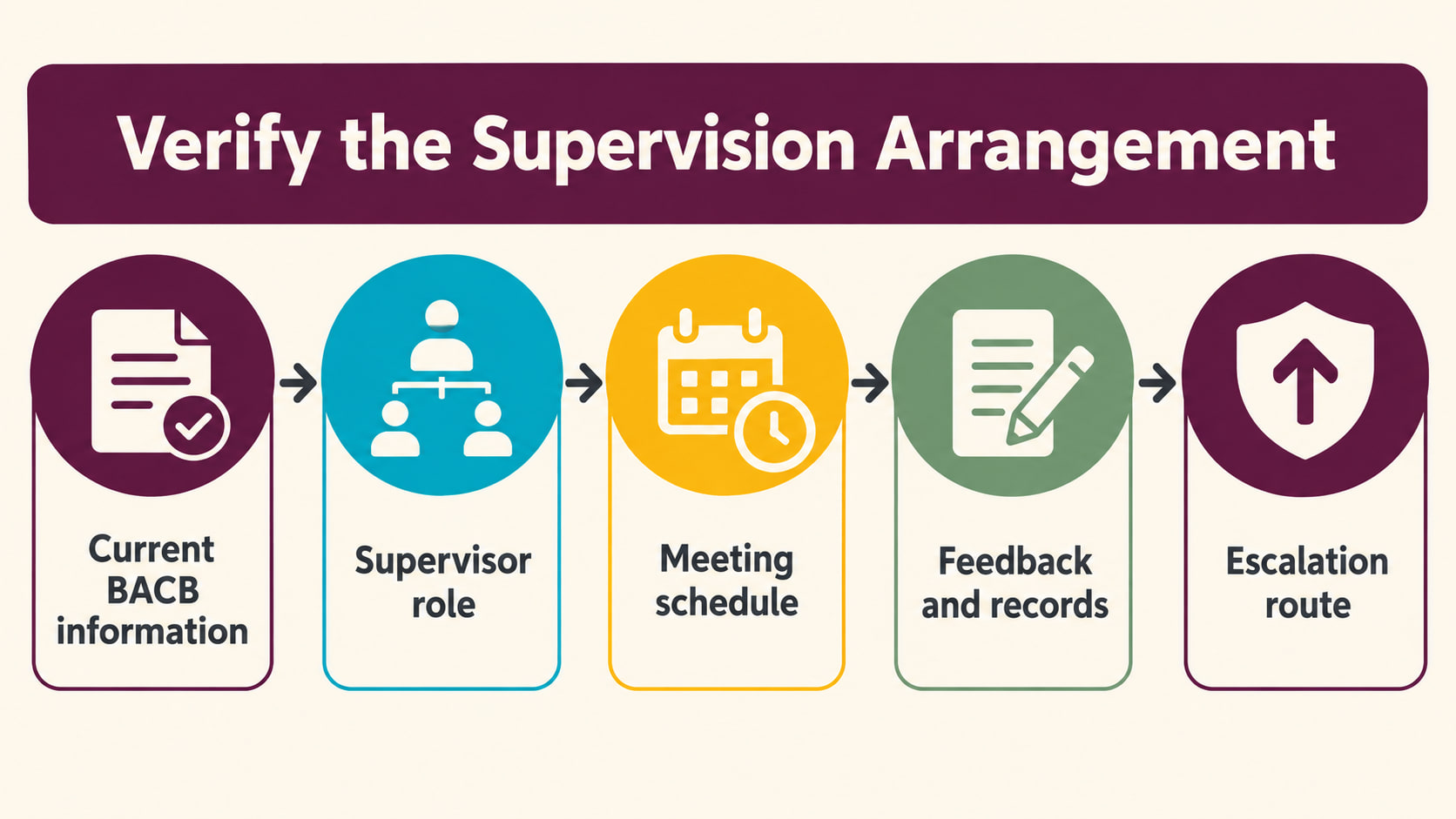
Use five steps: open the current BACB resources, identify who is responsible for supervision, confirm how contact and observation will occur, ask how records and concerns are handled, and save the relevant written details. If an answer is unclear, ask the organization to clarify before relying on it.
Verification is about matching the person, role, organization, and current process. It is not about collecting private information or demanding that a supervisor disclose confidential client details.
Start with current official information
Begin with the current RBT Handbook, RBT resources, Test Content Outline, and applicable ethics materials. Check publication dates and use the version that the BACB currently identifies as controlling. Requirements can change, so an old social post or a copied checklist should not be treated as the final authority.
Use official information to frame questions, not to impersonate a credentialing reviewer. If a requirement depends on a particular application, employer, or supervisor arrangement, ask the responsible organization how it applies in that setting.
Confirm the supervision arrangement
Ask who the responsible supervisor is, which organization employs or contracts the RBT, how supervision is scheduled, and who provides direction when the supervisor is unavailable. Confirm the approved communication route and the process for urgent safety or client-care concerns.
Also clarify what the RBT is expected to bring to supervision: data questions, session observations, documentation examples, training needs, or a list of situations requiring follow-up. A clear arrangement makes it easier to seek direction promptly instead of waiting until an uncertainty becomes a larger record or safety problem.
Questions to ask before starting
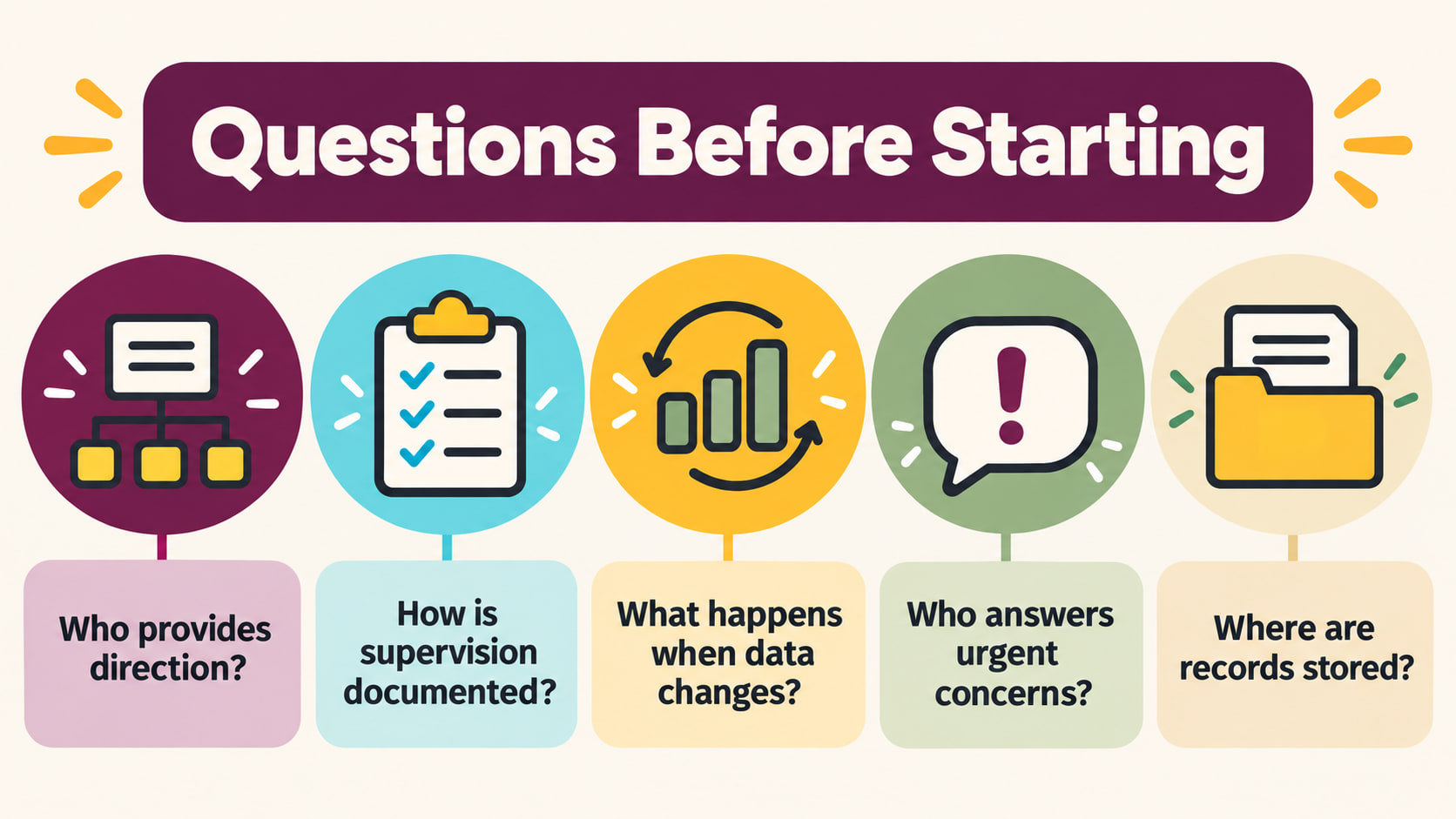
- Who is the named supervisor for this role and organization?
- How will supervision, observation, and feedback be scheduled and documented?
- Who should I contact when the supervisor is unavailable?
- Which procedures may I implement, and where can I find the current written versions?
- How should I report a safety concern, data problem, or conflict between instructions?
- What information should remain confidential in messages, notes, and training examples?
Helpful and concerning signals
Helpful signals include a clear role description, current written procedures, a reliable route for questions, respectful feedback, objective documentation, and a willingness to distinguish training practice from authorization. A supervisor or organization should be able to explain how the RBT receives direction without promising outcomes that no one can guarantee.
Pause and seek clarification when someone refuses to identify the responsible process, asks the RBT to hide an error, encourages undocumented plan changes, requests unnecessary confidential information, or treats a completion badge as proof of every required step. One concerning signal may need context, but it should not be ignored when safety, privacy, or accurate records are involved.
Keep a clear record
Save the organization’s written supervision details, approved contact route, current procedure locations, and follow-up instructions according to its record policy. A short objective note can identify the date, task discussed, direction received, and next action without copying confidential client information into an informal channel.
Do not create a private dossier of a supervisor. Keep only what the organization requires and protect access to employment, credentialing, and client-related information.
A verification record should distinguish what you confirmed from what still needs confirmation. For example, you might record that the organization named a supervisor, supplied a procedure location, and explained the urgent-contact route. You might separately note that a schedule, observation date, or document version remains pending. This distinction prevents a partial conversation from being remembered as a complete approval.
Use evidence without overreaching
Useful evidence can include a current organization document, a message from the approved administrative contact, a supervision schedule, or a reference to the current official handbook. The evidence should answer the question being asked. A general biography may show experience, but it may not answer who is responsible for your current supervision arrangement. Likewise, a screenshot without a date or context may be difficult to interpret later.
When information conflicts, do not try to resolve the conflict by choosing the more convenient answer. Keep the two statements, identify the decision that depends on them, and ask the responsible organization which source controls. If the conflict affects safety, privacy, a client record, or an immediate service decision, use the organization’s urgent route.
It is also reasonable to ask how changes will be communicated. A supervisor may change roles, an employer may update its process, or a written procedure may be replaced. Ask where the current version will be posted, who will notify the RBT, and what to do during the transition. A verification process is useful only if it remains current after the first conversation.
Keep the checklist proportional: verify what affects the role, ask for clarification when needed, and respect the privacy of everyone involved.
RBT role boundaries
Verification does not turn an RBT into an independent reviewer or treatment designer. The RBT implements assigned procedures, records observable events, communicates questions, and seeks timely direction. If a plan is unclear or a situation changes, report the uncertainty and wait for authorized guidance through the approved route.
This article uses an original checklist, not an official examination question. Consult current BACB materials and the responsible organization for decisions about a specific credential, supervisor, workplace, or application.
Frequently asked questions
Does a public profile prove that someone is my current supervisor?
No. Confirm the actual organization and written supervision arrangement through the approved process.
What should I do if two people give conflicting directions?
Pause the uncertain step, preserve the objective record, and ask the responsible organization which instruction controls.
Can this checklist replace a BACB decision?
No. It organizes questions; current official resources and the applicable organization process control credentialing decisions.
Ready to practice the RBT concepts you just reviewed?
Try an independent, original RBT practice resource with exam-style questions, scoring, and answer explanations.
References
- Behavior Analyst Certification Board. RBT Test Content Outline, 3rd edition.
- Behavior Analyst Certification Board. RBT Handbook.
- Behavior Analyst Certification Board. RBT Ethics Code.